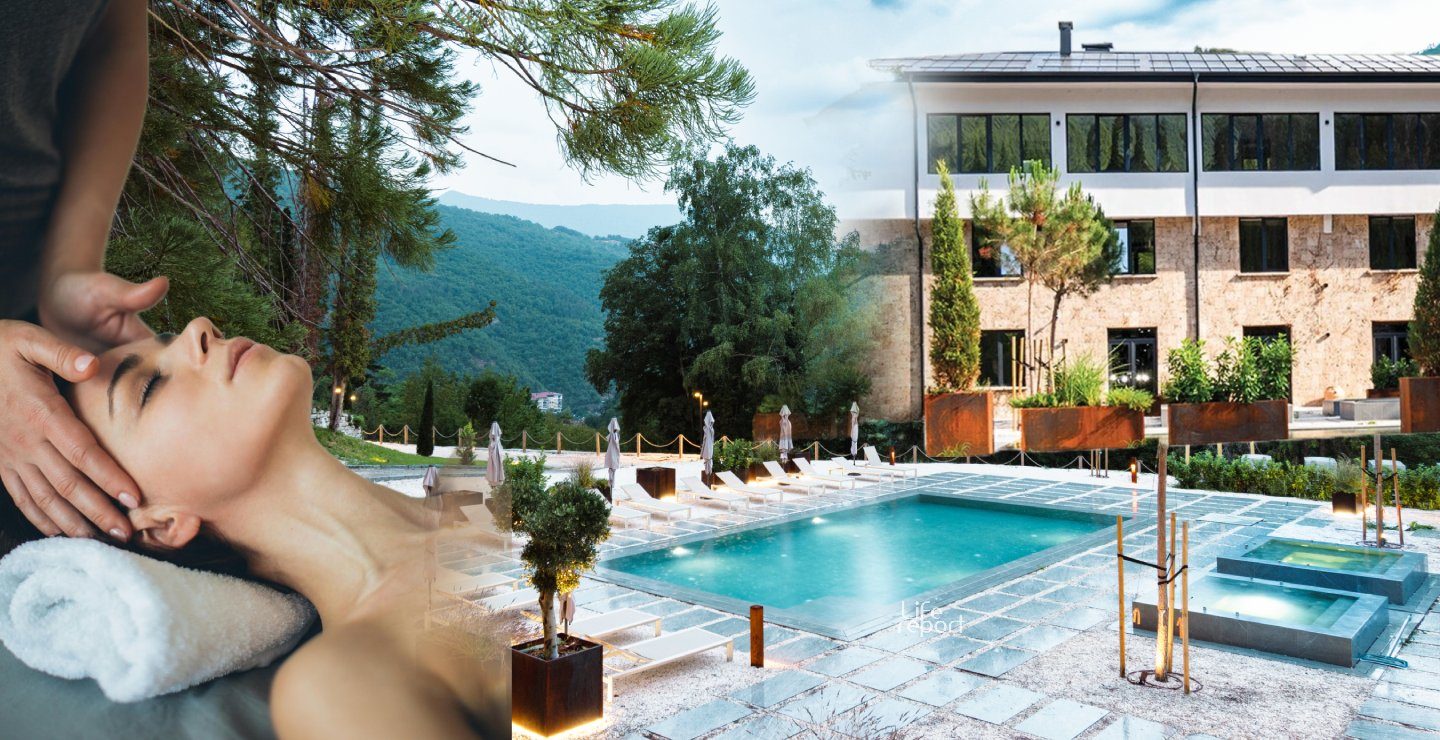
In the Rhodope Mountains (Bulgaria), a former Soviet-era residence has been reborn as Villa Rossa – a sanctuary where history, healing waters, and Italian-designed interiors conspire to remind you what stillness actually feels like.
Let us begin with a confession: I had forgotten what silence sounded like. Not the relative quiet of a luxury hotel room with triple-glazed windows, nor the curated hush of a spa where ambient music has been engineered to induce a state of mild sedation. I mean actual silence – the kind that arrives unannounced, that settles into your bones, that makes you realise, with some embarrassment, that you have been living inside a low-grade hum of notifications, small anxieties, and the ceaseless chatter of your own mind for so long that you stopped noticing its absence.
The water in the Rhodope Mountains does not care about any of this. It emerges from the earth at twenty-six degrees Celsius, carrying a concentration of radon that would alarm a safety inspector but which has, for centuries, been quietly performing the kind of neurological reset that no amount of meditation apps can replicate. And it is here, in a former Soviet-era residence that once hosted prime ministers and witnessed the peculiar theatre of Cold War diplomacy, that I finally remembered what stillness actually feels like.
This is Villa Rossa. And it is, quite simply, the most sophisticated argument for doing nothing that I have encountered in years.
The building itself possesses the kind of backstory that sounds almost too cinematic to be true. Constructed between 1959 and 1963 as a private residence for Bulgaria’s long-serving communist leader, it served for decades as a stage for high-level diplomacy – a place where the Japanese Prime Minister Takeo Fukuda and other international dignitaries were received, and where the country’s balneological traditions were presented as a point of national pride. After the severe car accident involving the leader’s daughter, Lyudmila Zhivkova, in 1973, the residence became her seven-month refuge – a place of convalescence long before the concept of wellness retreats had been packaged and sold to the global elite.
Then came the years of neglect – the kind of slow decay that claims so many architectural landmarks of the twentieth century – until the building was essentially uninhabitable, its historical significance buried beneath the accumulated indifference of passing decades.
What happened next is the part that should interest anyone who believes that preservation and progress need not be mutually exclusive.
View this post on Instagram
A four-year renovation project brought together an Italian architectural studio led by Alberto Carucci and the Bulgarian firm Kshta, working in deliberate, painstaking collaboration. Their brief was essentially to resurrect a piece of Cold War history and persuade it to become a luxury wellness sanctuary – a task that required not merely architectural skill but something approaching diplomatic finesse.
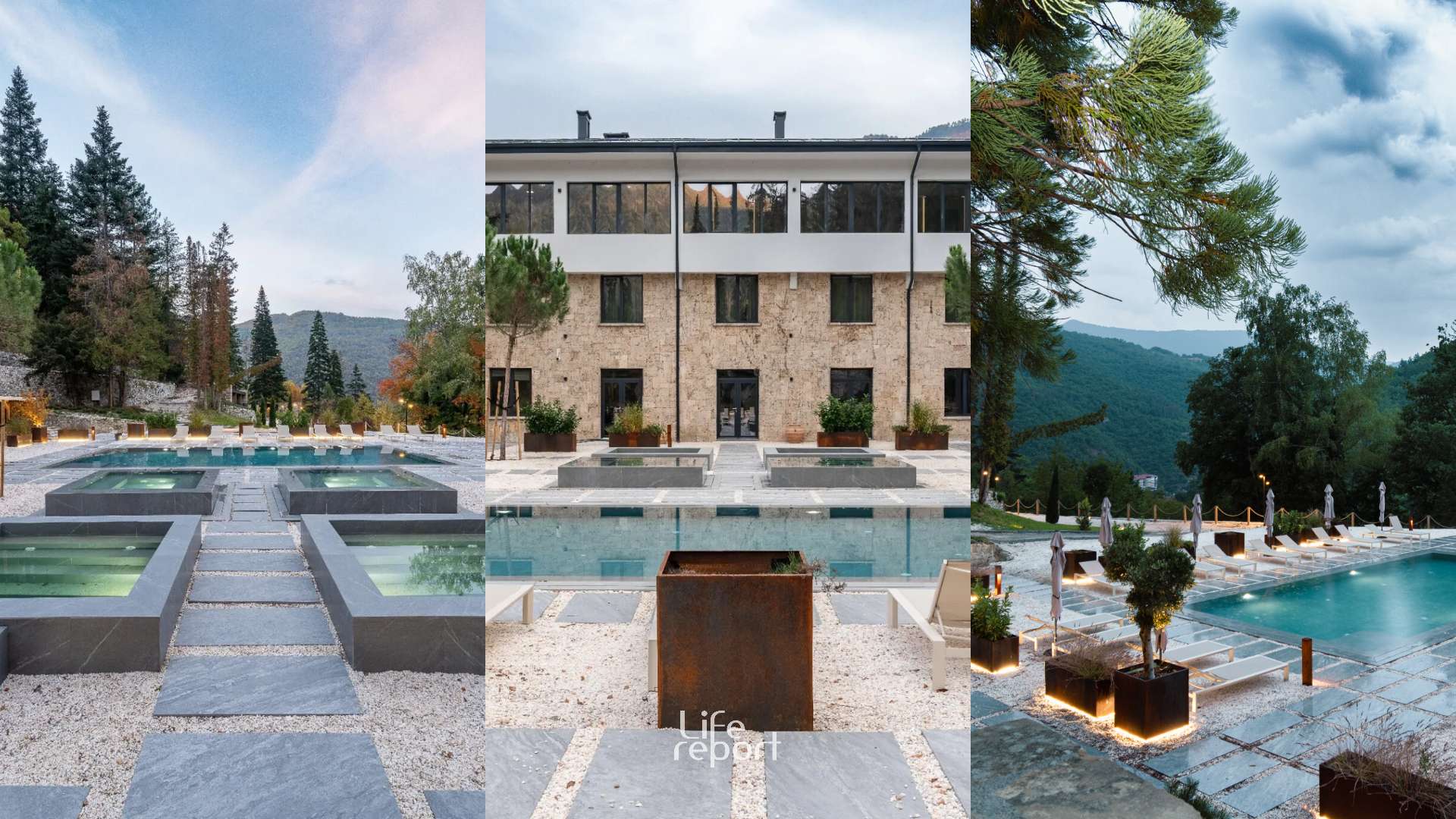
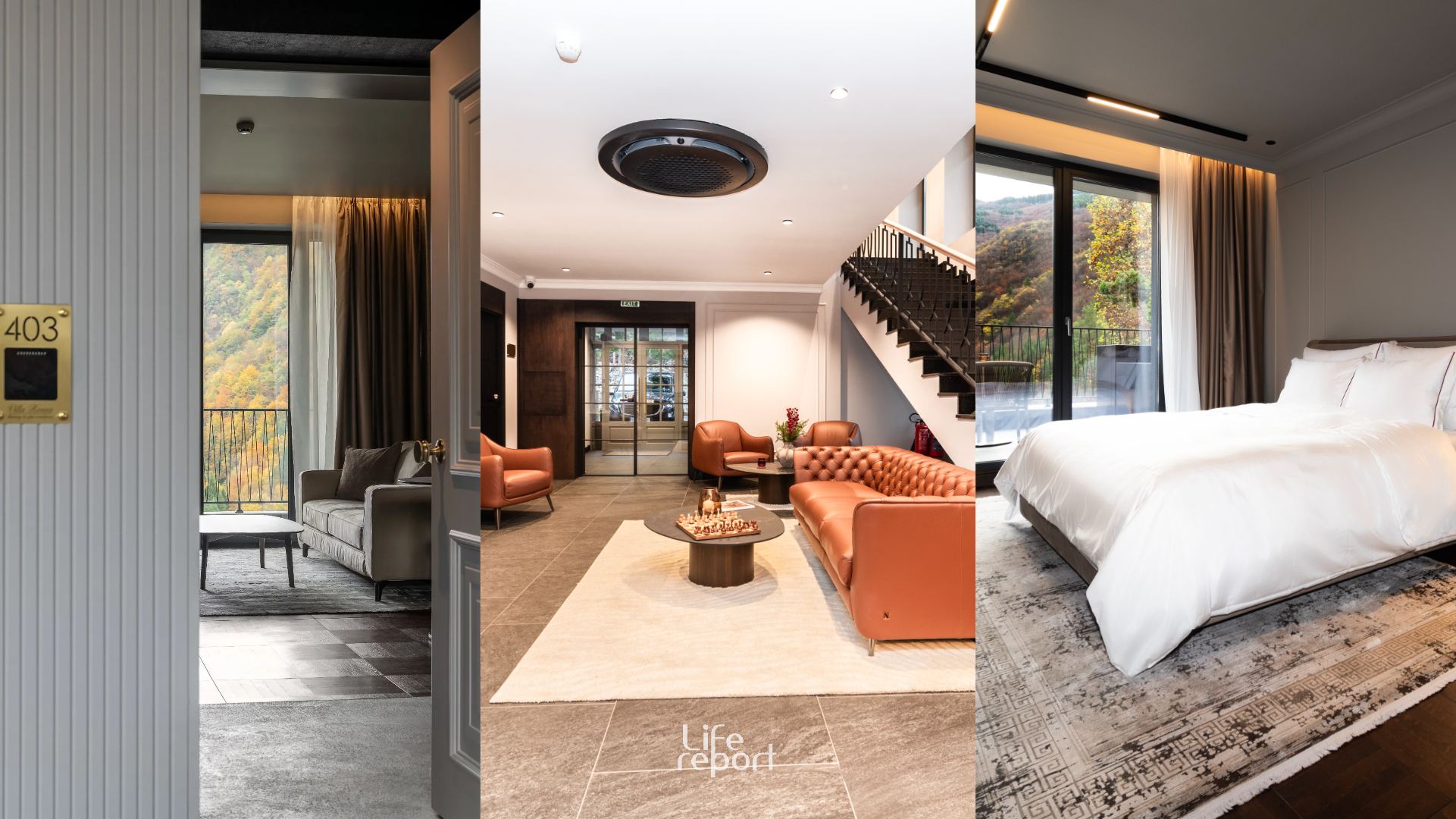
The result is a masterclass in what might be called respectful reinvention. The building’s original character – those solid volumes, horizontal lines, the unmistakable aesthetic of mid-century state architecture – has been preserved, but the interior language has been entirely reimagined. Natural materials dominate: wood, stone, lime plasters in warm earth tones drawn directly from the surrounding landscape. The colour palette – ochre, sand, warm browns, subtle greys – feels less like a design choice than an extension of the mountains themselves.
Light is treated as a material in its own right. Indirect and soft, it moves through the spaces in ways that highlight texture rather than announcing itself. There is no aggression here, no desperate bid for Instagram attention. The design follows nature rather than attempting to compete with it.
The furnishings, supplied by Essenza – Bulgaria’s leading purveyor of high-end Italian furniture – include pieces from Natuzzi and Calligaris, selected not for their brand visibility but for their tactile quality and understated elegance. Custom cabinetry and decorative panels were crafted by local Bulgarian artisans, a decision that grounds the project in place while maintaining international standards of refinement.
In the former bunkers of the residence, now repurposed as a cigar bar, the historical irony is almost too perfect to ignore: spaces once designed for survival and secrecy now host intimate evenings of contemplative indulgence. But architecture, however elegant, is ultimately just a setting. The true protagonist of Villa Rossa is the water.
The spring, called Soleno Izvorche, has been rising from the Rhodope depths for centuries, its mineral composition a matter of local legend long before it became a subject of scientific study. Today, we can describe precisely what makes it extraordinary: total mineralisation of 1,594 milligrams per litre, rich in sulphates, bicarbonates, sodium, calcium, magnesium, fluorine and silicon. And then there is the radon – 4,694 becquerels per litre, one of the highest therapeutic concentrations in Bulgaria.
Before you allow the word radon to trigger anxieties about basements and mitigation systems, consider this: during the Second World War, this exact location served as a recovery sanctuary for soldiers, its waters used for precisely the same therapeutic purposes that Villa Rossa now offers. The history of balneotherapy is long and largely respectable, and the specific properties of radon-rich thermal water – its ability to reduce inflammation, alleviate chronic pain and stimulate circulation – are well documented.
What science often fails to capture is the sensory experience. The water emerges at a temperature that feels less like a treatment and more like an embrace. Twenty-six degrees is not hot enough to shock, nor cool enough to resist. It is, instead, the precise temperature at which the body stops defending itself and begins, gradually, to remember what relaxation actually feels like.
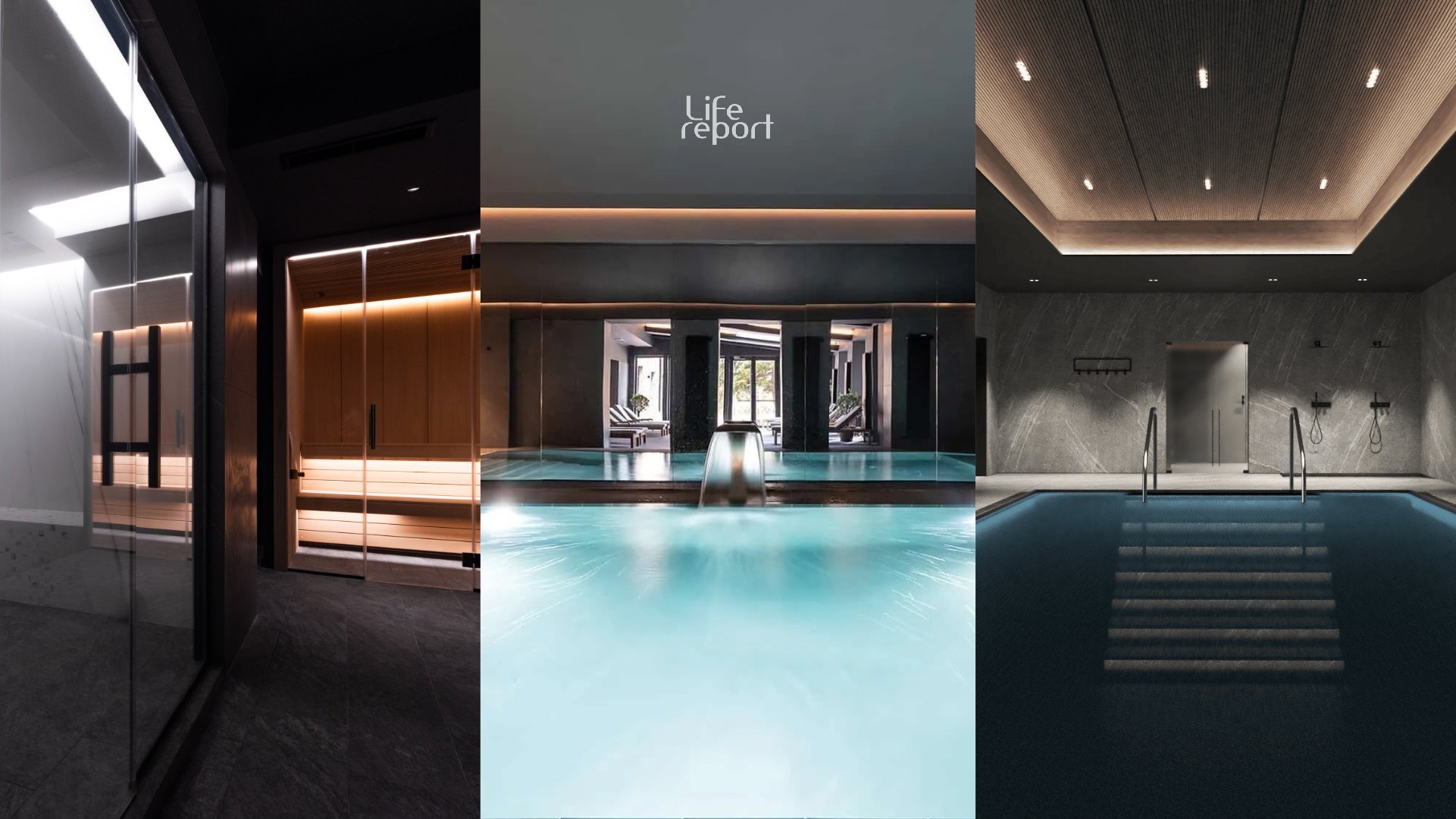
The claims made for this water are substantial: natural pain relief through reduced inflammation, enhanced circulation and profound nervous system regulation. It is said to help with arthritis, joint conditions, stress, sleep disorders and muscular tension. And while one should always maintain a healthy scepticism about any substance described as an elixir, there is something compelling about a therapy that has been trusted for centuries, that predates the wellness industry by millennia, and that asks nothing of you except to be present in the water and let it do its work.
The accommodation follows the same philosophy of layered distinction. Standard rooms offer mountain views and private balconies, their design clean and uncluttered. Suites add separate living areas and the kind of spatial generosity that makes extended stays genuinely pleasurable. But the real distinction belongs to the villas – standalone residences in the exclusive upper quarter of the property, each with its own private terrace and, in some cases, private pools.
Access to this upper area is governed by the property’s commitment to sustainability: cars are not permitted. Guests are transported by electric vehicles, a decision that serves both environmental responsibility and experiential quality. The silence in this zone is remarkable, broken only by birds and the sound of wind moving through the ancient forest.
The landscape architecture, designed by the Bulgarian studio Landscape Design Studio, negotiates the space between Italian garden traditions and the wild authenticity of the Rhodopes. The result is not a manicured imposition on nature but something closer to a collaboration – paths that follow the natural contours of the land, plantings that emphasise indigenous species, and seating areas positioned to capture specific views or moments of light.
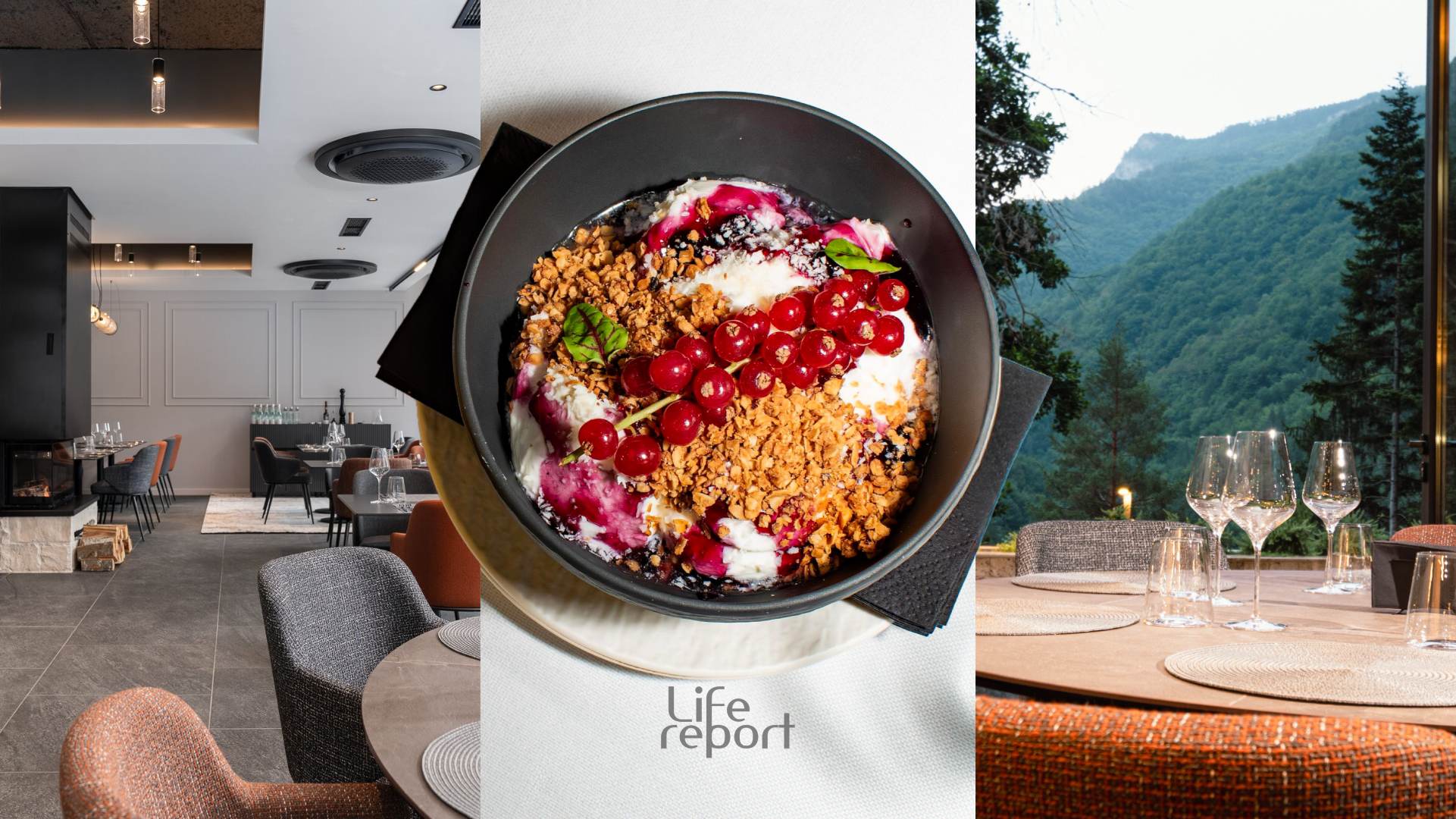
One does not, of course, live by thermal water alone. The culinary programme at Villa Rossa deserves its own consideration. The restaurant offers a contemporary interpretation of European cuisine, drawing on seasonal ingredients from the region. The Lobby Bar provides a refined setting for modern mixology, with a terrace that makes golden hour feel like a deliberate conspiracy in favour of your Instagram feed. The wine cellar houses a carefully curated collection of both local and international vintages, available for private tastings guided by staff who understand that wine appreciation is as much about narrative as it is about tannins.
The outdoor barbecue area, with its fire pit and open-air setting, suggests evenings that begin with grilled specialities and dissolve into the kind of unhurried conversation that seems increasingly difficult to achieve in urban life.
For those who prefer their meals to arrive with ceremony, the Sunday brunch – served outdoors, accompanied by champagne and the gentle bubbles of a jacuzzi nestled in the greenery – represents a particular kind of genius. It acknowledges, with a wink, that the distinction between relaxation and indulgence is largely a matter of presentation.
What makes Villa Rossa genuinely interesting, in an era when luxury retreats announce themselves with ever louder claims to authenticity and transformation, is its refusal to try too hard.
The property does not promise to fix you. It does not offer six-figure biohacking protocols or pseudoscientific nonsense dressed up in wellness jargon. It does not require you to adopt a philosophy or commit to a lifestyle. What it offers is considerably rarer: a setting of genuine beauty, water with demonstrable therapeutic properties, architecture that respects both history and the human need for tranquillity – and then, this is the radical part, it simply leaves you alone.
View this post on Instagram
The water, after all, has been doing its work for centuries. It does not require your belief, your enthusiasm or your social media promotion. It simply is.
And in a world where everything seems to demand our active participation, where relaxation has become yet another performance, there is something almost revolutionary about a place that understands that the most luxurious thing you can offer a guest is not another experience but the permission to stop having experiences.
The body, given the right conditions, will find its way back to equilibrium. The mind, granted genuine stillness, will eventually quiet. The water will do what water does. You need only to be there.