What is the sound of a contemporary art season running on autopilot? It is the polite, carbonated sigh of a Champagne flute reaching room temperature in a Basel tent; the whisper of a collector dismissing a Rothko-esque canvas as “brave, but not quite for the Hamptons”; the weary click of a private-view heel abandoning protocol for an early night. Against this velvet-roped ennui, a genuine spark of heat becomes a subversive luxury. And this August, that heat radiates not from the grill-marked coteries of St. Moritz or Mayfair, but from a gleaming stretch of Bulgaria’s Black Sea coast, where the city of Burgas – unlikely, unpretentious, and quietly ambitious – has curated a reason to recalibrate your summer compass.
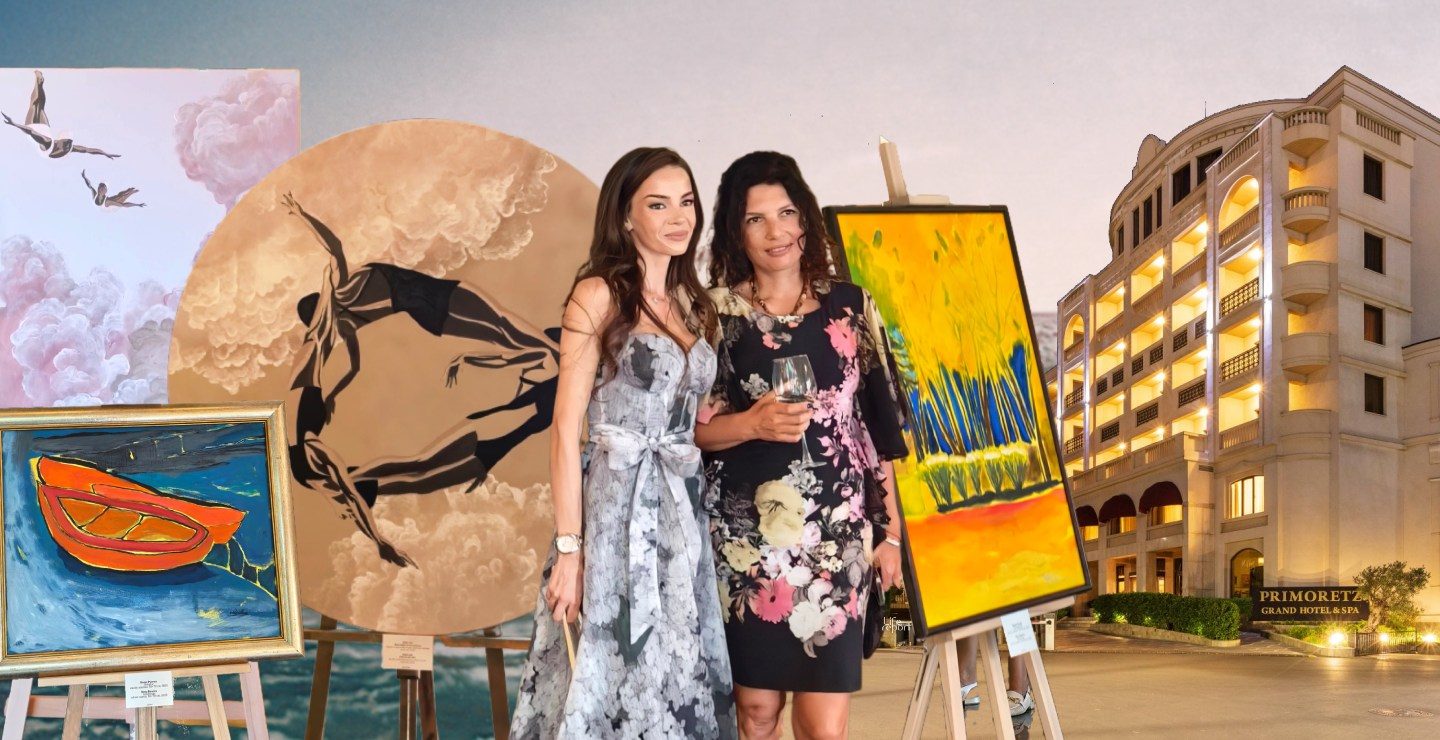
Inside the lobby of the Grand Hotel & SPA Primoretz, a five-star property nestled within the city’s lush Sea Garden, the exhibition Summer Heat runs until 20 August. It would be a mistake to dismiss this as little more than a hotel’s decorative afterthought. Curated by the internationally recognised duo Stefan Stoyanov and Stefka Doncheva – known for exhibitions that favour immersive, cerebral dialogue over easy spectacle – the show orchestrates a compelling visual conversation between two formidable Bulgarian artists, Nina Ruseva and Mika Sav. The result is not the polite, agreeable art one might expect to find sandwiched between a concierge desk and a thalassotherapy brochure. It is a charged, intelligent interplay of scale, gesture and identity.
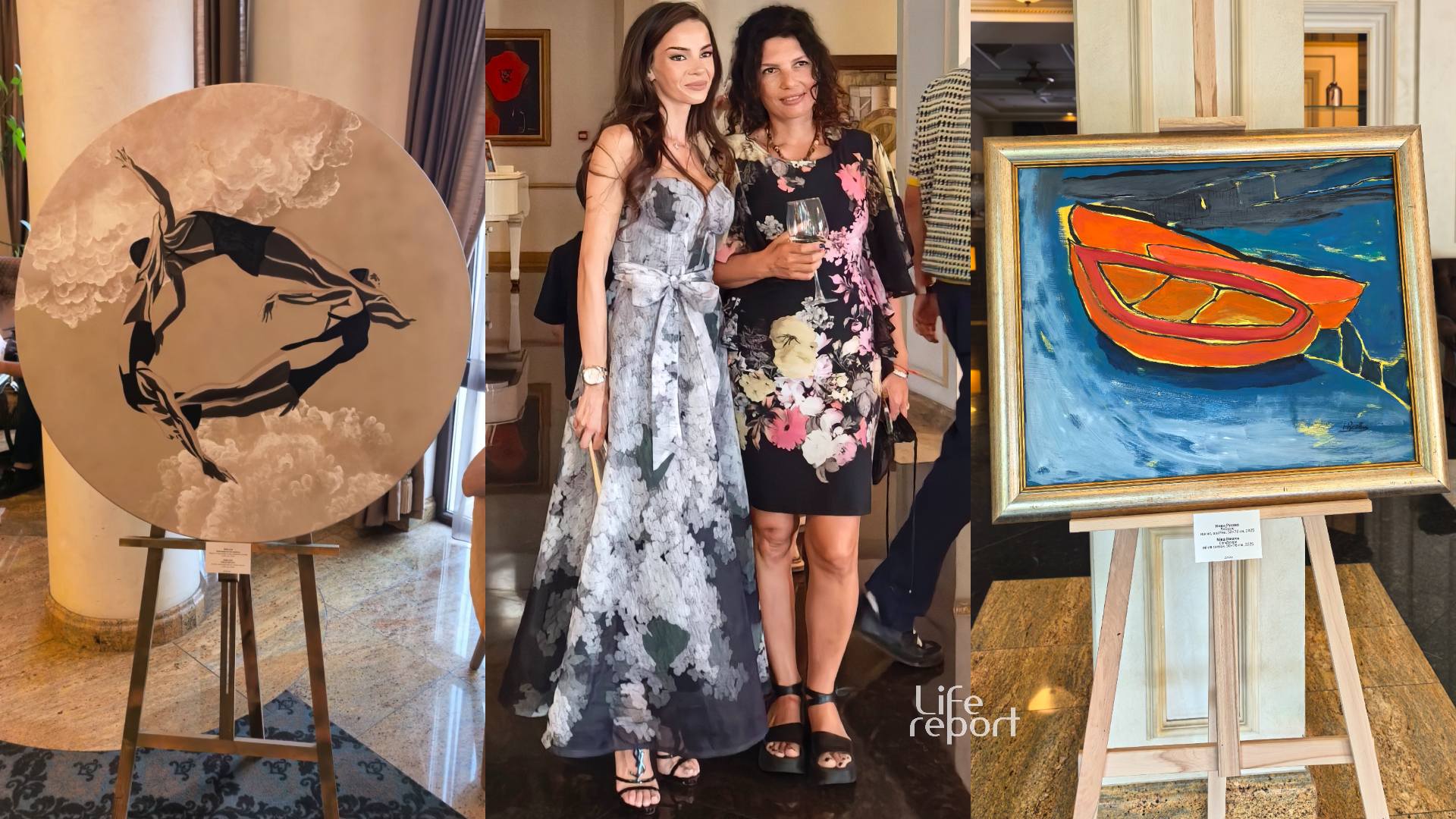
Nina Ruseva brings the intellectual rigour of a doctorate in art history and a painterly temperament that requires no academic footnote. Her canvases are vast, assertive landscapes where abstraction and figuration collide with the force of a low-pressure weather system. Large chromatic zones – ochres bleeding into ultramarine, dense fields of sienna abruptly bisected by a limb or a shadow – create a spatial depth that feels almost architectural. Standing before them, the scent of the sea drifting in from the hotel’s private beach mingles with the faint, familiar ghost of turpentine, producing a satisfying vertigo, as though the painting were a window onto a world that refuses to resolve into a simple narrative.
Across the lobby, Mika Sav – a multidisciplinary artist and Forbes 30 Under 30 honouree – responds with a visual lexicon of kinetic energy and spiritual resilience. Her practice spans bold painterly gestures and sculptural forms that capture bodies suspended in flight or caught in the elegant, terrifying arc of free fall. There is a palpable preoccupation with female strength, endurance and what might be described as the graceful sustainability of the human spirit. Her works do not merely occupy space; they seem to alter the very velocity of the air around them. A bronze torso twists skywards, defying the marble floor’s mute horizontality, while a canvas layered with swift, almost calligraphic strokes suggests a figure moving too quickly for the eye to arrest – a compelling, defiant blur.
View this post on Instagram
The fact that this dialogue unfolds not in a white-cube gallery but within a mid-century luxury hotel – originally opened in 1959 and comprehensively reimagined in 2010 – adds a subtle, ironic dimension to the viewing experience. The Grand Hotel & SPA Primoretz, with its 3,000-square-metre wellness centre, Mediterranean restaurant and expansive indoor mineral pool, offers a rare kind of luxury: the opportunity to contemplate the boundary between figuration and pure colour before surrendering to the enveloping steam of a hammam. It is a circuit few serious art destinations can claim. One may find oneself, still half-lost in Ruseva’s oceanic blues, wrapped in a robe and slippers, the faint saline tang of the Black Sea lingering on the breeze – a synaesthetic overlap that feels less like distraction than an extension of the works’ sensuality.
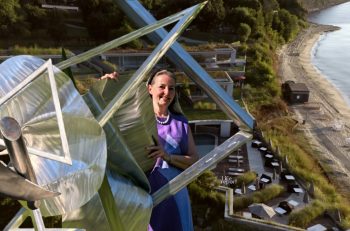
Of course, Burgas itself is not content merely to be a charming coastal destination with an admirable spa-to-art ratio. The city is actively pursuing its candidacy to become the European Capital of Culture in 2032. A dedicated foundation, Burgas 2032, now leads the bid, bringing together thirteen municipalities from across the region and having already attracted nearly 250 initial project proposals through its open call, Magazia’32. Competitive municipal funding now supports both established state institutions and an increasingly dynamic independent arts scene, transforming venues such as the Cultural Centre NHK and the Contemporary Art Centre into genuine cultural hubs. St. Anastasia Island and the historic site of Aquae Calidae have become stages for site-specific artistic interventions. Mayor Dimitar Nikolov has described the journey itself as a source of inspiration – a sentiment that may sound idealistic from a sun lounger overlooking the sea, yet here it is supported by tangible cultural investment and institutional ambition. Summer Heat is precisely the sort of high-calibre exhibition that demonstrates this is far more than a civic aspiration.
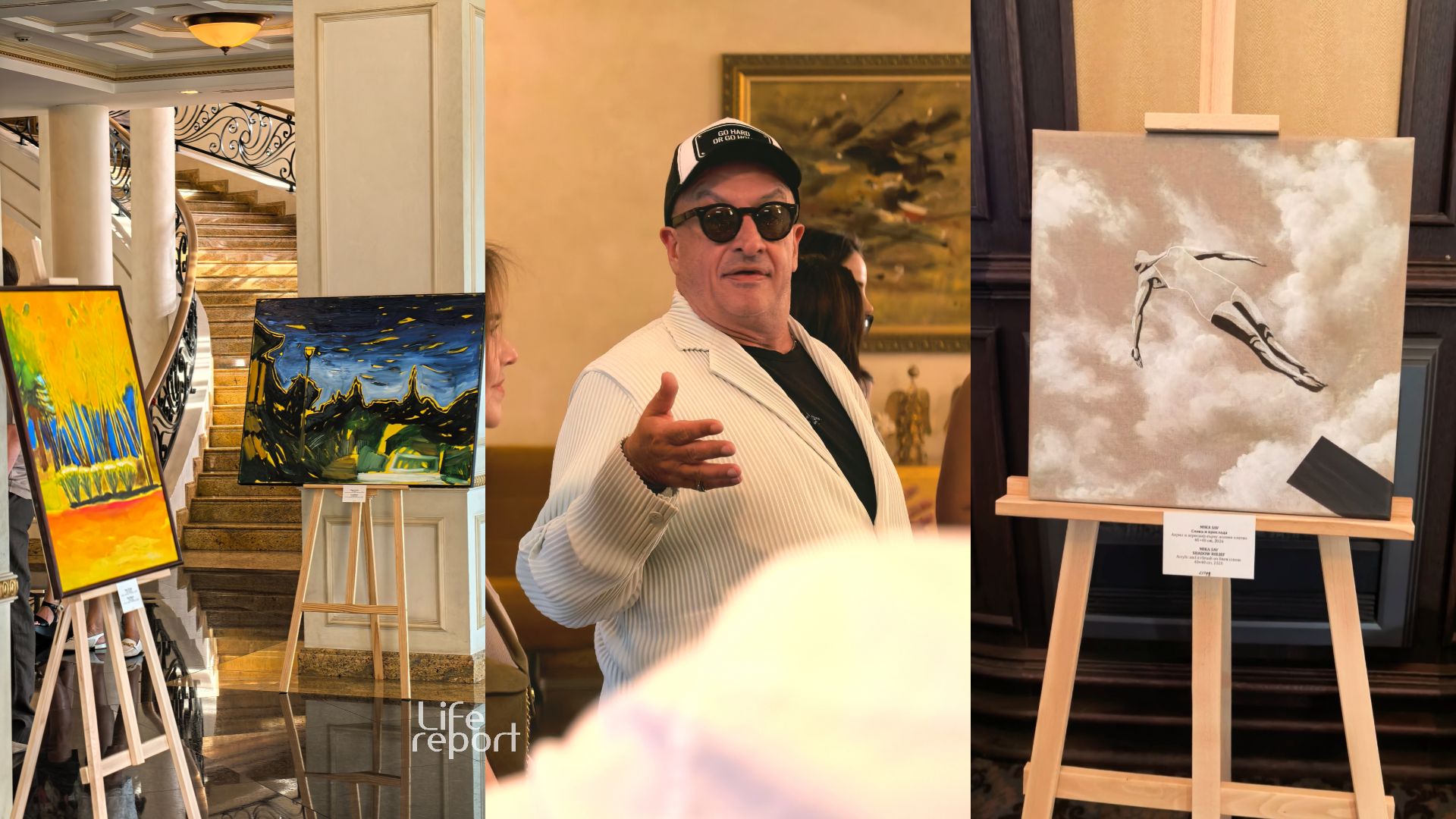
For the discerning traveller – one whose summer itinerary includes a meaningful cultural encounter as naturally as a perfectly chilled glass of rosé – this represents a rare convergence. The two artists behind the exhibition are far more than emerging local names. Ruseva’s scholarly authority and Sav’s entrepreneurial, internationally minded energy form a compelling cosmopolitan pairing that resonates well beyond the Black Sea coast. Their work explores themes of courage, identity and female agency with remarkable immediacy, yet remains refreshingly free from the didacticism that so often accompanies such subjects. Curators Stefan Stoyanov and Stefka Doncheva have previously staged exhibitions in Sofia and beyond that treat art as a language requiring neither translation nor explanation, only attention. Here, they have transformed the hotel’s expansive, light-filled lobby into a kind of secular nave, where the artworks are not simply displayed but invited to preside.
Perhaps it is the understated confidence of the entire project that proves most seductive. There are no velvet ropes, no obligatory QR codes leading to jargon-laden press releases. Instead, there is the leisurely, cinematic walk through the Sea Garden towards the hotel; the rhythmic sound of waves breaking against the shore; the welcome coolness of the lobby; and then the art – glowing, assured and entirely at ease in a place that understands hospitality as an expression of cultural intelligence. It is a reminder that true luxury is never about choosing the obvious, but about discovering the authentic, presented with effortless elegance. And if one feels inclined to contemplate a sculpture of a body suspended in free fall while soaking in a warm mineral pool, that, too, is entirely possible. This August, the smartest destination is Burgas.
ALSO READ: The Next Must-See Cultural Landmark for Art Lovers is in Sydney