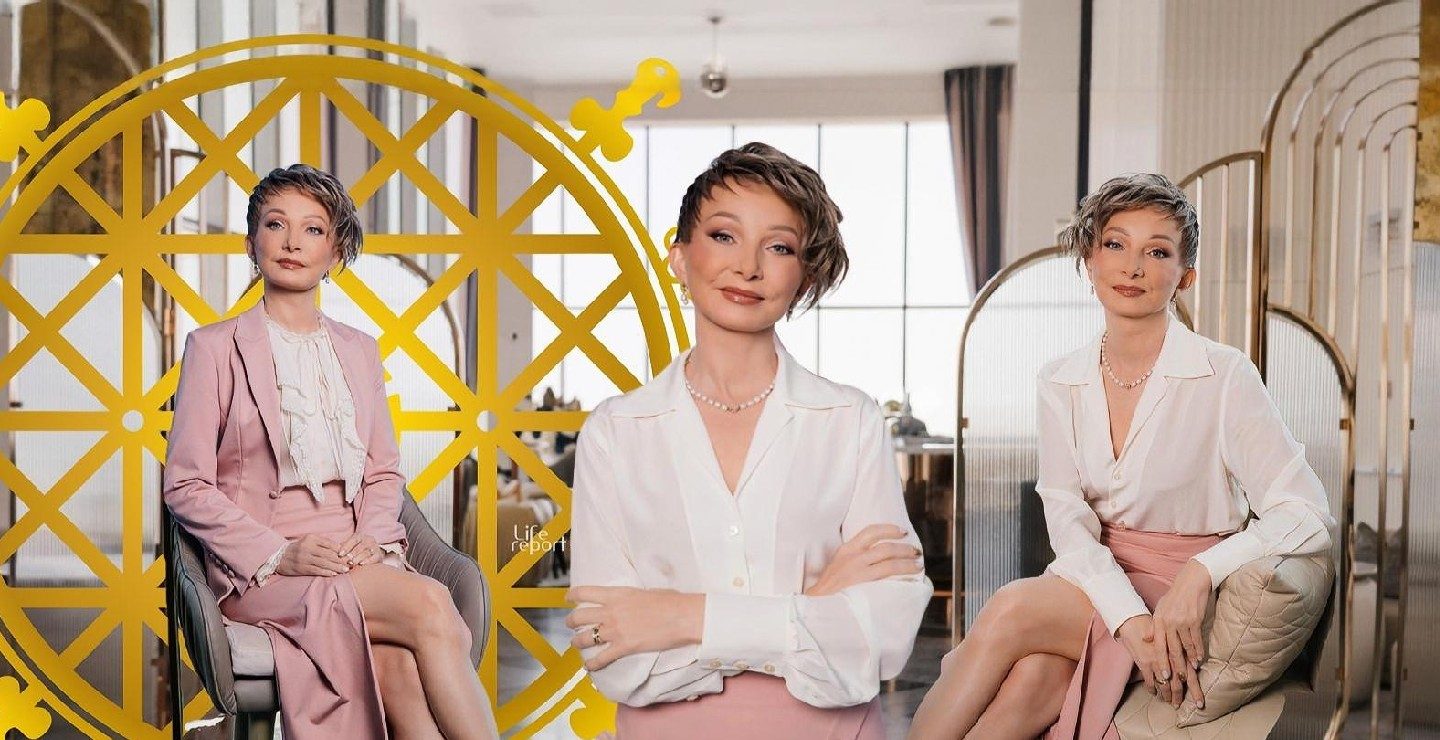
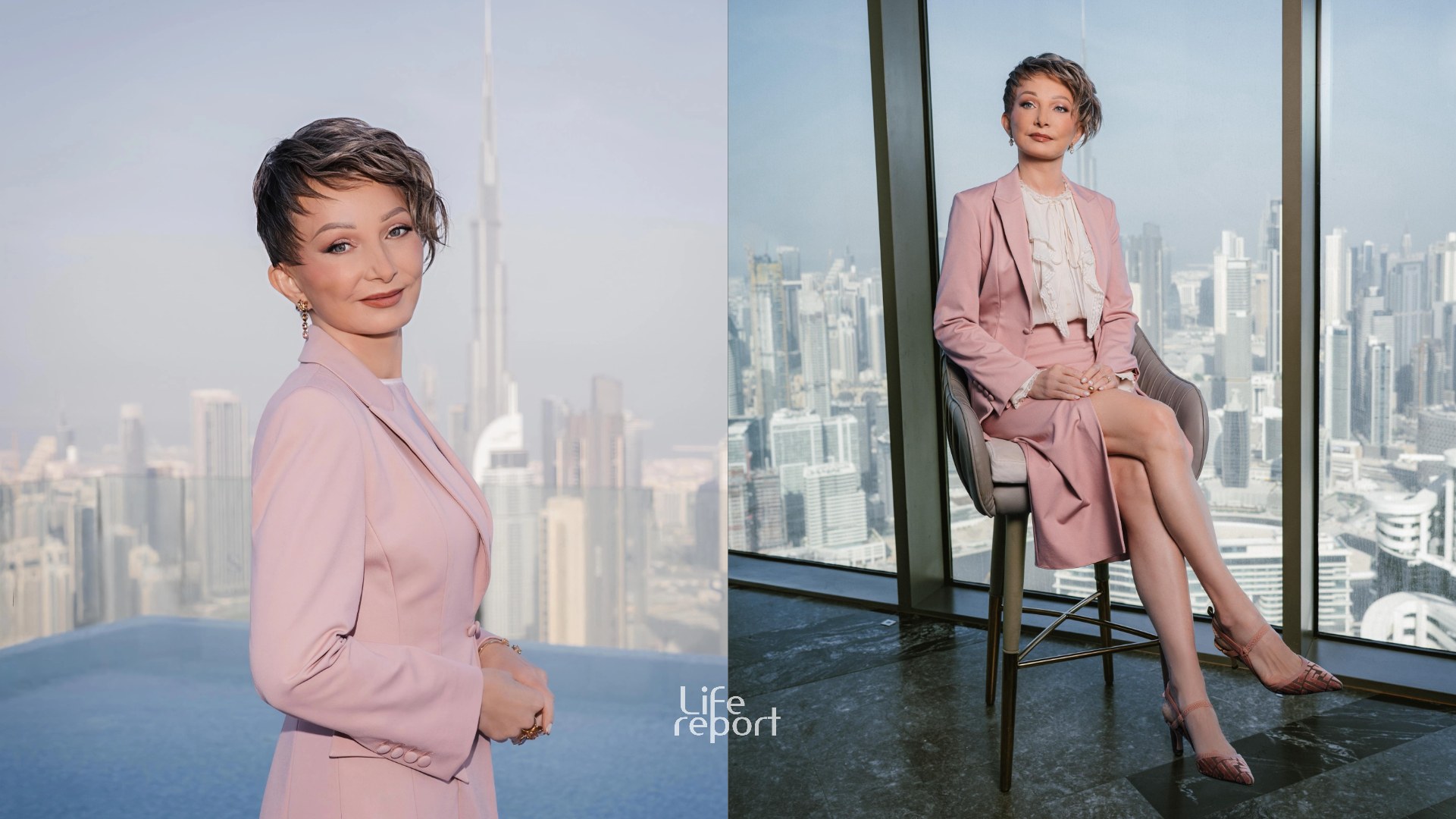
In the glass-and-chrome geometry of Dubai, where ambition often moves at the speed of capital, Arina Arinnitti speaks in a cadence that feels almost deliberately slowed – measured, intentional, as if each word has been filtered through a deeper question: to what end? It is a question that has come to define both her life and her work.
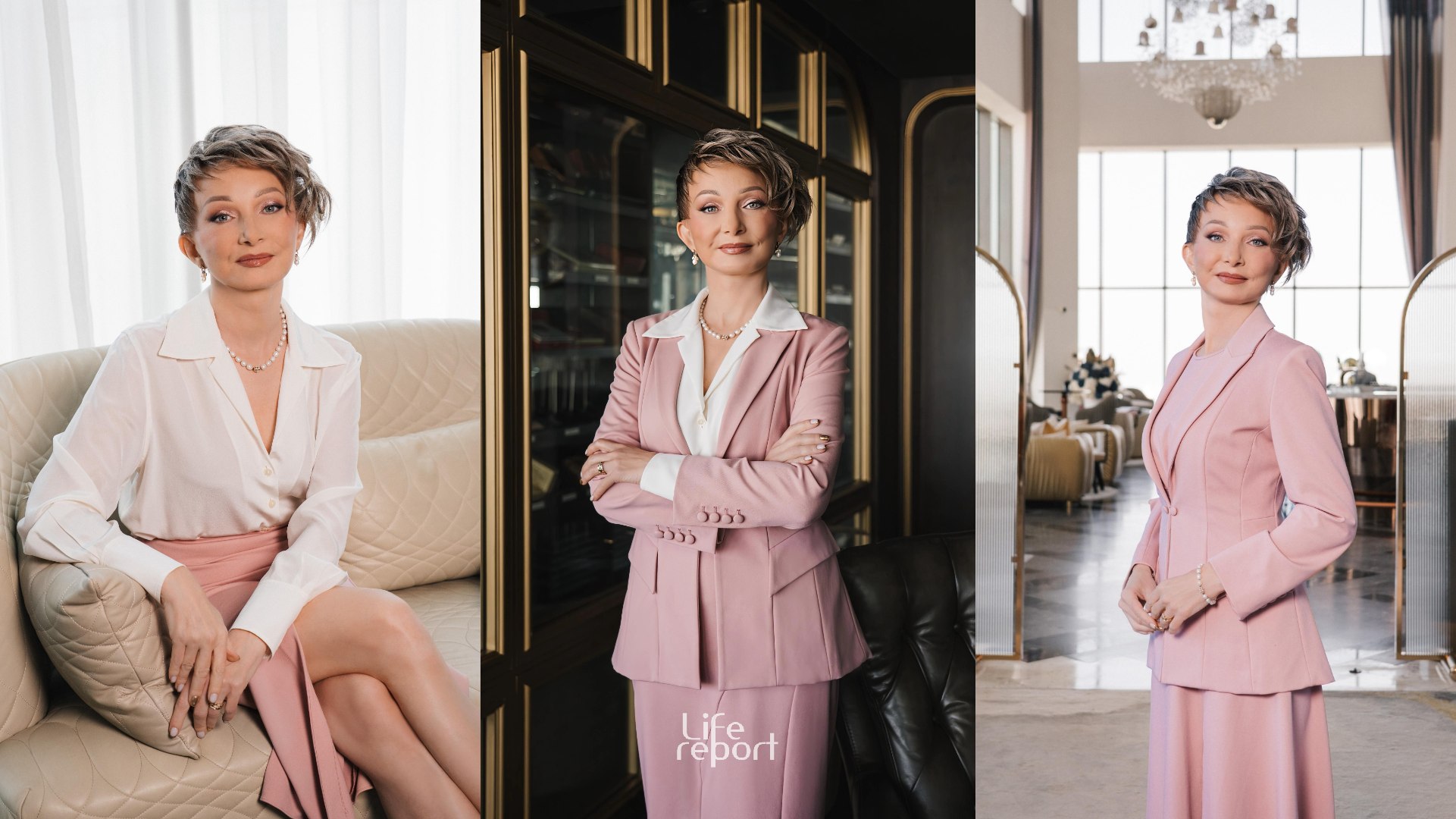
Arinnitti is not easily categorized. Founder of the Arinnitti Future of Humankind Foundation in the United States and President and CEO of Arinnitti Middle East Management Consultancy, she occupies a rare intersection – where philanthropy meets governance, and where influence is not merely accumulated but redistributed. We met on a late afternoon in Dubai, the light diffused through the tall windows of a private members’ space overlooking the city’s restless skyline.
You operate at the crossroads of philanthropy, investment, and social impact. Where does this synthesis come from?
It comes from realizing that success, as it is defined today, is fundamentally empty. I didn’t arrive at this work through inspiration. I arrived through disillusionment. When you see clearly that achievement, money, recognition – none of it gives meaning – you are left with a very uncomfortable truth: Most of what we are taught to pursue is irrelevant. And from that point, there are only two options. You either go back to sleep – or you take responsibility for creating a different reality.
I chose the second. So what I do is not philanthropy in the traditional sense. It’s not an investment in the traditional sense. It’s infrastructure for a new way of living. Places, systems, communities where people don’t just survive or succeed – but reconnect with meaning, with creation, with themselves. Because if that doesn’t exist, then everything else we build is just a more sophisticated form of emptiness.
Your foundation focuses on long-term societal impact. In a place like Dubai, which is often associated with speed and scale, how do you introduce the idea of longevity?
Dubai is actually more aligned with long-term thinking than people assume. Yes, it moves fast – but it builds for decades ahead. My role here is not to disrupt that rhythm, but to complement it. Philanthropy, when done correctly, should function like infrastructure. Invisible, but essential.
She pauses, then adds, almost as an aside: And it must be intelligent. Emotional generosity is not enough – we need strategic generosity.
This idea – strategic generosity – recurs throughout our conversation, a kind of thesis statement for her approach.
View this post on Instagram
You are also deeply involved in women’s empowerment across the Middle East. What does empowerment mean to you, beyond the rhetoric?
Empowerment is not visibility. Visibility is a byproduct. Real empowerment is access – access to capital, to education, to decision-making rooms. And most importantly, to self-perception. Many women don’t step forward not because they lack ability, but because they were never taught to see themselves as central.
And how do you change that?
She smiles, but it’s not a light smile – it carries weight: You don’t “change” it. You create environments where a different version of reality becomes possible. Through mentorship, through networks, through representation that is not symbolic but operational. When a woman sees another woman not just speaking, but leading – structurally, financially – that changes something very fundamental.
Her work in Dubai reflects this philosophy. Through partnerships, private initiatives, and curated gatherings, she has been quietly building what she calls “ecosystems of influence” – spaces where women are not just included, but positioned.
Dubai is often described as a city of opportunity. Has it lived up to that idea for you?
Completely. But not in the way people think. Opportunity here is not handed to you – it’s mirrored back to you. The city reflects your level of clarity. If you know why you are here, Dubai accelerates it. If you don’t, it amplifies the confusion.
There is something almost philosophical in her framing of the city – not as a place, but as a mechanism.
Your work also intersects with ESG and conscious capital. Do you believe business can genuinely be ethical, or is that still an aspiration?
It must be ethical. Not as a moral stance, but as a survival strategy. We are entering an era where short-term profit models are becoming obsolete. Investors are more aware, societies are more interconnected. The question is no longer “Can you make money?” but “At what cost – and for whom?”
She leans forward slightly, her voice sharpening: Conscious capital is not charity. It’s intelligence. It’s understanding that sustainability – social, environmental, human – is directly tied to long-term value.
Philanthropy is often criticized as reactive – a way to soften the consequences of systemic inequality rather than address its roots. How do you respond to that?
She nods slightly – not in agreement, but in recognition: That criticism is valid. But only within a certain model of philanthropy – the one that reacts. Most philanthropic structures are built around response: a problem appears, and resources are mobilized to manage its consequences. But reaction, by definition, comes too late. What we are building is fundamentally different. It’s not about responding to what is broken. It’s about designing conditions where certain problems don’t emerge in the first place.
That requires a different level of thinking. You’re no longer asking, “How do we help?” You’re asking, “What kind of systems produce this reality – and what would it take to redesign them?”
So for me, philanthropy is not an act of compensation. It’s an act of architecture. We are not here to balance dysfunction. We are here to create environments where a different quality of life becomes inevitable. And that shift – from reaction to design – changes everything.
View this post on Instagram
On a personal level, what drives you now? Has that initial sense of emptiness disappeared?
She pauses – longer this time, as if choosing precision over speed: It didn’t disappear. And I don’t believe it’s meant to. What we call “emptiness” is often misunderstood. Most people experience it as something missing – something to escape, to fill, to fix. But if you don’t run from it… it reveals its true nature. It’s not emptiness. It’s space. A space not yet occupied by noise, by meanings imposed from the outside, or by borrowed ambitions.
Before, that space felt like a void. Now, it feels like capacity. It’s what allows me to see clearly. To create without distortion. To not confuse movement with meaning. So what drives me now is not the need to fill something inside. It’s the responsibility to stay open enough… to let something real come through. Because the moment you lose that space – you go back to building things that look alive, but aren’t.
If you had to define your legacy – not in titles, but in impact – what would it be?
She doesn’t pause this time: That I didn’t just participate in the world as it was – I helped redefine what is possible within it. That I contributed to a shift where power is no longer divorced from consciousness, and compassion is no longer mistaken for weakness.
Where building wealth and building meaning are not separate pursuits – but the same act, done consciously. If there is a legacy, it’s not in what I built, but in what became thinkable because it existed. That a different way of living, creating, and leading stopped being an idea – and became a reality others could step into.
Outside, the city continues its relentless ascent – glass, steel, and ambition stretching toward the horizon. But what she is building moves differently. Less visible, more structural. Not a rejection of the system – but a recalibration of its foundation. And in that quiet precision, there is something far more radical than disruption: A new standard – introduced not through declaration, but through existence.