Halfway through a ranking that refuses to confuse noise with permanence, the atmosphere shifts. The marquee names have not yet arrived, but the territory between thirty and twenty-one is where luxury sheds its marketing armour and speaks in the dialects of ateliers, archival fabrics, and double-barrelled complications. These are the houses that understand cultural gravity is accumulated like a patina – slowly, and never by committee.
In Dubai’s glass-and-steel luxury landscape, a generation weaned on Supreme drops and metaverse pop-ups is discovering the quietly subversive thrill of patience: a Jaeger-LeCoultre Reverso whose mechanism remains invisible, a Hermès cashmere throw that will outlive every iPhone upgrade, a bottle of Guerlain’s Mitsouko still composed as if the Belle Époque never ended. Part III of LifeReport’s definitive index, forged from Brand Finance data, Vogue Business insight, and a healthy disdain for virality, interrogates that subtle alchemy. Heritage here is not a museum label but a living, slightly mischievous intelligence – the kind that knows a hand-stitched saddle stitch will always outlast a hype cycle. These twenty brands do not clamour for your attention; they reward the quiet hours spent learning why they never needed to.

This third instalment of The 50 Best Luxury Brands in the World descends from No. 30 to No. 21 – a rarefied stratum where influence begins to speak in the measured tones of a Geneva auction room rather than the decibels of a balance sheet. Heritage maisons, uncompromising jewellers, visionary designers, and engineering icons converge here, each having long understood that cultural gravity accrues not through virality but through the quiet seduction of permanence. Some names arrive like old friends; others feel like overdue rediscoveries. Together, they have shaped the interior lives of generations – from collectors raising a paddle beneath the chandeliers of Paris to the discerning tastemakers moving through Dubai’s private members’ clubs, DIFC gallery openings, and penthouses suspended above the Arabian Gulf, where the right watch or objet d’art communicates more than a business card ever could. These are brands that survived economic cycles, transformed entire categories, and became cultural reference points long before they ever troubled a quarterly earnings report.
ALSO READ: The Part I of The 50 Best Luxury Brands in the World
LifeReport will unveil the next ten, ranked No. 20 to No. 11, when the narrative demands it – and not a moment sooner.
Rank 30
Goyard
Founded in 1853
Category: Trunks, leather goods
Goyard: The Trunk Nobody Advertises and Everybody Wants
There is a particular kind of confidence that comes from never once buying an advertisement, and Goyard has been quietly exercising it since Edmond Goyard hand-painted his first triple-chevron canvas in 1892 – a pattern spelling out the letter Y in tribute to his ancestors, who once drove logs down the rivers of Burgundy. The house has remained almost defiantly analogue ever since: no e-commerce, no campaigns, no department-store shelf, just a handful of boutiques and a client ledger that reportedly ran from the Duke and Duchess of Windsor to Karl Lagerfeld, who kept his account open for decades. Sir Arthur Conan Doyle once commissioned a trunk that unfolded into a portable writing desk, which tells you rather more about the brand’s priorities than any marketing department could. The chevron canvas, largely unchanged for well over a century, functions less as a print than a password – one that Dubai’s Gen Z collectors are learning to speak fluently, subtitles unnecessary.
View this post on Instagram
Rank 29
Delvaux
Founded in 1829
Category: Leather goods
Delvaux: The 1829 House That Invented the Handbag and Never Once Shouted About It
Founded in Brussels a year before Belgium itself existed, Delvaux holds a distinction few houses can claim without irony: it is older than the country it calls home, and considerably older than most of the labels currently occupying the world’s luggage carousels. In 1908, the maison filed the first-ever patent for a leather handbag, which makes every “iconic” tote since, strictly speaking, a footnote. The Brillant, introduced in 1958, and the Tempête, born from a yacht’s trapeze in 1967, are still hand-sewn in Belgian and French ateliers using archive techniques that predate the concept of a logo as a marketing strategy. There is no monogram shouting from across the room here – only the quiet arithmetic of leather, stitching, and time, achieving an exclusivity comparable to Hermès in weight, if not in decibels. Delvaux, in other words, has spent nearly two centuries perfecting the art of being recognised only by those already fluent in the language.
View this post on Instagram
Rank 28
Loro Piana
Founded in 1924
Category: Textiles, apparel
Loro Piana: The Loudest Silence Money Can Buy
Vicuña, the world’s rarest natural fibre, can only be shorn once every three years, hand-collected under strict Andean conservation protocols – which perhaps explains why Loro Piana, the only house to secure it at source, treats a simple coat as though it were a diplomatic negotiation. Founded in Piedmont in 1924 and folded into LVMH’s empire in 2013 for a reported $2.6 billion, the maison has spent six generations perfecting fibres so refined they verge on abstraction: Baby Cashmere, harvested from the underfleece of infant Hircus goats, and Gift of Kings merino, engineered into outerwear that behaves more like architecture than apparel. This is the brand billionaires reach for precisely because it refuses to announce itself – no monogram required when a $600 cashmere cap can still, memorably, define a Succession character in three seconds flat. Discretion, it turns out, has never been more expensive to maintain.
View this post on Instagram
Rank 27
Brunello Cucinelli
Founded in 1978
Category: Apparel, cashmere
Brunello Cucinelli: The Billionaire Who Built an Empire on Marcus Aurelius and a $550 Loan
In 1977, a young Umbrian entrepreneur borrowed $550, dyed a batch of cashmere sweaters in colours nobody was making at the time, and sold out immediately – an origin story so modest it barely hints at the philosopher-king enterprise it became. Brunello Cucinelli has spent the decades since restoring Solomeo, his medieval hillside hamlet, into a working headquarters where lunch breaks last ninety minutes, wages sit roughly a fifth above the industry norm, and Kant’s categorical imperative is quoted with the same ease other CEOs quote quarterly earnings. He calls it “humanistic capitalism”, a doctrine borrowed from Marcus Aurelius and applied, somewhat improbably, to beige overcoats. Long before “quiet luxury” became a TikTok caption, Cucinelli was selling the same idea with none of the algorithm’s cynicism – though even philosopher-kings, as one short-seller report recently noted, are occasionally asked to show their homework.
View this post on Instagram
Rank 26
Ralph Lauren
Founded in 1967
Category: Fashion, home, hospitality
Ralph Lauren: The Bronx Boy Who Sold America Its Own Fantasy Back to Itself
Ralph Lifshitz was born in the Bronx, not Gloucestershire, which makes the entire English-manor mythology he later constructed one of the more audacious acts of self-invention in modern retail – a $50,000 loan for neckties in 1967 that eventually bought him a French Renaissance Revival mansion on Madison Avenue, complete with mahogany balustrades and the unshakable confidence to sell it back to customers as heritage. The Rhinelander flagship, the 17,000-acre Double RL Ranch in Colorado, the Polo Bar’s clubby mahogany hush – each is a stage set for a lifestyle that never technically existed until Lauren built it, brick by brick and tweed by tweed. Purple Label, hand-tailored with the obsessive precision of a Savile Row atelier that happens to answer to Wall Street, remains the label’s quiet proof that theatre and craftsmanship need not be enemies. Few designers have made nostalgia this profitable, or this convincingly their own.
View this post on Instagram
Rank 25
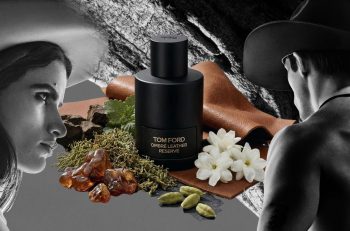
Tom Ford
Founded in 2005
Category: Fashion, beauty
Tom Ford: The Man Who Built an Empire on Sex Appeal and Sold It for $2.8 Billion
Before Tom Ford became a noun, a verb, and briefly a billion-dollar exit strategy, he was the architecture student from Santa Fe who resurrected Gucci in 1994 and, within a decade, drove its sales from $230 million to nearly $3 billion on little more than velvet, unbuttoned shirts, and the conviction that sex sells better when it is tailored. Launching his own house in 2005, Ford built an empire less on product than on persona – tuxedos cut like confessions, a lipstick shade darker than most people’s secrets, an aesthetic so unapologetically carnal it made minimalism look like a missed opportunity. That persona proved durable enough for Estée Lauder to acquire the entire brand in 2022 for $2.8 billion, outbidding Kering in the process. It remains, perhaps, the only luxury acquisition in recent memory where the founder’s personality was, quite literally, the most valuable asset on the balance sheet.
View this post on Instagram
Rank 24
Loewe
Founded in 1846
Category: Fashion, leather goods
Loewe: The 1846 House That Turned Leatherworking Into a Punchline (A Very Expensive One)
Founded in Madrid in 1846, Loewe holds the distinction of being Spain’s oldest luxury leather house – a heritage so venerable it might have calcified into museum-piece irrelevance had Jonathan Anderson not spent eleven years treating the archive like a dare rather than a rulebook. His tenure produced the Puzzle bag, an exercise in geometric origami disguised as luggage, and heels shaped like inflated balloons, proof that a craft-obsessed surrealist can make critics take fashion seriously precisely by refusing to take it seriously at all. Anderson departed for Dior in 2025, and the house passed, with LVMH’s characteristic efficiency, to Jack McCollough and Lazaro Hernandez, the Proenza Schouler duo now tasked with proving Loewe’s strangeness was a philosophy rather than a personality cult. Whatever comes next, the leather itself – hand-stitched, unshowy, stubbornly excellent – remains the one constant no creative director has dared to surrealise away.
View this post on Instagram
Rank 23
Celine
Founded in 1945
Category: Fashion, leather goods
Celine: How One House Went From Parisian Daywear to Rock Star and Back Again
Few fashion houses have executed as complete a personality transplant as Celine, which spent the Phoebe Philo years cultivating the wardrobe of a discerning Parisian who reads Sontag at weekends, then handed the keys to Hedi Slimane, who promptly replaced bourgeois restraint with leather trousers, cigarette smoke, and a rock-and-roll silhouette so razor-thin it seemed engineered for stage lighting. Slimane resurrected the Triomphe monogram and built the 16 bag into a modern staple during his seven-year tenure, nearly doubling the house’s revenue in the process – proof that nostalgia, deployed correctly, is simply strategy in vintage clothing. His departure in 2024 brought a fittingly circular twist: Michael Rider, who once designed under Philo herself, returned as creative director in 2025, tasked with reconciling two aesthetics that could scarcely be more different and somehow making both feel like the same house all along.
View this post on Instagram
Rank 22
Versace
Founded in 1978
Category: Fashion, home
Versace: How a Murdered Genius, One Family, and Now Prada Are Still Fighting Over the Same Medusa
Gianni Versace built an empire on unapologetic excess – Medusa heads, molten-gold Baroque prints, and the 1994 safety-pin dress that turned Elizabeth Hurley into a headline before “viral” was a concept anyone needed. After his 1997 murder, Donatella Versace carried that maximalism for twenty-eight years, dressing everyone from pop stars to political spouses in unmistakably Versace silhouettes, before stepping aside in 2025 for Dario Vitale, whose tenure lasted a single, well-reviewed season. Prada then acquired the house outright in a $1.4 billion deal and, by February 2026, handed creative direction to Pieter Mulier, formerly of Alaïa and long Raf Simons’s closest collaborator – a curatorial pairing that reads less like continuity than a very expensive experiment in restraint meeting excess. Whether Milan’s loudest house survives its quietest era yet remains, appropriately, the season’s most dramatic subplot.
View this post on Instagram
Rank 21
Valentino
Founded in 1960
Category: Fashion, beauty
Valentino’s Red Became a Cultural Phenomenon
Some fashion houses are recognised by a logo; Valentino is recognised by a colour. Valentino Red has long transcended the seasonal churn of luxury fashion, evolving into a visual language that speaks as fluently on a couture runway as it does in a Dubai penthouse or an impeccably lit Instagram carousel. Under Pierpaolo Piccioli, the Roman maison transformed couture into an emotionally charged exercise in romantic maximalism, while the Rockstud became one of the defining accessories of the digital generation – proof that commercial success and artistic credibility need not be strangers. Today, as Alessandro Michele writes a more eclectic new chapter for the house, Valentino continues to navigate the space between heritage and reinvention with unusual confidence, extending its universe through beauty, fragrance, and coveted accessories that resonate with a new luxury consumer. From the Born in Roma fragrance collection to couture silhouettes that continue to dominate red carpets, Valentino understands a simple truth: in an era obsessed with novelty, the rarest luxury is an identity so distinctive that it never has to shout.
View this post on Instagram
The third chapter of LifeReport’s 50 Best Luxury Brands series lingers over positions 30 to 21 – a rarefied band where the familiar and the unexpected converse like old acquaintances across a candlelit table. Each entry has been assessed through the three pillars of Heritage, Prestige and Influence, the final order emerging from a meticulous synthesis of Brand Finance, Kantar BrandZ, Deloitte and Vogue Business data, tempered by a quiet conviction that true cultural gravity cannot be reduced to a quarterly earnings report. The resulting list aspires not to mirror existing rankings but to capture something far more elusive: the enduring power to define what luxury itself means, decades after the campaign has faded and the hype has moved on. The next ten, from No. 20 to No. 11, will be unveiled when the narrative demands it – and not a moment sooner.
ALSO READ: The Part II of The 50 Best Luxury Brands in the World