By December, even Dubai’s idea of luxury can begin to feel like a rerun. Another extravagant brunch, another afternoon lost in a shopping mall, another long weekend spent circulating between the same familiar addresses, pretending that doing nothing somewhere expensive still counts as an adventure. The problem is not a lack of places to go; it is the increasingly desperate need to find somewhere that feels genuinely different. And this Eid Al Etihad, the most compelling escape may be hiding just three hours away, in a city that rarely makes the obvious luxury-travel shortlist: Yerevan.
Armenia has extended its temporary visa exemption until 1 July 2027, making spontaneous trips considerably easier for eligible UAE residents. The arrangement covers nationals of 111 countries holding qualifying residence permits issued by the UAE, another GCC state, the United States, an EU member state or a Schengen Area country. The permit must be valid for at least six months from arrival, while eligible visitors can stay for up to 180 days within a one-year period. For millennials and Gen Z travellers accustomed to the polished predictability of the UAE’s luxury scene, this is more than a convenient change to entry requirements. It is an opportunity to escape the carefully choreographed familiar and discover a destination where the best experiences cannot necessarily be booked by the pool.
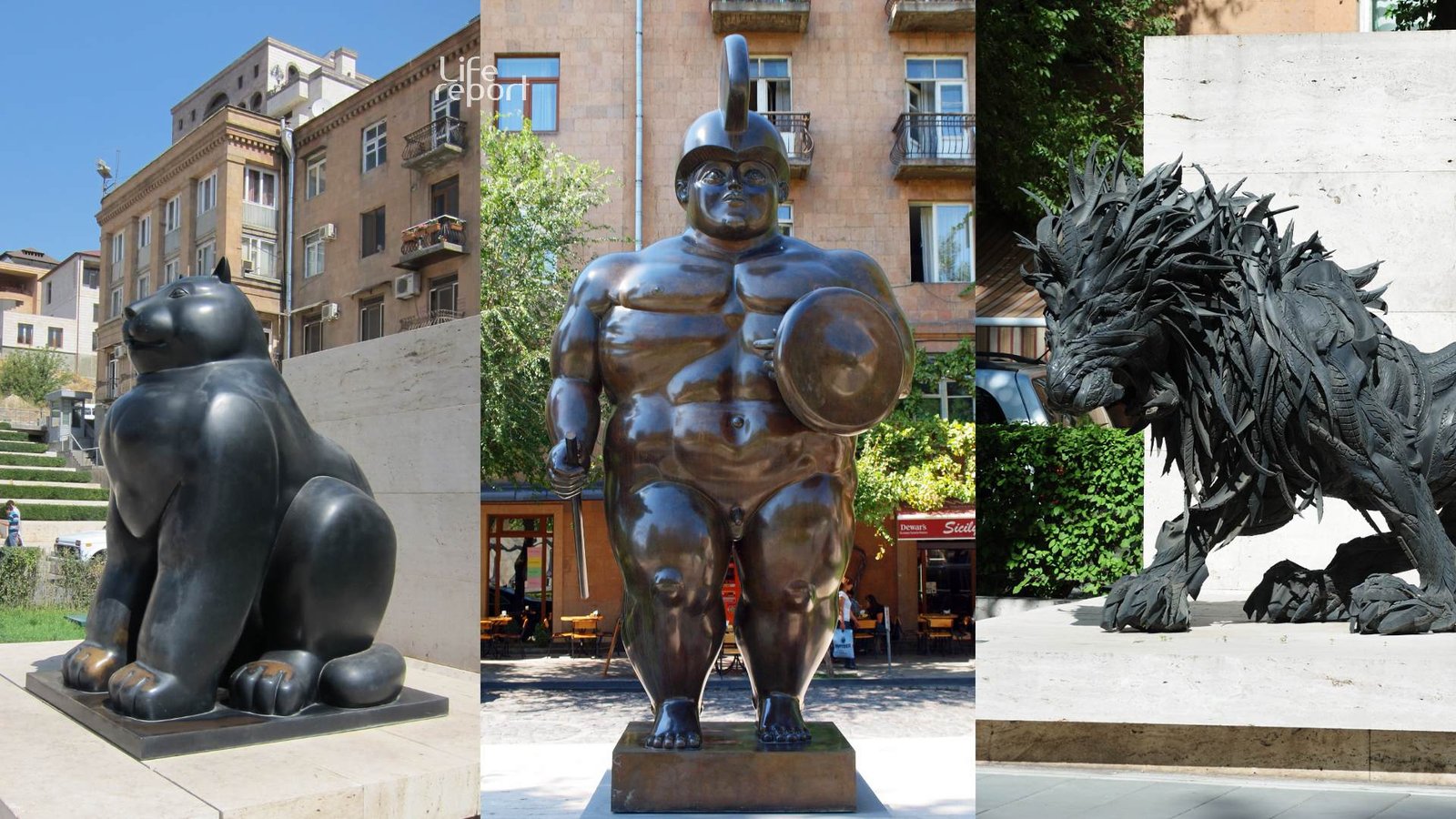
The flight from Dubai is mercifully brief, a three-hour escape from the Gulf’s perpetual air-conditioned hum into a city that wears its history with the nonchalance of an old-money aunt who has no need to prove her lineage. Yerevan does not greet you with the performative grandeur of a Gulf metropolis. It greets you with tufa stone in shades of rose and apricot, and with an urban topography that rewards walking. The city centre unfolds on foot, and it is here that the first, gentle irony reveals itself: the city’s most Instagrammed landmark is, in essence, a staircase. The Cascade – a monumental Soviet-era architectural complex of terraces and escalators, originally conceived by architect Alexander Tamanyan and later developed by Yerevan’s chief architect, Jim Torosyan, alongside architects Sargis Gurzadyan and Aslan Mkhitaryan – is less a tourist attraction than a civic living room. Its 572 steps form a monumental promenade where contemporary sculpture does the work of conversation. Fernando Botero’s bronze Cat, an irresistibly rotund and deliciously absurd creature created in 1988, sits in the sculpture garden with the smugness of a banker on holiday. Nearby, Ji Yong-Ho’s Lion 2 (2008) – a beast assembled from discarded tyres over a stainless-steel framework, its musculature a feat of layered rubber – stands as a monument to the elegant lie of realism. Up close, the lion is a tyre yard. From a distance, it breathes. It is the perfect metaphor for a city that rewards the second look.
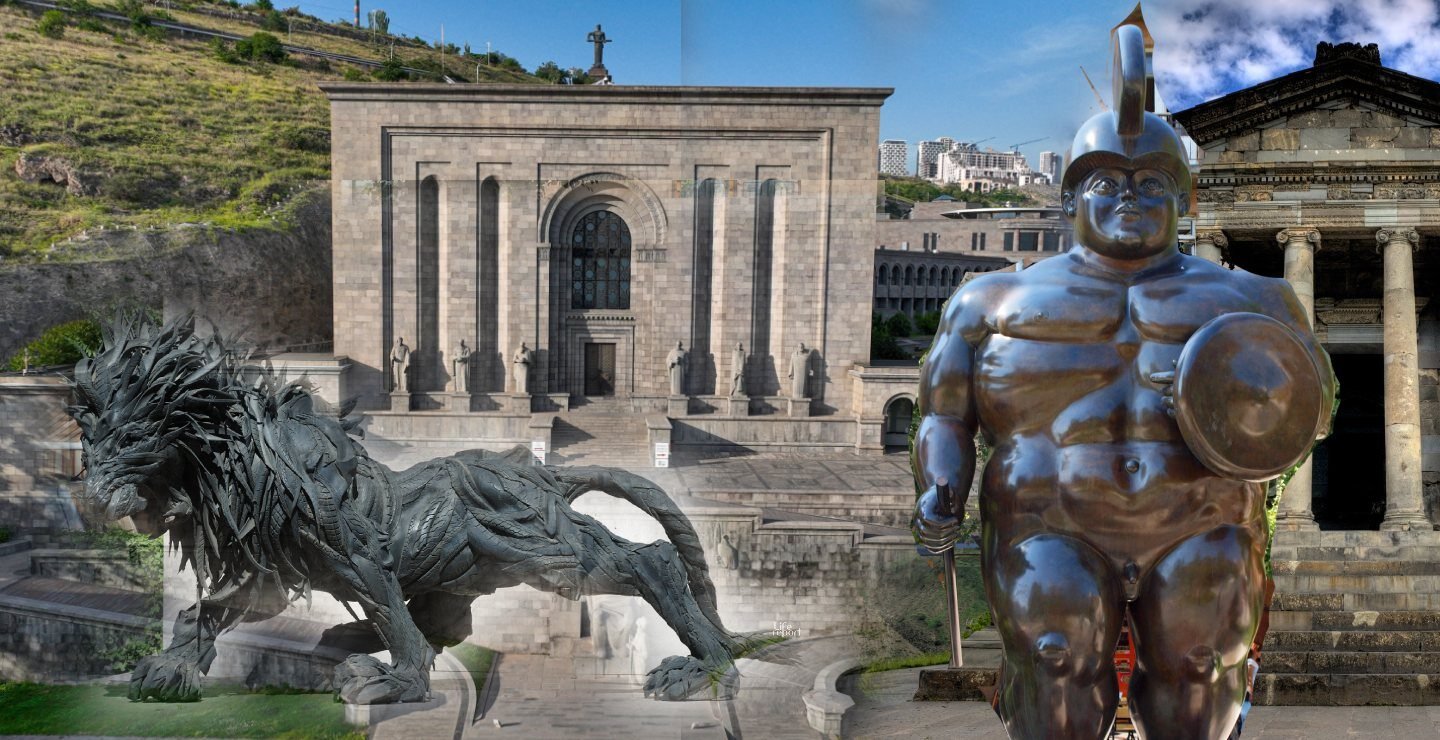
But the true texture of Yerevan’s creative renaissance is not found in its official monuments. It is in the coffee. For decades, the city laboured under what one local roaster uncharitably calls a ‘Soviet espresso-and-Nescafé hangover’, a period when caffeine was a utility rather than a ritual. That era is over. On Saryan Street and its surrounding lanes, a third-wave coffee culture has taken hold – Lumen Coffee, Drip Roastery and a constellation of minimalist cafés where Ethiopian natural-process beans are treated with the same reverence as a Matenadaran manuscript. The Matenadaran, for its part, remains the city’s intellectual conscience: an imposing basalt repository of knowledge housing a collection of approximately 23,000 manuscripts, fragments and talismans. Its illuminated miniatures are a reminder that this is a culture that was preserving art and science while much of Europe was still arguing about the correct way to salt meat. For older children – and adults who have never quite outgrown the thrill of encountering something genuinely ancient – the Matenadaran is not merely a museum; it is a corrective to the notion that history began with the internet.
View this post on Instagram
The mountain interlude is obligatory, and mercifully brief. Tsaghkadzor, about an hour’s drive from the capital, is a pine-forested town where the medieval Kecharis Monastery sits beneath slopes that, in December, are crisp rather than forbidding. The cable car towards Mount Teghenis offers the kind of view that makes a child forget the iPad and a parent forget the inbox. The Tsaghkadzor Marriott Hotel is among the town’s established international properties, while its wider hospitality offering includes spa hotels and mountain retreats. The spa culture is suitably robust for those whose idea of alpine activity is a hot-stone massage rather than a black run. This is not Courchevel, and it knows it. That is its charm.
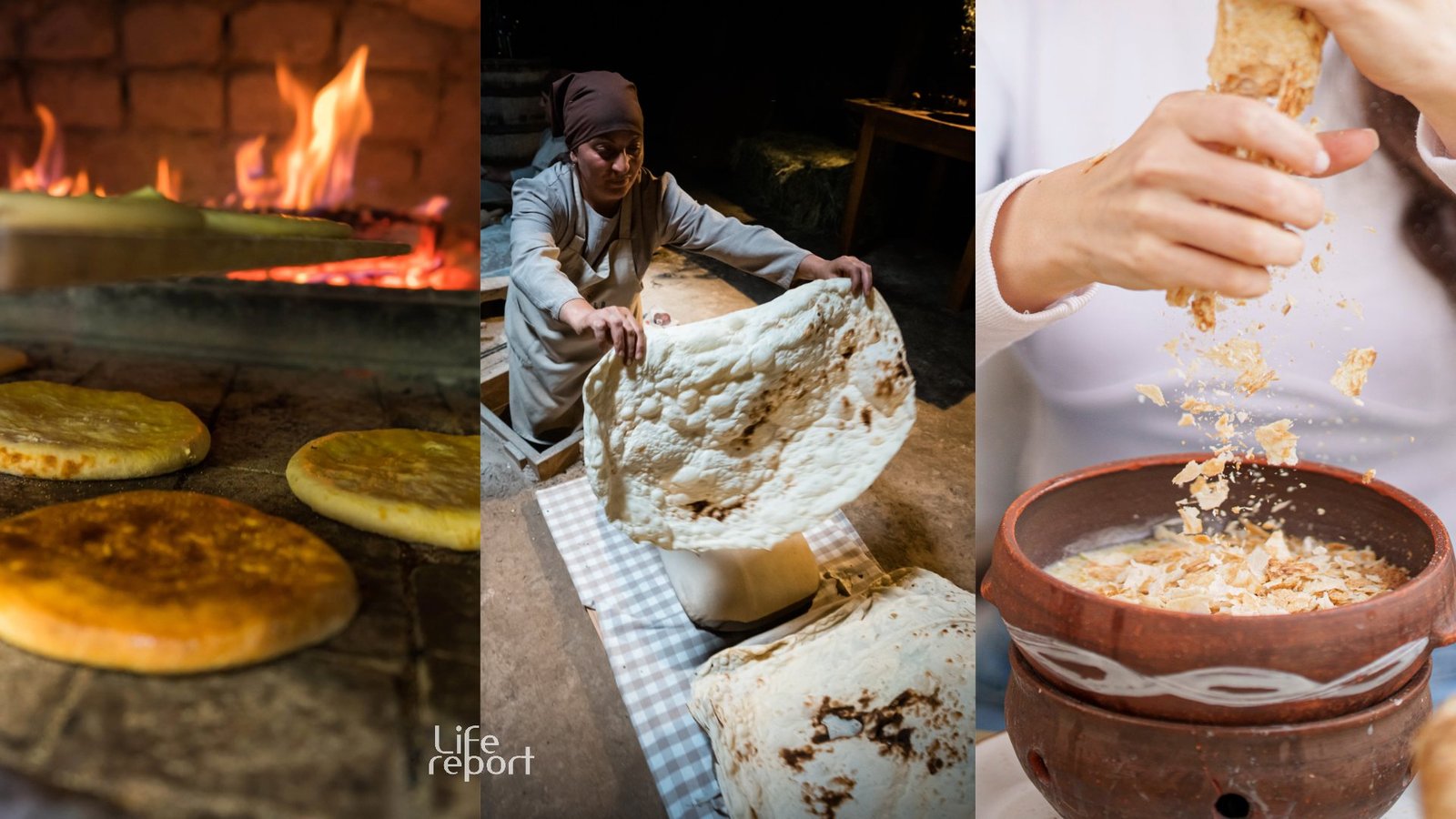
But perhaps the most quietly radical experience in Armenia is the one that takes place in a village kitchen. Lavash, the paper-thin flatbread whose preparation, meaning and appearance as an expression of Armenian culture were inscribed on UNESCO’s Representative List of the Intangible Cultural Heritage of Humanity in 2014, is not something one merely observes. At workshops in villages such as Tsaghkunk, children are handed dough and invited to roll, stretch and slap it against the scorching inner wall of a traditional tonir oven. Less than a minute later, the bread is blistered, pliable and ready to be torn apart and eaten with local cheese and herbs. Restaurateur Artak Zargaryan, who helped develop Tsaghkunk as part of The Cradle, an NGO dedicated to restoring ancient Armenian sites, describes the process as ‘a form of worship, a spiritual experience’. One need not share his mysticism to recognise the value of a holiday in which a child’s hands are occupied with something other than a touchscreen. Gata, the traditional sweet pastry, offers a similarly hands-on diversion, and the resulting sugar high is earned rather than administered.
East of Yerevan, the country provides its historical counterweight. The first-century Temple of Garni, perched above the Azat Gorge, is the kind of Greco-Roman folly that makes one wonder what the Romans were thinking when they decided that this particular edge of the empire was worth the commute. Nearby, the Geghard Monastery is partly carved into the living rock, its chambers a testament to a faith that expressed itself in architecture rather than edicts. And beneath Garni, the basalt columns of the Symphony of Stones – a natural formation of strikingly regular hexagonal shapes – offer a moment of pure, unmediated awe that no amount of hotel concierge service can manufacture.
Back in the city, Vernissage, the open-air market near Republic Square, remains one of the most honest forms of retail therapy in the Caucasus. It is not a luxury boutique, and it does not pretend to be. It is a sprawling collection of handmade jewellery, ceramics, woodcarvings, carpets and Soviet-era memorabilia, where haggling is not merely accepted but expected, and where the pleasure lies as much in the transaction as in the object. For a generation raised on the frictionless efficiency of e-commerce, Vernissage is a reminder that the best souvenirs are often the ones you have to argue for. The city’s fashion scene, meanwhile, has been quietly asserting itself. Yerevan Fashion Week, which held its fourth edition in October 2026, brought together Armenian and international designers, industry professionals and global media, further strengthening the city’s position as an emerging fashion destination. The irony is not lost on anyone who remembers when ‘Soviet modernism’ was a slur rather than a selling point.
And then there is the wine. Armenia’s winemaking history stretches back millennia – literally. Archaeological excavations at the Areni-1 cave complex in the Vayots Dzor region uncovered evidence of a winery dating back to around 4100 BCE, widely regarded as the oldest known winery in the world. Today, the Ararat Valley, with its volcanic soils and distinctive microclimates, is one of the country’s important wine-producing regions. Wineries such as Karas and Voskeni are helping bring indigenous grape varieties, including Areni and Voskehat, to increasingly international audiences. A glass of Areni, deep and peppery, tastes like the land it came from: ancient, a little rugged and entirely unconcerned with fashion. It is the kind of wine that might make a Michelin inspector – should one ever make the trip – reach for a second glass and a notebook.
The practicalities, for once, do not intrude on the pleasure. Flydubai operates direct flights daily from Dubai, Air Arabia connects Yerevan with Sharjah, and Air Arabia Abu Dhabi offers direct flights from the capital. For eligible travellers, the temporary visa exemption remains in force until 1 July 2027. The residence permit must be presented as a physical card or a sticker in the passport, and its validity must extend for at least six months from the date of arrival. The exemption is available only to nationals of the 111 designated countries, so checking the latest eligibility list before booking remains essential. The holiday can begin with a reservation, not a queue. What awaits is not a destination that shouts for attention, but one that rewards it – a country where a staircase becomes an art gallery, a tyre becomes a lion, a piece of dough becomes a living heritage, and a weekend is long enough to remember what a weekend is actually for. The UAE’s luxury traveller has spent years perfecting the art of the obvious. Armenia offers something rarer: the luxury of the unexpected.
ALSO READ: Why Dubai Men Are Ditching Designer Logos for Bespoke Tailoring