Let’s be honest: most luxury brand rankings are spreadsheet theatre – an annual ritual in which a management consultancy crowns whichever conglomerate shouted the loudest last quarter, mistaking a spike in revenue for a soul.
LifeReport’s 50 Best Luxury Brands in the World is a different kind of index. It’s a decanter poured slowly. We’ve abandoned the tyranny of the single valuation table and returned to the fundamentals that actually matter once the receipt has faded: Heritage – how stubbornly a house clings to its origins; Prestige – how many hands, years and silent, obsessive gestures it takes to craft a single object; and Influence – the rare ability to change culture rather than merely rent it.
The result is a composite portrait drawn from the Brand Finance Luxury & Premium 50, Kantar BrandZ, Deloitte’s Global Powers of Luxury Goods, the Vogue Business Index, and a healthy scepticism towards anything that trends on TikTok for the wrong reasons. It rewards patience over publicity, artisanal obsession over algorithm-friendly minimalism, and those beautifully inconvenient legacies that cannot be reduced to a market capitalisation.
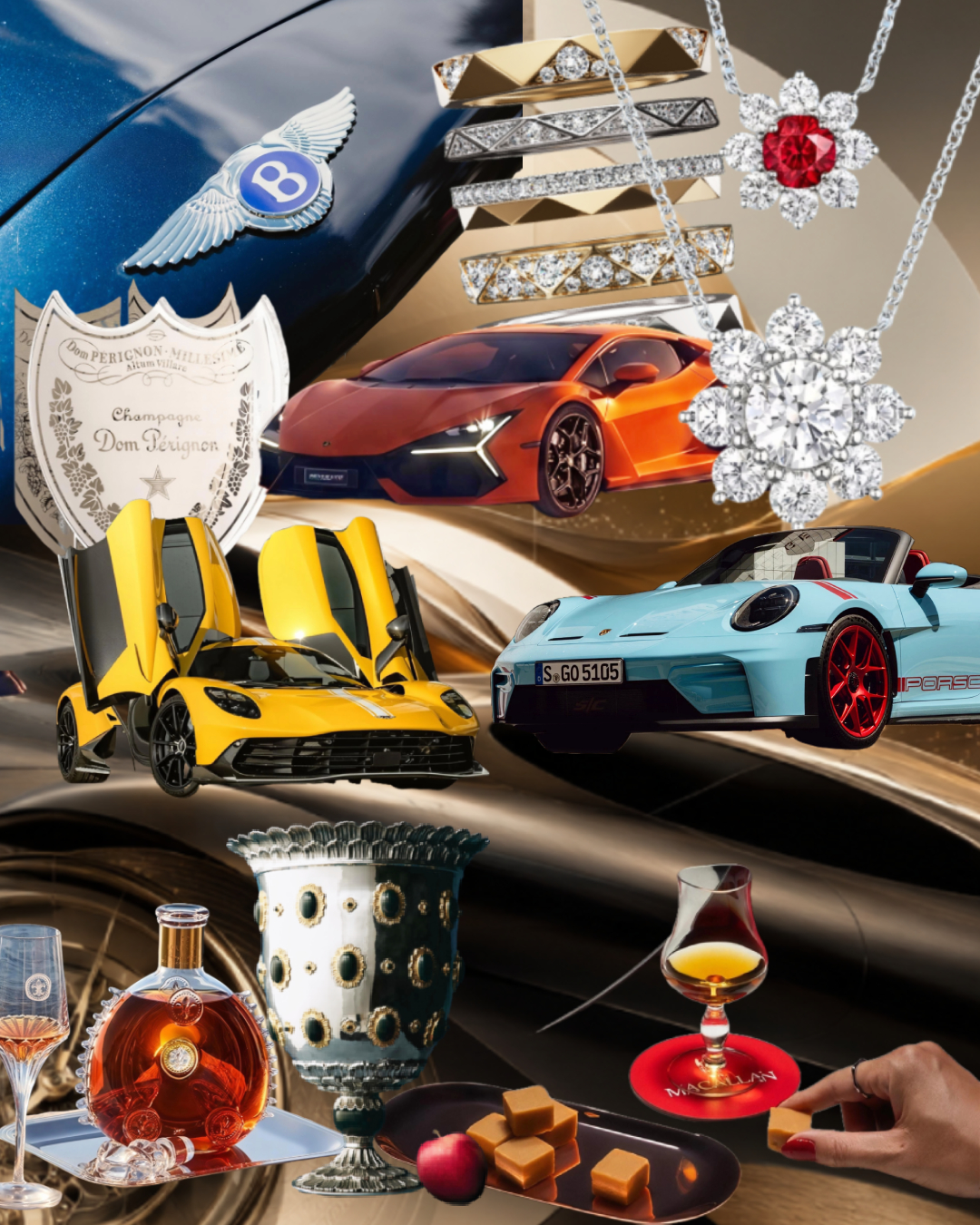
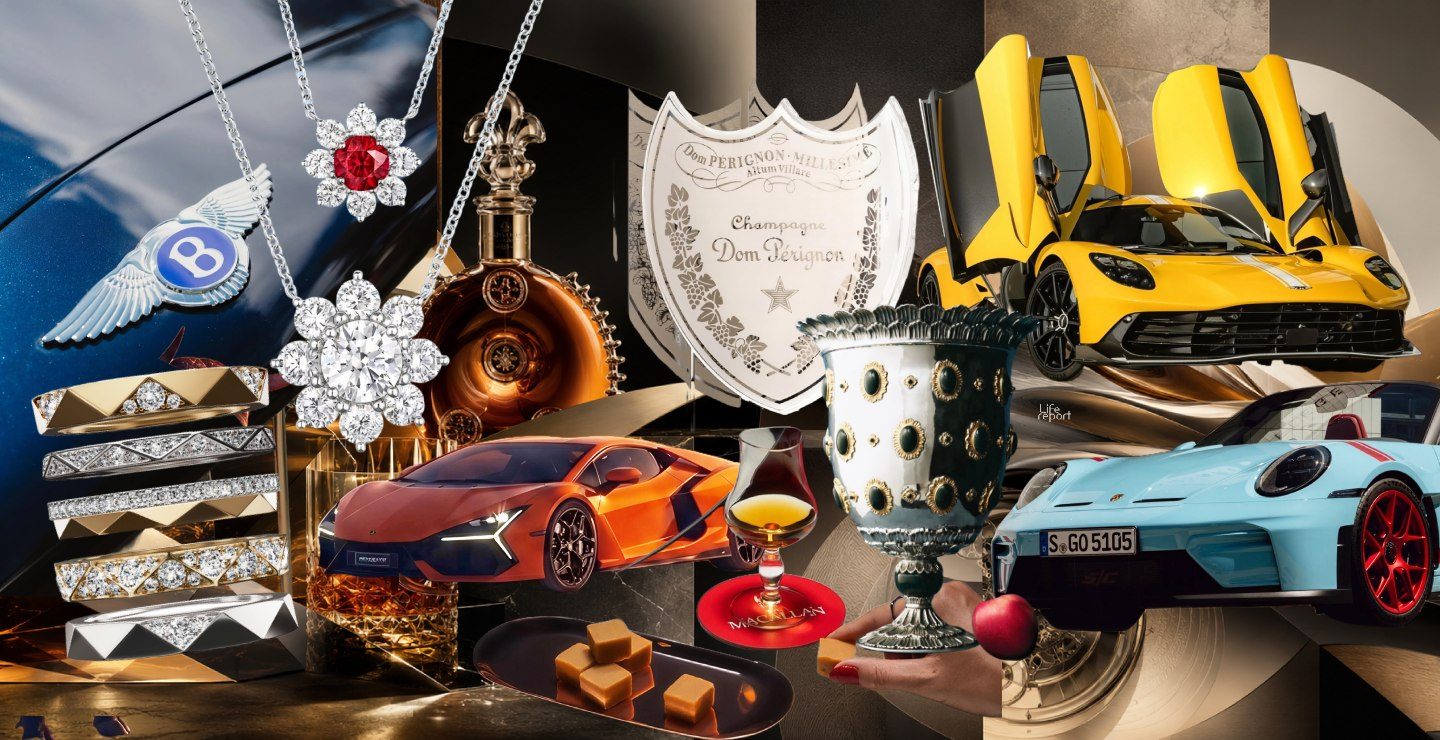
This is the first instalment of the series, and we’re beginning at the wrong end – the delicious threshold where numbers fifty through forty-one await. You’ll find familiar names behaving more radically than their reputations suggest, alongside a handful of surprises that may leave you wondering why you ever trusted another ranking in the first place. From a Speyside distillery whose bottles outsell Warhols at auction to a supercar dynasty born entirely from a bruised ego, these are the houses that have outlasted empires, reshaped their categories and – if you’ve spent any time in Dubai’s private members’ clubs, on its velvet-lined roads or inside its hushed VIP salons – probably already occupy a discreet corner of your life.
The next ten brands, ranked forty through thirty-one, are already being prepared for the second instalment. Keep LifeReport close. The countdown, like the things it celebrates, is in no hurry at all.
Rank 50
The Macallan
Founded in 1824
Category: Single Malt Whisky
The Macallan: Proof That Some Investments Actually Taste Better With Age
There is something faintly absurd about a whisky commanding more at auction than a Warhol, and yet The Macallan has made a habit of it. Its 1926 Valerio Adami, signed by the Italian artist himself, sold for US$2.7 million at Sotheby’s, a record no bottle has yet surpassed. The alchemy behind this is less mystique than method: sherry-seasoned European oak sourced from Jerez and matured beneath Speyside’s damp, patient skies, doing quieter work than any marketing department ever could. Even the distillery refuses half-measures. Its grass-roofed home by Rogers Stirk Harbour + Partners undulates across the Highlands like an amphitheatre built for a congregation of one. To drink it is less an indulgence than an education – a masterclass, served neat, in why the finest luxury rarely announces itself. Fittingly, Dubai’s connoisseurs have quietly made it their signature pour.
View this post on Instagram
Rank 49
Louis XIII
Founded in 1874
Category: Cognac
Louis XIII: The Cognac That Outlives Everyone Who Made It
No cellar master who blends Louis XIII will ever taste the eaux-de-vie he sets aside for it – a fact so quietly absurd it borders on poetry, especially in an age when luxury rarely asks anyone to work for a reward they’ll never receive. Rémy Martin’s flagship draws on up to 1,200 Grande Champagne eaux-de-vie aged between forty and one hundred years, the work of four successive cellar masters passing a single blend across a century like a baton in the world’s slowest, most fragrant relay. It arrives, inevitably, in hand-blown Baccarat crystal, adorned with the fleur-de-lis and weighing nearly three pounds before a single drop has been poured – heritage rendered in glass, once sold to kings, now to tycoons who understand that some things simply cannot be rushed, regardless of the size of the yacht.
View this post on Instagram
Rank 48
Dom Pérignon
Founded in 1921 (first vintage; produced by Moët & Chandon, founded 1743)
Category: Champagne
Dom Pérignon: The Only Champagne With a Waiting Period Longer Than Your Attention Span
No other Champagne makes you wait quite like this one – a prestige cuvée that refuses to release a vintage until it reaches its first “Plénitude”, the moment chef de cave Vincent Chaperon and his predecessors decide a harvest has finally said everything it has to say. It is, in effect, patience monetised. Every vintage becomes a standalone manifesto rather than another annual release, explaining why collectors treat exceptional years much as others treat a Basquiat. The house has long understood that Champagne and contemporary art share a common currency. Collaborations with Lady Gaga, Jeff Koons and Tokujin Yoshioka have transformed bottles into sculptures, blurring the boundary between cellar and gallery with effortless confidence. What you’re really buying, beneath the gold foil and the Benedictine mythology, is a single harvest’s opinion of itself – bottled, matured and finally allowed to speak.
View this post on Instagram
Rank 47
Porsche
Founded in 1931
Category: Automotive
Porsche 911: The One Car That Never Needed a Rebrand
No other object in the luxury canon has spent six decades getting better without once pretending to be new. The 911’s silhouette has evolved with the discipline of a bespoke suit tailored generation after generation, without ever requiring reinvention to remain desirable. Porsche’s Sonderwunsch atelier now takes that philosophy even further, allowing a horse breeder to name a paint colour after his daughter or an architect to immortalise his dog in “Otto Yellow”, transforming what other marques call an options list into something closer to a commissioned portrait. This is precisely why the 911 remains, by most industry accounts, the most profitable sports car ever built. It sells not horsepower alone but continuity – the rare luxury of choosing a legacy rather than simply a launch. Somewhere between Nürburgring lap times and a six-figure Sonderwunsch invoice lies the real product: proof that true prestige, unlike most things that claim the word, has never needed to shout.
View this post on Instagram
Rank 46
Lamborghini
Founded in 1963
Category: Automotive
Lamborghini: The Supercar Built Entirely Out of Spite
Every legend needs an origin story, and few in luxury are as gloriously petty as this one: a tractor magnate, tired of Enzo Ferrari’s dismissive shrug over a faulty clutch, went home and built an entire supercar dynasty simply to prove a point. That grudge gave birth to the Miura in 1966, the first mid-engined V12 road car and the template every wedge-shaped Lamborghini since has quietly revered, from the Countach’s poster-bedroom fame to the Aventador’s operatic farewell. Where Ferrari pursued lap times, Lamborghini pursued spectacle – scissor doors, angular bodywork and a naturally aspirated shriek engineered to announce itself long before it comes into view. The result is not merely a car but Italian temperament rendered in carbon fibre, extroversion elevated to an engineering philosophy. More than six decades on, the raging bull still answers to no one, least of all good taste – which was, after all, entirely the point.
View this post on Instagram
Rank 45
Aston Martin
Founded in 1913
Category: Automotive
Aston Martin: The Only Car Brand With Its Own Stunt Double
More than sixty years on, the joke practically writes itself: no other manufacturer has spent six decades allowing a fictional spy to do its marketing, and none has managed it with quite the same effortless charm. The DB5’s appearance in Goldfinger established a formula the DB series has never truly abandoned – a restrained silhouette, understated menace and the reassuring sense that elegance and danger were never mutually exclusive. Q by Aston Martin, the marque’s bespoke atelier, now extends that mythology into hardware. The limited-edition DB12 Goldfinger Edition, one of just sixty examples, arrives finished in the same Silver Birch paint as Bond’s original DB5, complete with gold accents, treating personalisation with the same reverence a Savile Row tailor reserves for a second fitting. Fittingly, Ian Fleming himself ultimately selected Aston Martin as Bond’s car of choice, proof that the finest luxury endorsements were never purchased – they were simply, quietly, inevitable.
View this post on Instagram
Rank 44
Bentley
Founded in 1919
Category: Automotive
Bentley: The Grand Tourer That Treats Torque Like a Love Language
There is something almost indecent about the effortless way a Bentley covers distance – immense torque delivered with the composure of someone who has never once been in a hurry, wrapped in mirror-matched veneers hand-selected from timber the wood shop has quietly been reserving for precisely this occasion. Under Volkswagen Group’s stewardship, the Flying B has not so much modernised as doubled down on its obsessions. Mulliner, Bentley’s historic bespoke division, now sees more than seventy per cent of buyers choosing some degree of personalisation, from unique finishes to full coachbuilt commissions such as the Batur, each requiring around eight months of painstaking hand craftsmanship at the Crewe factory. This is luxury measured not in horsepower but in patience – platinum organ stops, laser-etched veneers and colour palettes treated with the same seasonal reverence as a Paris fashion house’s runway collection. The experience feels less like driving a motor car than being quietly, thoroughly indulged by one.
View this post on Instagram
Rank 43
Buccellati
Founded in 1919
Category: Jewellery & Silverware
Buccellati: The House That Made Gold Behave Like Lace
At some point in the history of luxury, someone decided diamonds should do all the talking. Buccellati has spent more than a century quietly disagreeing. When Mario Buccellati established the house in Milan in 1919, earning the title “Prince of Goldsmiths”, he built his reputation on techniques so painstaking that they remain virtually impossible to imitate. Its signature tulle engraving transforms precious metal into something resembling Venetian lace, every tiny opening painstakingly pierced and refined by hand before it earns the right to exist. Equally distinctive is the house’s rigato engraving, whose delicate parallel lines catch and reflect light with the softness of silk stirred by a gentle breeze. Today, under Richemont alongside Cartier and Van Cleef & Arpels, Buccellati remains unmistakably Milanese in spirit. Guided by Andrea Buccellati and Lucrezia Buccellati, the maison continues to treat gemstones as supporting actors rather than the stars of the performance. Think of it as the Renaissance answer to French maximalism. Where diamonds shout, Buccellati allows gold to whisper – and somehow, that whisper carries even further.
View this post on Instagram
Rank 42
Harry Winston
Founded in 1932
Category: High Jewellery & Watches
Harry Winston: The Man Who Turned the Red Carpet Into a Showroom
Marilyn Monroe said it best when she sang his name on screen, and she was hardly exaggerating. Harry Winston built an empire on the radical idea that diamonds photograph even better than they sell. In 1944, he lent Jennifer Jones his jewels for the Academy Awards, effectively inventing the modern red-carpet jewellery loan – a marketing strategy the luxury industry now treats as standard practice. He later donated the legendary Hope Diamond to the Smithsonian Institution rather than keeping it in a private vault, a decision that revealed everything about a man who understood that mystique often outlasts ownership. From Halle Berry’s unforgettable Pumpkin Diamond to Gwyneth Paltrow’s princess-cut necklace and Katharine Hepburn’s celebrated Inquisition Necklace, eight decades of Oscar history have shimmered beneath Winston stones. Every awards season, somewhere between the acceptance speech and the after-party, a Harry Winston diamond is doing as much publicity work as the film itself.
View this post on Instagram
Rank 41
Graff
Founded in 1960
Category: High Jewellery
Graff: The House That Bought a Tennis Ball for US$53 Million and Made It Priceless
There is a particular kind of confidence required to look at a 1,109-carat rough diamond – roughly the size of, and one imagines possessing much the same initial appeal as, a tennis ball – and see 302 flawless carats waiting patiently inside. Laurence Graff possessed precisely that confidence. In 2017, he paid US$53 million for the privilege of unlocking its potential, and eighteen months later unveiled the Lesedi La Rona – the largest square emerald-cut diamond ever graded by the Gemological Institute of America, D colour and of exceptional clarity, as though the earth itself had spent millions of years rehearsing for a single unveiling. It is this relentless vertical integration – acquiring rough stones, cutting them in-house and setting them without ever surrendering creative control to intermediaries – that has made Graff synonymous with diamonds of almost absurd scale, the sort of gemstones capable of turning a gala appearance into an event in their own right. Think of it as jewellery’s equivalent of owning the vineyard, the winery and the sommelier. In Graff’s world, perfection is never outsourced.
View this post on Instagram
This is the first instalment of our The 50 Best Luxury Brands in the World series, beginning at the very end of the ranking with positions 50 to 41. Some of these names will feel reassuringly familiar; others may come as a genuine surprise. Every brand has been evaluated against our three core pillars – Heritage, Prestige and Influence – with the final order shaped by a careful synthesis of leading global indices, newly released industry data and cultural relevance, rather than simply reproducing any existing ranking. The result is a list designed to capture not only commercial success but the enduring power to define luxury itself. Keep visiting LifeReport as we prepare the second instalment, where we’ll reveal the next ten brands in our countdown, ranked from No. 40 to No. 31.
ALSO READ: The Art of Owning Art: A Cosmopolitan’s Guide to Collecting in Dubai (Without Losing Your Nerve or Your Bank Balance)