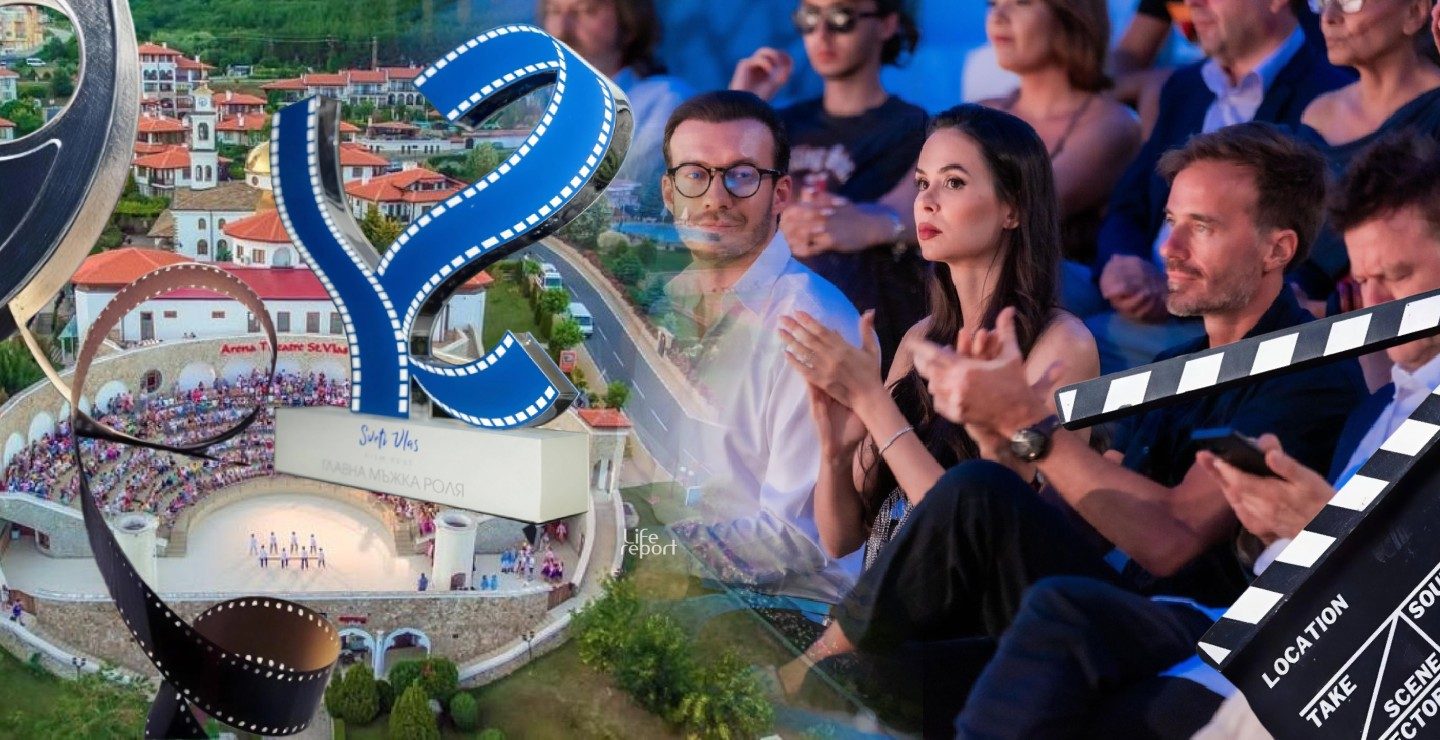
The former president took to the stage not in a gilded concert hall but beneath a constellation of Balkan stars, with the Black Sea exhaling softly beyond the pines. He was there to present a weighty piece of sculpted glass to a director whose latest work had premiered at the Venice Film Festival. This was not the Lido, where red carpets swallow whole islands of ego every September. This was Sveti Vlas, a yachter’s sanctuary nestled between the foothills of the Stara Planina and a marina that gleams with quiet discretion. The occasion was the fifth edition of the Sveti Vlas Film Fest, and if you have not yet pencilled it into your cultural calendar, you are precisely the kind of person this festival was designed to seduce – effortlessly, and without ever raising its voice.
At a time when film festivals have largely morphed into corporate carnivals of content, where premieres are drowned out by influencer cacophony and the word “curated” is tossed around like confetti, the Sveti Vlas Film Fest operates on a far more intriguing frequency. It is small, yes. Unapologetically national in its focus. Yet it possesses an almost Medici-like sense of patronage, a belief that cinema should be a dialogue rather than a marketplace. The Dinevi Group, the real estate dynasty behind the superyacht-friendly Dinevi Marina and the resort that hosts the festival, has quietly funded a platform where contemporary Bulgarian cinema meets its audience without the barrier of a ticket price. Free admission. An open-air amphitheatre. A view capable of making even the most seasoned cinematographer weep. That the event has reached its fifth anniversary with its strongest programme to date is no accident; it is a statement of intent wrapped in sea salt and pine resin.
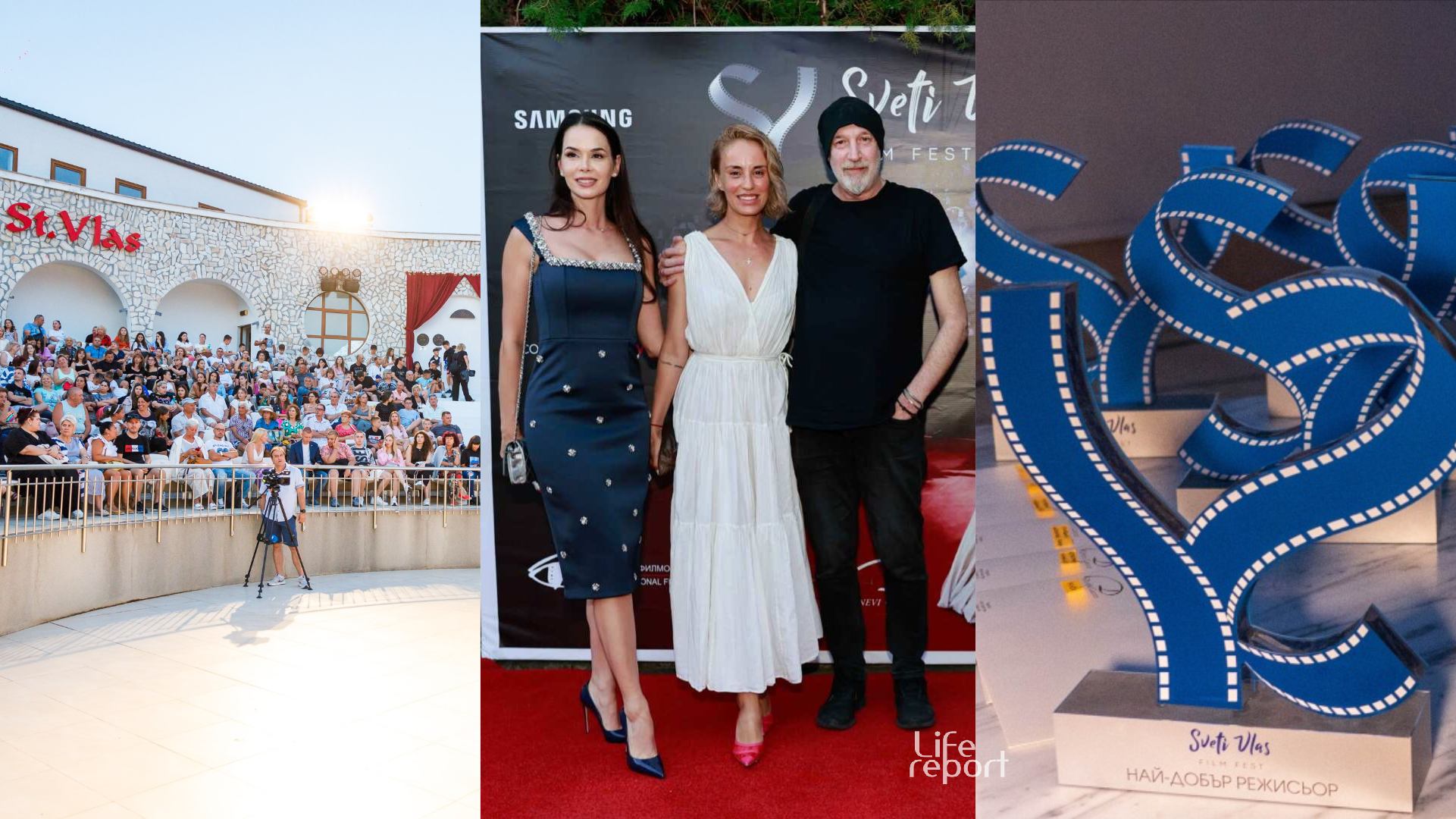
The closing-night ceremony on 4 July awarded the Grand Prix for Best Feature to Stefan Komandarev’s Made in E.U., a film that interrogates moral compromise with the precision of a Swiss watch – a Jaeger-LeCoultre Reverso, perhaps, whose reverse reveals something one might prefer not to see. Komandarev, who dedicated the award to the “friends and conspirators” who made the film possible, had already seen his work premiere at Venice before winning the Golden Rose for Best Bulgarian Feature Film. On the amphitheatre stage, Petar Stoyanov, President of Bulgaria from 1997 to 2002, reflected on the festival’s improbable journey. “I was fortunate enough to witness the birth of this idea more than five years ago,” he said. “I salute the people who refused to let it explode like a firework and then fade away.”
The remark landed with the gentle irony of a man who has watched countless cultural initiatives flare brightly before disappearing into the night. Sveti Vlas, by contrast, has cultivated a slow-burning flame. What makes this intimate Black Sea gathering so magnetic for a generation that curates experiences as carefully as a wardrobe? In part, it is the effortless elegance of its setting. The Arena Amphitheatre, carved into the landscape of Dinevi Resort, catches the evening breeze like a perfectly tailored linen suit. By day, screenings move to the conference hall of Hotel Palace, where the air carries the faint scent of ozone and iced espresso. The audience is a blend of Sofia’s creative class, curious holidaymakers from across Europe and a growing number of international visitors who have realised that the true luxury of the 2020s lies not in exclusivity but in discovery. There are no velvet ropes, no hulking security guards, no hierarchy dictated by accreditation lanyards. Instead, there is the rare privilege of watching a film such as Lust – for which Ralitsa Petrova won Best Director and Yulian Atanasov received Best Cinematography – while the Black Sea shimmers in the distance, providing a living backdrop no post-production studio could ever replicate.
View this post on Instagram
Petrova’s Lust, a brooding and visually sumptuous work of auteur cinema, shared the spotlight with films spanning an impressive emotional range. Dimitar Sardzhev’s A Tale of Mother and Son received the Special Jury Prize for its “bright artistic value and strong authorial presence” – the sort of citation that might sound like faint praise at a lesser festival but here felt closer to a coronation. The acting awards showcased a depth of talent that should have casting directors refreshing their flight schedules: Ivan Savov won Best Actor for Before I Forget, a tender story of a man racing against dementia to create new memories, while Stefka Yanorova received Best Actress for 3.0 kg Happiness, a performance whose quiet restraint proved quietly devastating. Meglena Karalambova, a veteran of both stage and screen, won Best Supporting Actress for Birthday, with the award accepted by director Ivaylo Penchev, whose film would later close the festival in a fittingly full-circle moment. Ivaylo Hristov claimed Best Supporting Actor for his role in Made in E.U., while the debut award, now named in honour of the late journalist Ivan Garelov, went to Kamen Stoyanov for Zvezda – appropriately enough, the Bulgarian word for “star”.
Perhaps the evening’s most symbolic moment, however, came not during the competitive awards but with the introduction of a new honorary distinction. The Union of Bulgarian Artists inaugurated its Rising Star Award, presented by chairman Hristo Mutafchiev to Alexandra Dimitrova, a young actor whose screen presence feels both unmistakably contemporary and curiously timeless. It was a gesture that marked the festival’s evolution from a well-intentioned seaside screening series into a genuine incubator of artistic continuity. A festival that begins championing emerging talent in only its fifth year is clearly planning for its fiftieth.
Bulgarian cinema has spent decades mastering the art of speaking in code under censorship. Today, it enjoys the freedom of artistic expression while confronting the less poetic reality of limited funding – a challenge no amount of metaphor can overcome. That is precisely why private patronage, such as the support provided by the Dinevi brothers through their Bulgarian Memory Foundation, represents not simply philanthropy but enlightened cultural investment. By anchoring the festival in Sveti Vlas, a town that presents itself as a quieter alternative to the neon-lit excesses of nearby Sunny Beach, the organisers have significantly elevated the region’s cultural profile. One imagines conversations drifting across the marina at sunset centred not on last night’s beach club but on the moral ambiguities of Komandarev’s latest film or the visual language of Lust. For a certain kind of traveller – one who packs a vintage Leica alongside a dog-eared copy of Calvino – that is the ultimate luxury.
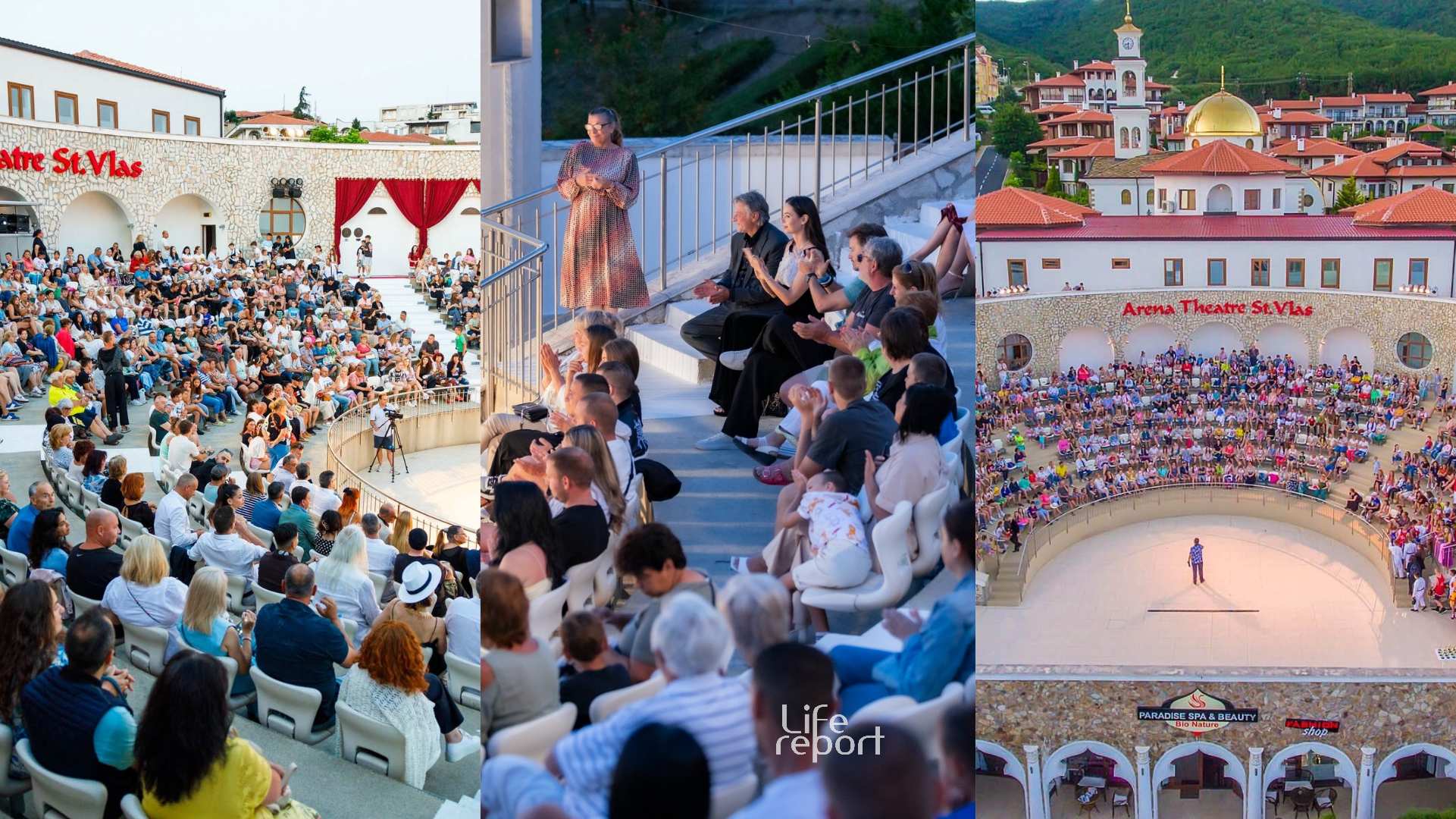
The festival’s artistic director and selector, film critic Assoc. Prof. Deyan Statulov, spoke of creating “a community of creators who share their dreams of cinema with each other and with the audience”. It may sound perilously close to utopianism, yet the evidence lay in the programme itself: nine feature films across three days, from the opening screening of Made in E.U. to the closing presentation of Birthday, with lighter works such as Brunch for Beginners and 3.0 kg Happiness providing welcome balance to more demanding auteur cinema. A special afternoon event celebrated the legacy of publisher Lyuben Dilov-son with the presentation of L’Europeo magazine, a publication that embodies precisely the kind of intellectually curious, cross-cultural outlook the festival seeks to encourage. Even the inclusion of Martina Troanska’s short film Fallaway suggested a welcome appetite for formal experimentation.
As the warm July evening settled over the amphitheatre and the last glass of rosé was emptied in the Hotel Palace lobby bar, it was impossible not to recall Stoyanov’s hope that the festival might one day become an international forum. It is an admirable ambition, provided “international” never comes to mean what it so often does: the dilution of identity in pursuit of scale. For now, the Sveti Vlas Film Fest remains a beautifully preserved secret, whispered about in the lounges of Dubai and the galleries of Berlin, a place where cinema breathes the same air as the sea and the only velvet is on the screen. For the UAE’s millennial and Gen Z cultural nomads – those who plan their summers around hidden artist residencies in the Cyclades or jazz festivals in the Tuscan hills – this is precisely the kind of discovery that makes the algorithm feel, if only for a moment, entirely unnecessary.