
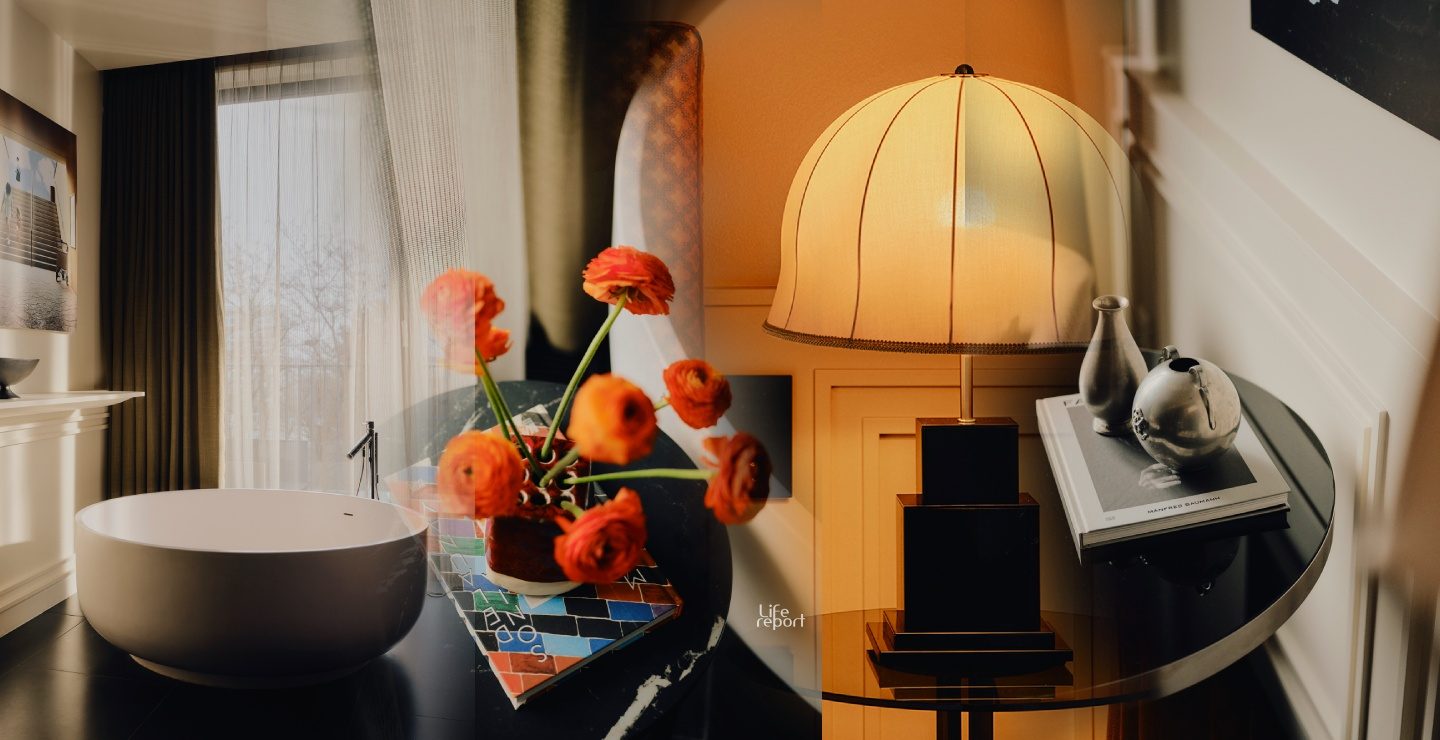
On the cusp of the Westend in Munich, a neighbourhood where Turkish bakeries and artists’ ateliers share the pavement with quietly ambitious galleries, a freshly minted hotel now catches that light and bends it to its own rhythm. The Dean Munich, the Irish-born, vibe-first brand’s largest property yet, opened its doors in July not with a roar but with a knowing wink – and it just might be the most intelligently seductive hotel launch of the year.
If you’ve grown weary of lobbies that feel like airport VIP lounges designed by algorithm, the arrival sequence here will come as a palate cleanser. Cream-lacquered walls cradle the space, while soft upholstery in bruised greens and aubergines absorbs the sound. A singular, stylised eye motif – a nod to postmodern mysticism – regards you with the detached amusement of a Peggy Guggenheim portrait. The air carries a bespoke DS & Durga fragrance, a scent that marries the damp greenery of the Irish Atlantic coast with something more enigmatic, as though Connemara had enjoyed a brief, illicit affair with a Munich courtyard garden. It is the olfactory equivalent of a linen suit: distinctive, yet never pushy.
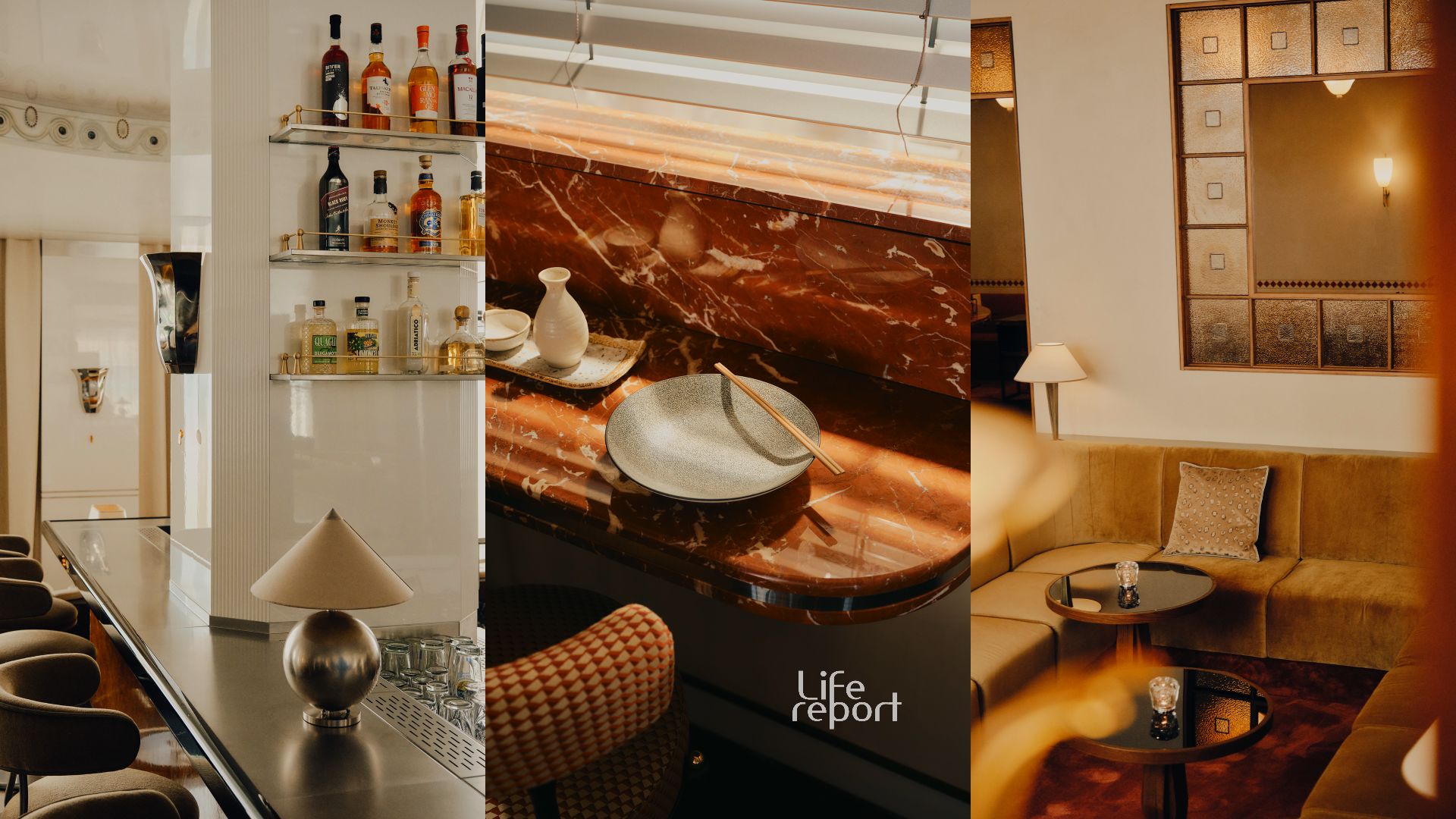
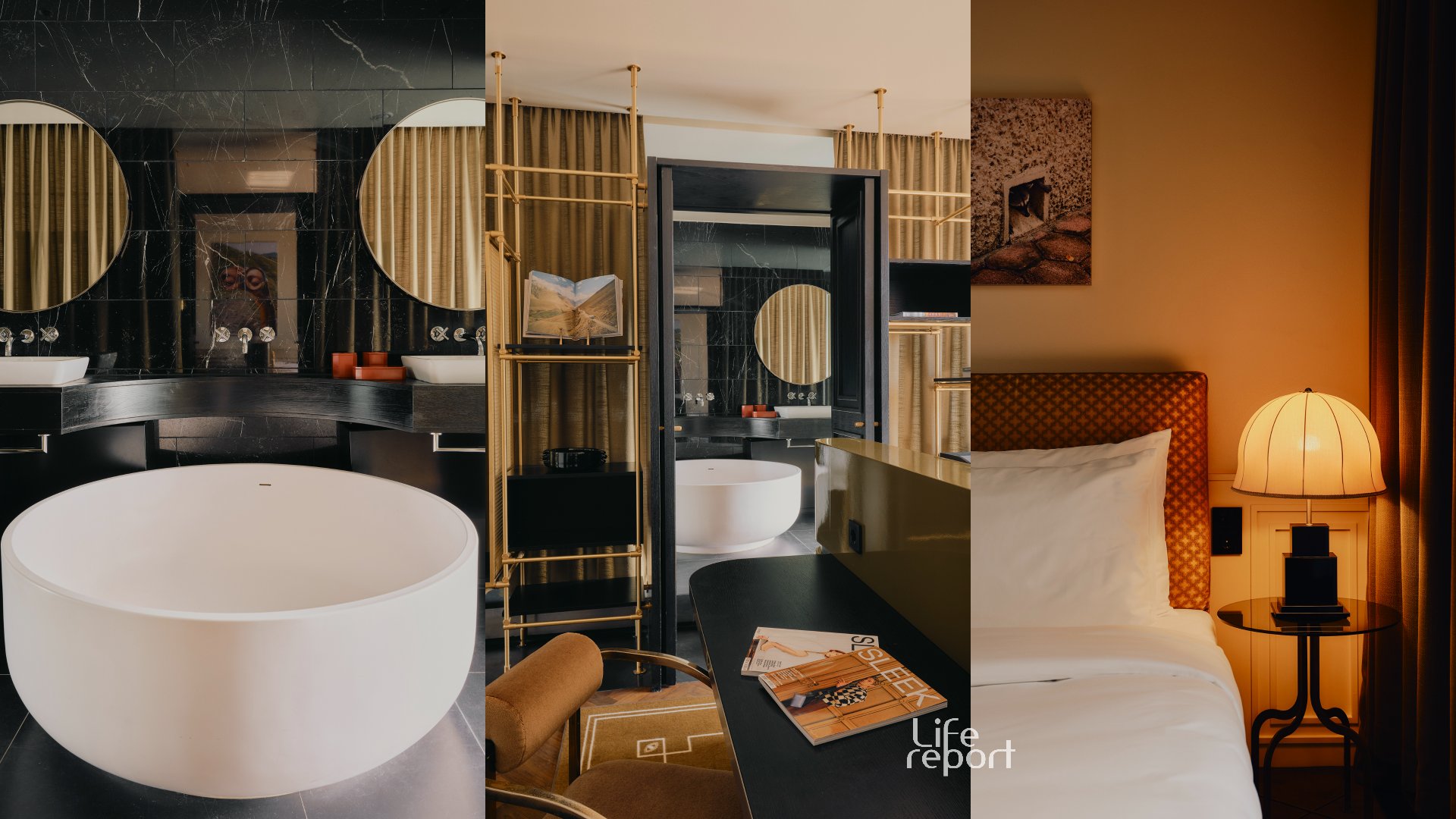
The hand behind this controlled sensuality is Tatjana von Stein, the French-German designer whose London studio has quietly shaped some of Europe’s most intuitive private residences and members’ clubs. For von Stein, a Munich native, the project was a homecoming charged with personal resonance. She has crafted an interior language that bridges two pivotal moments in the city’s cultural psyche: the sinuous, nature-infused curves of Bavaria’s Art Nouveau heritage, Jugendstil, and the hedonistic, lacquered energy of the 1980s, when Munich’s clubs pulsed with a globally influential electronic music scene. The result is a tension between elegance and exuberance that resolves into something wholly coherent, like a perfectly balanced cocktail. Across the hotel’s 281 guestrooms, that tension softens into a soothing palette of gentle greens and refined detailing – a subtle wall curve here, a contrasting trim there – while smart technology remains discreetly hidden behind tactile surfaces. It is a masterclass in doing less while obsessing over every stitch.
The public spaces, by contrast, embrace a more extroverted theatricality. Custom furniture designed by von Stein’s studio – think svelte, low-slung seating upholstered in rich velvets – sits comfortably alongside vintage pieces sourced from Cologne’s Studio Kuhlmann. Glossy surfaces catch the light from fixtures that feel less like lamps than kinetic sculptures. A bespoke sound system by Friendly Pressure hums beneath the chatter, with a playlist curated as meticulously as the wine list. One might roll one’s eyes at the phrase “sonic identity”, yet here the audio landscape genuinely shapes the atmosphere, shifting from contemplative mornings to louche evenings without a flicker of obvious effort.
View this post on Instagram
The most pleasant surprise awaits guests who have learned to approach hotel art programmes with the same cautious optimism reserved for “bespoke” minibar snacks. The Dean Munich’s site-specific initiative, The City Beneath the City, curated by Christian Ganzenberg, director of Munich’s international art festival Various Others, escapes the decorative-wallpaper trap entirely. Borrowing its philosophical undertone from Italo Calvino, the collection commissions Munich-based artists to excavate the city’s hidden layers. Ju Young Kim’s sculptural interventions blend Art Nouveau botanical motifs with the visual language of heating pipes and street grates, creating a witty dialogue between the organic and the municipal. Veronika Hilger’s paintings hover in the uncanny territory between memory and the surreal. In the corridors, Sebastian Quast’s interactive works surprise with their tactile materiality, while in the guestrooms, photography by Der Greif Studio replaces the usual generic cityscapes. Ossian Fraser went so far as to incorporate debris from the construction site into his pieces – literally grounding the artwork in its surroundings. The programme does not shout “gallery”; it murmurs an ongoing conversation, and you find yourself listening.
When a hotel names its signature restaurant Ibasho – the Japanese term for a place where one feels a sense of belonging – the culinary offering must deliver more than a respectable bowl of edamame. The kitchen, guided by consultant chef Alex Craciun, whose CV includes Michelin-starred rigour in Tokyo and the creation of London’s Sosharu, answers with a menu of precise, playful Japanese gastronomy. Craciun’s pressed sushi, known as oshizushi, arrives as beautifully composed blocks: yellowtail and avocado laced with truffle, or wagyu beef crowned with a glistening ribbon of Ossetra caviar. A dedicated robata section turns out expertly grilled skewers and steaks, their smokiness providing an earthy counterpoint to a striking sashimi platter. Begin with the Seijaku Martini – sake, Haku vodka, and a saline whisper of pickled ginger and cucumber – and you will understand why stillness is overrated when it tastes this good. A thoughtfully curated caviar pairing is, naturally, available for those moments when simple indulgence feels like a moral imperative.
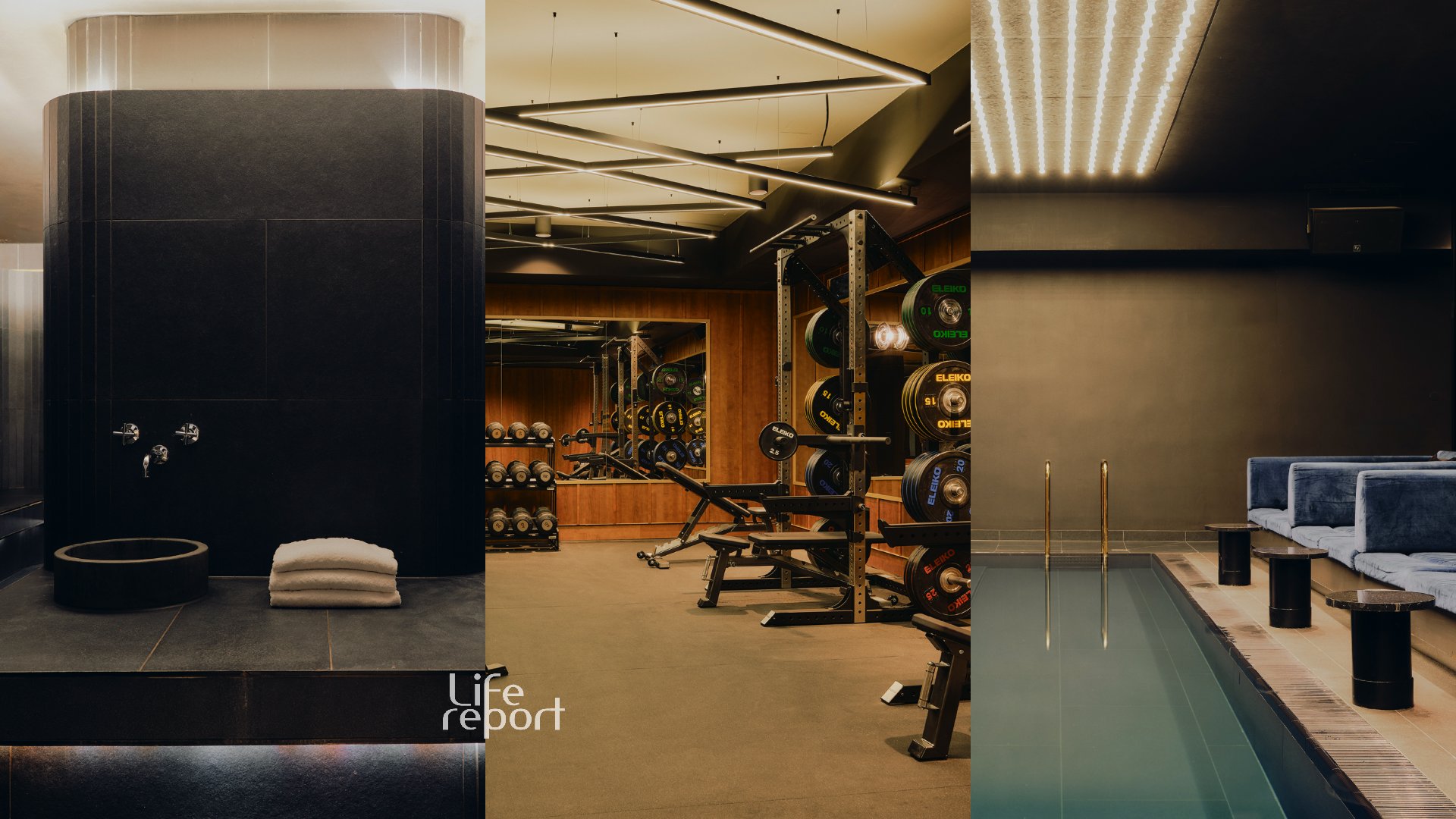
The wellness-conscious are not overlooked, although they may need to recalibrate their definition of a hotel gym. Power, the brand’s signature fitness and wellness concept, is a design-led, almost bunker-like sanctuary that treats recovery as an art form. Yes, there is an indoor pool, a sauna, a steam room, and a treatment room where tension quietly dissolves. But the real draw is the guided, music-driven group training that transforms high-energy MetCon sessions into something approaching a nocturnal club night repurposed for burpees. It is fitness as performance, complete with industry-leading equipment and contrast therapy, because a cold plunge after a beat-heavy workout is the new black. In a city whose underground clubs helped define European nightlife during the 1980s, the notion of a workout soundtracked by a carefully curated mix feels less like a gimmick and more like a cultural inheritance.
Positioned a short stroll from Marienplatz, Viktualienmarkt and the green arteries of the River Isar, The Dean Munich occupies a neighbourhood that still resists the polished monotony of global luxury. This is a district of quiet courtyards and old-world craftsmanship, where the hum of late-night bars mingles with the scent of freshly baked Brezen. The Irish-born brand, with its roots in Dublin’s irreverent hospitality scene and properties in Cork, Galway and Berlin, understands that a hotel should feel like a knowing host rather than a faceless corporation. The promise of “organic interactions and genuine encounters” often reads like brochure bluster, but here, when a bartender remembers your preferred apéritif and the concierge suggests a private gallery opening rather than a bus tour, the rhetoric feels earned.
For the Gulf’s luxury nomads, raised on a diet of ever-taller, gold-leaf ziggurats and lobbies calibrated for the selfie stick, The Dean Munich is a gentle, impeccably dressed provocation. It suggests that the most radical form of luxury in 2026 is not amplitude but intelligence; not ostentation but a perfectly mixed Martini, a bespoke scent that lingers like a half-remembered lyric, and the quiet thrill of peeling back a city’s layers one exquisite detail at a time. In an era that too often mistakes noise for confidence, this hotel whispers – and it has never been more worth listening to.


