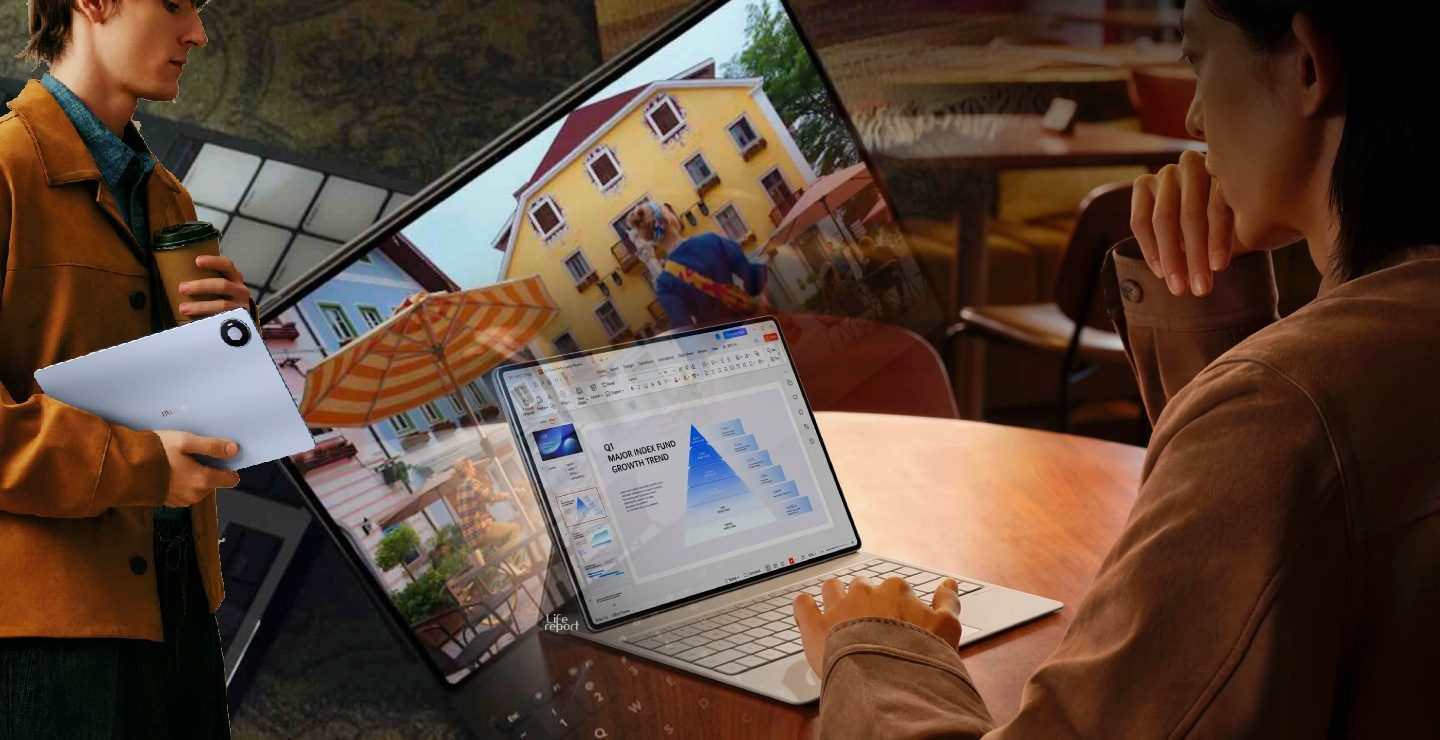
Some objects don’t just arrive; they alight. Slip a hand into a jacket pocket at a Downtown Dubai café, past a Cartier Tank and a worn leather cardholder, and you might momentarily forget that the slim, cool pane beneath your fingertips is a 13-inch tablet. The new Huawei MatePad Pro Max weighs scarcely more than a paperback edition of a Le Carré novel – 509 grams, to be precise – and, at just 4.7 millimetres thin, it makes a stack of three credit cards look almost corpulent. In a city that has elevated the superlative to a conversational tic, the quietest flex is often the one that whispers rather than shouts. Huawei’s latest creation understands this perfectly.
Available in the UAE from July 2026, with prices starting at AED 4,699, the MatePad Pro Max arrives not as an incremental upgrade but as a deliberate exercise in cultural alignment. It is an object for a generation that instinctively understands the line between Brutalism and Bauhaus, that orders single-origin coffee while analysing the tensile strength of a mid-century chair, and that refuses to sacrifice an ounce of aesthetics at the altar of utility. It is, in short, an object of desire for the millennial and Gen Z luxury audience that has made Dubai its creative and commercial playground.
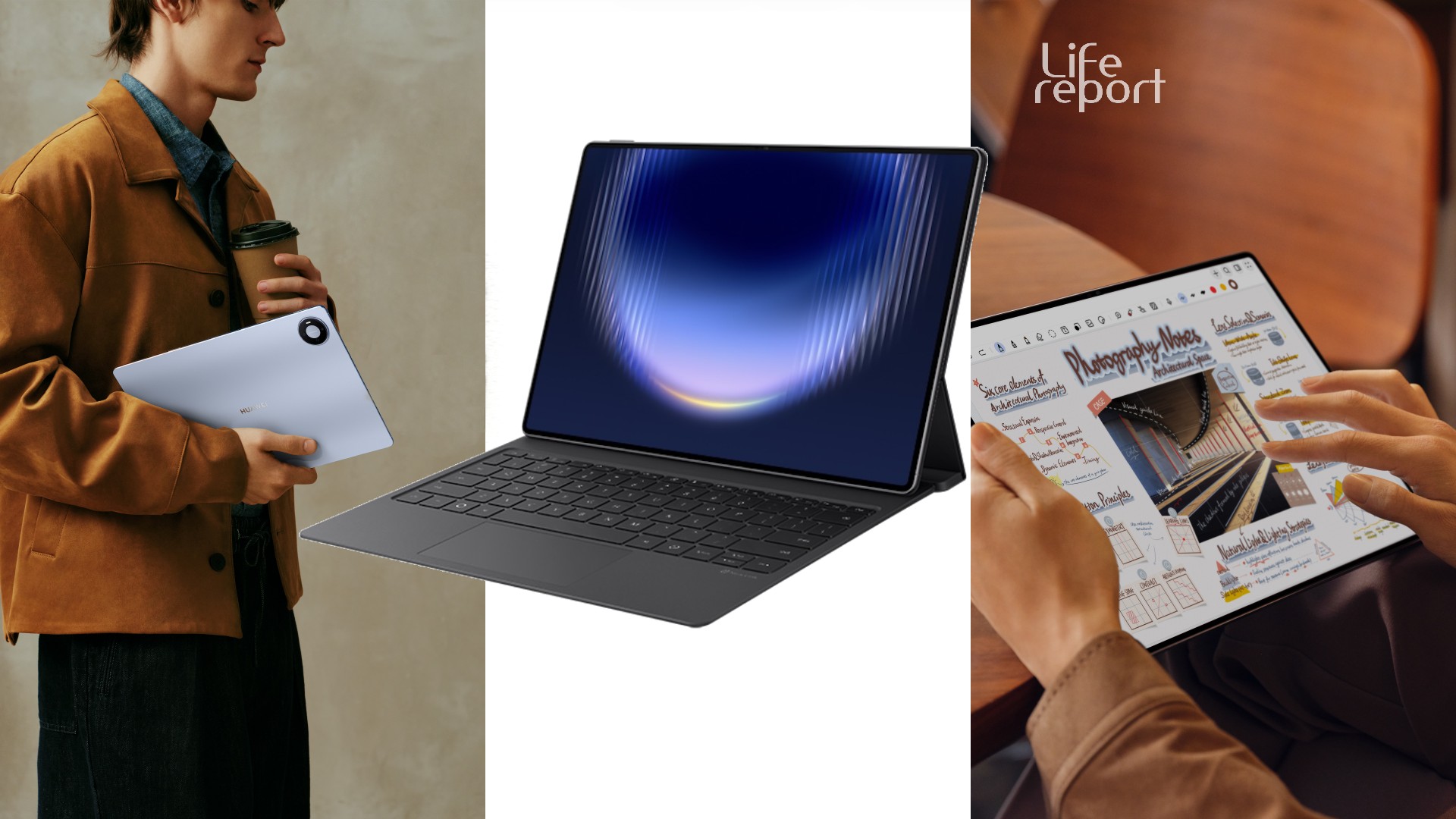
The industrial design alone warrants a moment of silence, perhaps in the calm, white-cube serenity of a gallery at Alserkal Avenue. Huawei’s engineers, employing the proprietary Cloud Falcon Architecture – a name that evokes a classified aerospace programme but actually refers to an innovative component-stacking technique – have achieved the kind of dimensional sleight of hand once associated with Jony Ive’s design philosophy. By reimagining every internal cavity, they have shaved away fractions of a millimetre with almost surgical precision. The aluminium-alloy unibody frame, inspired by aerospace engineering, increases bending resistance by 60 per cent compared with previous 13-inch Huawei tablets. The practical benefit is obvious: this device is unlikely to warp during a business-class sprint through Heathrow, or when slipped behind the sun visor of a G-Class on a Liwa desert excursion. Because nothing undermines a DIFC power lunch quite like a tablet that flexes more than a Pilates reformer.
Switch on the MatePad Pro Max and the display reads like a love letter to analogue texture in a digital world. The 13.2-inch Flexible OLED PaperMatte Display, framed by a remarkably slim 3.55-millimetre bezel, achieves a 94 per cent screen-to-body ratio that almost dissolves the boundary between glass and air. A sophisticated nano-etching process transforms the surface into one that mimics the light absorption of fine art paper. Direct sunlight – the perennial enemy of outdoor productivity – is softened into gentle diffusion; reflections scatter rather than glare, helping the display earn TÜV Rheinland Full Care Display 5.0 certification. Reading a long-form feature on this screen feels less like staring at pixels and more like leafing through a finely printed broadsheet beneath a pergola in the Jardin Majorelle. For the UAE’s perpetually sun-drenched terraces, that is less a luxury than a genuine advantage.
View this post on Instagram
Productivity – that most overused word in corporate vocabulary – here acquires unusual sincerity. Huawei has integrated PC-level WPS Office with AI-powered tools that handle the mundane tasks of formatting, data visualisation and transcription, allowing users to focus on the work that actually matters. Collaborative editing and native PDF annotation render the familiar phrase, “I’ll get back to my desk”, almost obsolete. Paired with the Huawei Glide Keyboard and the second-generation HUAWEI M-Pencil, the tablet transforms the back seat of a chauffeur-driven Lexus into a mobile office. Huawei Notes and GoPaint feel less like software than a digital atelier: 240 stylus sensing levels and near-imperceptible latency make sketching a façade or annotating a tasting menu at Boca feel as fluid as ink on a Rhodia notebook. Creative professionals – from graphic designers shaping the next Dubai Design Week identity to architects experimenting with parametric design – will appreciate that the tablet’s expansive canvas belies its remarkably compact footprint.
There remains, of course, the enduring irony of the tablet category: promising the power of a laptop while often delivering the endurance of a smartphone. Huawei addresses that expectation with quiet confidence. The 10,400mAh high-silicon anode battery delivers up to 14.5 hours of use, comfortably enough for a return flight to Paris or an afternoon of editing, meetings and media consumption. Performance has improved by 20 per cent over its predecessor, while thermal efficiency is up by 30 per cent, allowing the device to remain impressively cool even when rendering 4K video or hosting a Teams call that probably should have been an email. Meanwhile, the six-speaker crossover audio system, built around a quad-driver bass unit, produces sound with a richness that seems improbable for something so slender – more reminiscent of a listening room at The Arts Club than a tablet barely thicker than a magazine.
And while almost nobody genuinely needs a 50-megapixel camera on a tablet, Huawei has included one nonetheless, complete with True-to-Colour calibration that flatters product photography destined for luxury resale platforms or social media. The camera module is elegantly integrated, never catching on the silk lining of an inside pocket, because details such as these matter when spending well over four thousand dirhams.
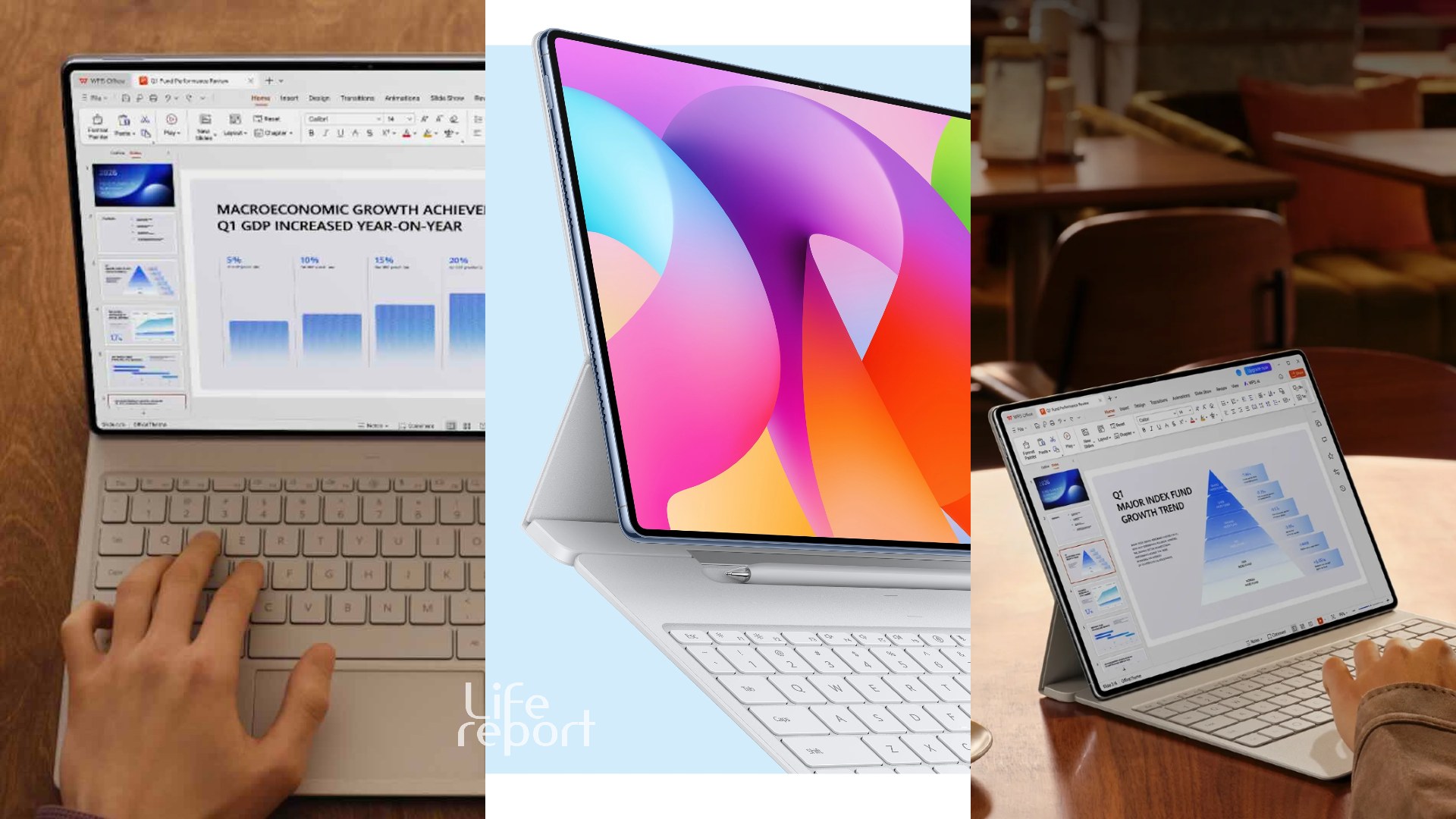
Perhaps the most refreshing surprise is the launch bundle. Early purchasers receive the second-generation Huawei M-Pencil and a wireless mouse at no additional cost – a gesture that quietly acknowledges the industry’s increasingly exhausting accessories race. At a time when many premium technology brands sell essential extras separately without a hint of embarrassment, Huawei’s approach feels almost refreshingly old-fashioned.
Dubai’s luxury landscape, forever attuned to the balance between spectacle and subtlety, will immediately understand this device. It is the technology equivalent of a Bottega Veneta Intrecciato pouch: understated, lightweight and effortlessly luxurious, yet built for everyday life rather than display. The MatePad Pro Max does not compete with the theatre of a supercar exhaust note; instead, it embraces the quiet confidence of impeccable craftsmanship. It slips into a Loewe tote as naturally as a Diptyque candle, ready for a day that moves seamlessly from breakfast at LPM to an afternoon sketching beneath the dome of the Louvre Abu Dhabi.
Huawei has long been recognised for its excellence in display technology and intelligent user experience, and the MatePad Pro Max further strengthens that reputation. Rather than chasing excess, it demonstrates that genuine innovation often lies in refinement. In a region where scale is frequently mistaken for significance, Huawei proposes a different definition of status: extraordinary capability expressed through extraordinary lightness. Available from 3 July from AED 4,699 at Huawei Experience Stores, Sharaf DG, Jumbo and other leading retailers, the MatePad Pro Max makes its statement quietly. And at just 509 grams, it scarcely weighs more than a morning newspaper.
Also Read: Inside the Sanlorenzo SX120: The Sustainable Italian Superyacht Every Gulf Billionaire Will Want in 2026