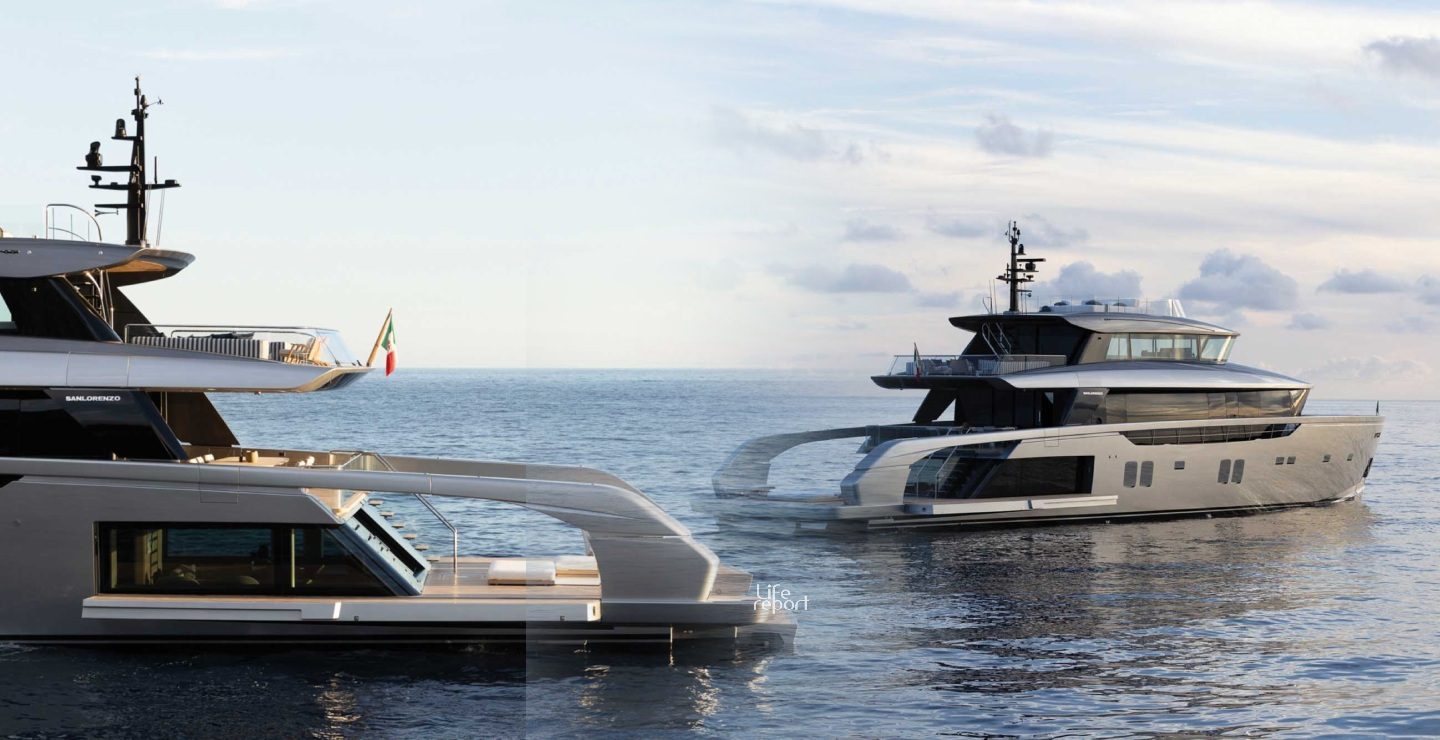
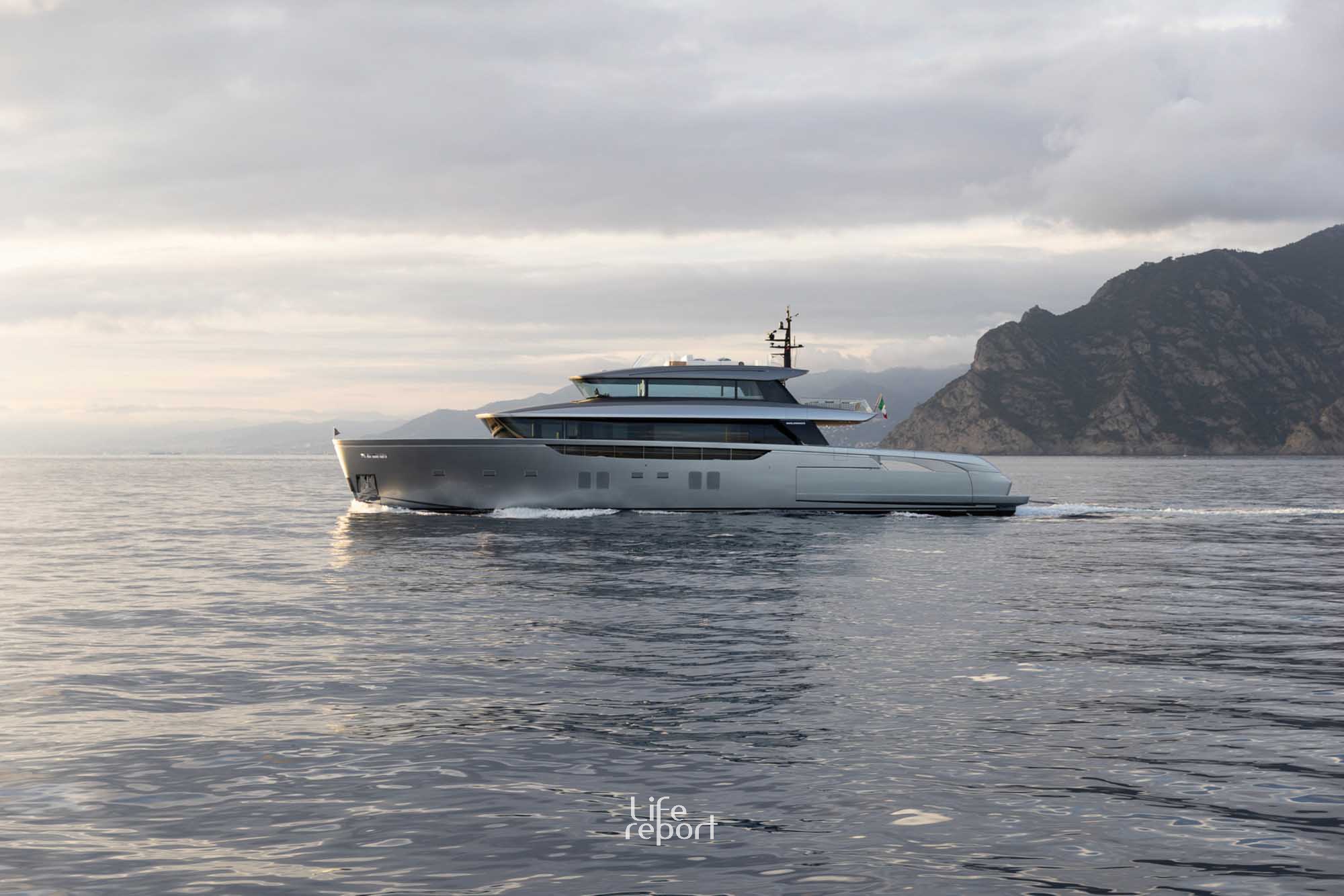
Golden hour over Jumeirah Bay Island. The call to prayer has faded, and the superyachts moored along Bulgari Yacht Club sit like polished pebbles against the dusk. Among them, a new silhouette will soon glide in – a shape at once muscular and poised, its sheer line as sharp as a tailored Caraceni lapel. This is the Sanlorenzo SX120, the largest iteration yet of the Italian shipyard’s SX crossover series, arriving with a manifesto rendered in teak and glass.
The concept of a “crossover” in yachting was once a polite euphemism for a motoryacht that dared to sport a slightly flared bow. Sanlorenzo, under the creative stewardship of architect Piero Lissoni and the naval architecture expertise of Zuccon International Project, has spent a decade transforming that notion into a bona fide movement. At 36.92 metres, the SX120 is the fleet’s new flagship – a floating villa that reads like a contemporary art collector’s riposte to the traditional tri-deck yacht. With only seven hulls set to be built, each serving as a near-blank canvas for its owner, the vessel enters the crowded 35–40-metre segment with the calm confidence of a disruptor that knows its references: mid-century Italian Rationalism, Japanese wabi-sabi restraint, and a discreet nod to Dubai’s own architectural audacity.
What truly separates the SX120 from its rivals, however, is not merely its aesthetic lineage but a strategic technological heart transplant. It is the first leisure craft in the world to adopt Volvo Penta’s IPS Professional Platform – a triple-engine pod-drive arrangement that allows the yacht to switch seamlessly between two and three engines, depending on speed and load. The result is up to a 30 per cent reduction in fuel consumption and emissions, a silent ballet of software that redefines sustainable luxury. In a region where environmental awareness is rapidly evolving from a marketing addendum into a genuine purchasing criterion among Generation Z and Millennial ultra-high-net-worth individuals, this propulsion system presents a compelling argument. It speaks the language of the Dubai Clean Energy Strategy 2050 while delivering a top speed of 22 knots – fast enough to feel the wind, yet never so fast as to unsettle a chilled glass of Vermentino.
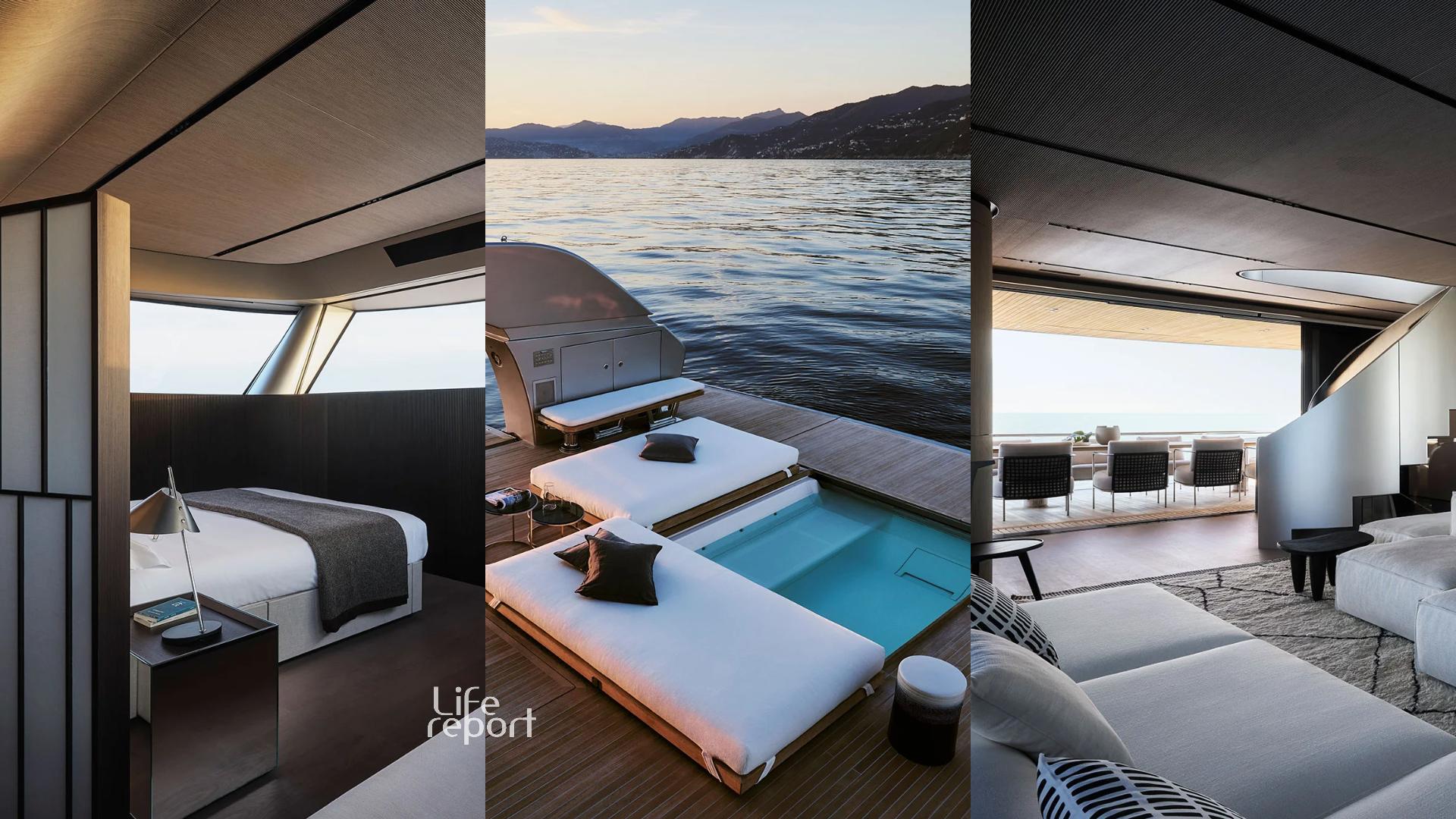
Step aboard, even hypothetically, via the vast beach club. This is where the SX120’s narrative truly unfolds. Spanning 70 square metres across the transom and two dramatic fold-down side terraces, the space is anchored by a retractable glass-panelled infinity pool that manages to be both the party’s centrepiece and its disappearing act. When not in use, a pair of teak sunpads glide over the pool on hidden tracks, returning the deck to a serene expanse of relaxation – a sleight of hand that would make a Las Vegas illusionist blush. Flanking the pool, substantial stainless-steel pedestals double as winches and cleats for stern lines, a detail of such brutalist elegance that one might mistake them for pieces from a Richard Serra exhibition. The port-side arch, a stylised crane, swings out with the gravitas of a kinetic sculpture to launch the tender, proving that, on this vessel, utility is never allowed to forget its manners.
View this post on Instagram
The beach club opens into a sunken aft lounge through heavily raked sliding doors, where a circular wooden pillar conceals a secret drinks cabinet – a wink to the speakeasies that embody Dubai’s own brand of hidden luxury. The cabinetry, a Piero Lissoni signature, marries oiled wood with metal in a manner that feels both organic and precise, like a finely curated fragrance by Frédéric Malle. Adjacent lies the “Joy Lounge” (a name, one suspects, devised by people who have never actually witnessed joy), which is, in truth, a clever and convertible multimedia den for younger guests – a place to occupy the iPad generation while adults debate the merits of the 2005 Sassicaia. With remarkable subtlety, the space can transform into a fourth guest cabin, as though a chameleon had trained at Milan Design Week.
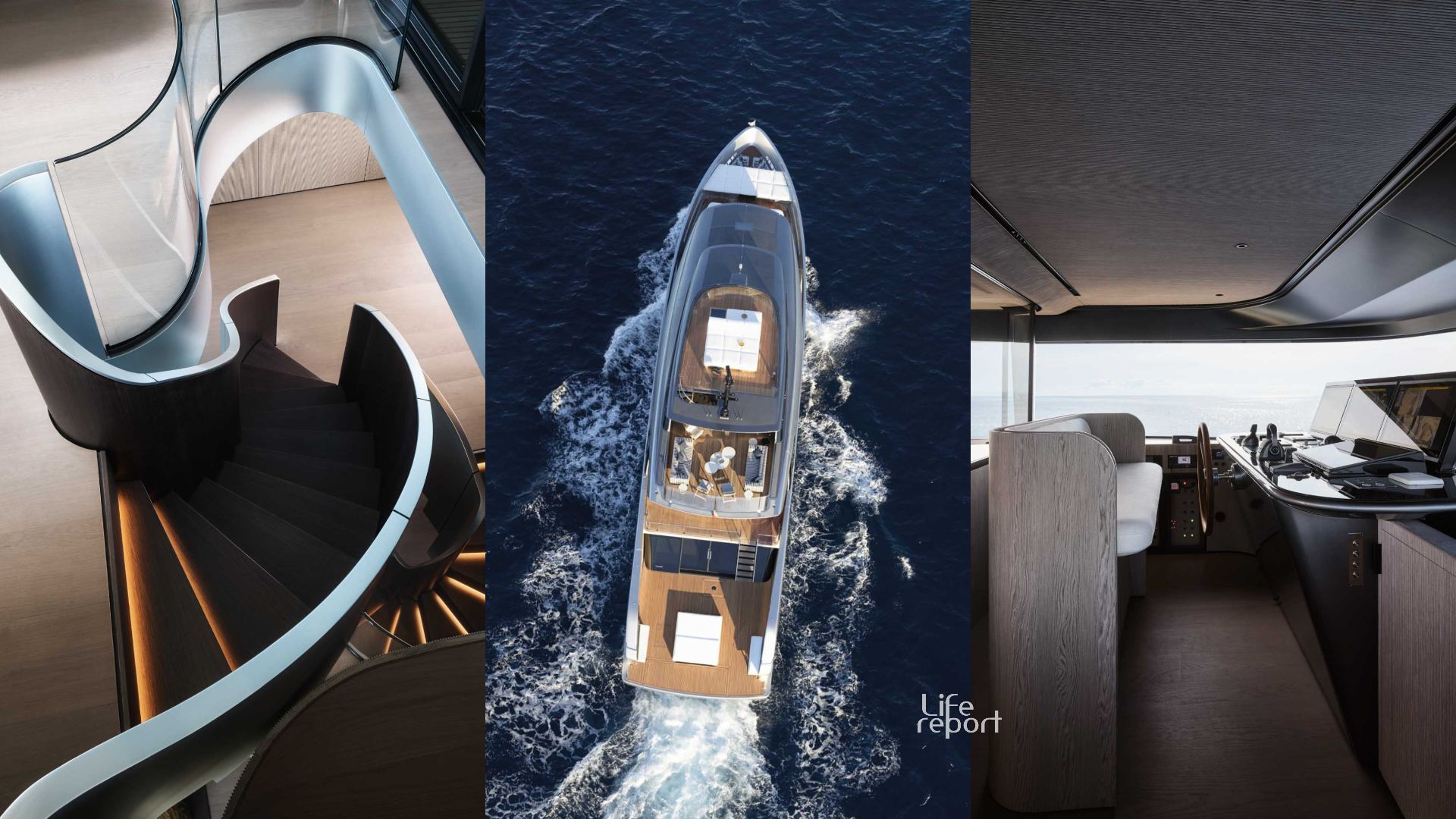
Ascending the central spiral staircase – a sculptural helix clad externally in a metallic film and lined internally with warm wood, surely the most Instagrammed artery of any SX model – one arrives on the main deck. Here, the owner’s suite occupies the prime forward position, blessed with reverse-angled windscreens that provide panoramic views of the horizon, as though framed by the cantilevered window of a contemporary art gallery. Direct access to a private foredeck lounge is the sort of privilege that prompts an involuntary sigh of appreciation. The main saloon, it must be said, represents the yacht’s one modest gesture; its proportions are intimate rather than grandiose. Yet in a home where every other zone – from the upper-deck sky lounge to the sprawling sundeck – encourages social gathering, it becomes a deliberate, almost Japanese exercise in restraint. Less space for aimless loitering; more reason to inhabit the ship’s edges, where sea and sky become the true interior designers.
The upper deck, accessed via the same staircase, is a flexible domain. Forward, the wheelhouse bristles with Garmin and Volvo Penta glass-cockpit displays – the nerve centre of a vessel that can be manoeuvred with the ease of parking a Lexus. Aft, the owner may opt for a climate-controlled sky lounge dressed in Loro Piana upholstery or an open-air dining room where the breeze serves as the only sommelier. Further aft still, a vast expanse of open deck leads to the star of the show: the flybridge sundeck, a new addition to the SX series, reached via its own external staircase. Here, Sanlorenzo introduces the Smart Island, a modular seating system that reconfigures like a Rubik’s Cube to accommodate a variety of social rituals – sunbathing, champagne breakfasts and late-night shisha beneath the stars. It is set to become a standard feature across future Sanlorenzo vessels, a detail that subtly elevates this yacht from product to design manifesto.
The SX120 is, in essence, a synthesis of contradictions: a motoryacht that thinks it is an explorer, a glass-walled party palace that takes its environmental responsibilities seriously, and a family cruiser with the soul of a design gallery. Its internal volume of 265 GT feels significantly larger than its 8-metre beam would suggest, thanks to Zuccon’s masterful manipulation of sightlines and natural light. The palette – pale linens, honed stone and muted metallics – serves as a calm canvas for the owner’s art collection, perhaps a curated selection of Emirati artists such as Abdul Qader Al Rais or the photographic works of Lamya Gargash, both of whom would find an appropriately illuminated setting here.
For the Generation Z and Millennial collectors of the Gulf, who have matured beyond the gilded excesses of the early 2000s, the SX120 arrives as an intelligent proposition. It understands that true luxury today lies in spatial generosity and environmental sensitivity, not merely acreage and horsepower. It provides a platform for multi-generational voyages without requiring anyone to compromise on comfort, and it does so without the visual cacophony of a floating palace. This is a yacht that would look as natural moored off Soneva Fushi as it would at anchor during the Formula 1 Abu Dhabi Grand Prix weekend, its boarding pass determined not by a uniformed crew but by invitation alone.
The first SX120 hull is expected to touch the water in 2026, and if whispers circulating through the corridors of the Dubai International Boat Show prove accurate, one may eventually find a permanent berth between Jumeirah Beach Hotel and the forthcoming Marsa Al Arab. In a city where the architectural vocabulary continually renegotiates the horizon – from the calligraphic void of the Museum of the Future to the twisting spire of Cayan Tower – the Sanlorenzo SX120 feels pre-adapted, a seaborne expression of that same forward-looking DNA. It is, after all, “floating architecture”, as Lissoni himself describes it, and for those who view their yacht not merely as a vessel but as a curatorial statement, it may well represent the most compelling chapter yet in the story of modern yachting.
Also Read: Two Destinations, One Dilemma: The Luxury Escape That Refuses to Choose Sides