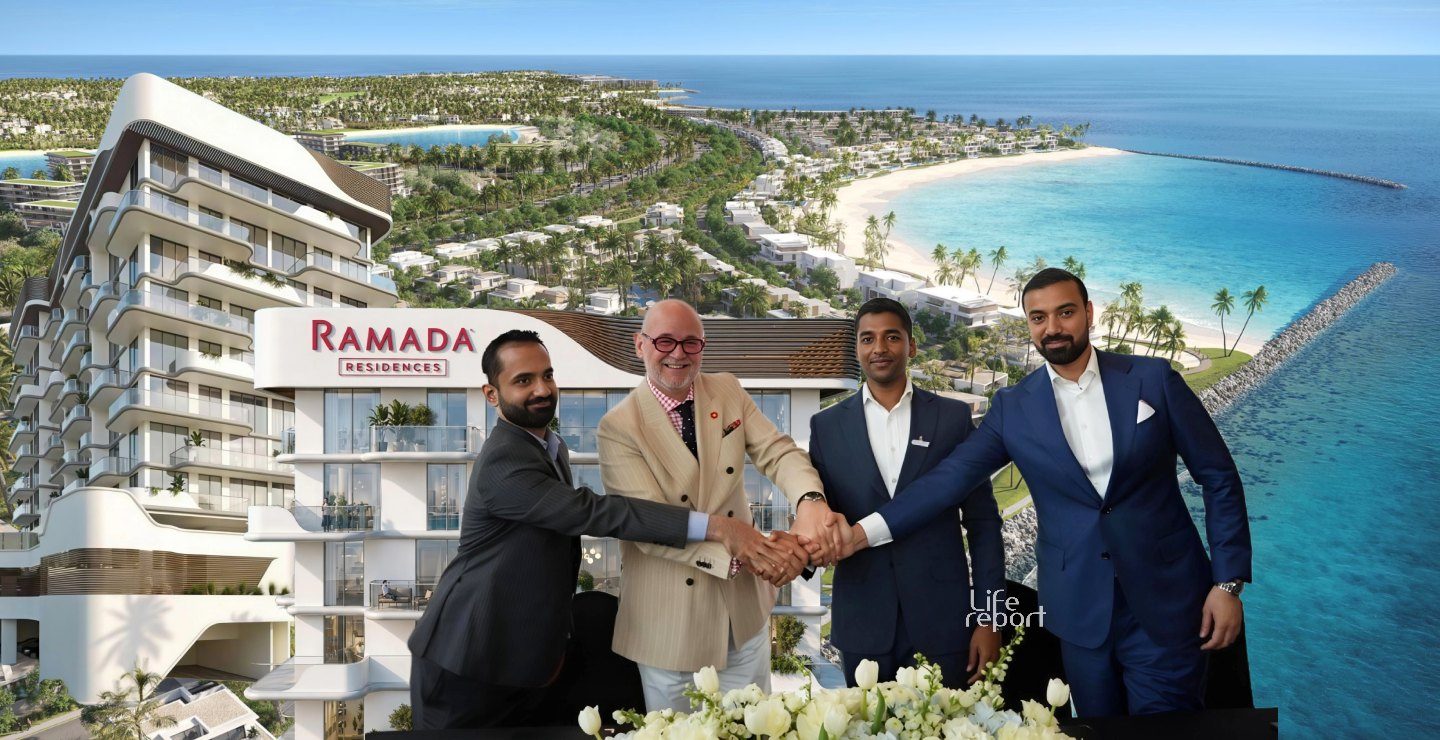
The invitation promised cocktails and canapés. The only thing anybody was hungry for was a square metre of floor space. In a city where a property signing usually comes with a light show, a celebrity DJ, and a tasting menu that name-checks three continents, the gathering for Grovy Developers, Wyndham Hotels & Resorts, and USquare Luxe Properties looked, at first glance, almost unnervingly restrained.
No chandelier the size of a Fiat. No string quartet. No artisanal oxygen bar. What it had instead was a room beyond capacity – brokers and investors pressed shoulder to shoulder, registering Expressions of Interest on iPads with the silent, slightly feral focus of auction-house veterans who smell a bargain. In a metropolis that has refined the art of the hard sell into performance theatre, this felt different. This was a quiet stampede, a knowing crush of people who had done the arithmetic and liked the answer.
A Market in Full Sail – and Slightly Out of Breath
To understand why a Ramada-branded address on a reclaimed archipelago is generating this much attention, one must first look at the broader canvas. Dubai’s branded-residence sector is no longer the sideshow it was a decade ago; it is the main tent. According to Savills, the global pipeline of branded residential schemes is expected to reach 910 by the close of 2025, a 19% year-on-year expansion, with the Middle East and North Africa region posting dramatic growth over the past five years. Dubai alone has emerged as one of the world’s leading markets for branded residences, fuelled by sustained demand from international investors and high-net-worth buyers seeking hospitality-led living experiences.
These are rarefied numbers, the kind that make wealth managers reach for the Bollinger. Yet they also describe a market that has become, in its upper reaches, increasingly hermetic. Luxury developments continue to compete through ever more elaborate expressions of exclusivity – private lounges, designer interiors, wellness technologies, and branded experiences that blur the line between hotel and home. Bulgari Residences on Jumeirah Bay offers Italian design flair and resident-only amenities, while Bentley-branded towers target ultra-prime buyers whose appetite for marque-name living appears bottomless.
View this post on Instagram
But what of the buyer who wants the service, the assurance, and the prestige of a branded residence without the need to remortgage a small European principality? What of the millennial investor who understands that the true luxury is not necessarily Carrara marble, but the reliability of professionally managed living and seamless hospitality-style service? This is the demographic that has quietly been rewriting the rulebook of asset acquisition in the UAE, and it is precisely here that the Ramada gambit makes its move.
The Ramada Gambit: Democratising the Branded Address
Wyndham Hotels & Resorts, one of the world’s largest hotel franchising companies, operates approximately 8,400 hotels across around 100 countries and commands a dominant presence in the economy and midscale hospitality segments. Attaching its Ramada flag to a residential project is not a retreat into modesty; it is a strategic widening of the branded-residence category.
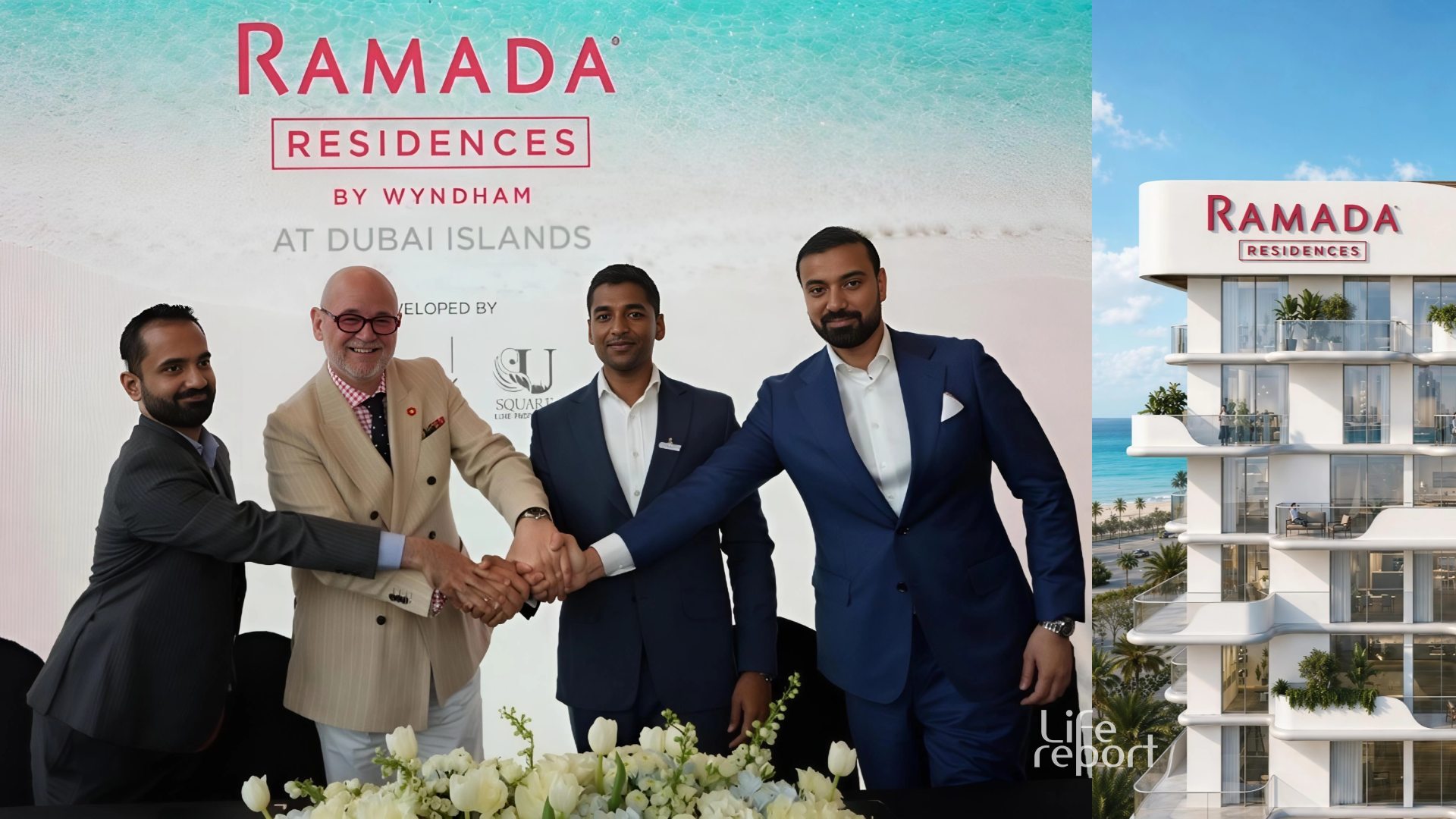
At the official signing event, attended by senior executives from Grovy Developers, Wyndham Hotels & Resorts, and USquare Luxe Properties, Dimitris Manikis, President, Europe, Middle East & Africa at Wyndham Hotels & Resorts, described the project as part of a broader effort to make branded living more attainable for a wider audience.
“Through Ramada Residences Dubai Islands, Wyndham is actively opening up the branded residences category to a broader audience through a more accessible offering,” he said.
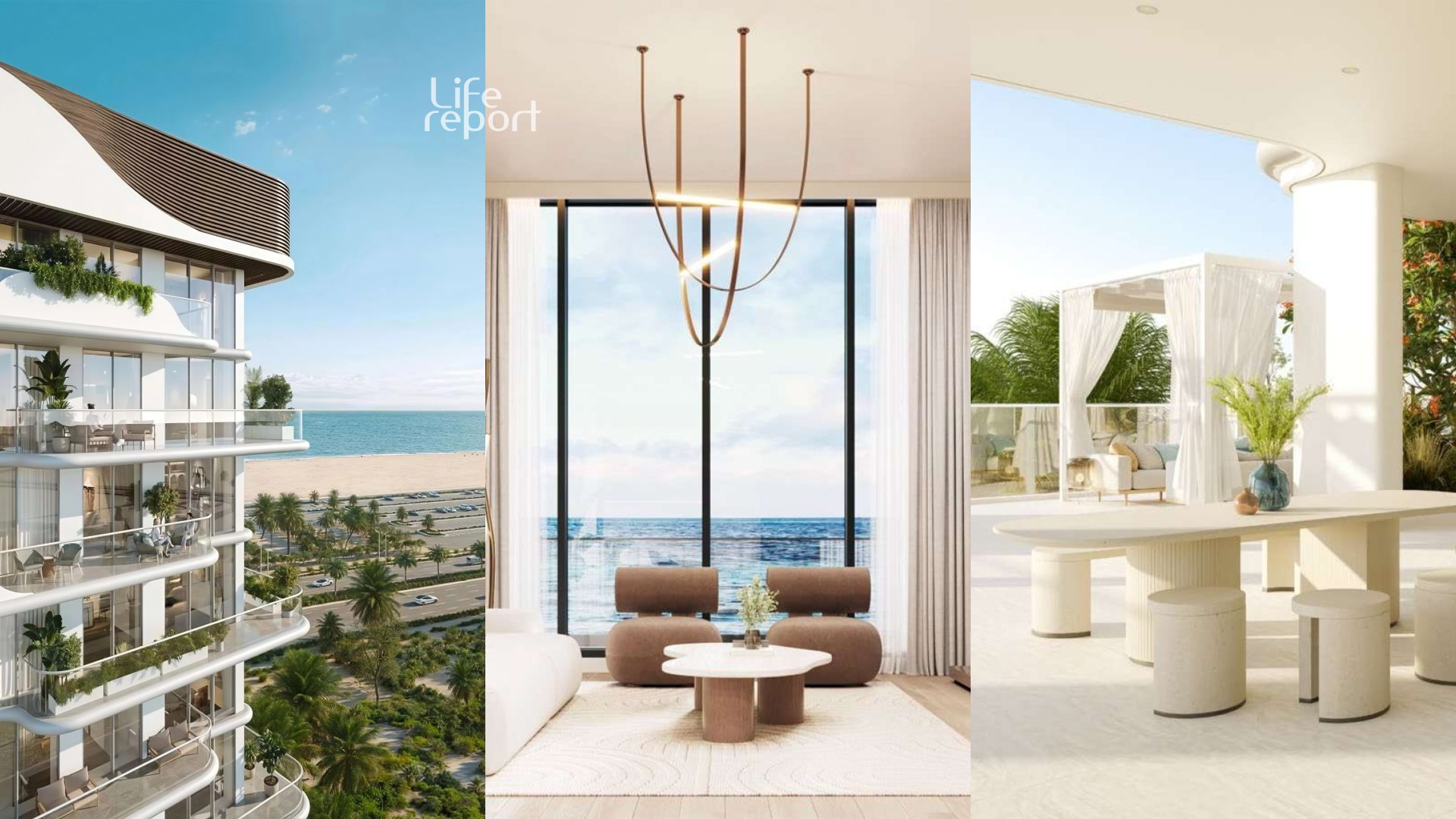
The word “accessible” is doing considerable work here, and one should pause to appreciate the strategic calculation behind it. Branded living, for so long the preserve of the ultra-luxury traveller, is increasingly being repositioned for a generation that would rather own a professionally managed asset than simply rent a fantasy. Scheduled for handover in Q3 2027, Ramada Residences by Wyndham at Dubai Islands will comprise a boutique collection of fully furnished one-, two-, and three-bedroom apartments, alongside four-bedroom penthouses. The development will operate with hotel-grade services and operational standards underpinned by Wyndham’s global hospitality framework.
The amenity offering reads like a carefully calibrated lifestyle wish list: aqua gym, golf simulator, open-air theatre, and a temperature-controlled infinity pool among more than 20 leisure facilities. Importantly for investors, the development is also among a select number of residential projects on Dubai Islands approved for short-term leasing – a distinction that significantly strengthens its appeal in Dubai’s rapidly expanding holiday-home market. At a time when professionally managed short-term rental inventory continues to outperform many traditional residential investment models, that approval is not a footnote; it is a commercial advantage dressed in zoning code.
The Island That Time – and Nakheel – Is Building
Dubai Islands itself remains a work in progress, and that is precisely its appeal. Formerly known as Deira Islands, the Nakheel master development comprises five islands designed to align with the Dubai 2040 Urban Master Plan. Envisioned as a coastal destination centred on leisure, connectivity, tourism, and residential growth, the district combines beachfront living with proximity to established urban centres.
Located within the cultural district of Dubai Islands, the project benefits from open beaches, green spaces, hospitality infrastructure, and direct connectivity to the city. It is, in short, a destination engineered for the long game – and one that younger buyers, particularly millennials and Gen Z investors now reshaping Dubai’s demand profile, find instinctively legible.
These are not the buyers of the old guard. They are tech entrepreneurs, finance professionals, founders, and globally mobile investors who value operational efficiency, smart-home integration, wellness infrastructure, and brands that signal competence rather than ostentation. Ramada, with its globally recognised yet unflashy pedigree, fits neatly into this new value equation: a name that promises reliability without performative extravagance.
The Developer Logic: Quiet Delivery Over Loud Promises
Grovy Developers arrives at this partnership with a quieter track record than some of Dubai’s more headline-grabbing developers, but one rooted in pragmatism and delivery. Founded in India in 1985, the company has delivered more than 100 projects across Delhi and the National Capital Region before expanding into the UAE market in 2015.
View this post on Instagram
Since entering Dubai, Grovy has focused on residential developments spanning the mid-market, premium, and luxury segments, with completed projects including Alcove, Aria, and Aura in Jumeirah Village Circle. The developer is also active in Dubai Islands and Dubailand, with a design philosophy centred on efficient space planning, smart-home integration, and lifestyle-led amenities. There is something almost old-fashioned about a developer that prefers to let completed projects speak for themselves, and in a market increasingly saturated with off-plan spectacle, that restraint can read less like caution and more like confidence.
Its partner, USquare Luxe Properties, brings a complementary layer of expertise. Co-founded by Ubaid Ur Rehman Shaikh and Muhammad Umeed, the company combines backgrounds in finance, private equity, and project management with a growing portfolio of luxury residential developments, including villa projects on Palm Jumeirah and in Al Furjan, alongside new communities in La Mer, Majan, and Dubai Islands.
Together, the collaboration between Grovy, Wyndham, and USquare feels less like a branding exercise and more like a strategic alignment of complementary capabilities – development, hospitality, and investment expertise converging at a moment when Dubai’s real-estate market is increasingly rewarding operational credibility over noise.
The Inevitability of the Accessible Premium
There is a danger, in writing about a Ramada-branded residence, of sounding as though one is damning it with faint praise. The temptation is to frame it as the “sensible” choice – the dependable luxury alternative in a city obsessed with excess. That would miss the point entirely. What is genuinely interesting here is the structural shift it represents. Branded residences have traditionally belonged to the ultra-luxury tier – Four Seasons, Ritz-Carlton, Armani, Bulgari – developments built as trophy assets for buyers already in possession of several homes and looking for yet another expression of status.
Ramada Residences by Wyndham at Dubai Islands is betting on something different. It is wagering that the appetite for branded living runs deeper than vanity. It is targeting a generation shaped by the experience economy – buyers who understand that consistency, operational excellence, and service infrastructure are luxuries in their own right. And if the launch event’s overflowing attendance is any indication, that wager is already resonating with the market. Not because the project promises the loudest spectacle, but because it understands a quieter and increasingly influential form of aspiration: value wrapped in credibility.
They arrived hungry, not for canapés, but for a stake in a development that appears to understand the assignment. They registered their interest not with the reckless abandon of gamblers, but with the measured confidence of people who had already done the sums, studied the floor plans, and recognised an opportunity before the crowd fully caught on. In a city that rarely resists the temptation of superlatives, the understated confidence of a Ramada-branded island address may prove to be one of Dubai’s most quietly disruptive luxury statements yet.
Also read: Football on Your Wrist: The $1.9 Million Richard Mille Built for the Beautiful Game