Dubai in spring does not so much arrive as insinuate itself. One morning you are still wrapped in the last gasp of winter – the air crisp, the light sharp – and the next, something shifts. The terrace cafés fill with people who suddenly remember they enjoy being outdoors.
The valet queues at La Mer grow absurdly long. And, most tellingly, the heavy ouds and smoky leathers that carried you through the cooler months begin to feel less like armour and more like a stifling obligation. This is the moment the fragrance wardrobe turns over. And this, precisely, is where Vilhelm Parfumerie enters the conversation – not with a shout, but with the kind of quiet, deliberate storytelling that makes spring feel less like a season and more like a decision.

With spring comes the inevitable ritual: the fragrance wardrobe change. The heavy ouds, the smoky leathers, the dense ambers that served so faithfully through the cooler months are gently returned to their boxes, making way for something lighter, something brighter, something that whispers rather than announces. This is the season of olfactory rebirth, and no one understands this seasonal poetry quite like Vilhelm Parfumerie.
The New York-born, French-bottled niche house has built its reputation on something increasingly rare in the luxury fragrance world: actual stories. Not the kind of stories that emerge from focus groups and marketing briefs, but those drawn from memory, travel, and the specific sensory experiences of founder Jan Vilhelm Ahlgren. Each scent is less a product than a narrative – “a library”, as the brand puts it – where identical bottles contain worlds as diverse as a summer morning in Sweden, Duke Ellington’s fingers on ivory keys, or a forgotten heroine glimpsed at Maxim’s during the Belle Époque. But it is in spring that Vilhelm’s storytelling instincts feel most essential.
Opus Kore: The Gift of Springtime
Consider, if you will, Opus Kore. Exclusive to Liberty London and available throughout the UAE, this fragrance is quite literally about the season itself. The name references Persephone – Kore being her epithet as the maiden goddess of spring – and the scent tells the myth with striking precision. Persephone, you will recall, was the daughter of Demeter, abducted by Hades to the underworld and ultimately permitted to return to the living for part of each year. Her return, according to the Greeks, is spring.
View this post on Instagram
Vilhelm’s interpretation opens with what can only be described as a bracing gust of Sicilian lemon and açaí – sharp, almost startling, like the first truly warm day after months of cold. Then it softens, blossoming into raspberry blossom, pink magnolia and violet leaf, before settling into the quiet sensuality of sandalwood, skin musks and crisp amber. It is, in structure, exactly what spring feels like: an initial shock of brightness that gradually reveals its gentler nature.
The brand’s founder puts it more poetically: “At the end of winter, you can read the spring on the face of people: the joy of the first day of a new season, and in nature, that early blossoming.” There is something almost unbearably charming about that observation – the idea that winter’s end is legible on our faces, that we carry the seasons in our expressions. Opus Kore simply translates that legibility into scent.
Modest Mimosa: The Shy One That Demands Attention
If Opus Kore represents spring’s dramatic mythology, Modest Mimosa captures its quiet, everyday beauty. According to Grazia, it is currently “making a sensation everywhere it goes” – the kind of fragrance that generates compliments from strangers, that stops people mid-step to ask what you are wearing. Which is ironic, given the name. Modesty is not usually associated with that level of attention.
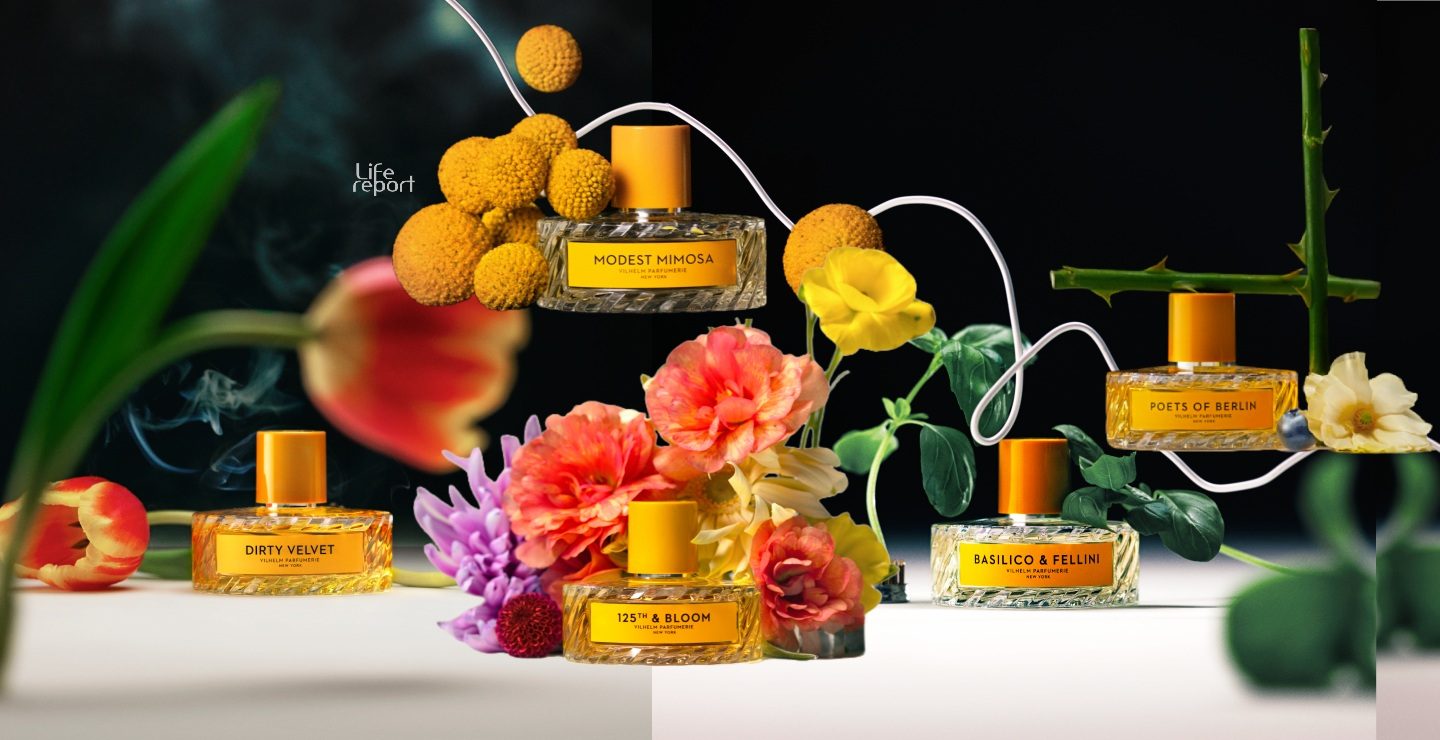
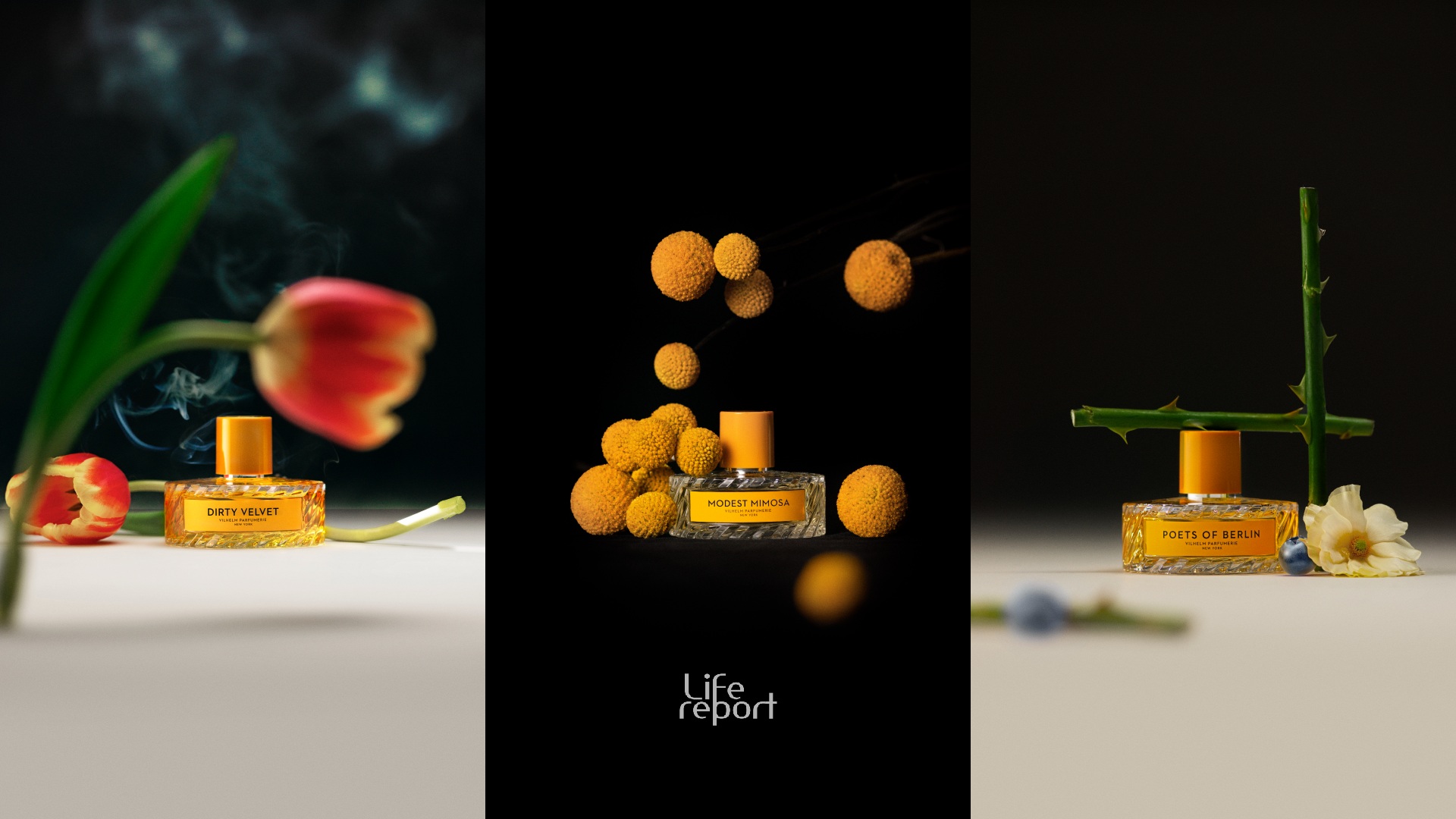
The fragrance centres on mimosa, that explosion of yellow fluff that signals the end of winter across the Mediterranean and, increasingly, in the manicured gardens of Dubai’s villa communities. But, Vilhelm being Vilhelm, the composition is more sophisticated than a simple floral bouquet. It opens with neroli and carrot – an unexpectedly vegetal freshness that grounds the sweetness before it can become cloying. The heart reveals mimosa and violet, soft and slightly powdery, like sunlight filtered through linen curtains. Then, just when you think you have it figured out, the base emerges: salted musk and white leather, adding a depth that elevates the entire composition from pretty to genuinely memorable. It is, in other words, a spring fragrance for people who think they do not like spring fragrances – the shy one that, it turns out, has rather a lot to say.
The Dubai Connection
What makes Vilhelm particularly relevant to the UAE market is the way it navigates the tension between opulence and restraint that defines the region’s luxury culture. The bottles themselves – heavy spun glass dressed in saffron-yellow labels inspired by a piece of Bakelite found in a Parisian flea market – feel substantial in the hand without screaming for attention. They are the olfactory equivalent of a perfectly tailored blazer: unmistakably luxurious but requiring a certain sophistication to appreciate fully.
Bloomingdale’s in Dubai and Abu Dhabi carries the full range, positioning Vilhelm firmly within a curated selection of niche houses that cater to consumers who have moved beyond the obvious. These are fragrances for people who understand that true rarity lies not in price but in taste – “rare ingredients, rare pairings, rare tastes”, as the brand describes it.
There is, perhaps, a gentle irony in a Swedish-founded, New York-born, French-bottled fragrance house finding such resonance in the UAE. But that irony is precisely the point. Spring is universal, as is the desire for rebirth, for freshness, for the particular optimism that comes with longer days and warmer light. Vilhelm simply translates that universal experience into scent, bottle by bottle, story by story.
Beyond the Obvious
For those who find Opus Kore and Modest Mimosa almost too on the nose – and there is something to be said for the pleasure of a fragrance that knows exactly what it is – the broader Vilhelm collection offers spring-appropriate alternatives that play with the season’s themes more obliquely.
Morning Chess, inspired by the founder’s childhood summers in a Swedish seaside cabin, captures the particular green brightness of fresh grass and sea breeze – a spring morning frozen in time. Dear Polly, a love letter to the founder’s wife, opens with black tea that warms the skin like the first properly hot cup of the season. Room Service, the Greta Garbo fantasy, balances citrus and red fruits with bamboo and violet – the scent of someone who has decided, very deliberately, to emerge from hibernation on her own terms.
View this post on Instagram
What unites them, across seasons and stories, is a refusal to settle for the generic. In a region where luxury can sometimes feel like a competition for the most visible logo, Vilhelm offers something more interesting: the quiet confidence of a story well told, a scent well made, a spring well spent.
The Art of Emerging
There is a particular pleasure, in a city like Dubai, in discovering something that not everyone knows. The luxury landscape here can feel overwhelming – a constant barrage of new hotels, new restaurants, new things to buy. But Vilhelm operates in a different register. It is known, as the brand says with characteristic understatement, “to those who matter”.
As the season shifts and the city softens, as the light turns golden and the terrace cafés fill again, there is something to be said for marking the transition with intention. Not just any fragrance, but one that carries its own mythology. Not just spring, but spring with a story.
Opus Kore whispers of Persephone’s return, of the ancient promise that winter always ends. Modest Mimosa hums with the quiet confidence of a flower that needs no introduction. And somewhere between them, in the space between mythology and memory, lies the particular pleasure of emerging – into the season, into the city, into whatever comes next. Spray accordingly. The compliments, like the spring itself, are inevitable.