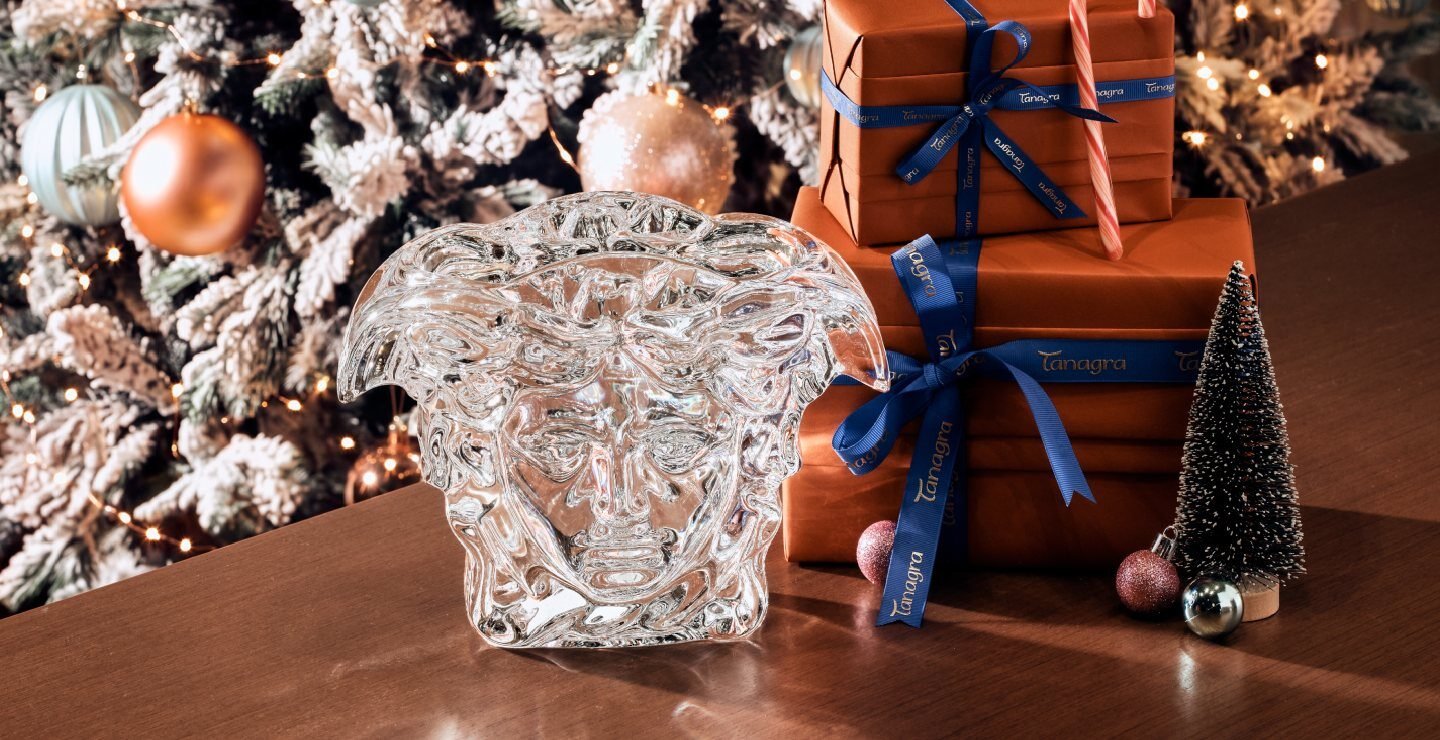
Reservations are made weeks in advance, dinner tables become social currency, and even the simplest evening can feel like another exercise in being seen. But what if the ultimate luxury this festive season were to disappear from the social circuit altogether? With The Festive Hour, its Holiday 2026 campaign, Tanagra makes a rather provocative case for staying in. Forget the obligatory party circuit and yet another gift destined to gather dust: the real extravagance, it suggests, is a beautifully curated home, good company and the rare pleasure of having nowhere else to be. Running until 4 January 2027 across the brand’s stores, digital platforms and social channels, the campaign forms part of Tanagra’s broader 2026 narrative, The Rituals of Belonging – a quietly ambitious proposition that turns the home into the ultimate expression of taste, status and the art of living.
The conceit centres on a little fairy. She dances through Tanagra Maison, twirling past swaying sculptures and floating gifts; with the turn of a key, the door opens onto a season of celebration. It would be easy to dismiss this as whimsy for whimsy’s sake, the kind of animated confection that luxury retail produces each winter with the dutiful regularity of a Nutcracker matinee. But the collaboration behind it deserves a second look. The Festive Hour was created with The Attic Studio, the Dubai-based illustration and design practice founded in 2015 by Abir Mnasria and Zaina Khayyat – a studio whose hand-drawn, research-led sensibility has already been enlisted by Hermès and recognised at Dubai Design Week, where its Habitat of Fantasy won the public vote. What The Attic brings to Tanagra is not the slick, frictionless polish of agency animation but the visible patience of the pen: a crafted visual language that mirrors the crystal, silver and porcelain it is meant to frame.
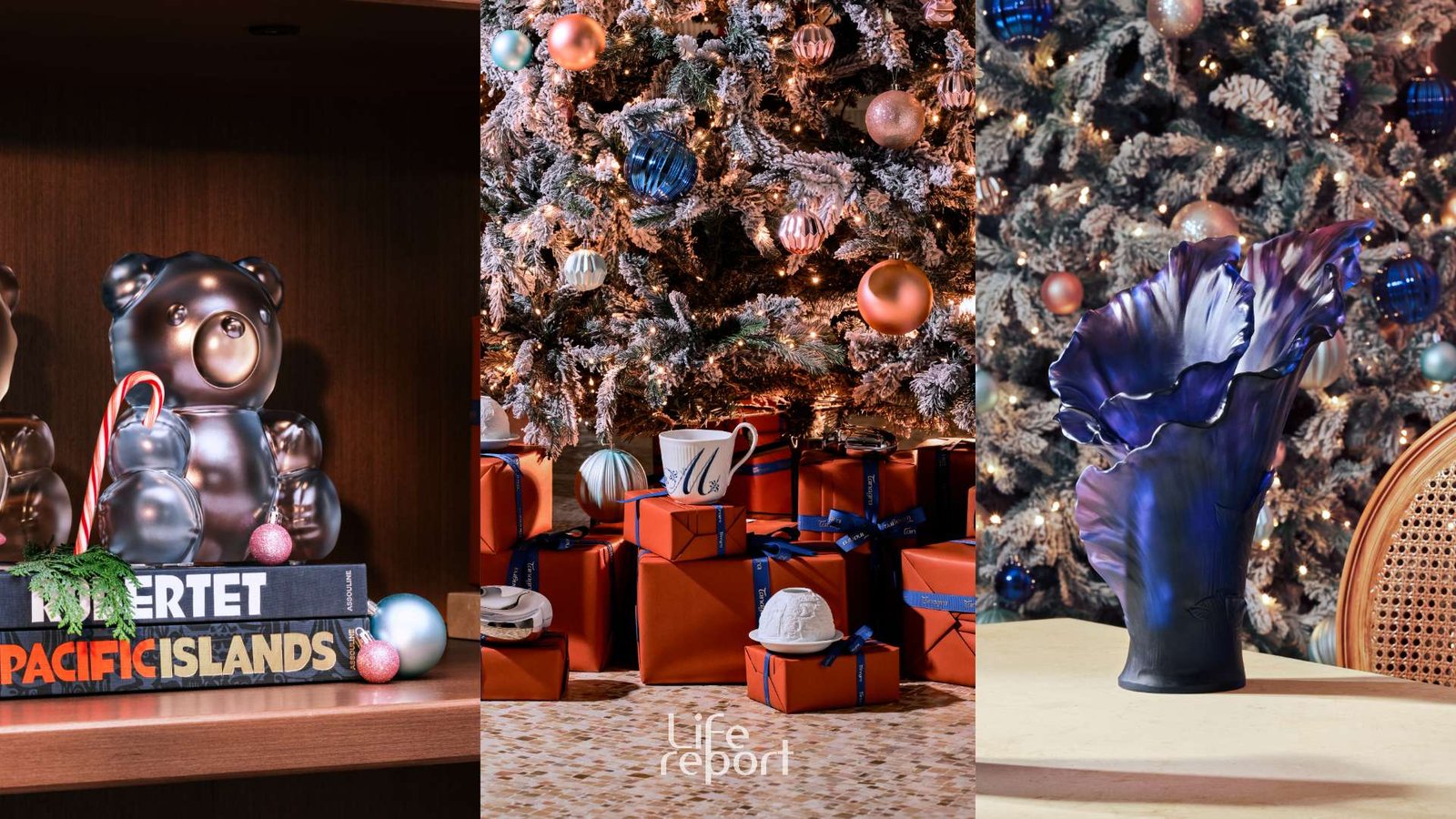
That framing matters more this season than it has in years, because Tanagra has spent the autumn quietly dismantling the idea of the shop. This autumn, the brand brought its reimagined flagship at Mall of the Emirates into focus. Designed by French interior designer Laura Gonzalez, the space takes the traditional Middle Eastern courtyard as its organising principle and unfolds into a succession of rooms – the Baccarat Atrium, Christofle Atelier, Daum Pavilion, Dining Gallery, Library, Tea Bar and VIP Salon – rather than a conventional retail floor. The effect is a kind of architectural bait-and-switch: you enter expecting a boutique and find yourself in a house. Baccarat, Christofle, Daum and Lalique are encountered not as isolated trophies but as inhabitants of distinct domestic atmospheres, their pieces calibrated to the proportions and light of the rooms that hold them. The Tea Bar serves Arabic coffee, karak and espresso alongside tea, with refreshments presented on tableware from Tanagra’s maisons. The air carries a bespoke signature scent of fresh flowers, warm wood, polished stone and tea. The message is not subtle, though it is elegantly delivered: hospitality is the product, and the objects are its props.
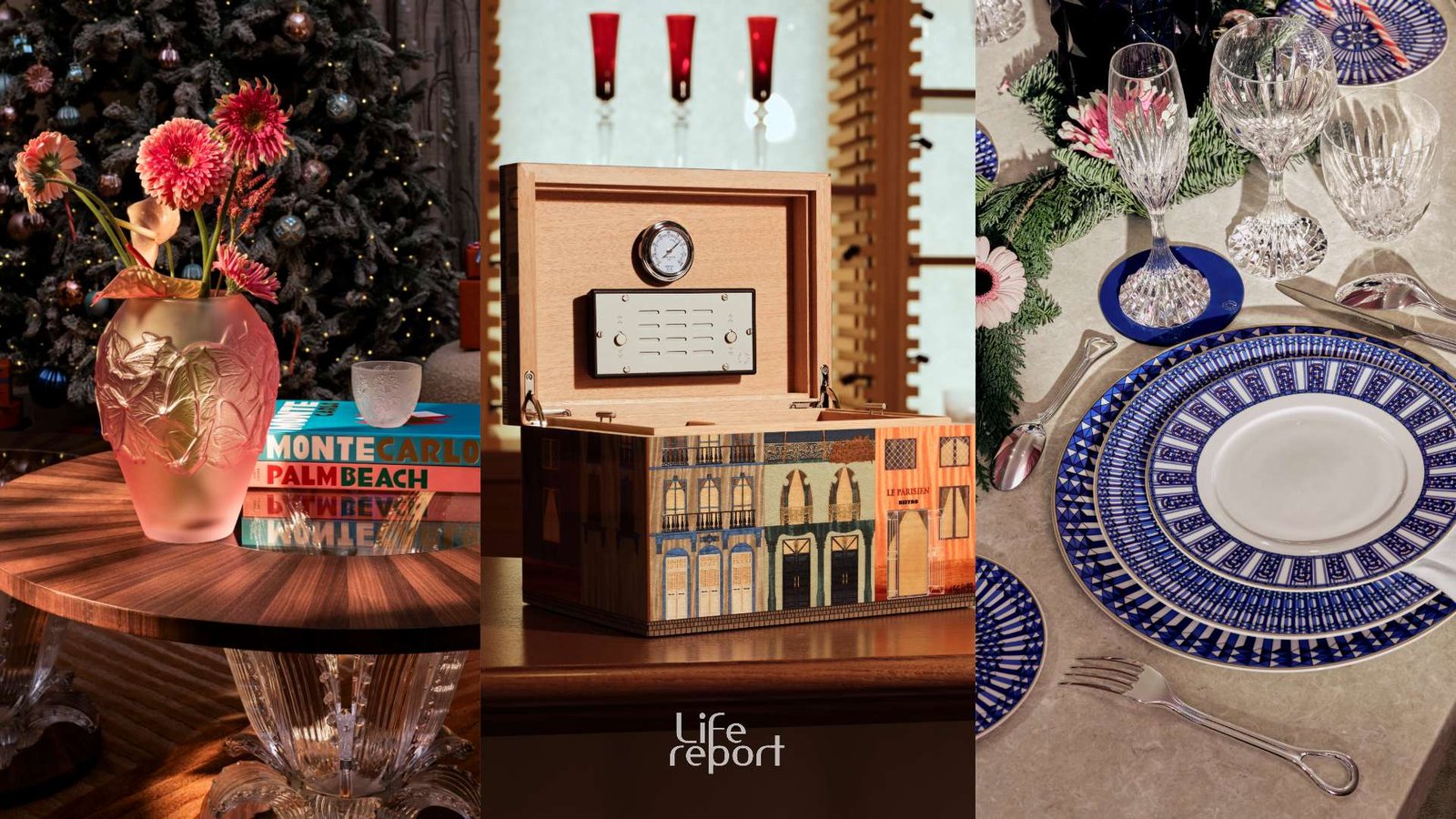
This is where the campaign and the architecture begin to rhyme. The Festive Hour is an invitation to gifting, hosting and the rituals that bring people home to one another, and its edit is deliberately promiscuous in its interpretation of the season’s pleasures – vases and candles for the host who has everything, barware for the friend who insists on a proper martini, glassware and tableware for the table that will be set and reset between now and January, home fragrance, books and games for the long, unhurried hours in between. Tanagra has been curating this universe since 1980, when Michel and Widad Chalhoub opened the first store in Kuwait. Forty-six years and ten regional stores later, it remains the Middle East’s most persuasive argument that a Baccarat Harcourt glass is not merely a vessel but a piece of social choreography. The brand’s name carries a similar double charge: Tanagra was an affectionate nickname for Madame Widad, but it also refers to the terracotta figurines of ancient Greece, depicting graceful women of high status. The metaphor writes itself, and Tanagra has had the good sense not to over-explain it.
View this post on Instagram
What makes The Festive Hour feel genuinely of its moment, rather than merely seasonal, is the changing relationship between luxury and experience. For younger luxury consumers in the UAE – millennials and Gen Z, those who grew up between mall culture and mood boards – the question is not simply whether an object is desirable, but what sort of life it enables. A 2024 American Express Middle East Trendex survey found that 74% of UAE consumers preferred to receive an experiential gift rather than a physical one. The finding is not specific to Gen Z, but it points to a wider appetite for gifts that promise experiences and memories. Homeware, in this logic, becomes a sly workaround. A candle is an object, yes, but it is also an evening; a set of glasses is a dinner party waiting to happen; a board game is a promise of unhurried company. Tanagra is not selling Christmas decorations. It is selling the fantasy of a home in which people actually stay.
The irony, of course, is that this fantasy is being staged inside a mall. The fairy dances through a maison that exists, physically, on the upper level of one of Dubai’s most trafficked retail addresses. But the best luxury has always been fluent in this kind of contradiction – the courtyard in the shopping centre, the hand-drawn illustration in the digital campaign, the ancient Greek name on a contemporary brand. The Festive Hour does not resolve the tension so much as make it pleasurable. It suggests that the rituals of belonging can be purchased, but not quite manufactured; that the right glass, the right scent, the right beautiful, unnecessary little thing might be enough to tip a gathering into a memory. Whether that is a cynical proposition or a sincere one is, by the time the fairy has finished her twirl, beside the point. The door is open. The tea is poured. The season, with all its performative warmth, is waiting to be hosted.
ALSO READ: Kuda Huraa or Landaa Giraavaru? The Four Seasons Maldives Escape That Says More About You Than Your Villa