Barcelona’s Genyum, a perfume house that bottles the air of painters’ studios and the world behind a ballerina’s performance, has arrived at Plethora Perfume Lounge. In a region that treats fragrance as a second language, it is less a product launch than a quiet cultural event – and a timely reminder that the most expensive thing you can wear in Dubai is a story.
There is a particular kind of luxury that announces itself, and a rarer kind that waits to be discovered. The first arrives in gold casing, with a name you can read from across the room. The second smells faintly of turpentine, sea salt and vetiver, and requires you to lean in. Genyum, the Barcelona-based niche perfume house founded by Anna Torrents, belongs emphatically to the latter category. Its arrival at Plethora Perfume Lounge, with locations across the UAE, is precisely the sort of development that distinguishes those who simply buy fragrance from those who collect it.
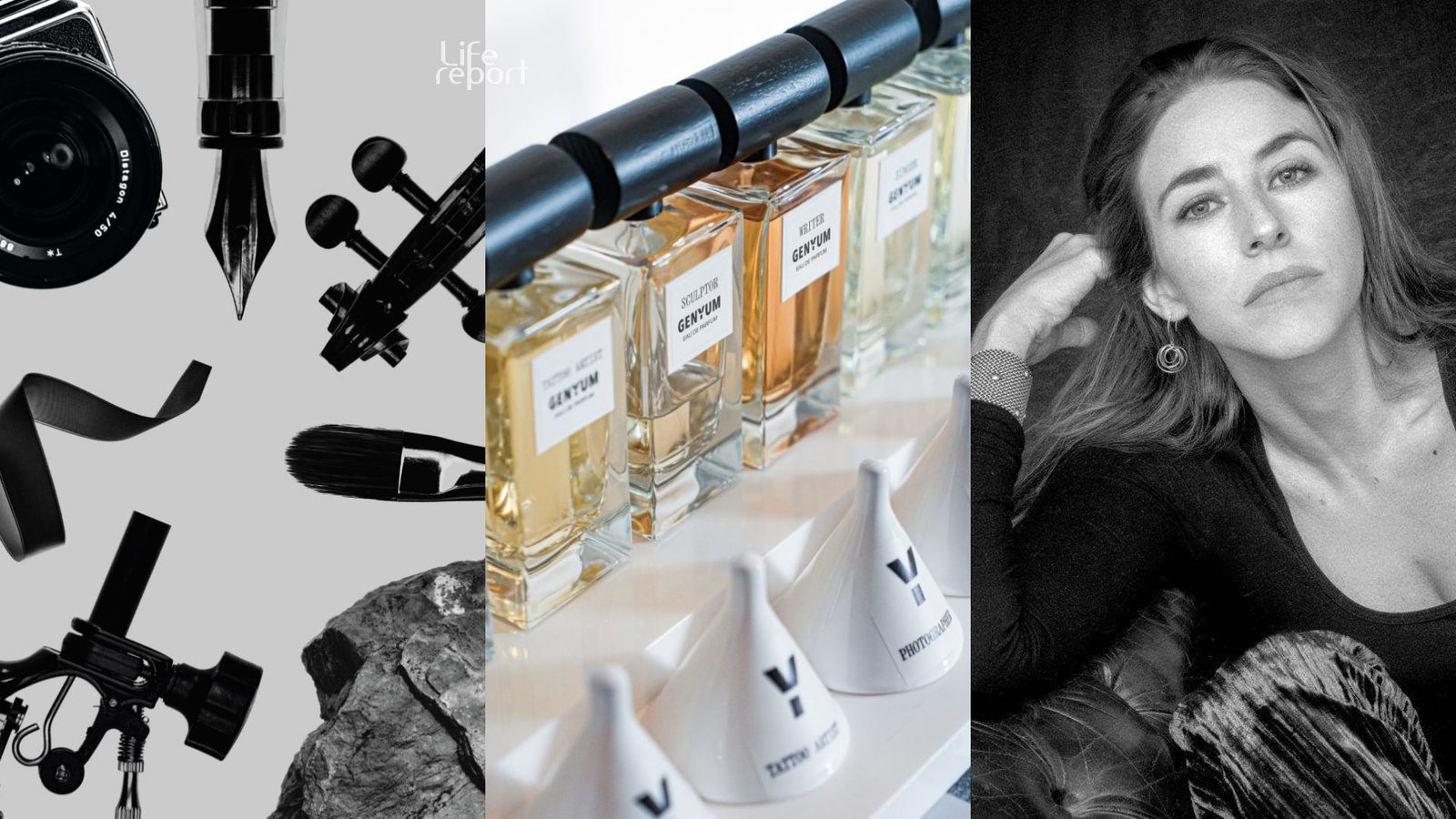
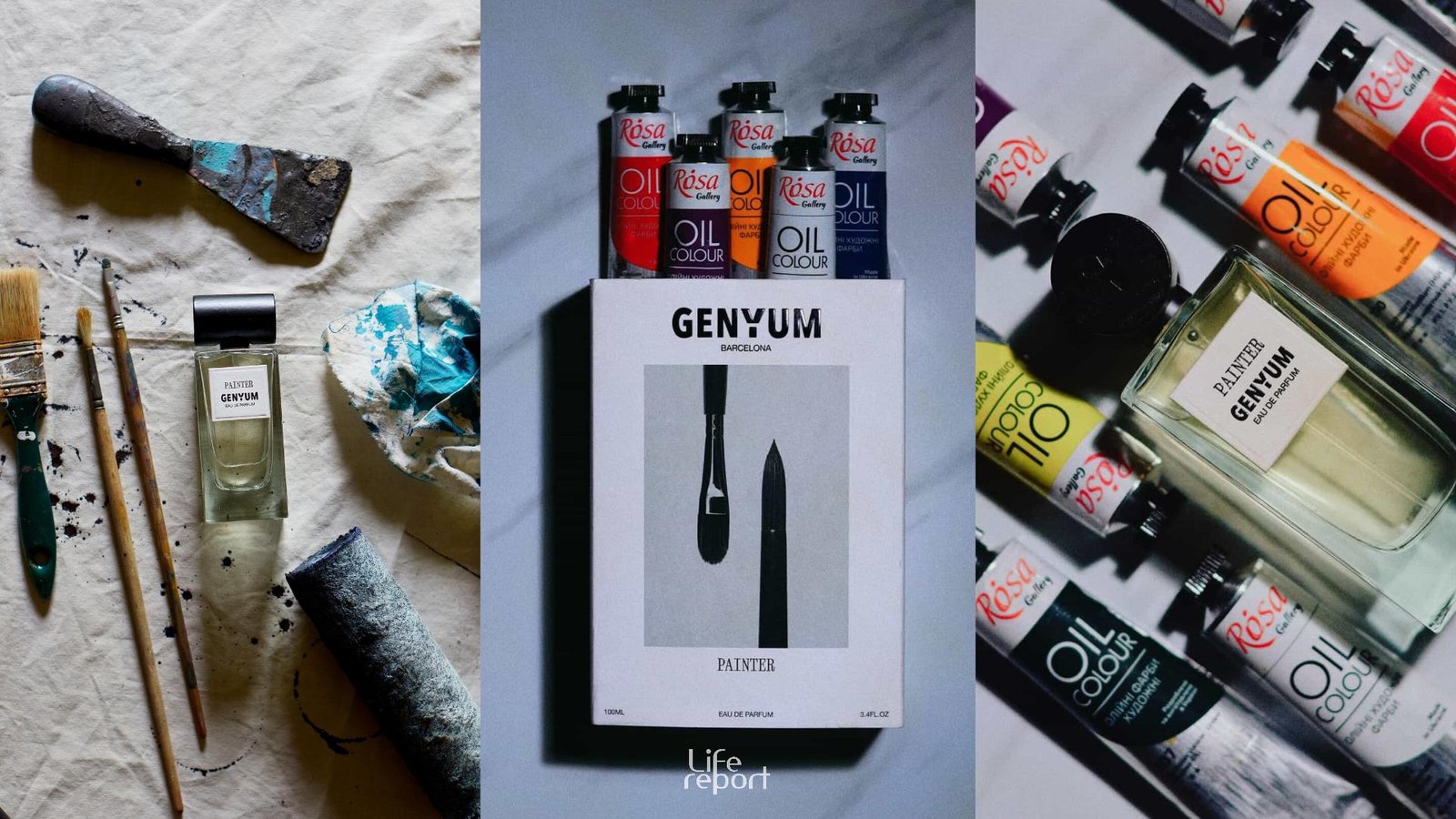
The concept is either profoundly romantic or a masterclass in the blindingly obvious, depending on how much time you have spent inside a working artist’s studio. Genyum does not seek to capture the smell of a finished painting, a marble sculpture or a ballet performance. Instead, it captures the atmosphere of the spaces in which such things are created: the raw materials, the tools, the rituals and the almost fetishistic attachment to a particular brush or a chipped palette knife. The brand was, quite literally, born in a sculptor’s studio, surrounded by iron, copper and other metals tamed by fire. It carries that origin story in its DNA rather than merely in its marketing materials.
After leaving Puig, Torrents built Genyum around a simple provocation: the world had plenty of perfumes dedicated to masterpieces, but precious few devoted to the people who create them. The name is a playful take on ‘genius’, celebrating the Latin idea of a guiding spirit and the modern association with extraordinary creative talent. Her manifesto, reproduced on the brand’s website and in its press materials, reads like a declaration of admiration for the awkward, obsessive, socially inconvenient people who insist on making things:
“You who drown when submerged in social norms, dogmas, economic interests, vulgarity… You who, armed with brush and pen, chisel and torch, music and movement, fight to preserve truth and beauty.” It is the kind of rhetoric that could curdle into pastiche in lesser hands. In Torrents’s, it lands somewhere between a curator’s wall text and a love letter, which is precisely the tone that niche perfumery, at its best, aspires to.
View this post on Instagram
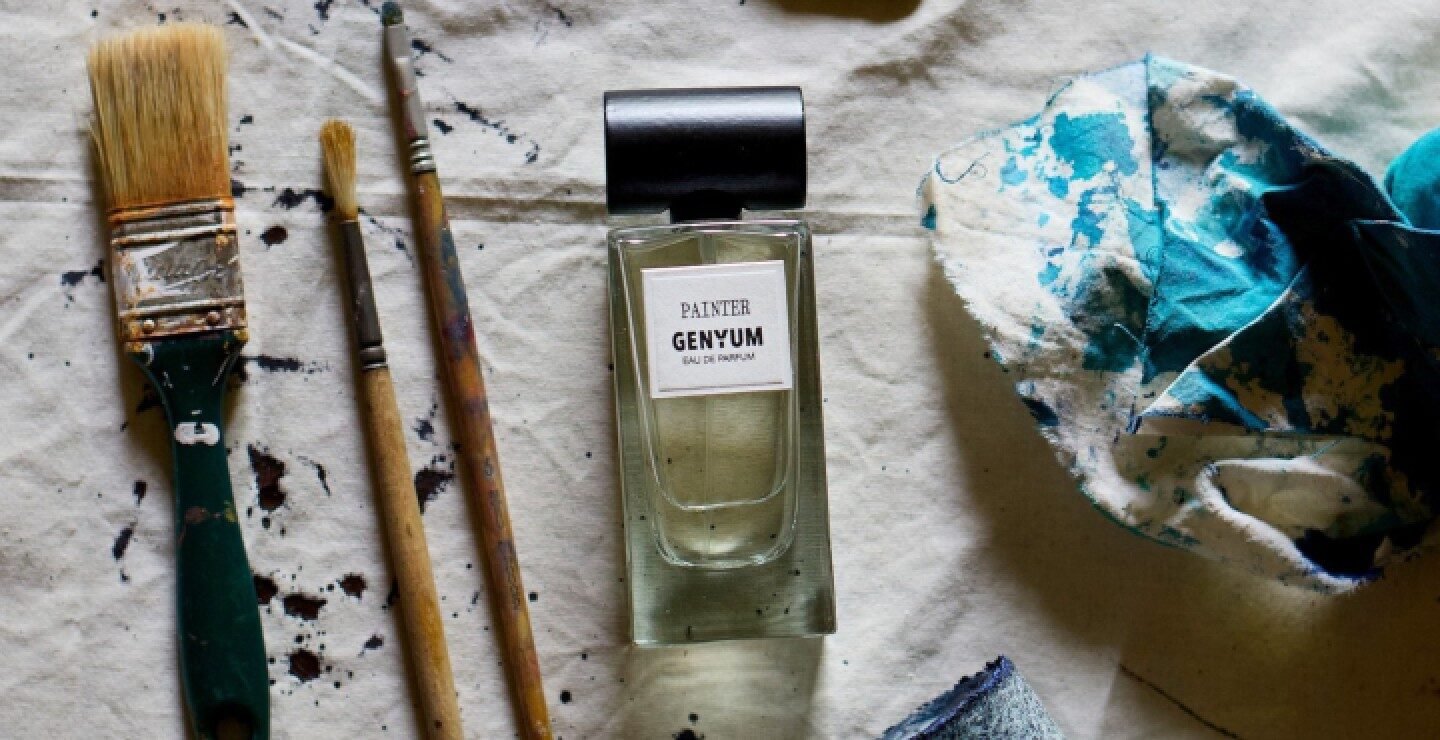
The collection reads like a cast list for a very elegant, slightly unhinged film: Painter, Sculptor, Ballerina, Writer, Actor, Singer, Musician, Photographer and Tattoo Artist. Each fragrance translates Torrents’s creative vision through the individual palette of a professional perfumer. The inaugural trio – Painter, Sculptor and Ballerina – appeared in 2018, with Painter composed by Jordi Fernández. The brief was not to reproduce the literal smell of oil paint but to translate the atmosphere of an artist’s studio into something wearable. Black pepper evokes the resinous, turpentine-like facets of the painter’s materials; laminaria seaweed lends an aquatic, faintly mineral coolness reminiscent of watercolour; and vetiver anchors the composition with the woody character of easels and brush handles. The result is sophisticated, powdery and creamy on the finish, with white amber and musk lingering on the skin like the last light of an afternoon in the atelier.
Torrents has revealed that people have told her they wept upon smelling Painter. One is inclined to file that under the grand tradition of perfumers’ hyperbole, and yet there is something disarmingly plausible about it. Painter is not a pretty scent in the conventional Gulf sense; it does not open with a flourish of rose and oud before settling into a warm, approving cloud. It is abstract, restrained, almost molecular in its refusal to resolve into a single recognisable object. It smells like the idea of making something, which is a far more unsettling and intimate proposition than smelling like the thing itself. In a market saturated with fragrances engineered to please on first encounter, a perfume that asks to be understood is a small act of rebellion.
That rebellion has found a natural stage at Plethora Perfume Lounge, the UAE-based specialist retailer that has spent more than fifteen years curating niche houses for a region whose appetite for fragrance is matched only by its allergy to the ordinary. Established in 2009, Plethora now operates across the Emirates, with locations including The Dubai Mall, The Galleria in Abu Dhabi, Reem Mall and Bawabat Al Sharq Mall. The retailer has positioned itself not simply as a shop but as a destination for fragrance discovery – a distinction that sounds like retail poetry until you actually walk into one of its lounges and realise that the phrase is not entirely unearned. The spaces are designed for lingering rather than transacting, with specialists who are less interested in closing a sale than in decoding an individual fragrance profile. Plethora’s recognition as Best Luxury Niche Perfume Store in the UAE in 2025, followed by the GCC-wide title in 2026 at the Luxury Lifestyle Awards, was not, in that sense, a surprise. It was a formal acknowledgement of something the market had already intuited.
View this post on Instagram
The timing is not accidental. Industry estimates place the UAE fragrance market at around $1 billion in 2025, although valuations vary according to how the category is defined. Dubai’s demographics offer another revealing indication of the market’s character: official 2024 population figures place just under 30 per cent of residents in the 25–34 age bracket. Younger consumers, particularly Gen Z and millennials, are helping reshape the category. The traditional ‘his and hers’ distinction feels increasingly outdated to buyers who approach fragrance as an expression of individual identity rather than a matter of gender. They are also, crucially, experience-literate: they do not simply want to be sold a bottle; they want to be inducted into a world. Plethora’s model – part gallery, part library, part confessional – was built for precisely this sensibility. Genyum’s arrival simply gives it a new chapter to read aloud.
There is a gentle irony here worth savouring. For years, the Gulf’s luxury conversation was dominated by the language of excess: the biggest, the rarest, the most expensive. That conversation has not disappeared, but it has acquired a new vocabulary. The flex is no longer simply the logo on the bottle but the provenance of the juice inside it: the name of the perfumer, the story of the house, the obscure ingredient with an unpronounceable origin. Plethora understands this better than most. Its shelves are stocked with the kind of brands that require a paragraph of explanation, and its staff are trained to supply that paragraph without making customers feel as though they have wandered into a lecture. The lounge format, for all its retail-speak connotations, acknowledges that discovery has become the ultimate luxury commodity. Time, attention and expertise are now more scarce, and therefore more valuable, than another bottle of something familiar.
Genyum fits this landscape with unusual precision. It is Spanish, giving it a perspective slightly removed from the traditional Anglo-French axis of perfumery; it is conceptually rigorous without being forbiddingly intellectual; and it wears its sustainability commitments lightly rather than as a badge. The fragrances are vegan and not tested on animals, while the packaging is made from recyclable materials. The ingredients are sourced and produced with consideration for environmental sustainability and the well-being of local communities – commitments that matter to a generation that reads labels with the same attention their parents once reserved for stock prices. None of this would count for much if the juice itself were forgettable. It is not. Photographer, one of the collection’s newer creations, was presented at Pitti Fragranze in Florence in 2025 and composed by Amélie Jacquin. It opens with pink peppercorn, nutmeg and cardamom before settling into a sandy, solar warmth that evokes the golden hour captured through a viewfinder. It is the olfactory equivalent of a well-edited camera roll: nostalgic, precise and quietly expensive.
What Genyum offers the Gulf consumer, ultimately, is not merely a fragrance but a permission slip. Permission to smell like a studio rather than a salon. Permission to wear something that requires a sentence of explanation. Permission to be the person at a dinner party who, when asked what they are wearing, names a Barcelona perfume house and a painter’s ritual rather than a department-store bestseller. In a city that has perfected the art of the entrance, there is something almost subversive about a scent that rewards a closer look. It does not shout. It does not sparkle. It sits on the skin like a thought you cannot quite finish, lingering long after the room has moved on. Which is, when you think about it, exactly what a work of art is supposed to do.
ALSO READ: Love, Without the Screwdriver: Cartier Reinvents Its Most Iconic Bracelet