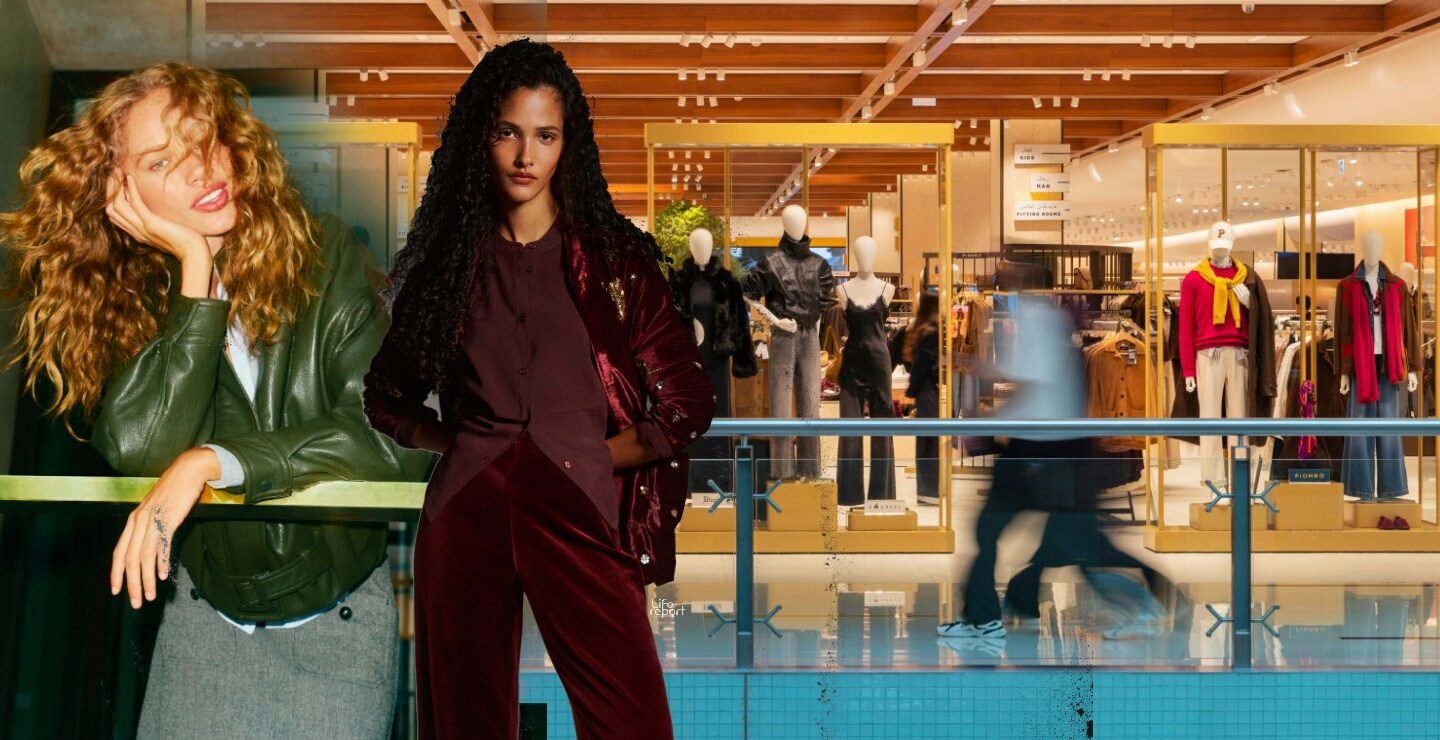
The yellow sign hangs a few hundred metres from the world’s tallest building, on the Waterfall side of the first floor, where the cascade cuts through four floors of Dubai Mall like a stage curtain that never quite falls. It is a strange place to preach the gospel of anti-labelism. Around it, the world’s most visited retail destination – welcoming 111 million visitors in 2024 alone – hums with the quiet violence of logos: monograms on handbags, crests on trainers, initials on belt buckles, the entire semiotic arsenal of contemporary status arranged in a horseshoe at the foot of the Burj Khalifa. And yet there it is, in Italian yellow: Love People. Not Labels.
The irony is not lost on Stefano Beraldo. OVS’s chief executive has spent more than a decade turning a Venetian high-street chain into something more structurally ambitious than the word ‘affordable’ usually allows, and he knows exactly how the sentence sounds inside a mall where the rent for a single square metre of Fashion Avenue could probably fund a small film festival. But Beraldo is not here to apologise for the contradiction. He is here to exploit it. ‘Dubai,’ he says, with the unruffled confidence of a man who has just signed a ten-million-euro cheque, ‘is the belly button of the world’.
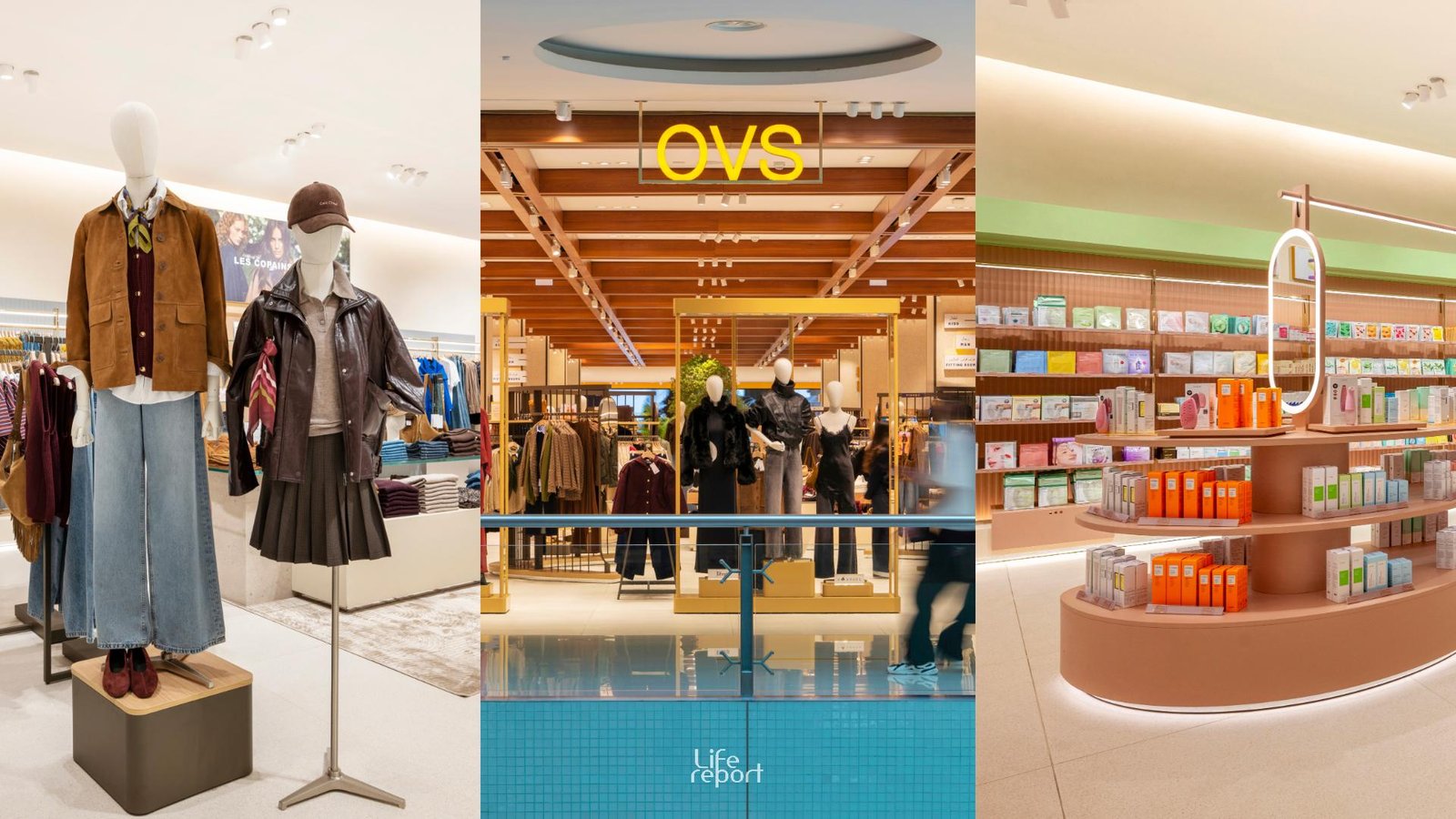
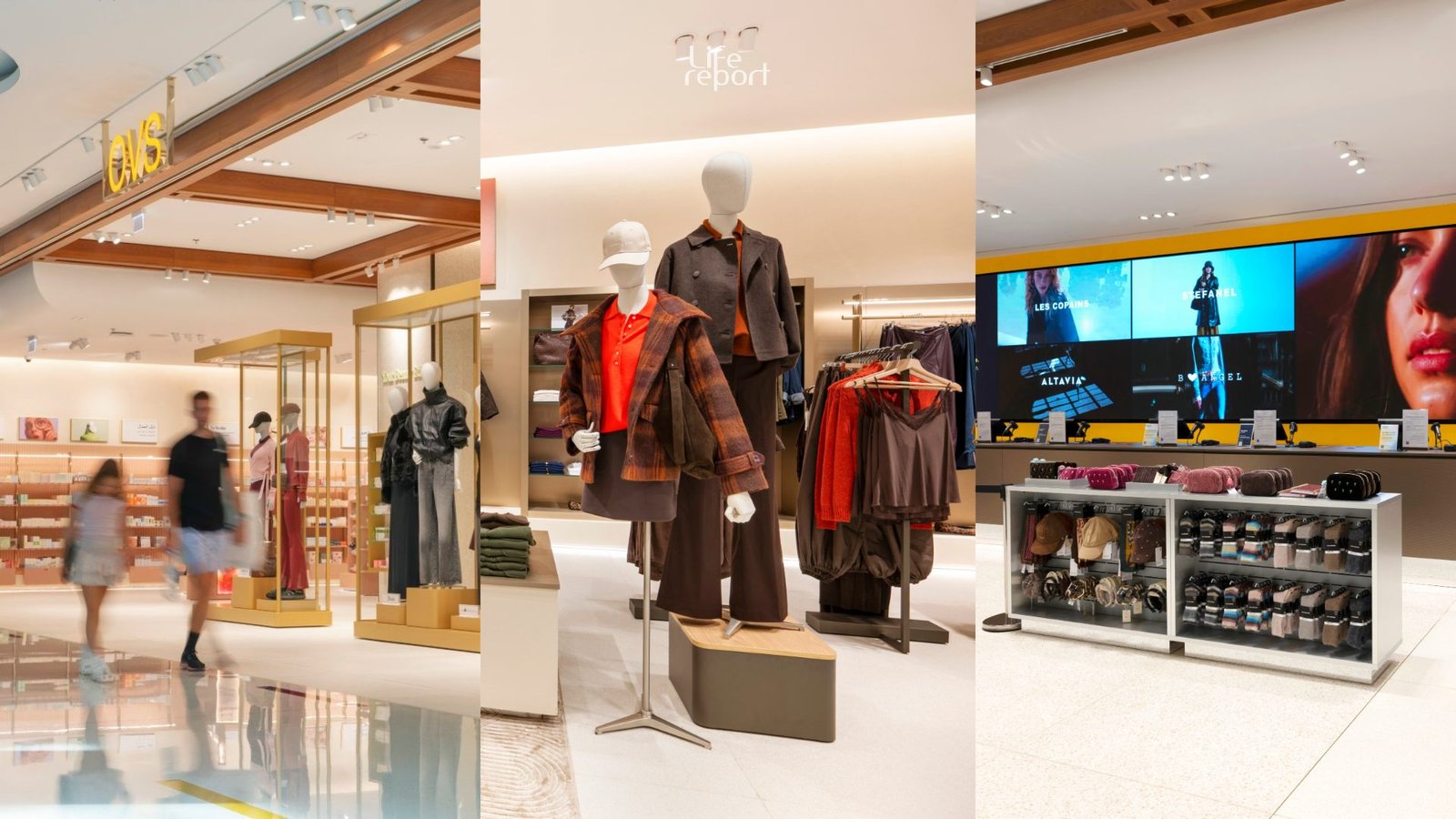
The store itself is the largest OVS has ever built: spanning more than 2,500 square metres, directly operated rather than managed through a local partner, stocked with premium collections and featuring a capsule designed exclusively for the UAE market. It opened in September 2026, following a year and a half of negotiations over a space vacated by a brand in difficulty, and its footprint accommodates the entire architecture of the group’s self-conception – what Beraldo calls the House of Brands. OVS and OVS Kids sit alongside Piombo, the colour-saturated label helmed by creative director Massimo Piombo; Les Copains, the Bologna-born knitwear house now repositioned as the group’s quiet-luxury proposition; Stefanel, the Italian femininity specialist, growing at twenty-five per cent on a like-for-like basis; B.Angel and Utopja for the digitally native consumer; Altavia for the yoga-to-espresso continuum; Goldenpoint for the unmentionables; and Shaka, the beauty concept making its largest physical debut anywhere in the group’s portfolio.
On paper, this reads like a department store by another name. In practice, it is something subtler: a wager that the next generation of Gulf consumers does not want a single brand to define them because they refuse to be defined by a single brand. The research bears this out with almost tedious consistency. Gen Z and younger millennials in the Gulf have grown up as social-media natives, exposed to the world’s finest labels through Instagram and TikTok, and have emerged not as logo-maximalists but as something closer to curators of identity. A logo, as one luxury strategist put it, is often irrelevant; what matters is the story, the texture, the sense that an object was chosen rather than inherited. They are, in the argot of the industry, logo-agnostic – which is a polite way of saying they will happily buy the label, so long as the label does not do the talking for them.
This is where the Dubai Mall flagship stops being a retail story and becomes an exercise in cultural positioning. OVS is not selling cheap clothes to people who cannot afford expensive ones. It is selling a portfolio of aesthetic identities to people who could afford anything but have grown bored of being told what to want. Piombo’s exuberant colour and travelling-man eclecticism appeal to the region’s cosmopolitan émigré class; Les Copains offers the kind of understated Milanese tailoring that reads as intelligence rather than expense; Stefanel delivers the quiet, versatile knitwear that the Gulf’s professional women actually wear between air-conditioned appointments. And Shaka – stocked with Korean skincare and Italian indie labels, and presented in the group’s largest beauty format to date – is the stealth weapon. Beauty has become a strategic growth category and a gateway for younger consumers who may be prepared to spend on a serum before investing in a suit. The beauty aisle is, in every sense, where the next decade of customer loyalty will be won.
View this post on Instagram
None of this would matter if the store were empty. But the early numbers are, by Beraldo’s own slightly astonished admission, stubbornly good. In its first month, despite Gulf tourism having fallen by as much as seventy per cent and regional travel patterns having been convulsed by conflict, the Dubai flagship was still tracking to budget. Half of the people walking through its doors are under thirty-five; eighty per cent are under forty-five. Those are not the demographics of a value retailer hoping to catch a tourist’s spare dirham. They are the demographics of a market that has been told for two decades that luxury means one thing and has decided it would rather mean several.
The architecture of the store reflects this. The design is described by the company as ‘refined and elegant’, which is the language of a brand that has no intention of shouting. But the real innovation is spatial: distinct brand worlds arranged beneath a single roof, each with its own aesthetic temperature, while sharing logistics, sourcing and consumer data. It is a model that allows OVS to hedge. If Piombo’s colour fails to seduce a customer, Stefanel’s grey may do so. If the mother is unmoved by B.Angel’s streetwear, the daughter may not be. The House of Brands is not a monolith; it is a portfolio of arguments, and Dubai is the testing ground for which arguments work on which demographics, at which price points and in which postcodes.
Beraldo is candid about the calculation. The store is a showroom as much as a shop, a calling card for potential franchise partners across the region and a laboratory for merchandising decisions that will eventually inform the group’s Italian heartland. The UAE operation is directly managed by OVS, without a local franchise partner or intermediary, which means the group controls its own destiny but also carries its own risk. The company has opened a logistics hub that has cut delivery times by up to a month and a half, and it is already preparing an Abu Dhabi outpost for spring 2027. The wider ambition, floated without much theatricality, is to reach between €2.7 billion and €3 billion in revenue within five years, up from €1.74 billion in 2025. Whether that figure is achieved through Dubai, Mumbai, Madrid or Montevideo is, from the boardroom’s perspective, a matter of arithmetic rather than romance.
And yet the romance is the point. There is something almost novelistic about a brand founded in 1972, with more than 2,600 stores and a philosophy rooted in the Italian everyman, planting its largest flag in a mall where the average transaction could feed a village. The claim Love People. Not Labels. won the Best Advertising Campaign award at Italy’s 2020 Diversity Media Awards, and it would be easy to dismiss it as a marketing flourish – the kind of slogan that looks good on a tote bag and evaporates at the till. But inside Dubai Mall, surrounded by the most concentrated display of label-worship on the planet, the sentence acquires an unexpected gravity. It is not an argument against aspiration. It is an argument about where aspiration should be allowed to reside: in the cut of a trench coat, the weight of a knit, the colour of a jacket – in the thing itself, rather than the name attached to it.
Massimo Piombo, who designed the exclusive UAE pieces and speaks about clothes the way a curator speaks about paintings, puts it more elegantly than any press release could. Elegance, he says, is not about showing what you can afford; it is about recognising the authentic value of things, the substance beneath the appearance. It is a sentence that could have been written by a Milanese tailor in 1958, and it is precisely the kind of sentiment that a twenty-five-year-old in Dubai, raised on a diet of global luxury and allergic to being marketed at, might actually believe.
The yellow sign will flicker above the waterfall for years, or it will not. Retail is a brutal business, and sentiment is no substitute for footfall. But for now, at least, the most interesting thing about the OVS Dubai Mall flagship is neither its size nor its investment, nor even its beauty concept. It is the fact that a brand built on the idea of accessible Italian style has looked at the most label-obsessed generation in the most label-obsessed city on earth and decided that the way to win them is to tell them, very politely, to ignore the label. Whether that is cynicism or sincerity is almost beside the point. In a market this sophisticated, the two have a habit of looking identical.
ALSO READ: From Worthless Coins to Priceless Art: How Yaw Owusu Turns Ghana’s Pesewa into Gold