
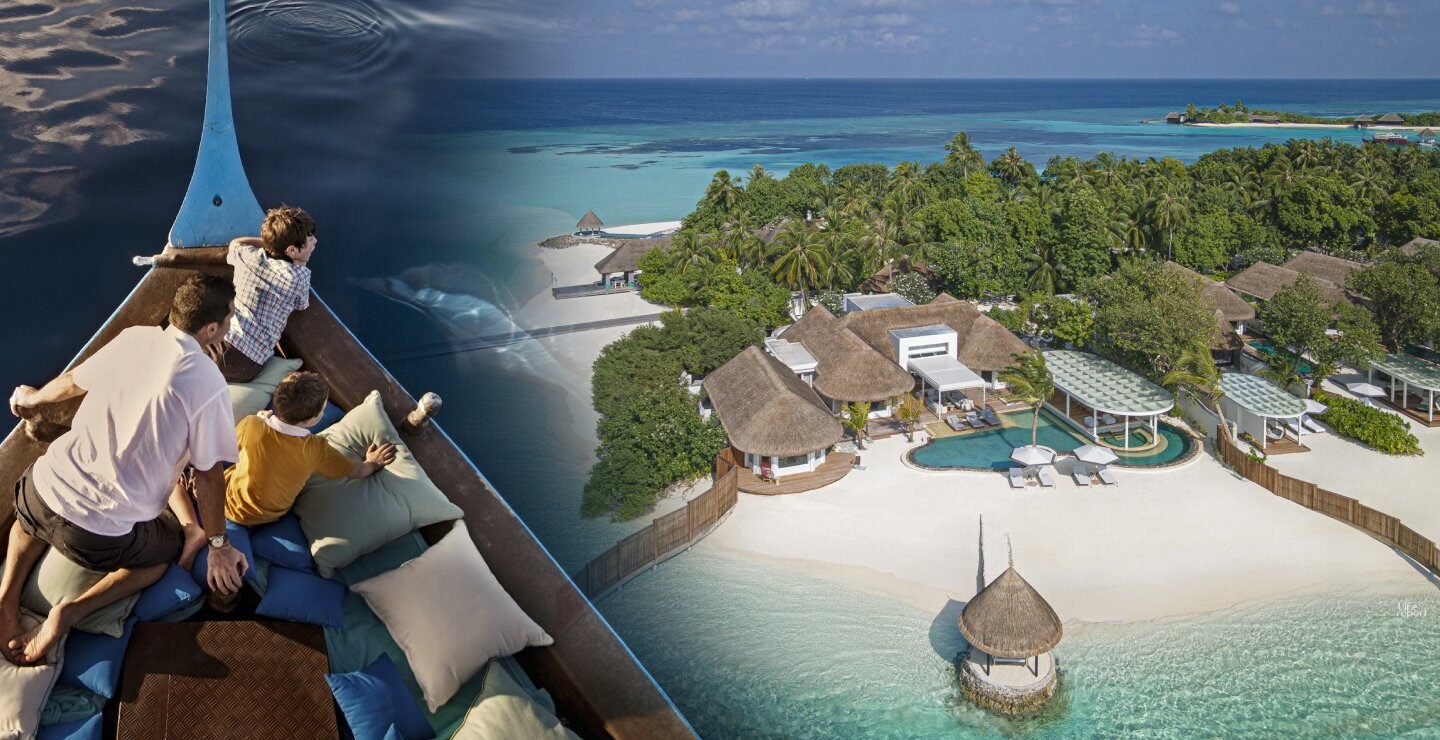
Forget the fireworks: in the UAE, the real sign that Eid Al Etihad is approaching is the sudden outbreak of seaplane emojis in the group chat. Villa screenshots follow, someone starts comparing overwater pools, and before long, half the neighbourhood seems to be heading for the Maldives.
In 2025, dnata Travel ranked the archipelago as the most-booked international destination for UAE travellers over the National Day break, with bookings for Maldivian island resorts more than doubling year on year. The annual exodus has become so predictable that it almost qualifies as a national tradition of its own. Yet there is something rather ironic about an archipelago of nearly 1,200 islands being reduced to the same familiar postcard: turquoise water, an overwater villa, a floating breakfast and the obligatory caption about ‘island time’. The Maldives, as it happens, has considerably more to offer than a photogenic pool and a well-positioned pineapple.
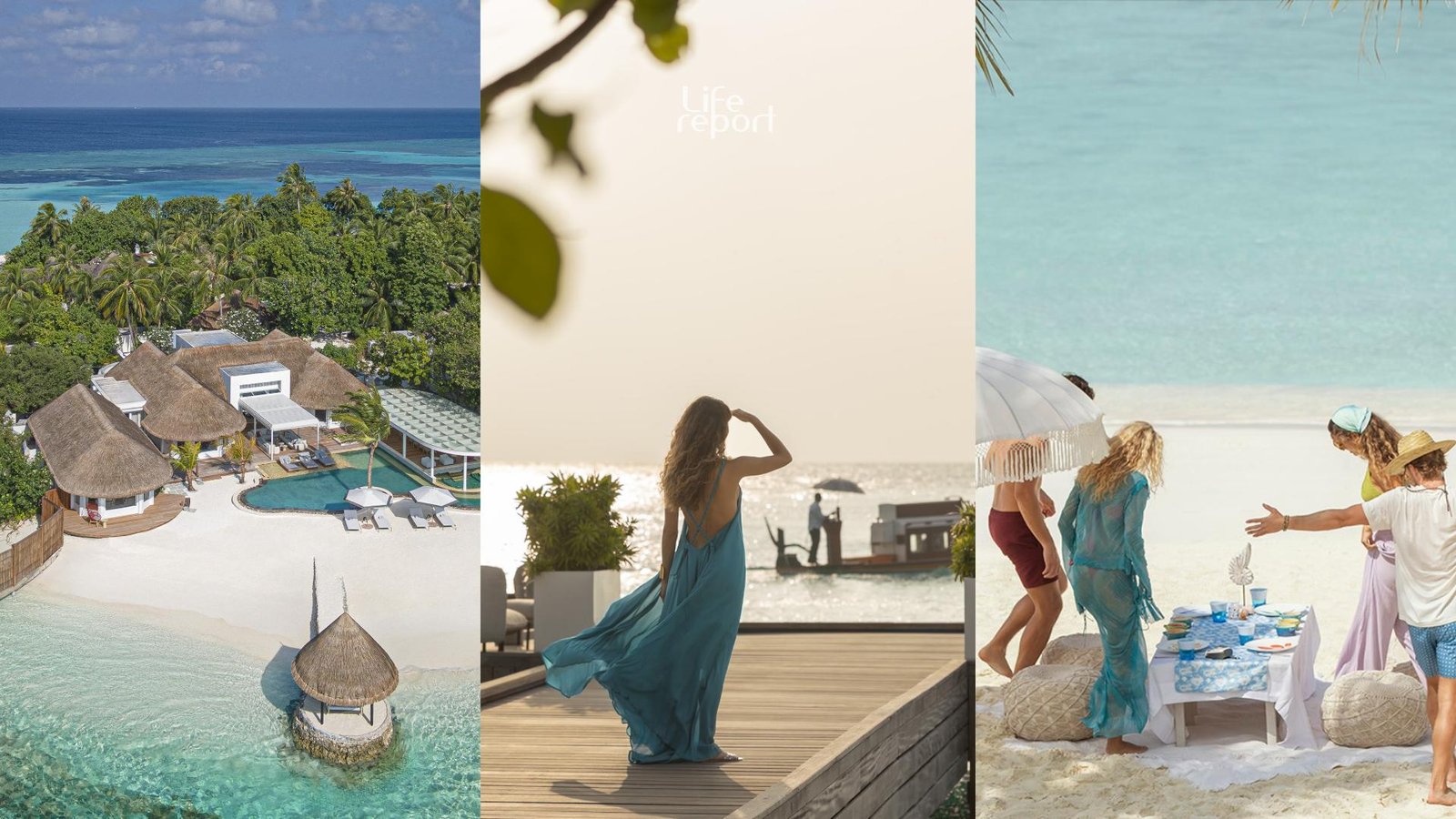
The irony is that the Maldives, at its best, is not a stage set at all. It is a place that quietly dismantles the very idea of an itinerary. Four Seasons, which has been operating in the country for two decades, has witnessed the evolution of its guests from honeymooning couples to multi-generational families and understands this better than most. Its two resorts – Kuda Huraa in the North Malé Atoll and Landaa Giraavaru within the Baa Atoll UNESCO Biosphere Reserve – offer not two tiers of the same experience, but two entirely distinct arguments about what an island escape might be. One is a village. The other is a wilderness. Choosing between them is less a matter of budget than of temperament, and the choice says more about you than any villa category ever could.
Kuda Huraa is the convivial one, a garden island that hums with the sociable energy of a Maldivian settlement rather than the hush of a sanatorium. The architecture is deliberately rooted in place: thatched roofs, timber floors, carved lattice screens and the kind of barefoot ease that reads as effortlessness but is, in fact, the product of considerable design discipline. It is also, improbably, a serious surf destination. Six world-class breaks – Sultans, Honkies, Cokes, Chickens, Ninjas and Jails – are within a fifteen-minute boat ride, and the resort’s annual Surfing Champions Trophy has attracted names such as Kelly Slater and Michel Bourez. The 2026 edition also featured Maldivian surfer Ahmed Hishaam and was won by Brazil’s Caio Ibelli. There is something quietly satisfying about a luxury resort where the most animated dinner conversation is about a swell window rather than a seating plan.
The dining follows the same logic. Baraabaru, the resort’s Indian restaurant, extends twenty-five metres over the lagoon on a torch-lit deck with timber columns inspired by the architecture of Kerala. Its appeal rests as much on the food as on the setting. The new Three-Bedroom Kuda Estate, unveiled in early 2025, is the resort’s most eloquent statement of intent: 467 square metres of interior space and 214 square metres outside, three standalone bedroom villas connected by communal indoor-outdoor living areas, a 139-square-metre infinity pool, and interiors that pair white, teal and deep purple with B&B Italia sofas. There is also the island’s only private sea-view gazebo. It is a house for people who like each other but also like the option of not being in the same room – a distinction that becomes increasingly important when three generations are involved.
View this post on Instagram
Landaa Giraavaru makes the opposite case entirely. It occupies an entire forty-four-acre island within the Baa Atoll UNESCO Biosphere Reserve, and its architecture carries the unmistakable DNA of Geoffrey Bawa by way of his protégé Ismail Murad: long, low lines, indigenous materials and a deference to the landscape that feels less like a style than a philosophy. Where Kuda Huraa bustles, Landaa exhales. A 2.5-kilometre lagoon forms part of the island’s western edge, and the resort’s centre of gravity is the water – specifically, the extraordinary marine life that gathers in these currents. The Maldives Manta Conservation Programme, the founding project of the Manta Trust, has been based here since 2005, and the resort publishes ‘hot dates’ for manta aggregations with the confidence of a Michelin kitchen announcing its truffle season. The 2025 season recorded an estimated 4,265 reef manta sightings, alongside 28 whale sharks, 16 devil rays and 10 oceanic mantas – a set of figures that reads like hyperbole until you find yourself in the water, watching a creature the size of a small car bank slowly beneath you with the unhurried authority of something that has been doing this for millennia.
The wellness offering at Landaa has acquired a reputation that extends well beyond the usual hotel-spa platitudes. AyurMa, the resort’s Ayurvedic retreat, was included in Vogue’s 2026 Global Spa Guide, which described its treatment spaces – stone bathtubs, strychnine-wood beds and an ambient om soundscape tuned to 432 hertz – as ‘some of the most thoughtfully conceived’ the writer had encountered. Panchakarma programmes run for two to three weeks; shorter immersions are available for the merely curious. The point is not deprivation but recalibration, a word that has become something of a cliché in wellness circles but here feels almost literal. You arrive with a nervous system set to Dubai speed and leave with something closer to the rhythm of the tide.
The Four-Bedroom Landaa Estate, reimagined in 2025, is the island’s flagship address: 800 square metres of interior space and 2,000 square metres outside, four bedrooms across separate pavilions, eighty metres of private beach, a twenty-metre lap pool, a sunken lounge, a library and a rooftop terrace. The furniture is a quiet roll-call of European design intelligence – Flexform, Paola Lenti, Gervasoni, Roda and Kettal – softened by hand-carved coral-stone screens that nod to Maldivian craft traditions rather than simply importing a Milanese showroom. It is, in the current vernacular, quiet luxury. But the phrase has been so thoroughly abused that it risks losing meaning. What the Landaa Estate actually offers is something simpler: the luxury of not having to explain yourself. Space, silence and the absence of anyone else’s idea of a good time.
View this post on Instagram
And yet the most unexpectedly compelling argument for Four Seasons’ Maldives outposts may be the one that has least to do with thread counts. The resorts’ marine conservation programme, run in partnership with Reefscapers, planted its 9,000th coral frame in March 2025 – a milestone in a project that began in the wake of the 1997–98 El Niño bleaching event and has grown into one of the Indian Ocean’s largest artificial reef restoration efforts, covering 3.05 acres. The coral-frame technique developed through the programme is now used by conservationists worldwide. An AI-enabled catamaran developed on-site in 2020 helped advance reef monitoring and, according to Four Seasons, led to the publication of the world’s largest coral-restoration study to date in Nature Ecology & Evolution. Children aged eight to twelve can join the Junior Marine Savers programme at Kuda Huraa, learning about coral propagation, turtle rehabilitation and dolphin research; teenagers at Landaa can join the Trainee Marine Biologist programme, working alongside resident marine biologists on manta identification and coral-restoration projects. The gentle irony is unavoidable: your teenager may return from the Maldives wanting to discuss coral bleaching rather than the latest TikTok trend. Consider yourself warned.
This is, perhaps, part of the reason the Maldives remains such a dependable National Day choice – not the overwater villas, not the floating breakfasts, but a growing suspicion among younger UAE travellers that luxury without substance is beginning to feel suspiciously like a very expensive form of boredom. Recent research into UAE Gen Z travel preferences points in a similar direction: a 2025 Wyndham Hotels & Resorts study found that 63 per cent of respondents preferred accommodation that reflected local culture. The Crown Prince of Dubai’s much-publicised 2019 escape to a private Maldivian island was a high-profile reminder that seclusion has long been part of the archipelago’s appeal. The islands have become a place where the region’s more thoughtful travellers go not to be seen, but to recalibrate – to remember that the opposite of a packed calendar is not emptiness but presence.
The choice between Kuda Huraa and Landaa Giraavaru, then, is not really a choice between two resorts. It is a choice between two modes of attention. Kuda Huraa is for the family that wants to do things together – surf, dive, eat well, laugh at the same jokes – and to do them in a setting that feels alive rather than curated. Landaa Giraavaru is for the family that wants to disappear into something larger than itself: the reef, the atoll, the slow metabolism of an island that has been here far longer than any of us and will be here long after the group chat has moved on to the next destination. Both are, in their own ways, acts of resistance against the prevailing idea that a holiday must be documented to be real.
Eid Al Etihad commemorates the union of the seven emirates in 1971, bringing together something greater than the sum of its parts. It is a strange and rather beautiful coincidence that the Maldives – an archipelago of nearly twelve hundred islands, scattered across the Indian Ocean like an afterthought – should offer a similar lesson in miniature. The Four Seasons version of that lesson is not shouted. It is whispered, over the sound of the tide, in a villa that feels less like a hotel room than a well-edited life. Turn your clocks to island time. The rest, as they say, can wait.
ALSO READ: Bentley Torcal First Edition: The Future of Electric Luxury


