Dubai has a new luxury obsession, and it comes in a paper cup. Forget the supercars, penthouses and designer accessories for a moment: the latest status symbol is a flat white made with camel milk, enriched with house-made pistachio paste and crowned with a whisper of saffron. Yes, camel milk. In a city where the extraordinary is practically an everyday expectation, even coffee needs a plot twist. Enter Drinkit, whose distinctly local creation arrives at an especially symbolic moment: four years after the chain first ventured into the UAE, as the nation prepares to celebrate 55 years of federation. It is a rather delicious collision of heritage, ambition and caffeine – and one that Dubai’s brand consultants would probably love to take credit for.
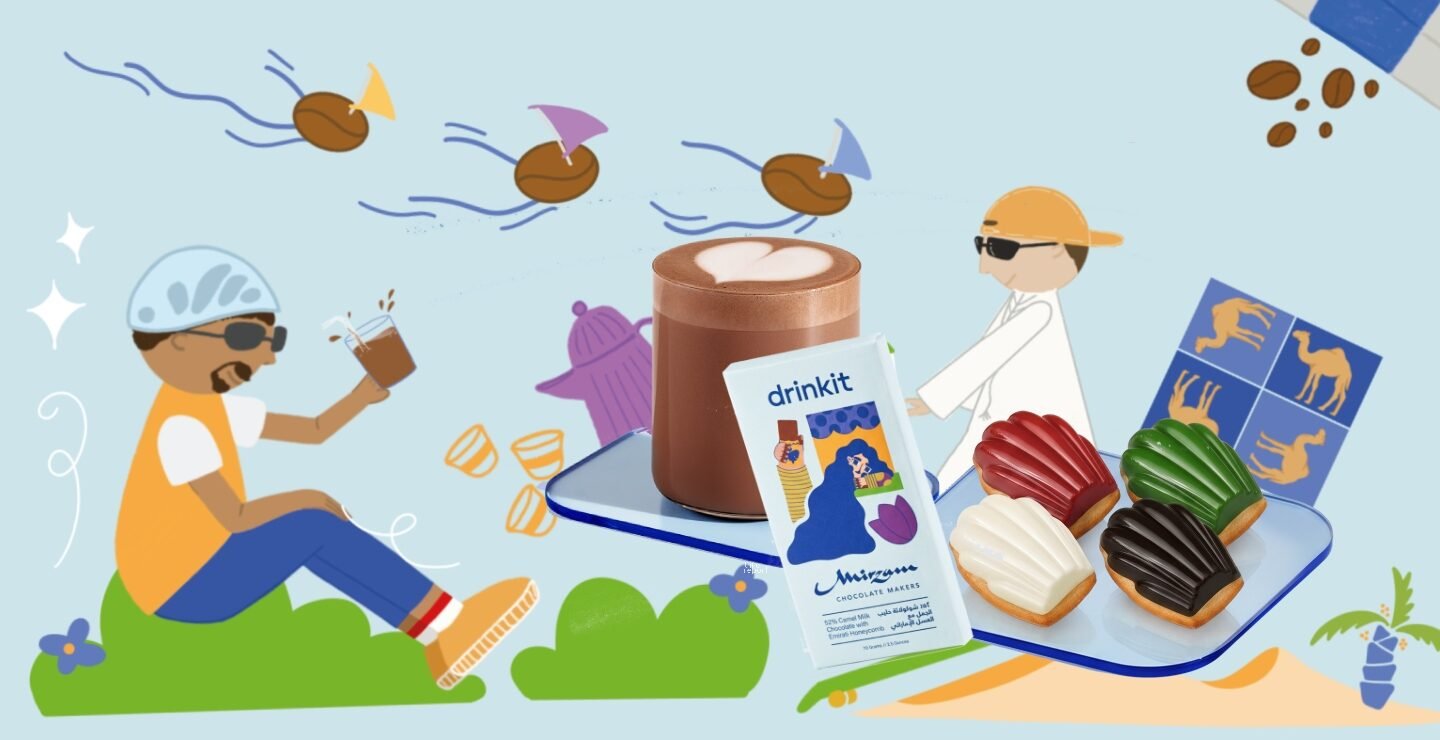
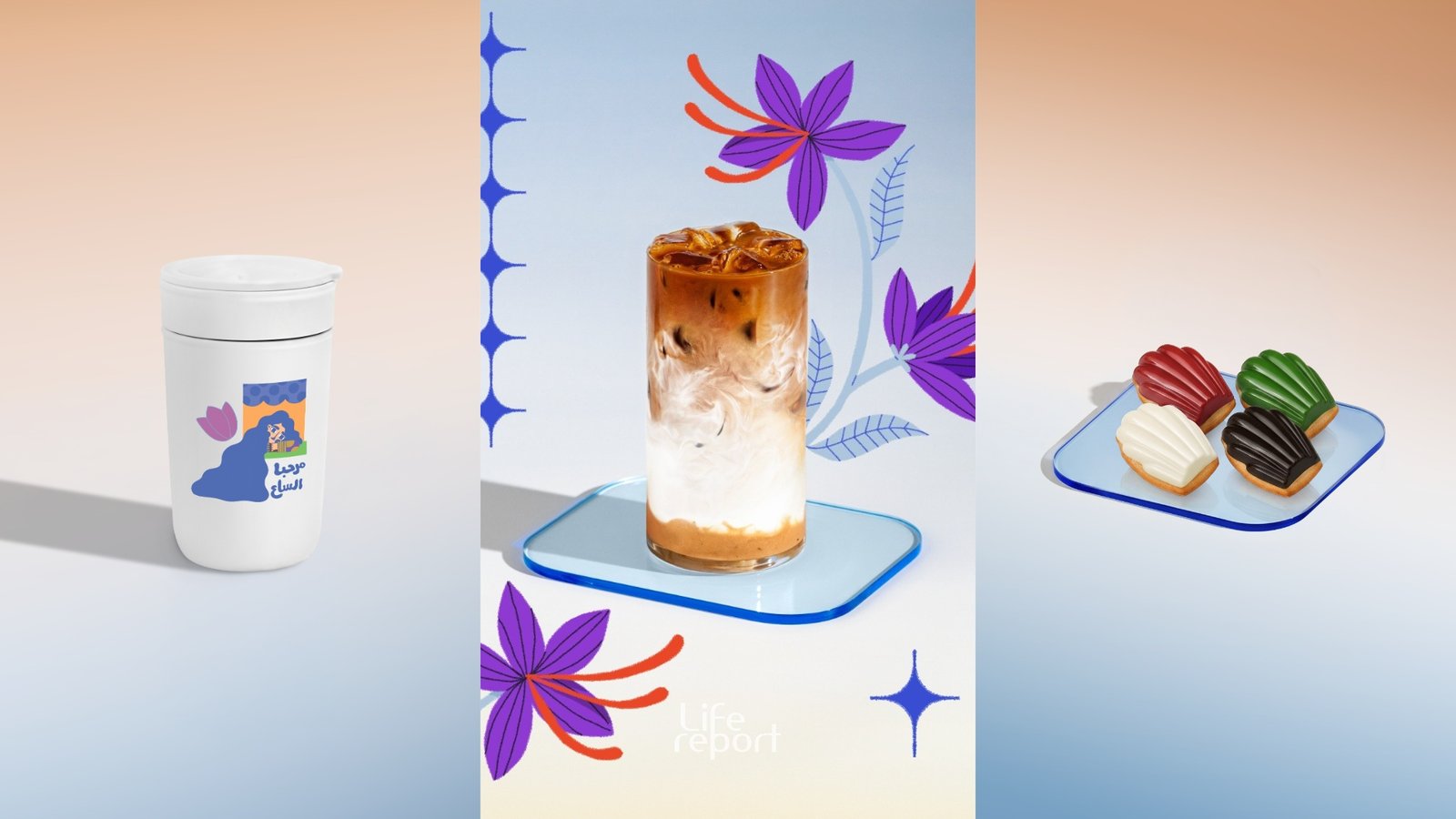
Drinkit’s ‘Proud to Grow in the UAE’ campaign is, on the surface, a limited-edition menu and a collaboration with three artists from the UAE’s creative scene. Beneath the surface, it is something more quietly subversive: a digital-first coffee chain – one that says 97 per cent of its orders are placed online rather than across a counter – attempting to reintroduce warmth. The irony is not lost on anyone who has stood in a Dubai coffee queue, watching customers place their orders through a kiosk screen while baristas prepare the drinks. Yet the campaign earns its sincerity. The artists – Mariam Alobeidli, whose whimsical illustrations have featured in campaigns for everything from Al Ain Farms to Gold Apple; Raghad Murad, the founder of Waggish, a sticker brand that has evolved into a wider creative label; and Hind Othman Alhammadi, the muralist known as ‘art of h’, whose work brings colour to bus shelters and public spaces across the Emirates – have produced original artwork that now appears on packaging, in-store screens and merchandise, as well as in a limited-edition collectable print. It is a far cry from the stock-photo falconry that usually passes for ‘local’ in Gulf marketing. Dareesha, the creative community that brought the three together, has achieved what few campaigns manage: making ‘heritage’ feel like a living practice rather than a museum label.
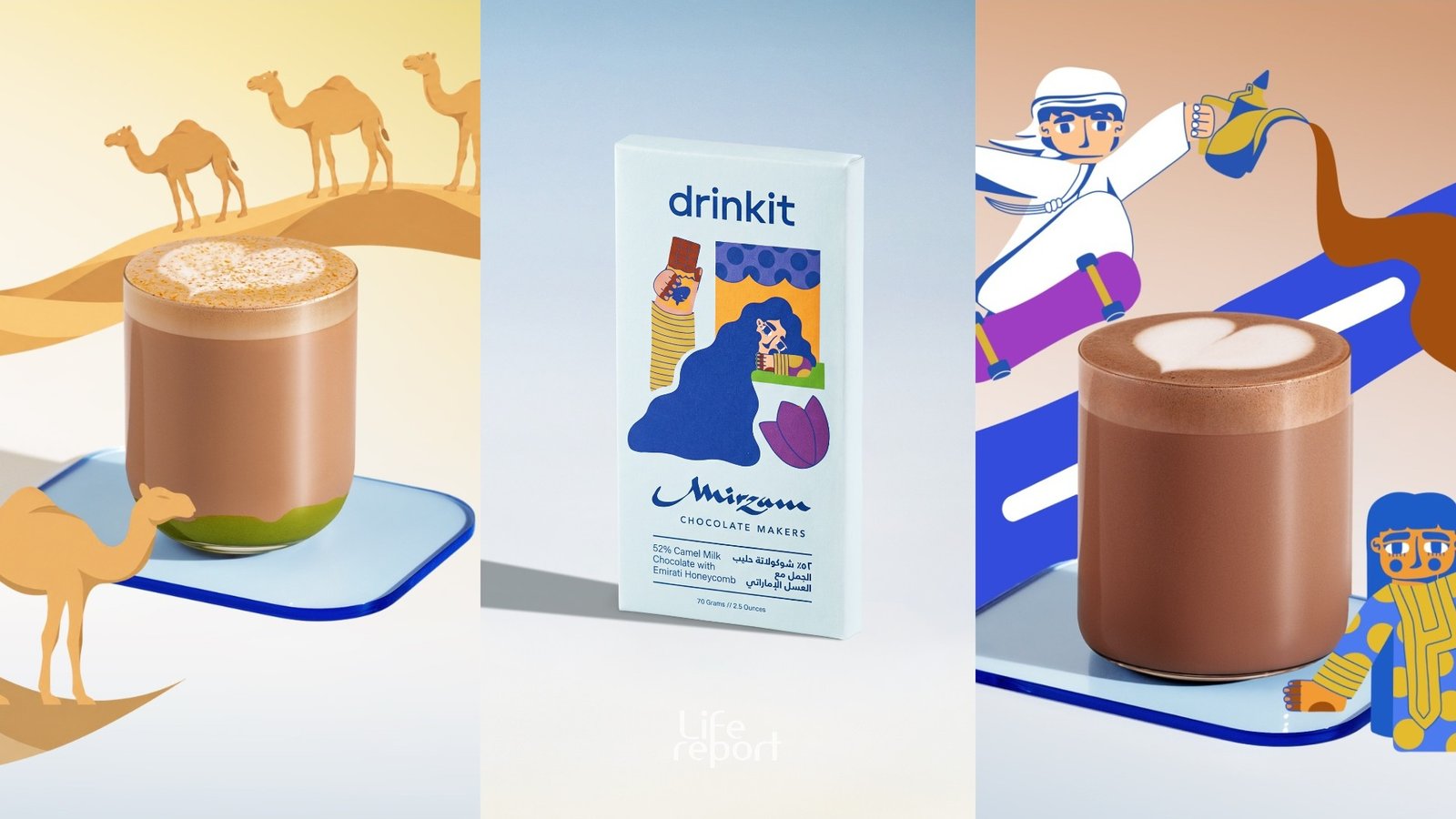
The menu, priced between AED 25 and AED 35, is where the campaign becomes edible. Camel milk – supplied by Camelicious, whose commercial products first reached the market in 2006 and whose Dubai farm now houses nearly 7,000 camels – is the through-line. It features in a flat white with house-made pistachio paste, a latte sweetened with Black Forest honey, and a cappuccino that tastes like the quiet luxury of a Bedouin breakfast reimagined by a third-wave barista. The chocolate, from Mirzam, is the other pillar: a home-grown bean-to-bar operation that opened the UAE’s first chocolate factory of its kind in Al Quoz in 2016. Its single-origin Indian chocolate is made from cocoa beans roasted, ground and moulded entirely under one roof. The hot chocolate is thick enough to require a moment of silence. The saffron karak chocolate is the kind of drink that makes you reconsider the entire genre of ‘fusion’: a cup that tastes like a Dubai winter, which is to say, like something you want to hold on to before it disappears.
Then there is the coffee itself. The Yemen Shaia’an Village coffee, available as filter coffee or prepared using a V60, is no token gesture towards provenance. It is a genuine rarity, grown by 150 smallholder farmers on ancient stone terraces in Yemen, with the whole coffee cherries naturally processed and dried for twenty-one to twenty-eight days. The result is a cup with wine-like cherry notes, warm spices and a lingering truffle-chocolate finish that stays with you like a good conversation. In a market where the UAE coffee industry is valued at more than US$3.2 billion and speciality coffee continues to gain ground, this is the kind of detail that separates a campaign from a marketing exercise. Recent figures put the proportion of Dubai residents under thirty-five at more than sixty per cent. These are consumers who have grown up with global palates and local loyalties, who can tell the difference between a brand that name-checks Yemen and one that actually sources its beans from there.
View this post on Instagram
The campaign’s tagline, ‘Proud to Grow in the UAE’, carries a double meaning that is easy to miss if you read it too quickly. It is, of course, a declaration of corporate gratitude: the chain opened its first Dubai outpost as an ‘experiment’, in the words of Drinkit MENA CEO Vitaliy Kolesnikov, and has since grown into an international operation. But it is also a quiet admission that growth, in this part of the world, is not simply a matter of square footage or app downloads. It is a matter of belonging. The campaign’s artists are not decorative accessories; they are the visual argument that a coffee chain can be a cultural participant rather than an extractive presence. The fact that the artwork will appear on merchandise and in a limited-edition collectable print – objects that Gen Z and millennial consumers might actually want to keep – is a smarter move than any loyalty programme.
There are, of course, the gentle absurdities. A digital-first chain promoting human connection is a little like a luxury car brand advertising the joy of walking. The phrase ‘Proud to Grow’ sits perilously close to the language of a nation-branding deck. And the idea that a camel milk flat white constitutes a ‘love letter’ to the UAE is the kind of metaphor that only a city built on superlatives could produce with a straight face. But the campaign transcends its own marketing grammar because the ingredients are real, the artists are not tokens, and the coffee is good enough to justify the prose. In a city where everything is designed to be photographed, this is a rare instance of a product that tastes better than it looks – and it looks very good indeed.
What Drinkit has understood, perhaps intuitively, is that the next chapter of luxury in the UAE will not be written in imported marble or European oak. It will be written in terroir: camel milk from a local farm, chocolate from a factory in Al Quoz, and coffee from ancient stone terraces in Yemen. The campaign does not ask consumers to choose between global sophistication and local identity; it assumes, correctly, that the two were never in opposition. The result is a coffee menu that reads like a short story about the country itself: audacious, layered, slightly ironic and impossible to replicate anywhere else.