
In a city that has spent two decades mistaking volume for sophistication, a fourteenth-floor dining room in Business Bay is making a quiet, radical proposition: that luxury might actually be a lack of noise.
Dubai has never been shy about its appetites. It has built the tallest, the widest, the most gold-leafed, the most aggressively air-conditioned. It has imported chefs the way other cities import footballers, attached Michelin stars to postcodes like medals on a uniform, and turned the simple act of eating into a form of competitive endurance. The reservation is a status symbol; the meal, a content opportunity; the bill, a punchline that arrives with the quiet menace of a plot twist. And yet, somewhere on the fourteenth floor of Paramount Hotel Midtown, behind a door that does not announce itself with a velvet rope or a hostess in architectural heels, a different conversation is taking place. It is a conversation conducted in the low register of ripe tomatoes, the peppery hum of good olive oil, and the patient, almost stubborn insistence that a bowl of pasta does not need a soundtrack, a smoke machine or a hashtag to justify its existence.
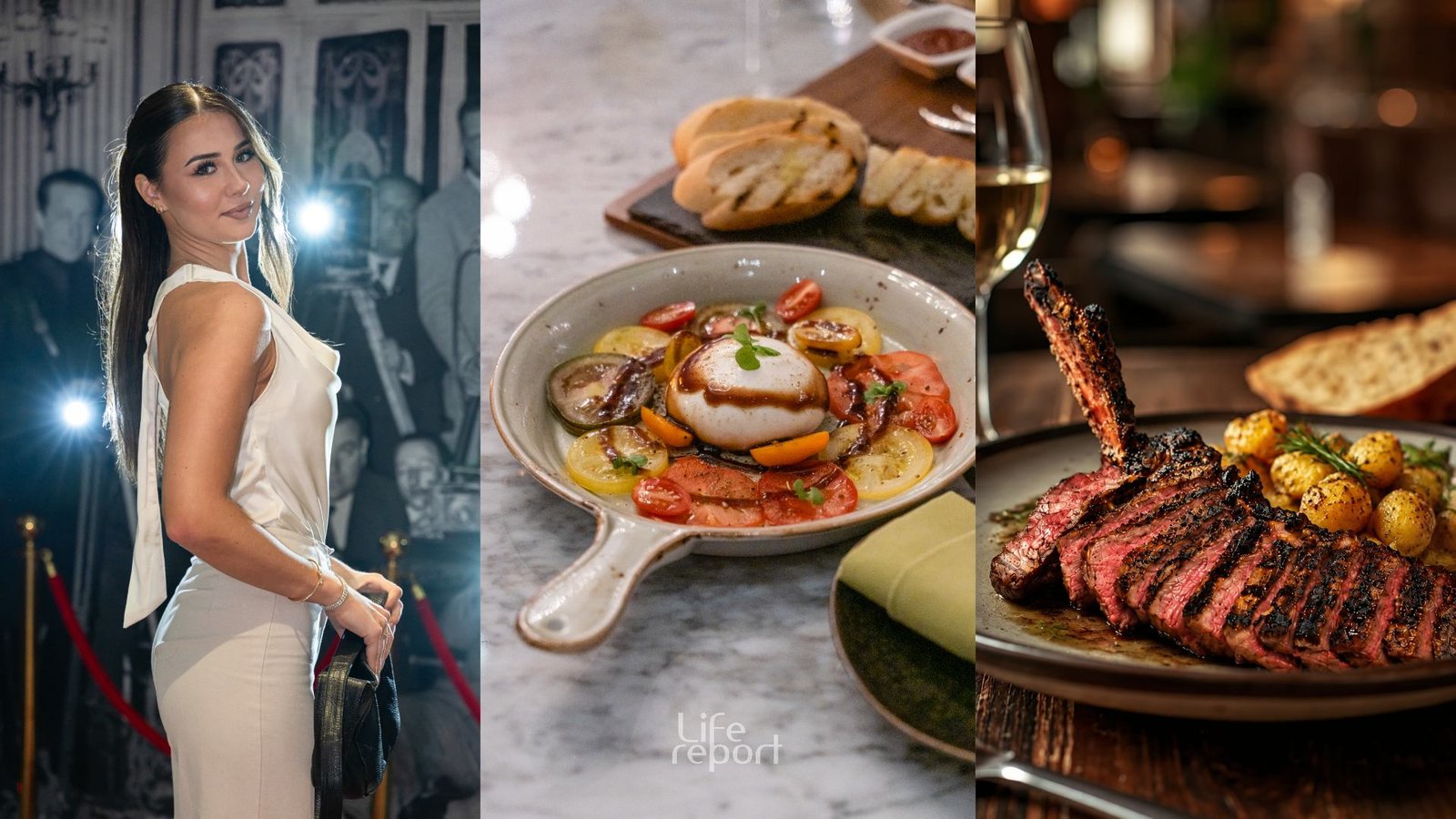
Paparazzi Tuscan, the hotel’s Italian restaurant, has unveiled a new à la carte menu that reads less like a declaration of ambition and more like a manifesto of restraint. This is not the Tuscan cooking of the glossy travel brochure – the cypress-lined drive, the Chianti sunset, the table groaning under the weight of a thousand antipasti. It is something closer to the Tuscan kitchen as it actually exists: unsalted bread, day-old and pragmatic; tomatoes that taste of the vine rather than the refrigerator; beef cheeks braised until they surrender not out of weakness but out of trust. The kitchen is led by Producer Culinary and Executive Sous Chef Ivan Vidal, who has two decades in the industry and won silver in the Executive Sous Chef of the Year category at the 2024 Middle East Chef Excellence Awards. In a city where technique is often used as a form of theatre, Vidal’s team uses it as a form of editing.
Begin with the bread, because the bread tells you everything. Pane sciocco, Tuscany’s notorious unsalted loaf, arrives alongside warm schiacciata, and the first bite is a small act of cognitive dissonance. Where is the salt? The answer is in the history books. Tuscany has been baking bread without salt for the better part of a millennium – the tradition is often traced to a twelfth-century dispute between Florence and Pisa, which is said to have made salt scarce and expensive inland. The result is a bread that tastes of wheat and air and nothing else, a blank canvas designed not to compete with the salty prosciutto, the aged pecorino or the olive oil that will follow. In the context of Dubai’s dining scene, where every plate is engineered to deliver a hit of dopamine before the first forkful has even landed, pane sciocco is almost subversive. It asks you to wait. It asks you to pay attention.
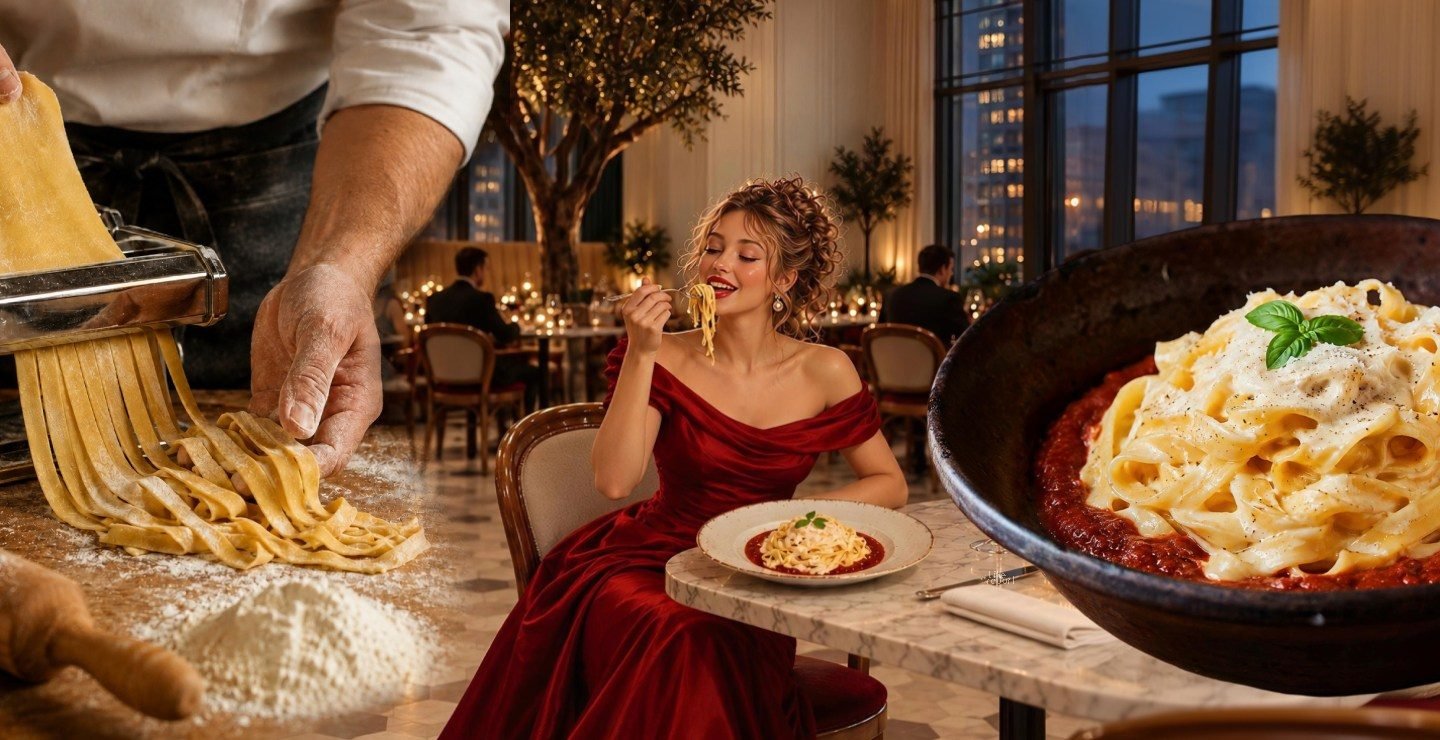
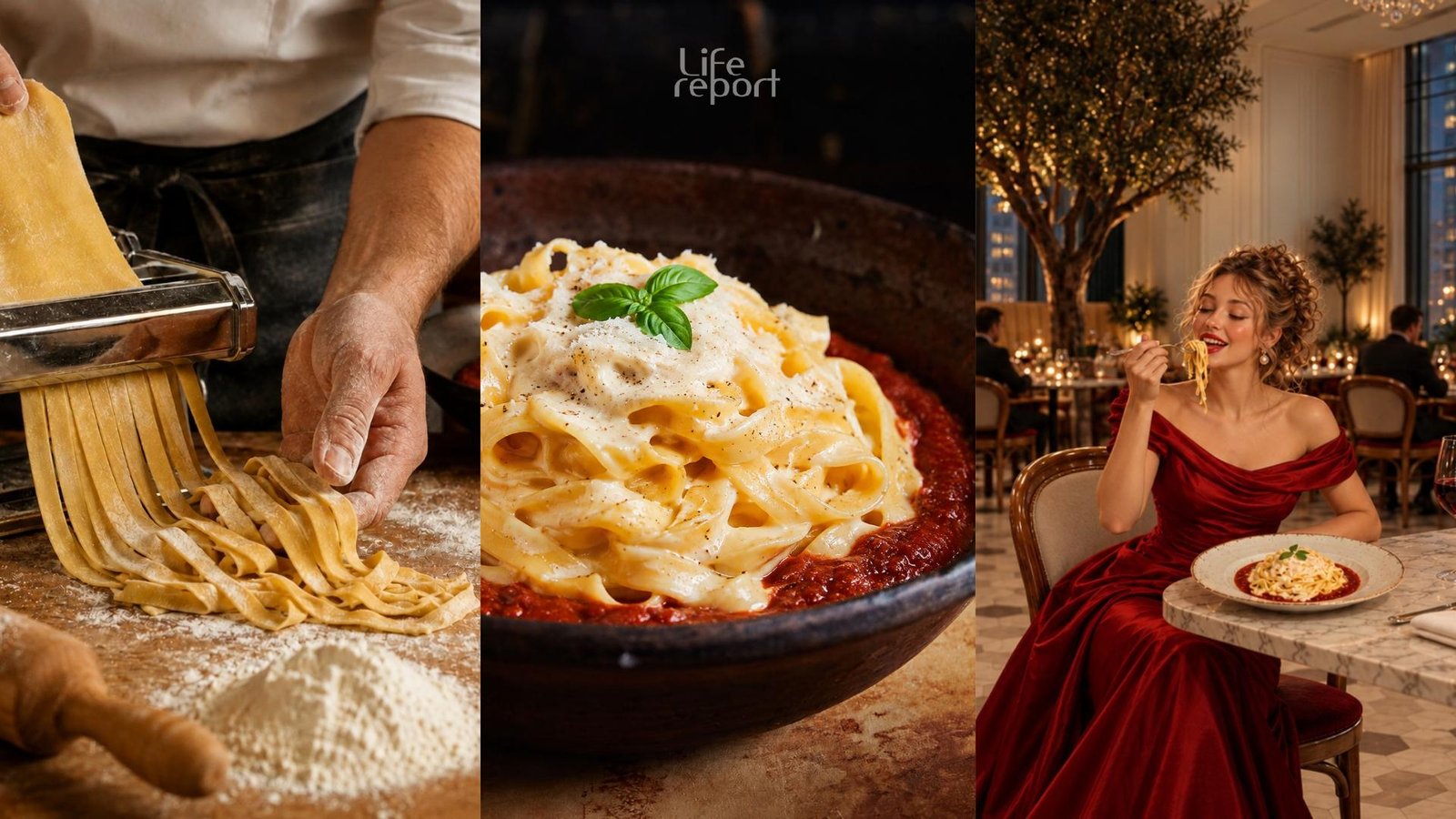
The pasta that follows is shaped by the same logic. There are five fresh pastas on the menu, each paired with its sauce according to the physics of contact rather than the aesthetics of the plate. The pappardelle, wide and ribbed like a length of corduroy, is built to carry the beef ragù – to hold it, fold it, drag it across the tongue in a slow, savoury tide. The tagliolini, finer and more delicate, is paired with clams, garlic, parsley and Tuscan extra virgin olive oil, the sauce left loose enough to coat each strand without drowning it.
View this post on Instagram
The menu also features ravioli filled with Parmigiano Reggiano, finished in truffle cream and topped with a drift of fresh truffle; fettuccine coated in Pecorino Toscano and San Marzano tomato; and Tortelli Mugellani, a nod to the Mugello valley north of Florence, where the pasta is traditionally filled with potato and served with a ragù that has been simmering since before the guests arrived. None of this is revolutionary. That is precisely the point. In a dining landscape that has convinced itself that novelty is the same as quality, the decision to make pasta that tastes like pasta – that behaves like pasta – is a quiet kind of confidence.
The menu unfolds in scenes, and the secondi are where the kitchen’s restraint becomes most legible. Triglie alla Livornese brings red mullet from the Tuscan coast, pan-roasted and finished with garlic, parsley and a bright tomato sauce that carries just enough chilli to register as a memory rather than a warning. It is a dish that understands the difference between heat and flavour, a distinction that eludes a surprising number of kitchens in this city.
The Peposo alla Fornacina is the more contemplative sibling: beef cheek braised with garlic and a generous hand of cracked black pepper, set over Parmigiano polenta, the pepper building slowly across the plate until you realise you have been holding your fork mid-air, listening to the dish rather than simply eating it. The recipe is said to descend from the furnace workers of Impruneta, who would leave their stews to cook in the residual heat of the kilns – an origin story that feels almost too perfectly on-brand for a restaurant that has chosen to define itself by what it does not do.
There is also Pollo al Mattone, chicken pressed under a brick and roasted with rosemary, garlic and lemon, and Bistecca del Paparazzi, a Black Angus MB2 bone-in striploin that meets the grill over high heat and arrives with smashed rosemary potatoes and a pour of Tuscan olive oil. It is a steak that does not need to be called a ‘tomahawk’ or served on a slab of Himalayan salt. It simply needs to be cooked properly. The absence of theatre is, by this point, the loudest thing in the room.
It would be easy to read Paparazzi’s new menu as an outlier, a contrarian gesture in a city that rewards volume. But the ground beneath Dubai’s dining scene has been shifting for some time. The past two years have seen the rise of what the industry has started calling ‘quiet luxury’ or ‘casual fine dining’ – a retreat from the white-tablecloth maximalism of the 2010s towards something more intimate, more ingredient-led, more interested in how a room makes you feel than in how it photographs.
A restaurant like Fi’lia in Business Bay, with its female-led kitchen and Michelin Guide recognition, has demonstrated that a mid-priced Italian restaurant can hold its own against the high-ticket imports. Newer arrivals like FLØR have been praised for ‘honest cooking’ and ‘engaged hospitality’, while operators speak increasingly of ‘intentionality’ and ‘soul’ rather than spectacle. Paparazzi is not ahead of the curve; it is riding it, with the quiet satisfaction of a restaurant that has realised the most luxurious thing it can offer a generation raised on notifications is a table where nothing demands your attention except the food.
The room itself – an open-plan kitchen, a chef’s table and a design language that borrows from the charm of 1960s Italy without collapsing into pastiche – was always built for this kind of cooking. What has changed is the menu’s willingness to trust it. The hotel’s own branding for the restaurant, ‘where divas escape the drama’, reads now less like a marketing slogan and more like a brief: a place for people who are exhausted by the performance of being seen and who would quite like to eat a plate of pappardelle without having to explain it to a ring light.
This is not to say the restaurant is austere. The Affogato is still drowned in a shot of espresso; the Torta Squisita, a warm ricotta tart with dark chocolate and vanilla gelato, still arrives with the kind of contrast that makes you close your eyes on the first spoonful; the tiramisù is still layered with espresso-soaked savoiardi and mascarpone, because some traditions are not improved by deconstruction. And the pizza bianca al tartufo, with its truffle cream, fior di latte and Pecorino Toscano, is proof that restraint does not mean joylessness. It means knowing which notes to play, and when to stop.
View this post on Instagram
Ivan Vidal has spoken about the menu in terms that could serve as a mission statement for the entire project: good ingredients, sound technique and the confidence to keep things simple. In a city that has spent years mistaking complexity for sophistication, that confidence is the rarest ingredient of all. Paparazzi Tuscan is not trying to be the most exciting restaurant in Dubai. It is trying to be the one you return to – on a Wednesday, without a reservation made three weeks in advance, without a plan for what you will post afterwards.
It is a restaurant that has looked at the theatre of modern dining and decided, politely, to lower the curtain. The pasta is made in-house. The bread has no salt. The pepper builds slowly. And somewhere on the fourteenth floor, above the traffic and the lights and the endless, exhausting performance of the city, a table is waiting for someone who would rather taste their dinner than explain it.
Location: Paramount Hotel Midtown. Contacts: +971 58 826 5729 or email restaurants.midtown@paramounthotelsdubai.com
ALSO READ: Christie’s Mawasim in Abu Dhabi: Is the Gulf Becoming the New Centre of the Art World?

