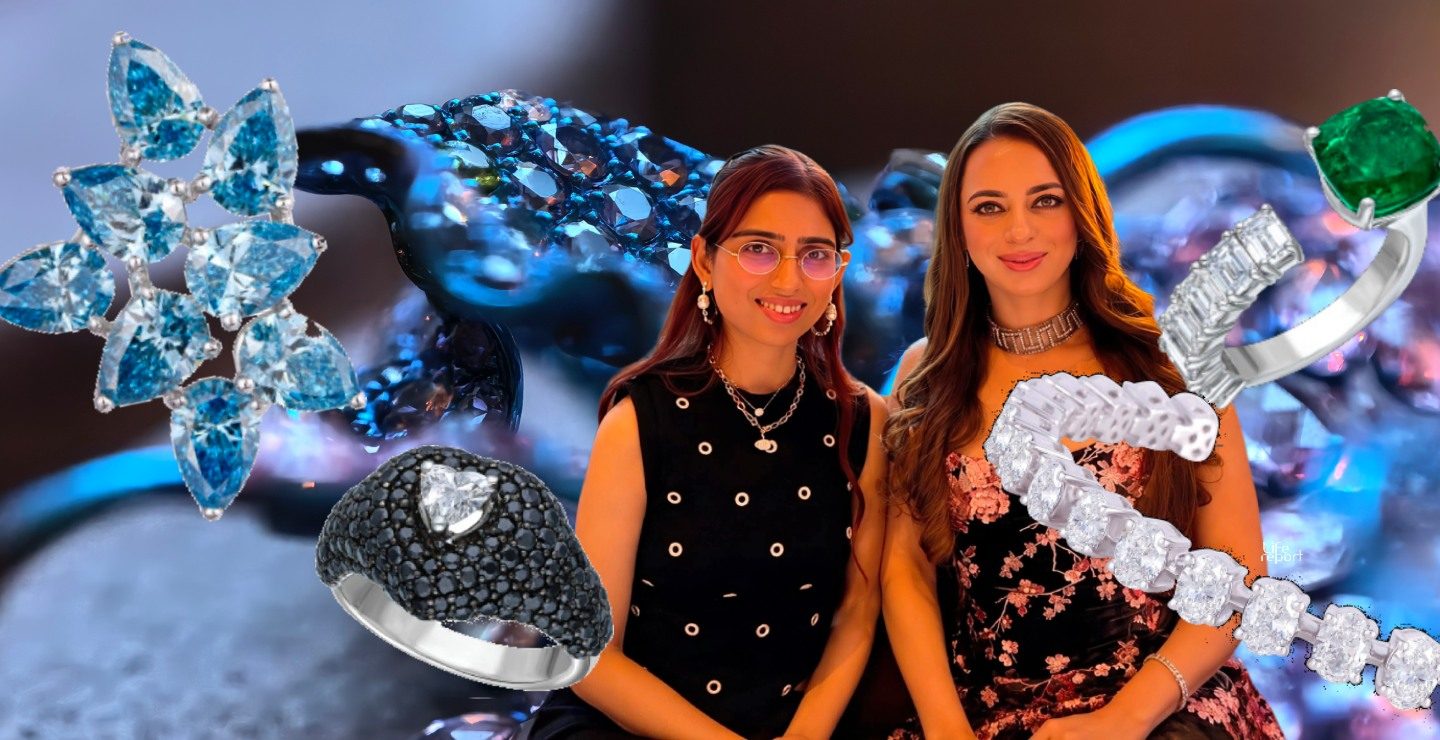
Vandana Jagwani has spent more than a decade translating four generations of Jaipur craftsmanship into something a lab-grown world can desire. Her family’s first retail move beyond India is less a shop than a statement – and Dubai, a city that has made a religion of reinvention, is only too happy to play host.
Dubai has never been sentimental about the past. It demolishes its own skyline with the casual regularity of a man changing shirts, replaces entire districts before the ink on the architectural reviews has dried, and treats the word “heritage” the way a sommelier treats a wine list: with polite, professional interest and a quiet awareness that something younger is about to arrive from the cellar.
So there is a certain delicious incongruity in the news that a jewellery house founded in 1947 – the year the subcontinent was partitioned, the lines on the map drawn in a hurry and a great deal of blood spilt – has chosen this city of perpetual tomorrows for its first retail address outside India. Mahesh Notandass, the Mumbai institution built on Jaipur’s lapidary instincts, is preparing to make Dubai its international home. Its fourth-generation creative director, Vandana M. Jagwani, announced the move at a private showcase on a Friday in October, in a room arranged with the particular care that precedes a very expensive conversation.
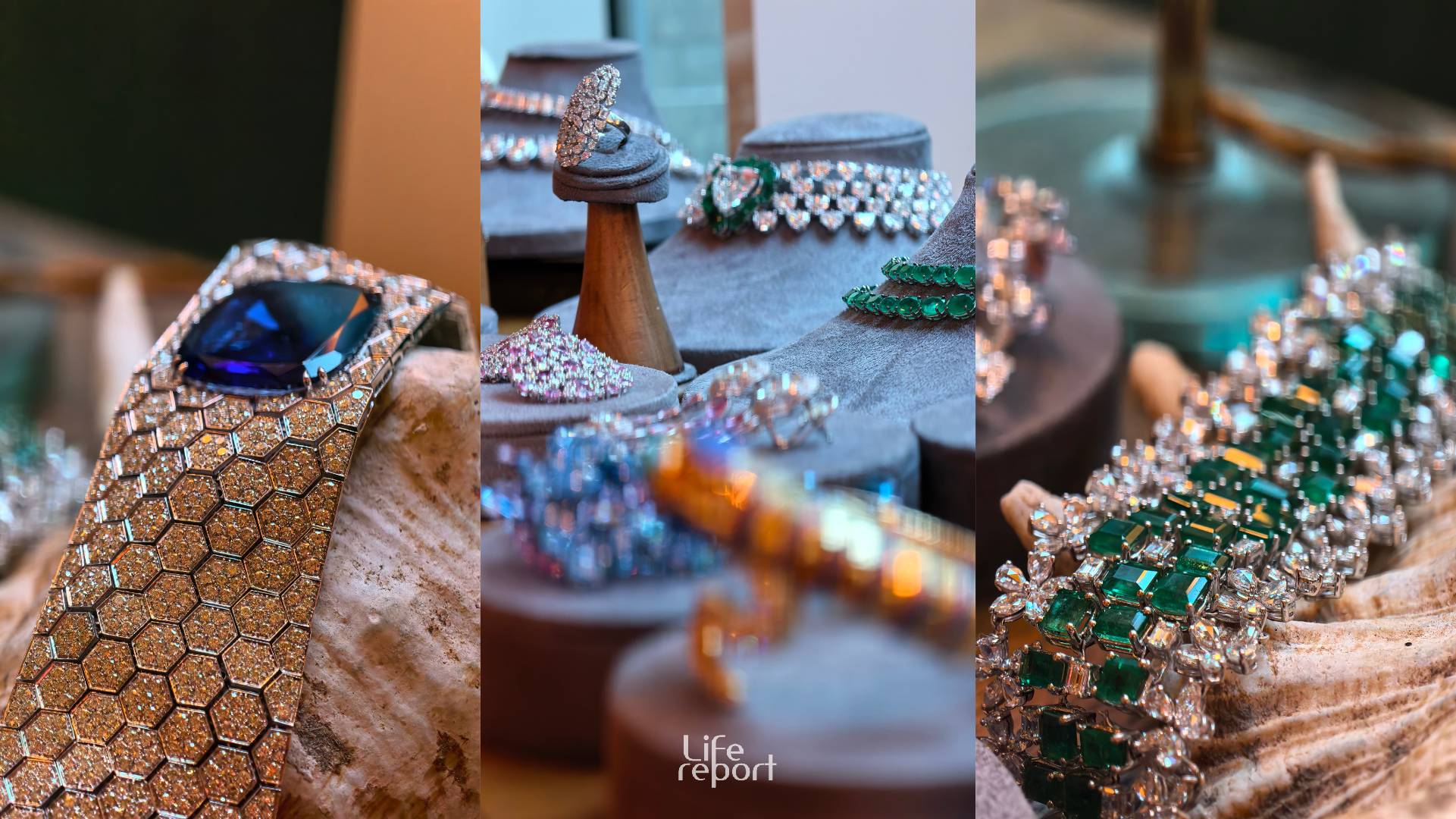
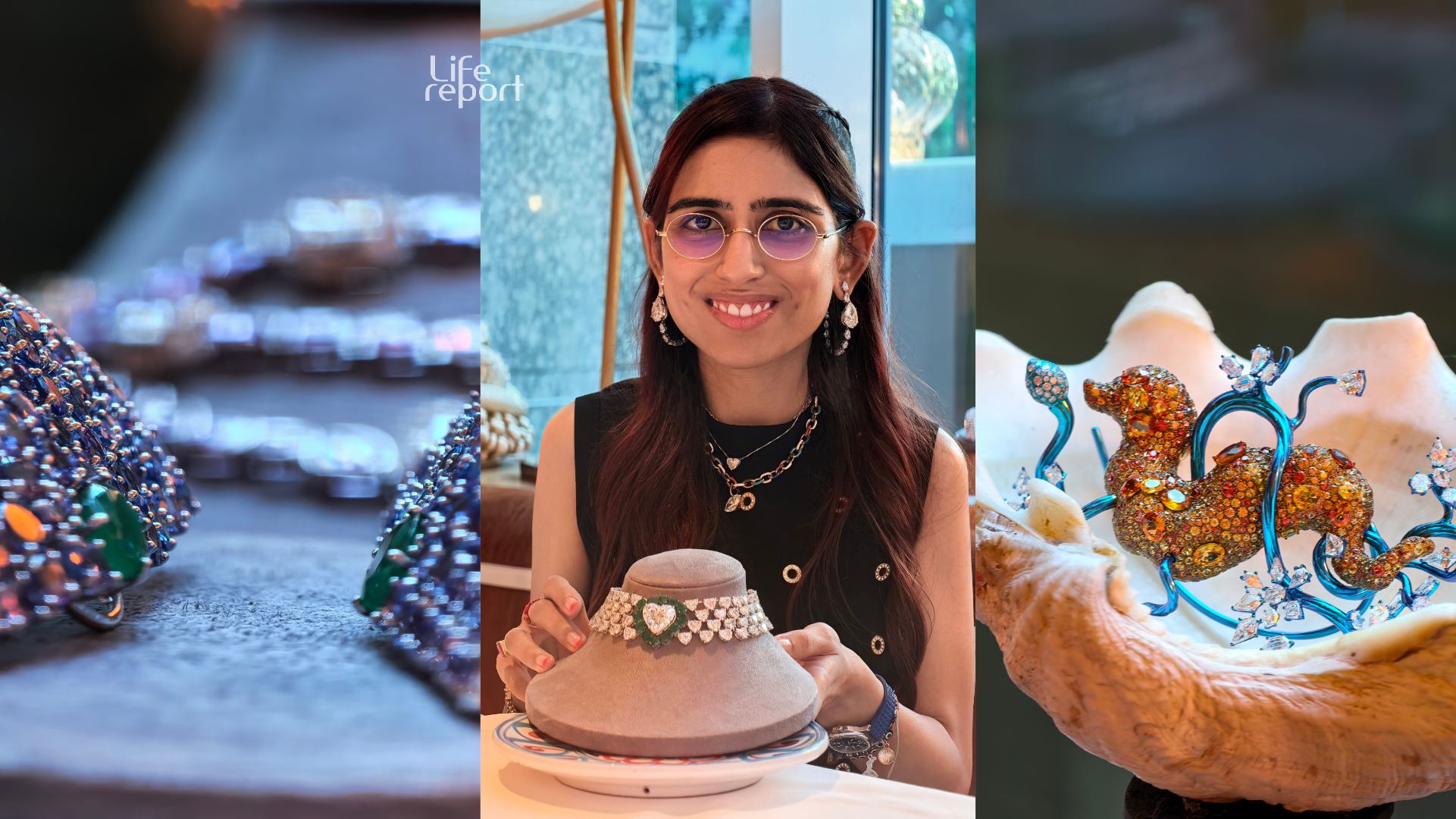
There were 35 pieces on display, drawn from both the heritage house and Vandals, the lab-grown diamond label Jagwani founded in 2020. One collection made its debut in the Gulf ahead of any other international showing – a small but telling inversion of the usual order, in which the Gulf receives what Europe has already admired. Among the vitrines sat the jewellery that had travelled to Cannes earlier this year: a 28-carat heart-shaped lab-grown diamond framed by emeralds and finished with cascading diamond detailing, the sort of object that makes a red carpet feel underdressed.
The choice of Dubai is not, on the surface, a surprise. The UAE’s diamond jewellery market is expected to grow from roughly $3.2 billion in 2026 to $5.4 billion by 2031, with lab-grown stones projected to contribute about $1.6 billion in incremental value over that period – twice the incremental value expected from natural diamonds. The UAE’s lab-grown diamond market alone was valued at $799.35 million in 2025, and Gen Z accounts for approximately 60 per cent of the luxury consumer base in the diamond category. Dubai welcomed 19.59 million international overnight visitors in 2025, a figure that functions as a luxury-shopping funnel with a skyline attached. The numbers are impeccable. The narrative, however, is more interesting.
View this post on Instagram
Jagwani’s family story begins with Kundanmal Jagwani, who moved from Pakistan to Jaipur in the late 1940s and began making jewellery. His son, Notandas, brought the craft to Mumbai in 1953; the family’s first retail outlet, Notandass and Sons Jewellers, opened in Bandra in 1983. The third generation, Mahesh Jagwani, launched the eponymous brand in 2006, by which time the family had become the sort of name whispered among India’s established families rather than shouted from billboards. Vandana joined in 2014 after studying management and economics and gaining a GIA certification. Her understanding of the business was built, as she has put it, through dinner-table conversations and a deep apprenticeship.
Then, in 2020, she did something that would have struck a traditional jeweller as either visionary or mildly heretical: she launched a lab-grown diamond brand. Vandals, billed as India’s first designer lab-grown diamond label, was a small act of provocation in a market that had spent decades associating value with the romance of geological time. Lab-grown stones have the same chemical composition and optical properties as mined diamonds; they can be assessed by the same gemmological laboratories and cut by the same hands. What they lack is the mythology of scarcity – the story of a diamond formed deep within the Earth over geological time and recovered through human effort. What they offer instead is a different proposition: design freed from the tyranny of carat weight, an alternative production model framed around sustainability, and a price architecture that allows a younger client to buy a piece of high jewellery without also buying a narrative about inheritance.
The luxury industry has not quite decided how to feel about this. On the one hand, lab-grown diamonds are among the fastest-growing segments of the market; on the other, the very same brands that champion them are careful to keep their natural-diamond lines at a reverent distance, like a family that has welcomed a clever new relative to the table but still keeps the silver locked in the cabinet. Jagwani has navigated this tension with unusual poise. Her answer to the price question – that lab-grown prices are crashing and that this is precisely why design, not raw material, must carry the value – is the sort of line that sounds obvious until you realise how few jewellers have the nerve to say it out loud. The Vandals aesthetic is contemporary, architectural, occasionally floral and unafraid of colour. It draws on the family’s decades-long expertise in cut, colour and clarity while refusing to genuflect before the stone. It is, in other words, a millennial proposition dressed in couture.
The Dubai showcase, however, was not merely a jewellery event. It was conceived and delivered by Evogue Digital in two movements, and the second is where the real story of the evening resides. After the editors had been shown the stones and the cameras had been permitted their moments, a smaller group gathered for an afternoon tea entitled From Legacy to Legendary, moderated by Evogue’s founder, Prarthana Nandwani. Fifteen family-office principals and next-generation business leaders sat in a room designed to resemble a conversation rather than a conference, discussing succession, governance and the peculiar burden of inheriting a business that bears your family’s name.
Nandwani is herself a Dubai-born entrepreneur whose father established his first company in the city four decades ago. She built Evogue into a strategic communications and advisory firm with offices in Dubai and Hong Kong, and speaks the language of family enterprise with the fluency of someone who grew up inside one. The decision to pair a jewellery launch with a family-office salon was quietly brilliant. Dubai International Financial Centre (DIFC) is home to more than 1,250 family-related entities, while the top 120 families associated with the centre manage more than $1.2 trillion in assets globally. The next generation of Gulf and Indian family principals is less interested in passive inheritance than in active reinvention. A lab-grown diamond brand founded by a fourth-generation jeweller is, in this context, not merely a product launch. It is a case study in how to remain legible to your ancestors while remaining desirable to your peers.
This is the deeper logic of Jagwani’s Dubai expansion. The city is not simply a market; it is a stage set for the negotiation between old money and new appetites. In the Gold Souk, gold is still sold by weight and haggled over with the theatricality of a marketplace that has been doing this since long before anyone thought to put a mall next to it. In Dubai Mall, Cartier and Van Cleef & Arpels preside over hushed boutiques where the air is calibrated and the lighting is flattering to both stones and self-image. Jagwani is not choosing between these Dubais. She is proposing a third: a Dubai where an Indian heritage house can speak to Gulf clients, European travellers and Indian diaspora families in the same breath, and where a lab-grown stone is not a compromise but a design decision.
Her international profile has been carefully built for this moment. In May, she walked the Cannes red carpet in association with BMW India, styled by Shaleena Nathani in a holographic Ramikadi ensemble reimagined from an outfit she had worn to her brother’s wedding – a detail that reads as either conscious luxury or extremely sophisticated thrift, depending on your inclination. The 28-carat heart-shaped diamond necklace that accompanied it was the sort of piece that makes jewellery editors reach for their superlatives and their competitors reach for their lawyers. In January, she appeared at the World Economic Forum in Davos on a panel titled “Who Powers the Next Economy?”, where she observed that “innovation and AI are the engines, but trust is the currency of the next economy” – a sentence that sounds considerably more profound when delivered by someone wearing a lab-grown diamond than it does in the average Davos press release. In June, she received a Global Young Leader 40 Under 40 award at the House of Lords in London.
View this post on Instagram
There is a gentle irony in all this, and it is not lost on Jagwani. The luxury world loves to talk about heritage, but what it really rewards is the ability to make heritage feel like a choice rather than an obligation. Dubai understands this better than almost any city on Earth. It has no ancient jewellery quarter of its own, no dynastic ateliers stretching back to the Mughals or the Medici. What it has is a genius for giving other people’s histories a second act – a place where an Indian family business can arrive with a 1947 birth certificate and a 2020 lab-grown brand and be received not as a contradiction but as a proposition.
The retail expansion will be watched closely, not least by the natural-diamond establishment, which has spent the past several years insisting that lab-grown diamonds belong in a different category entirely. They are right, of course. They do. But categories have a way of dissolving when the design is good enough, the client is young enough and the city is ambitious enough. Jagwani’s bet is that Dubai – a place that has never met a legacy it could not rebrand – will prove the ideal address for a house that wants to be both ancient and new. The stones, after all, have the same chemical composition and optical properties. The story is the variable. And in Dubai, story has always been the most valuable commodity of all.
ALSO READ: The Guggenheim Finally Comes to Abu Dhabi: Inside Its $1Bn Art-World Debut