
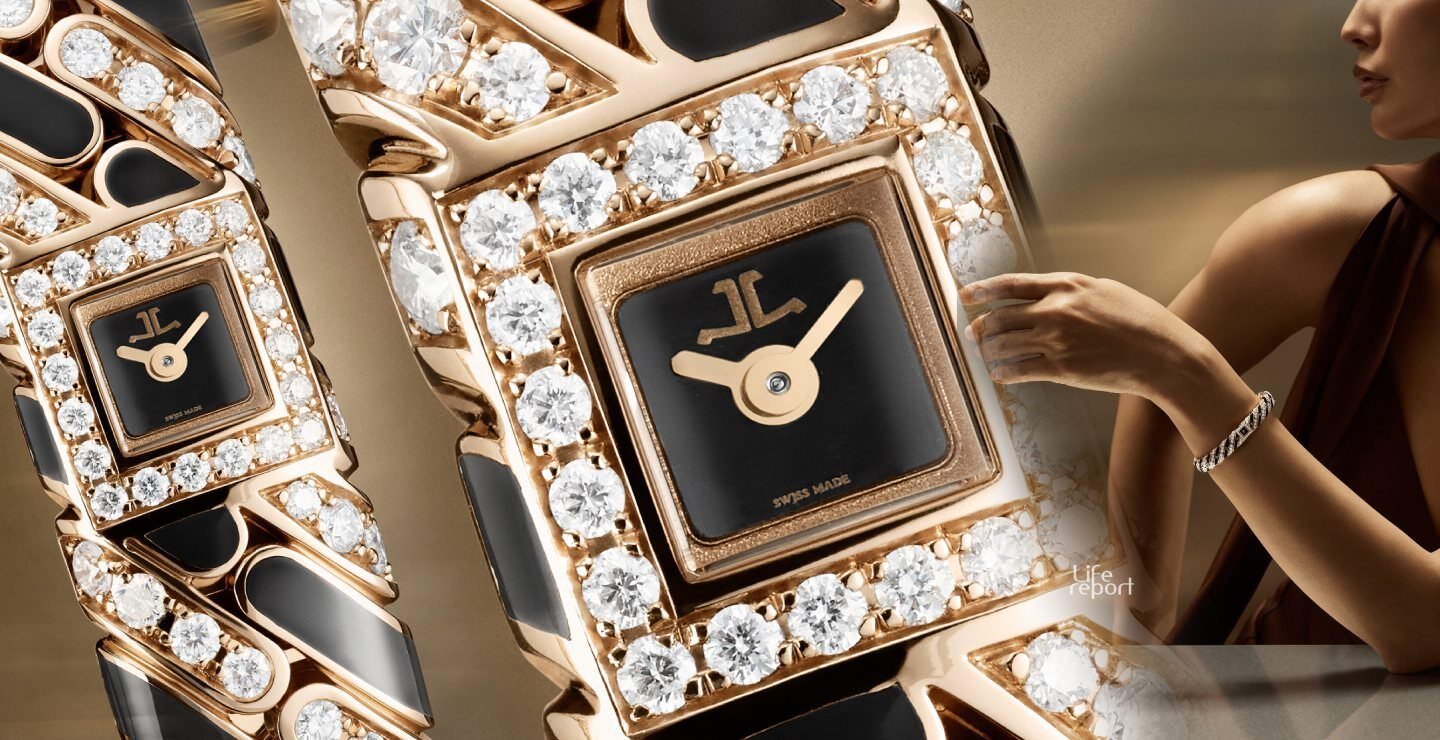
In a corner of Dubai where the gold is as relentless as the air conditioning, a watch has arrived that refuses to shout. Jaeger-LeCoultre has taken the world’s smallest rectangular mechanical movement and wrapped it in 18-carat pink gold, black HyCeram and a quiet, devastating self-assurance. For a generation raised on noise, it is the ultimate flex: a whisper.
There is a particular species of luxury that announces itself before it enters the room. It has a certain girth, a certain gleam, a certain willingness to be photographed from every angle. The Gulf knows it well. It is the luxury of the obvious, and it has its pleasures – none of them subtle. But there is another kind, rarer and considerably more dangerous to the ego of the merely wealthy. It is the luxury of the hidden: the object that does not explain itself, the piece that requires you to know, and to have chosen not to tell.
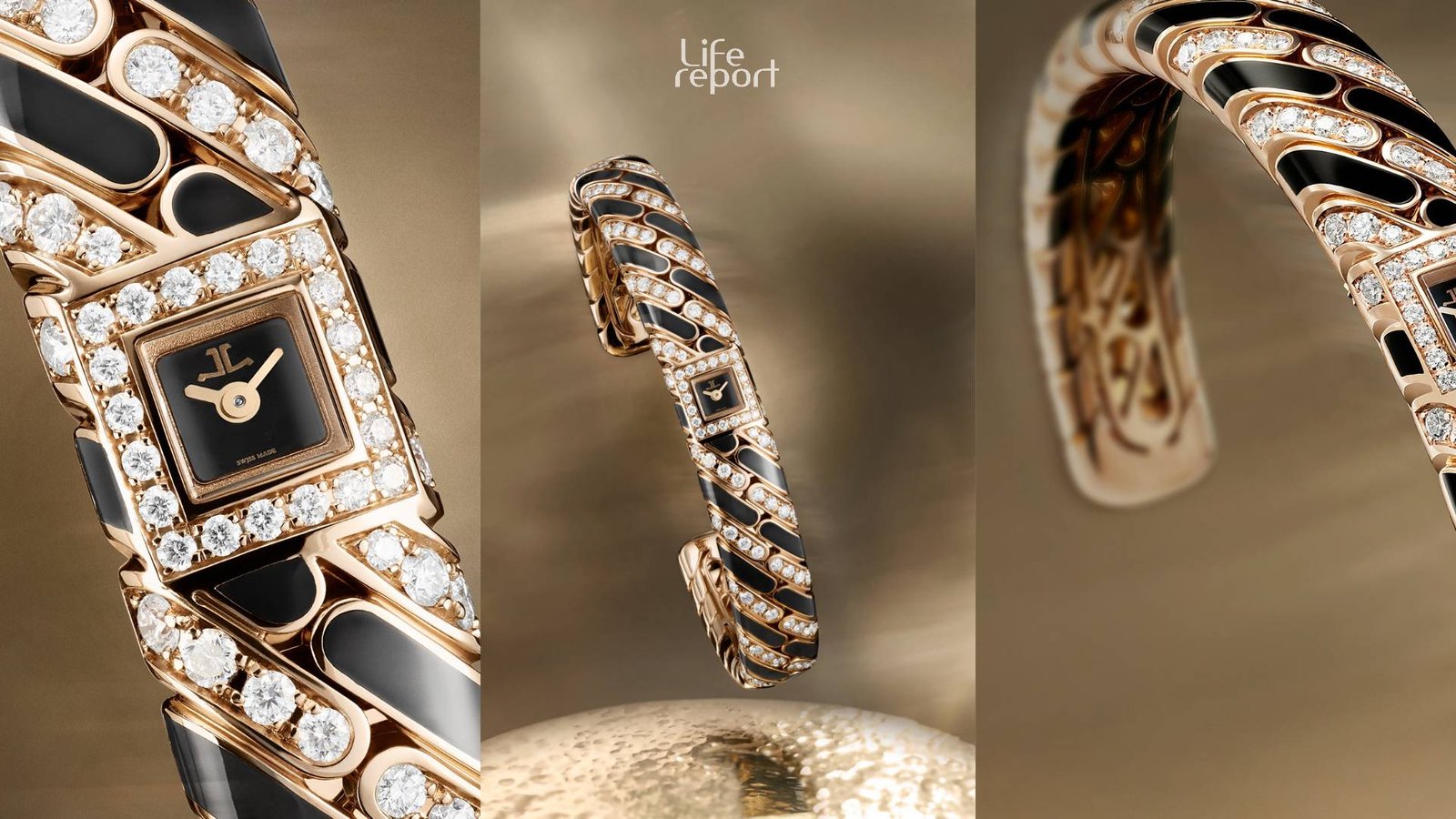
The Jaeger-LeCoultre Calibre 101 Chain belongs, emphatically, to the second camp. At first glance, it is a sculptural bangle in 18-carat pink gold, punctuated by diagonal bands of brilliant-cut diamonds and an intensely glossy black material called HyCeram®. It looks like jewellery. It behaves like jewellery. It sits on the wrist with the easy, architectural confidence of something that has never had to ask for attention. Then you notice the dial: a black-lacquered rectangle no larger than a postage stamp, framed by diamonds, with two slender hands. The time, when you finally find it, is almost an afterthought.
This is no accident. It is a philosophical position, expressed in gold and micro-engineering. Because inside that bangle, invisible to almost everyone who will ever see it, beats the Calibre 101 – the world’s smallest rectangular manual-winding mechanical movement, a mechanism that weighs barely one gram and has retained its original dimensions and architecture since 1929. To wear it is to carry a century of horological obsession on your wrist while appearing simply to have dressed well. In a market that has spent the last decade confusing volume with value, that is a genuinely subversive act.
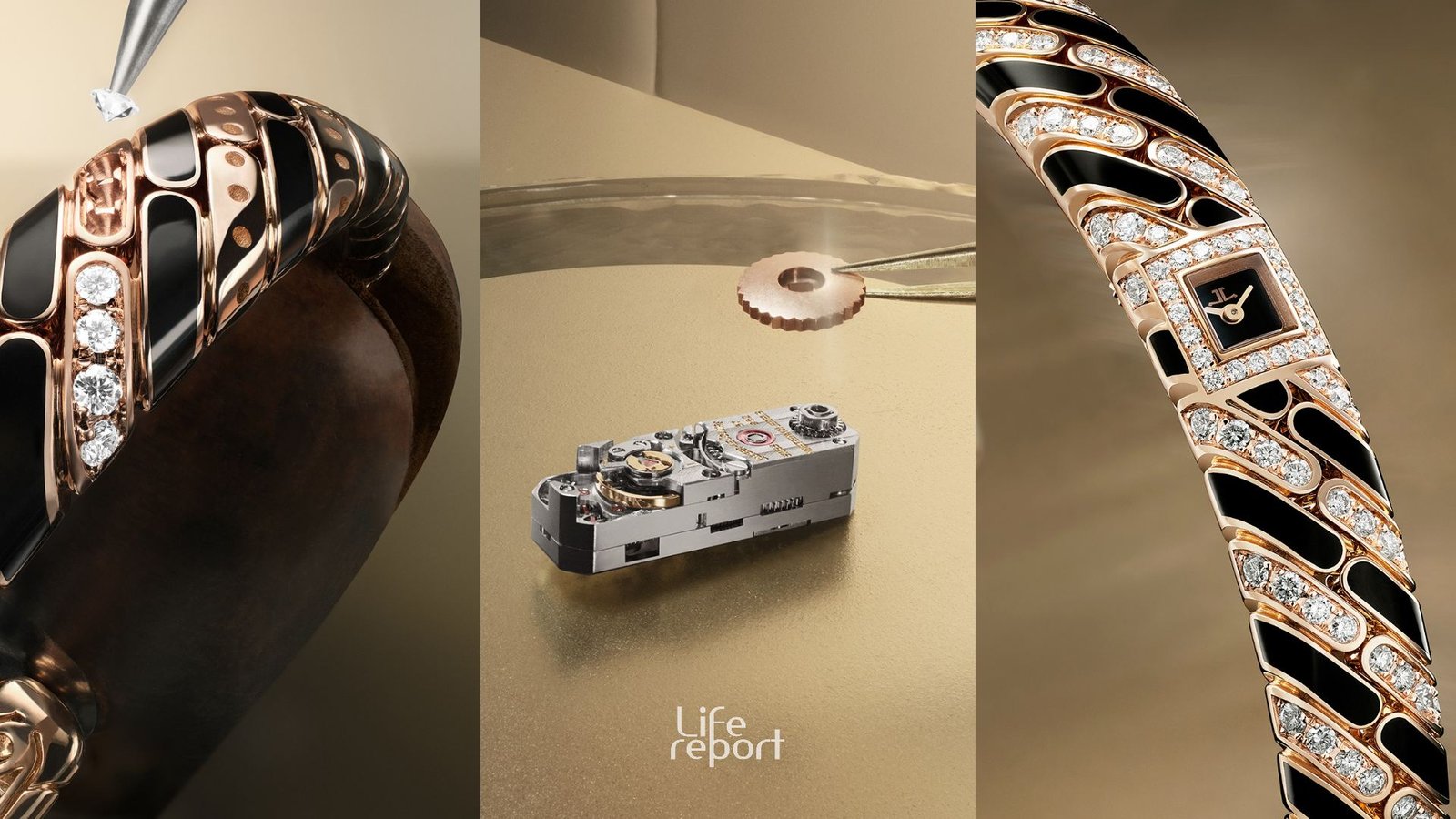
The provenance is not incidental. The Calibre 101 grew out of the Duoplan, introduced in 1924, whose innovative two-level architecture was patented in 1925. By arranging the mechanism across two levels, LeCoultre’s watchmakers found a way to miniaturise the movement without sacrificing precision. Four years later, the Calibre 101 took that architecture to its logical and almost absurd conclusion: 14 millimetres long, 4.8 millimetres wide and 3.4 millimetres thick, with a volume of just 0.2 cubic centimetres. It was created long before the advent of computer-aided design, laser cutting and modern CNC machining. Today’s fifth-generation version contains 98 components, each custom-produced and adjusted. It runs at 21,600 vibrations per hour, offers 33 hours of power reserve and requires approximately 40 hours of hand assembly by a handful of watchmakers who have mastered dexterity at a scale that makes brain surgery look positively broad-brush. Published accounts put annual production at only a few dozen movements – a reflection not of marketing strategy but of the extraordinary patience and precision the process demands.
View this post on Instagram
It is, in other words, the opposite of a quartz fashion watch with a famous name on the dial. And this is where the Calibre 101 Chain becomes something more than a pretty object. The contemporary luxury landscape is littered with miniature women’s watches that achieve their delicate proportions by hollowing out the inside – literally and metaphorically. The movement is an afterthought, a cheap engine beneath a beautiful bonnet. Jaeger-LeCoultre has taken the opposite approach. The Chain follows a jewellery-led design philosophy: the bangle, its gem-setting and its ornamentation dictate the aesthetic, while the case and movement are discreetly integrated into the finished form. The result is a piece that looks like jewellery first and tells the time second, yet is powered by a mechanism more serious than most of what sits in the display cases of its competitors. The diamonds are not a distraction from the engineering. They are the frame. The engineering is the point.
The historical echo here is deliberate. The new piece pays homage to a celebrated 1955 Duoplan model nicknamed ‘Chain’, whose heavy, polished gold links on a solid-gold bracelet have been reinterpreted as sculptural detailing along the sides of the new bangle. But the deeper lineage runs through one of the twentieth century’s most scrutinised wrists. In 1953, Queen Elizabeth II wore a diamond-set Jaeger-LeCoultre Calibre 101 watch to her coronation, a gift from Vincent Auriol, then President of France. The timepiece was so discreet that it could easily have been mistaken for a bracelet. That is the ancestral claim: not a watch that happened to be small, but a watch that was small because it was extraordinary. The Chain does not imitate the Queen’s watch. It inherits its argument.
The execution is equally literate in the language of high jewellery. Each bangle is cast in a mould created specifically for that individual piece. The 36 recessed details designed to accommodate the HyCeram® are carefully finished to ensure immaculate edges before the diamond openings are drilled. The material is then hand-filled into the recesses using a syringe, processed under pressure and heat, and polished to reveal a depth of black that reads less like ceramic and more like obsidian with a sense of humour. A master gem-setter then hand-sets 158 brilliant-cut diamonds, totalling approximately 2.73 carats, into the alternating diagonal bands. More than 300 hours of technical research and development preceded the first piece. The result is a bangle that feels less like a watch and more like a small, beautifully engineered building for the wrist – architectural where Bulgari’s Serpenti is sinuous, precise where Cartier’s Baignoire is fluid.
And yet, for all its refinement, the Chain is not precious in the prissy sense. The black HyCeram® prevents the pink gold and diamonds from sliding into sweetness. The proportions are bold, almost brutalist in their confidence. It is a piece that would look as correct with a tailored jacket in a DIFC boardroom as with a slip dress at a beachside dinner in Jumeirah. This matters in a city that has developed an unusually sophisticated eye for the intersection of heritage and contemporary design – a city where Jaeger-LeCoultre’s Dubai Mall flagship reopened in November 2024 with a redesigned interior featuring an art installation by Emirati architect Abdalla Almulla. Even the carpets echo the natural landscape of the Vallée de Joux, with references to trees, rocks and minerals: a subtle but telling gesture towards the Maison’s Swiss origins.
The regional context is not merely decorative. Affluent millennials and Gen Z professionals in the UAE are becoming an increasingly influential force in the luxury watch market, viewing high-mechanical timepieces not simply as inherited trophies but as markers of personal achievement – purchases driven by a distinctly contemporary appetite for objects that embody both craftsmanship and cultural capital. This is a generation that has grown up with more information about watchmaking than any before it, and correspondingly less patience for hollow gestures. A quartz movement in a diamond case no longer impresses. A 98-component mechanical calibre that takes 40 hours to assemble and weighs barely one gram does. The Chain speaks to that literacy. It rewards the wearer who has done the reading.
Which brings us to the price. Jaeger-LeCoultre lists it as ‘Price available upon request’ – luxury shorthand for a conversation that begins in a private room. The absence of a published figure is almost beside the point. The piece is not presented as a numbered limited edition, but production of the Calibre 101 movement itself remains highly restricted. Published accounts put annual output at only a few dozen examples. Scarcity here is not a marketing strategy. It is a by-product of virtuosity.
View this post on Instagram
The objections are easy to anticipate. The dial is minuscule; checking the time requires a small act of intimacy rather than a glance. The power reserve is a modest 33 hours, which means the owner must wind it regularly – by hand, with care, like a ritual rather than a convenience. A quartz watch would run longer and cost less. But practicality has never been the correct standard for judging a diamond-set pink-gold bangle, and Jaeger-LeCoultre knows it. The Chain refuses the traditional compromise of women’s jewellery watches, in which visual delicacy has too often been used to justify mechanical indifference. Here, the case is tiny not because the movement is basic, but because the movement is extraordinary.
That is the quiet rebellion at the heart of the Calibre 101 Chain. In an era of conspicuous everything – conspicuous wealth, conspicuous wellness, conspicuous authenticity – it chooses a different register. It does not display its complexity. It hides it. It asks the wearer to know what is inside, and to be content that almost no one else does. For a certain kind of millennial or Gen Z luxury consumer in the UAE – the kind who has graduated from logo fatigue to the more rarefied pleasure of connoisseurship – that is not a limitation. It is the entire point.
The Calibre 101 Chain can be enquired about at Jaeger-LeCoultre’s official Dubai boutiques in The Dubai Mall and Mall of the Emirates, where the lighting is flattering, the carpets draw inspiration from the Vallée de Joux, and, one hopes, discretion extends to not asking what you do for a living. It is, by any reasonable measure, an absurd object: a mechanical marvel the size of a thumbnail, set in gold and ceramic, designed to be wound by hand and worn as jewellery. It is also, in its refusal to be sensible, one of the most convincing arguments for luxury in years. The diamonds catch the light. The black ceramic swallows it. And somewhere inside, too small to see and too precise to ignore, a century of obsession keeps perfect time.
ALSO READ: Forget Botox: Why Longevity Medicine Is Dubai’s New Luxury

