Bahrain’s contemporary art scene is undergoing a striking transformation – and at its heart stands Sheikh Rashid Al Khalifa, the visionary artist and cultural patron redefining the Gulf’s creative landscape. From the century-old RAK Art Foundation in Riffa to the soon-to-open RAK Art Collection, his influence is reshaping how the region experiences, collects, and celebrates art. In this rare, thoughtful conversation inside his historic family home, Sheikh Rashid reflects on Bahrain’s artistic renaissance, the rise of women artists, and why public art remains essential in an increasingly digital world.
The afternoon sun in Riffa, Bahrain is a tangible thing, a gentle, gilded pressure that seems to polish the very air. I found myself waiting in the courtyard of a century-old house, the childhood home of Sheikh Rashid Al Khalifa, which now serves as the serene headquarters of his RAK Art Foundation. The air was scented with the faint, melancholic sweetness of blooming frangipani, a marked contrast to the crisp, conditioned galleries within. It is a place where history and the contemporary moment engage in a quiet, sophisticated dialogue – a fitting stage for meeting the man who has, with a curator’s discernment and an artist’s soul, placed Bahrain firmly on the global map of contemporary art.
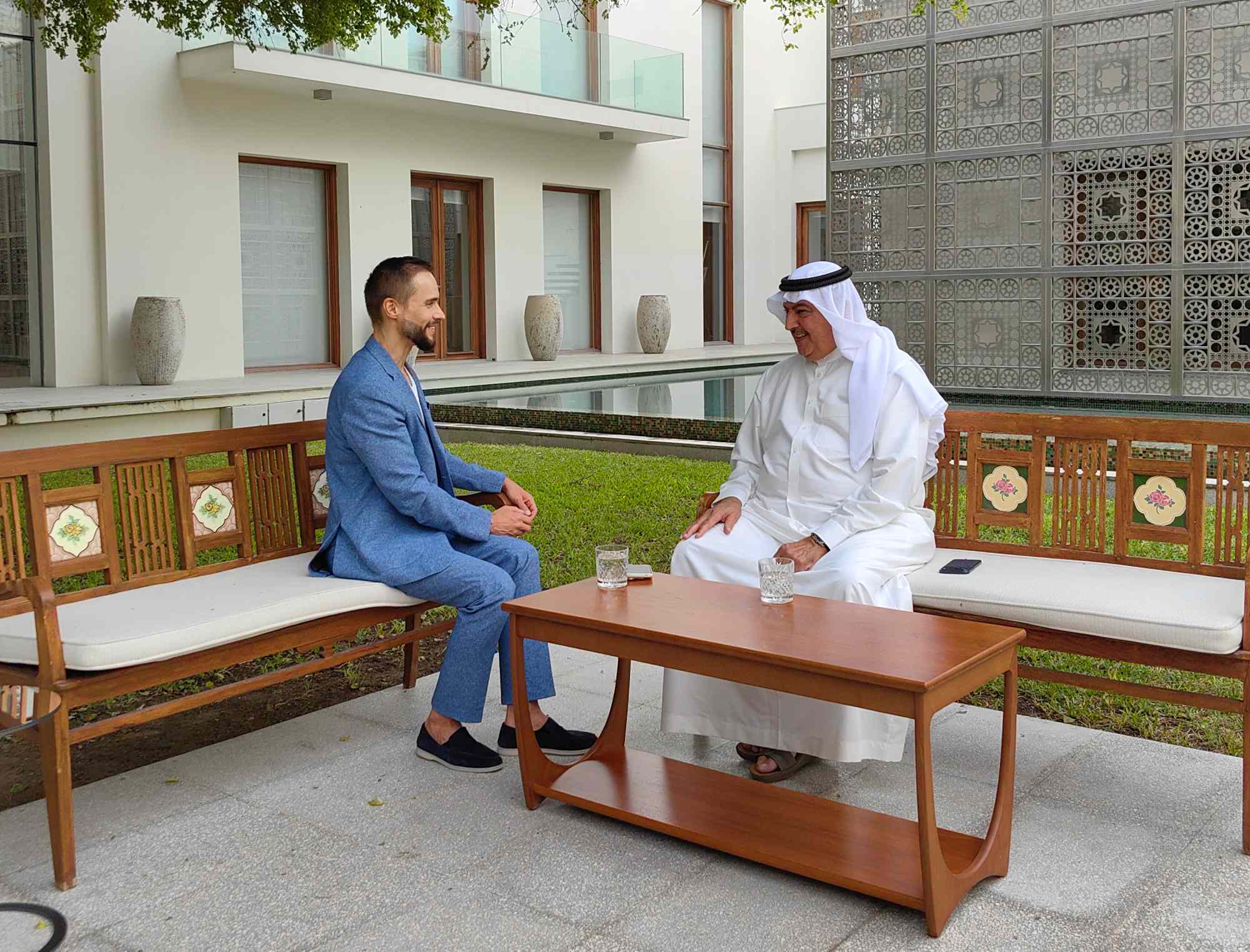
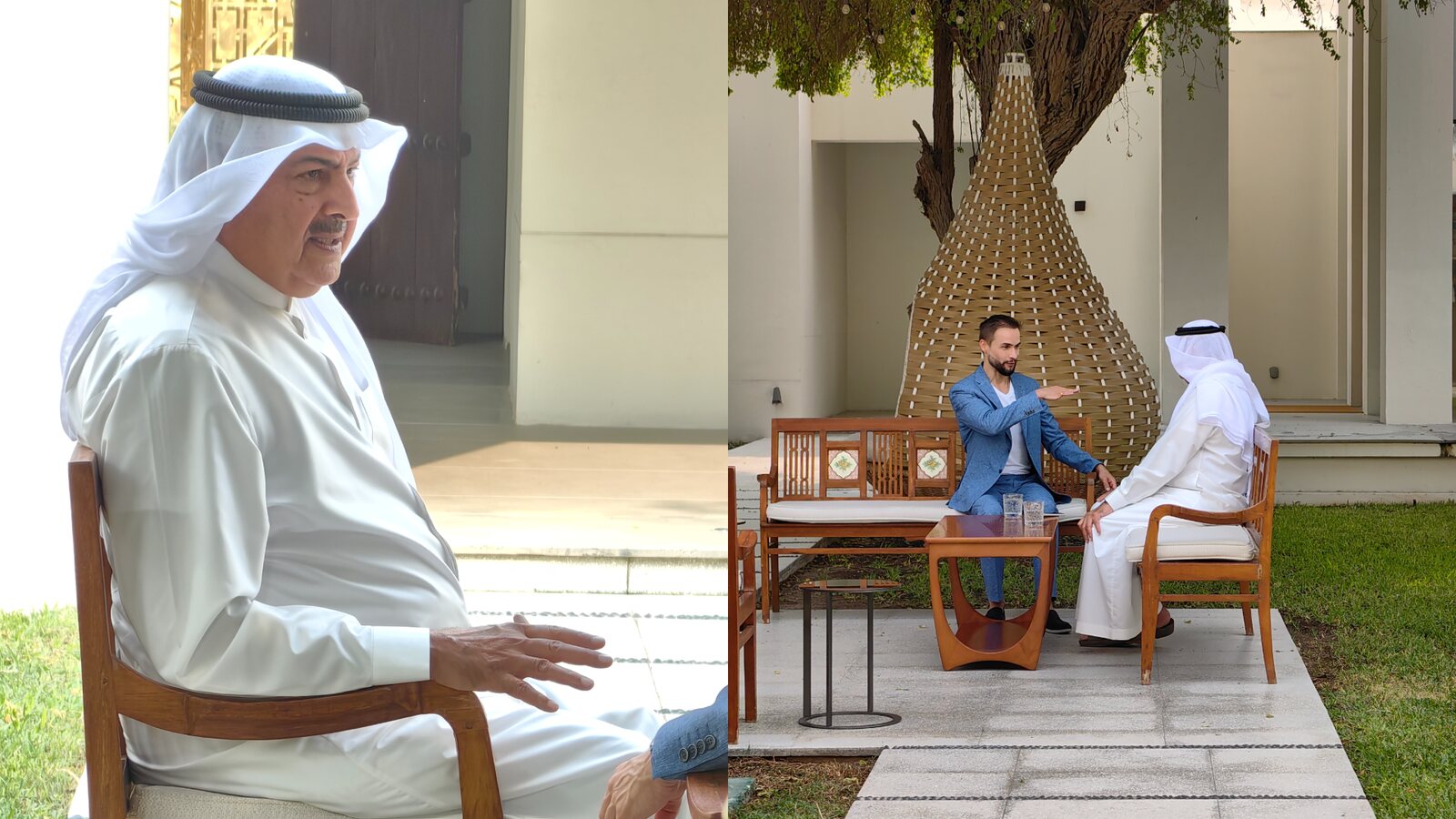
Sheikh Rashid Al Khalifa is a study in understated elegance. His demeanour is that of a man entirely at peace with the dualities of his life: a member of the Bahraini royal family and a working artist; a collector of profound import and a humble champion of emerging talent. As we settled in the courtyard where traditional Arabic arches framed views of modern art, I was reminded that the most compelling forms of luxury are not those that shout, but those that whisper of depth, heritage, and finely calibrated taste.
Our conversation began, as all good conversations do, with the landscape of the moment. “We are witnessing a new renaissance in the Gulf,” I suggested, referencing the constellation of monumental institutions – from the Grand Egyptian Museum to the forthcoming Guggenheim Abu Dhabi – redefining our cultural geography.
A warm, knowing smile appeared. “For years, we have been waiting for this development,” he acknowledged, his voice as measured as his artistic compositions. “It started with Art Dubai, the auction houses (Sotheby’s and Christie’s) arriving, and then the museums. This has had a huge impact on the awareness of art’s importance in our region.” He spoke not with the bombast of a developer, but with the quiet satisfaction of a gardener seeing seeds he planted decades ago finally break into magnificent bloom. He lit up further when discussing the rise of collectors and, most notably, the formidable emergence of women artists. “They are really taking strong steps,” he said with palpable pride. “Their artworks are amazing, and they are no longer shy, no longer hiding their work.”
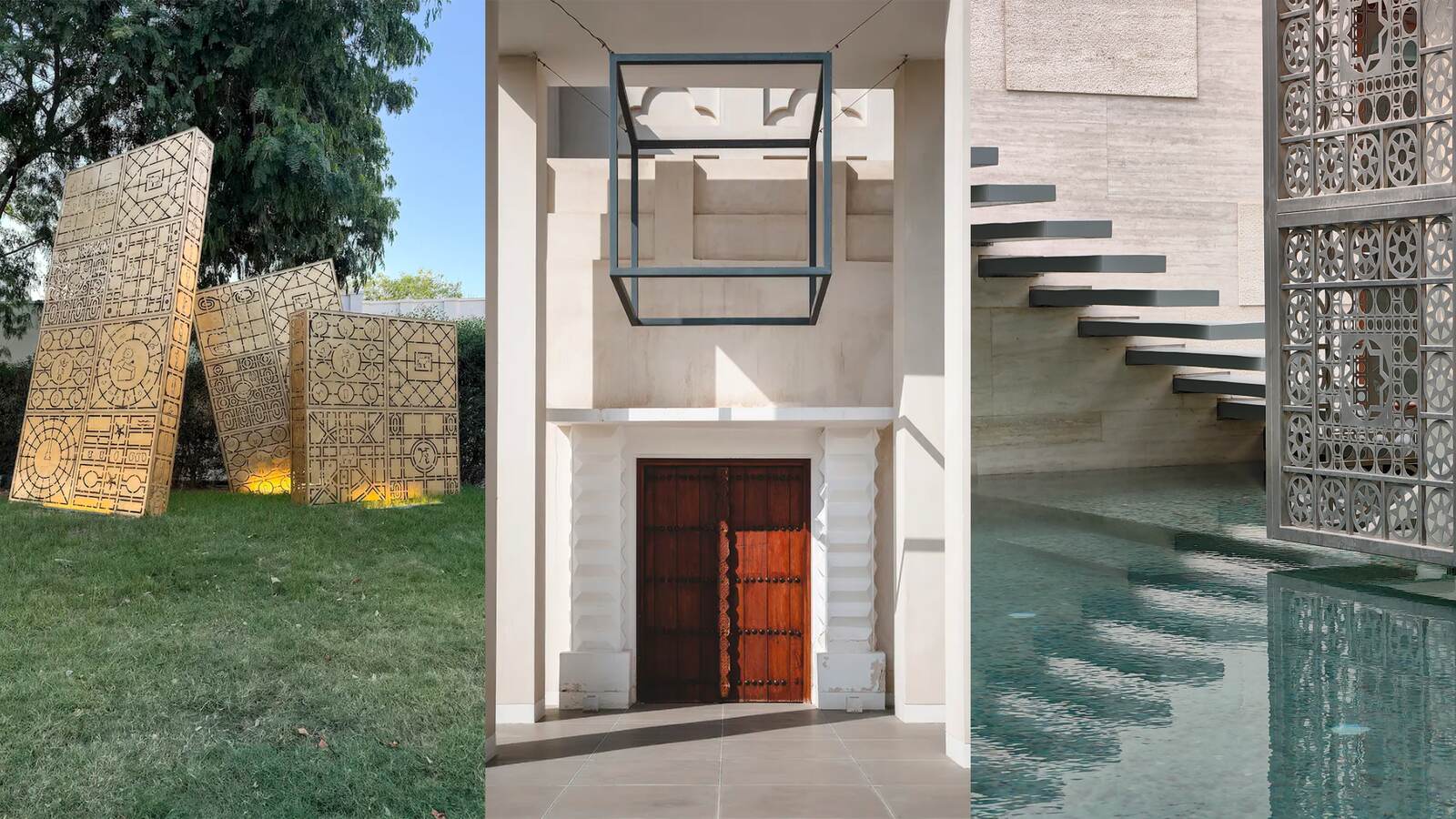
This organic growth finds its next logical expression in the RAK Art Collection, set to open soon. “It will be the country’s first contemporary art museum,” he clarified, with a hint of well-earned triumph. He described the space – a transformed villa behind towering aluminium doors, where bubble-wrapped paintings lean against stark white walls, awaiting their moment. It is a project with a mission: to allow a younger generation “to re-envision their future through the arts” and to bring prolific Bahraini artists, long overlooked, into the wider narrative of Middle Eastern art.
Naturally, one cannot discuss the patron without discussing the artist. Sheikh Rashid’s own artistic journey is a fascinating evolution from the traditional oils on canvas of his youth – informed by studies in art and design in the UK, a path less trodden by Gulf royals of his generation – to the sleek, optically vibrant aluminium reliefs for which he is now known.
View this post on Instagram
“I started like any beginner,” he demurred, with a graceful wave of his hand that seemed to dismiss the exquisite mural he painted on a wall of this very house at the age of sixteen – a piece that still exists, a testament to his precocious talent. “But as your style evolves, you develop your own belief, your own liking. And materials play a big role.”
The pivotal moment came with an invitation to exhibit at an event near the Pyramids in Egypt. “This triggered the use of aluminium,” he explained, a material he had earlier explored in an installation for London’s Saatchi Gallery. “If you have an idea, the material and medium govern what you should do.” For him, even within the expansive field of installation art, there is a need for structure and form. “I like structured pieces,” he confessed, “rather than something put together in a haphazard way.”
I recalled seeing his work, a series of twelve sculptural forms positioned with breathtaking audacity in the desert with the Giza pyramids as their backdrop. The effect was not of competition, but of conversation – a dialogue between ancient monumentality and futuristic, reflective surfaces. “It looked really amazing,” he agreed modestly. Now, he is preparing a four-by-four-metre iteration of this concept for the Venice Biennale, a fitting stage for an artist who thinks on a grand, public scale.
“Why,” I asked, “in our increasingly digital world, are these large-scale, physical sculptures so important?”
“You are taking art to the people,” he replied, his eyes alight with the conviction of a man who understands the social function of beauty. “To their own environment – parks, walkways, seasides. Instead of people coming to you in museums, you are sharing your creation with them. It is very engaging, and in a way, it is educational. It teaches appreciation.”

This belief in nurturing appreciation is the bedrock of his foundation’s work. He spoke of The Art Station, a vibrant cultural complex in a converted 1970s shopping area, which provides studios and residency programmes for a new generation of artists and designers. Furthermore, in a move that signals a truly modern understanding of culture’s role, he has partnered with UNIDO (the United Nations Industrial Development Organization) to establish a centre for the “orange economy” – the creative industries.
“It’s about a certain kind of authenticity,” he mused, summarising the transformation he sees in Bahrain. “It’s very palpable.” He mentioned the grounds outside the newly opened RAK Art Collection, where the final touches were being put on a pair of mesmerising geodesic domes, designed by Buckminster Fuller and clad in fragments of local clay and stone. They look simultaneously ancient and futuristic, perfectly poised to absorb the fierce Bahraini heat. Soon, they will host the UNIDO’s Global Center for Creative Orange Economy and cultural accelerators. “In my view,” he said, a note of wistful ambition in his voice, “there’s nothing better than visiting a museum. If I had my way, I would have more museums per square metre in Bahrain than anywhere else.”
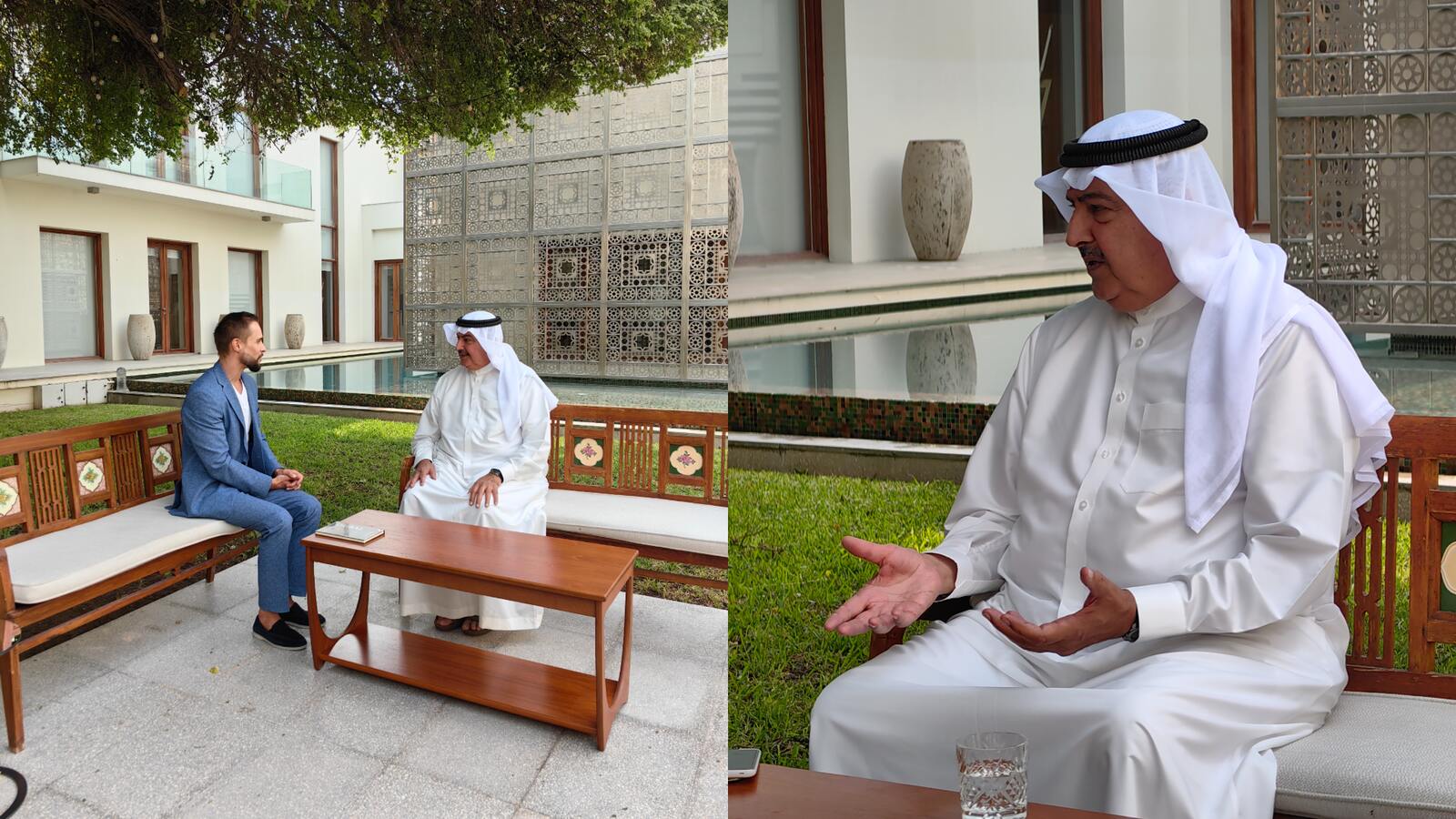
As our conversation drew to a close, I asked for his recommendations on navigating the Gulf’s burgeoning art scene. His answer was a grand tour of the senses, delivered with a curator’s precision. “In Doha, the Museum of Islamic Art is a must – a sublime object in itself. In Abu Dhabi, you cannot miss the Louvre, of course, and the forthcoming Guggenheim. Oman… Oman is an open-air museum, a natural masterpiece.” He saved a special admiration for AlUla in Saudi Arabia. “I was stunned, amazed by the nature of the place.” And Bahrain? “It is small, but it has its own beauty and charm. You can get from one place to another so easily.”
It was a charming, perfectly pitched description. As I took my leave, the evening light had softened, casting long shadows across the courtyard. I thought of that sixteen-year-old’s mural on the inner wall, and the four-metre sculpture destined for Venice. In Sheikh Rashid Al Khalifa, the past is not a relic but a foundation, and the future is not an abstraction but a canvas, vast and gleaming, waiting for its form.