
What should it feel like to command time? Not to glance at it, not to be reminded of it, but to physically engage with its measurement in an age defined by touchscreens? The answer – a manifesto of silent sophistication – has just landed on the wrists of the anointed few. It whispers of a tactile pleasure so refined it makes the tap of a smartphone screen feel like a crude, medieval thud. Welcome to the era of the chronograph that doesn’t shout, but sighs with satisfaction.
This is the story of the Audemars Piguet Royal Oak “Jumbo” Extra-Thin Selfwinding Flying Tourbillon Chronograph RD#5. More than a mere timepiece created to mark the brand’s 150th anniversary, it is a philosophical pivot. It concludes Audemars Piguet’s groundbreaking Research and Development series not with a roar of complexity, but with a masterclass in thoughtful subtraction. It is a watch that looks at a century and a half of chronograph tradition and, with the gentle irony of a true intellectual, asks: “But is it kind to the finger?”
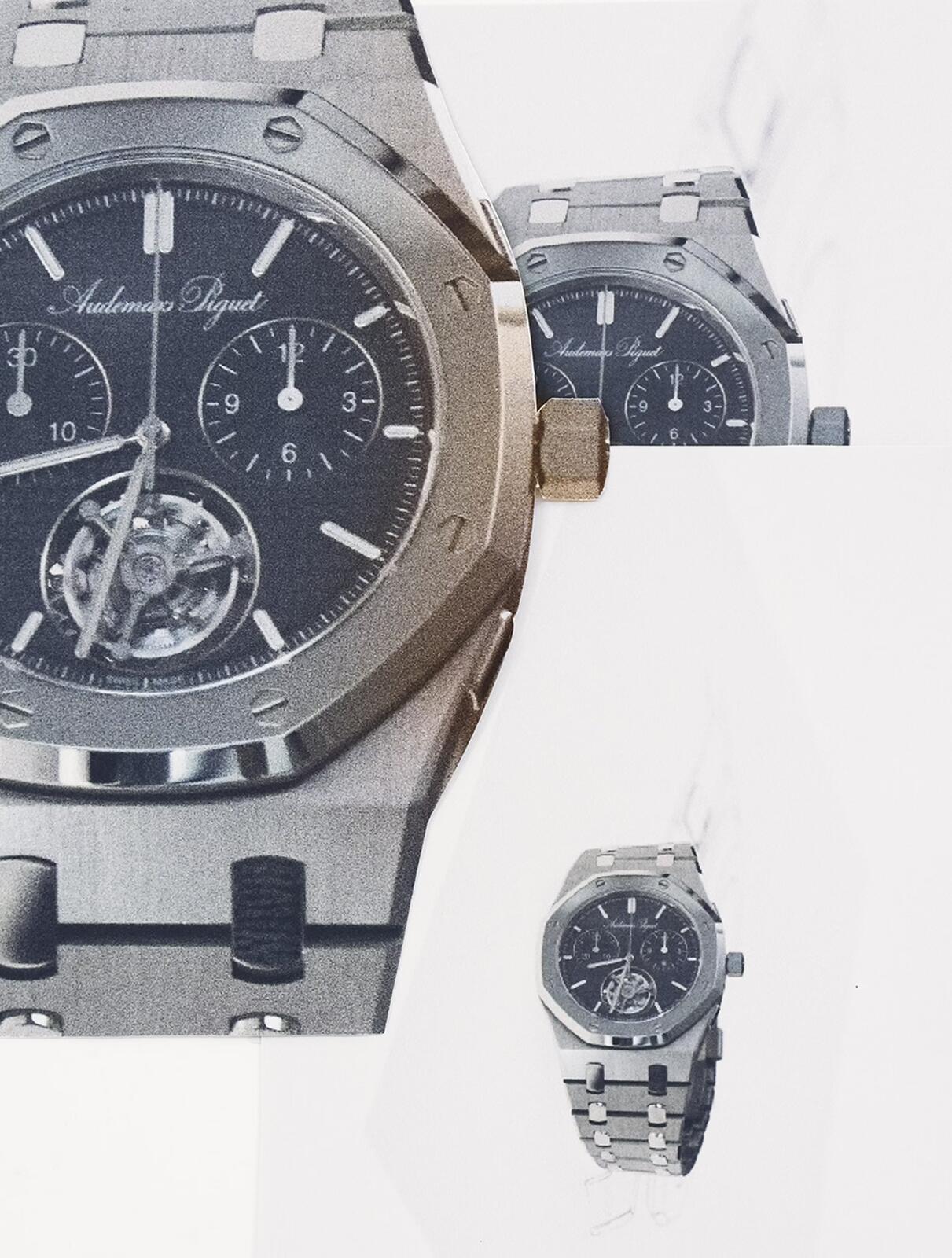
The Anatomy of a Whisper: Engineering the Imperceptible
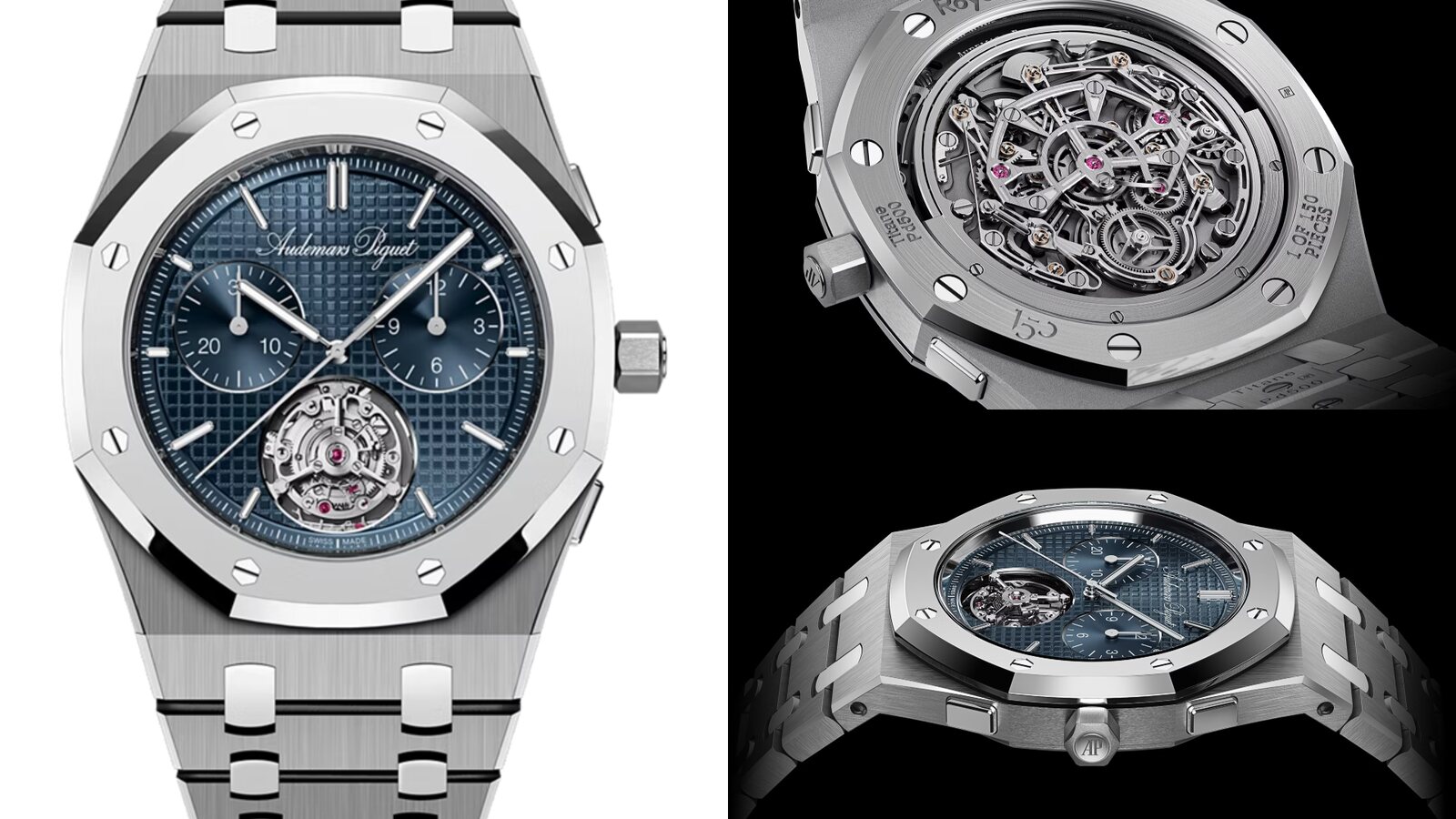
The Royal Oak silhouette is a language we all speak fluently: the 39 mm “Jumbo” case, the 8.1 mm sliver of presence on the wrist, the orchestrated play of light across brushed and polished planes. The RD#5 speaks this dialect with a new, technical accent. Its case and bracelet are hewn from titanium, offering featherweight confidence. But the true alchemy lies in the details: the bezel, caseback, and even the discreet push-pieces are crafted from Bulk Metallic Glass (BMG), a palladium-rich amorphous alloy. This material – born of metallurgical sorcery in which molten metal is cooled so rapidly that its atoms cannot crystallise – offers a hardness and brilliance steel cannot match. It creates a lustrous, almost liquid contrast against titanium’s matte finish: a dialogue between the futuristic and the iconic.
Yet the real revolution is not seen, but felt. For decades, activating a luxury chronograph required a deliberate, firm press – a physical commitment of roughly 1.5 kilograms of force over a millimetre of travel. The engineers at Audemars Piguet, in a move of delightful audacity, drew inspiration not from another watch, but from the smartphone in your pocket. Their goal? A pusher requiring just 300 grams of force over 0.3 mm of travel. The result is a chronograph that engages with the gentle, precise click of a premium volume button. It is an act of interaction so intuitive and effortless that it redefines the relationship between wearer and complication. This is ergonomics elevated to the level of haute couture.
View this post on Instagram
Calibre 8100: The Elastic Heart of a New Machine
Beneath the iconic “Petite Tapisserie” dial, rendered in the deep, mesmerising Bleu Nuit, beats Calibre 8100 – the very raison d’être of the project. This movement does not merely refine the chronograph; it conceptually reinvents it, rendering 150 years of standardised mechanics charmingly obsolete.
Traditional chronographs reset via a hammer striking a heart-shaped cam – a satisfying, if brutish, impact that dissipates energy through friction. The RD#5’s patented system is closer to a drawn bow. As the chronograph runs, energy is intelligently stored within three spring-loaded racks. When the reset is activated, that energy is released in a controlled, elastic snap, returning the hands to zero in under 0.15 seconds, without visible vibration. Giulio Papi, Director of Watch Conception at Audemars Piguet, captures it perfectly: “Think of the traditional chronograph as a car driving with the handbrake on. With Calibre 8100, the handbrake is gone, and the car is now tied to an elastic band.”
This architecture also enables the holy grail for purists: an instantaneously jumping minute counter. The hand neither creeps nor stutters; it advances with a decisive snap precisely as the sweep seconds hand completes its rotation. Combined with a flyback function and a flying tourbillon whose titanium cage minimises inertia, Calibre 8100 is a symphony of liberated energy. Comprising 379 components, it is both a technical powerhouse and a model of serene efficiency – all while fitting within the sacred proportions of the Jumbo case.
A Dubai State of Mind: Horology’s New Global Pulse
The narrative of the RD#5 is inseparable from a city that has mastered the art of audacious understatement: Dubai. Its 2025 unveiling found a natural stage at the seventh edition of Dubai Watch Week (DWW), an event that has rapidly ascended to the uppermost tier of global horology. Maximilian Büsser of MB&F has described it as the greatest watch event in the world today.
Held under the patronage of Her Highness Sheikha Latifa bint Mohammed bin Rashid Al Maktoum, DWW 2025 was a clear statement of intent. Expanding to a vast 200,000-square-foot setting at Burj Park, the event doubled its footprint, welcoming more than 90 brands – from the established grandeur of Audemars Piguet and Hermès to a new wave of compelling independent makers. This is not a trade fair, but a non-commercial cultural salon, where masters such as Philippe Dufour engage in open dialogue with the next generation of collectors.
For millennial and Gen Z connoisseurs navigating life between DIFC and the Palm, DWW represents something quietly radical: the democratisation of access within a rarefied world. Admission is free (with registration), shifting the emphasis from commerce to education, passion, and community. Here, in the shadow of the Burj Khalifa, the RD#5 transcends objecthood. It becomes a symbol of a new axis of luxury – one that fuses Swiss historical depth with the forward-looking, experiential, and digitally native sensibilities of the modern Gulf audience.
The Final RD: A Legacy of Questioning
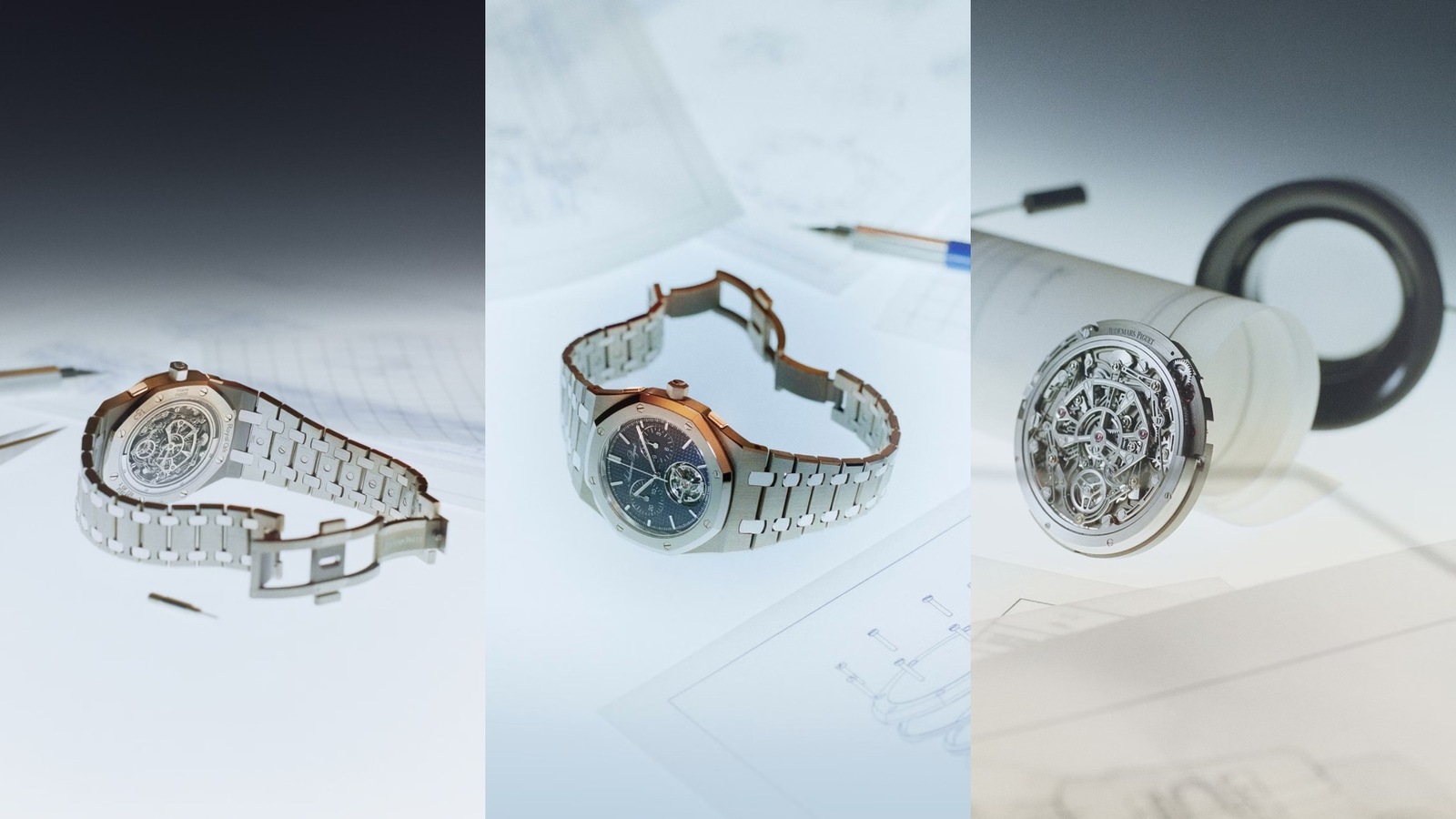
The RD#5 marks the closing chapter of a decade-long series that has subtly but decisively reshaped modern watchmaking. Each preceding model – from the acoustic triumph of the RD#1 Supersonnerie to the ultra-thin perpetual calendar of the RD#2 and the high-amplitude tourbillon of the RD#3 – addressed a fundamental technical dilemma. The RD#5 posed the most human question of all: can a machine of sublime complexity also be a gentle companion? Limited to just 150 pieces, its rarity is self-evident. Its true legacy, however, lies in its philosophy. In a market often seduced by louder, larger, and more ostentatious displays of mechanical bravado, Audemars Piguet has delivered a masterpiece of considered restraint.
It is a watch for the connoisseur who finds meaning not in what a machine demands, but in what it effortlessly provides. A whisper in a world of shouts, it proves that the most radical innovation can feel like the softest click. In the end, the RD#5 does more than tell time. It makes time – and our experience of mastering it – feel profoundly and elegantly modern. And in the vibrant, future-facing heart of the horological world that is now Dubai, that may be the most compelling complication of all.


