The light in Dubai doesn’t merely illuminate; it edits. It softens the edges of ambition, gilds the glass towers and casts long, forgiving shadows over whatever you were before you arrived. It is, in other words, a curator in its own right – which makes Al Quoz the ideal neighbourhood for an exhibition that takes light itself as its subject.
Dom Art Projects, the female-led private institution that opened in November 2025 on Al Khayat Avenue, has built its reputation on precisely this sort of intellectual ambition. Founded by Anna Pumpyanskaya and Alisa Bagdonaite, the space was conceived as a creative home – dom means ‘house’ or ‘home’ in Slavic languages and ‘always’ in Arabic, a linguistic coincidence the founders have embraced with characteristic grace – and it has quickly become the sort of place where you go to think rather than to be seen. Its third not-for-profit exhibition, The Matter of Light, curated by Eugenia Kikodze, runs from 27 October 2026 to 10 March 2027 and brings together 22 artists from across the Arab world, Eastern Europe and beyond in a meditation on how light shapes not just what we see, but how we understand seeing itself.

The premise is deceptively simple. When you look at a painting, a sculpture or a screen, you are not seeing the object itself. You are seeing photons – particles of light – bouncing off surfaces and entering your eyes, where the retina converts the incoming light into electrical signals that are transmitted to the brain for interpretation. Colour and form are, in this sense, contingent on our interaction with light. Visual art, therefore, is not merely illuminated by light; it is also a product of light. It is a philosophical position that has occupied thinkers from Plato’s cave to the phenomenologists, and it acquires a particular piquancy in a city where the manipulation of light – in architecture, in retail and in the careful choreography of a dinner reservation timed to sunset – is practically a civic art form.
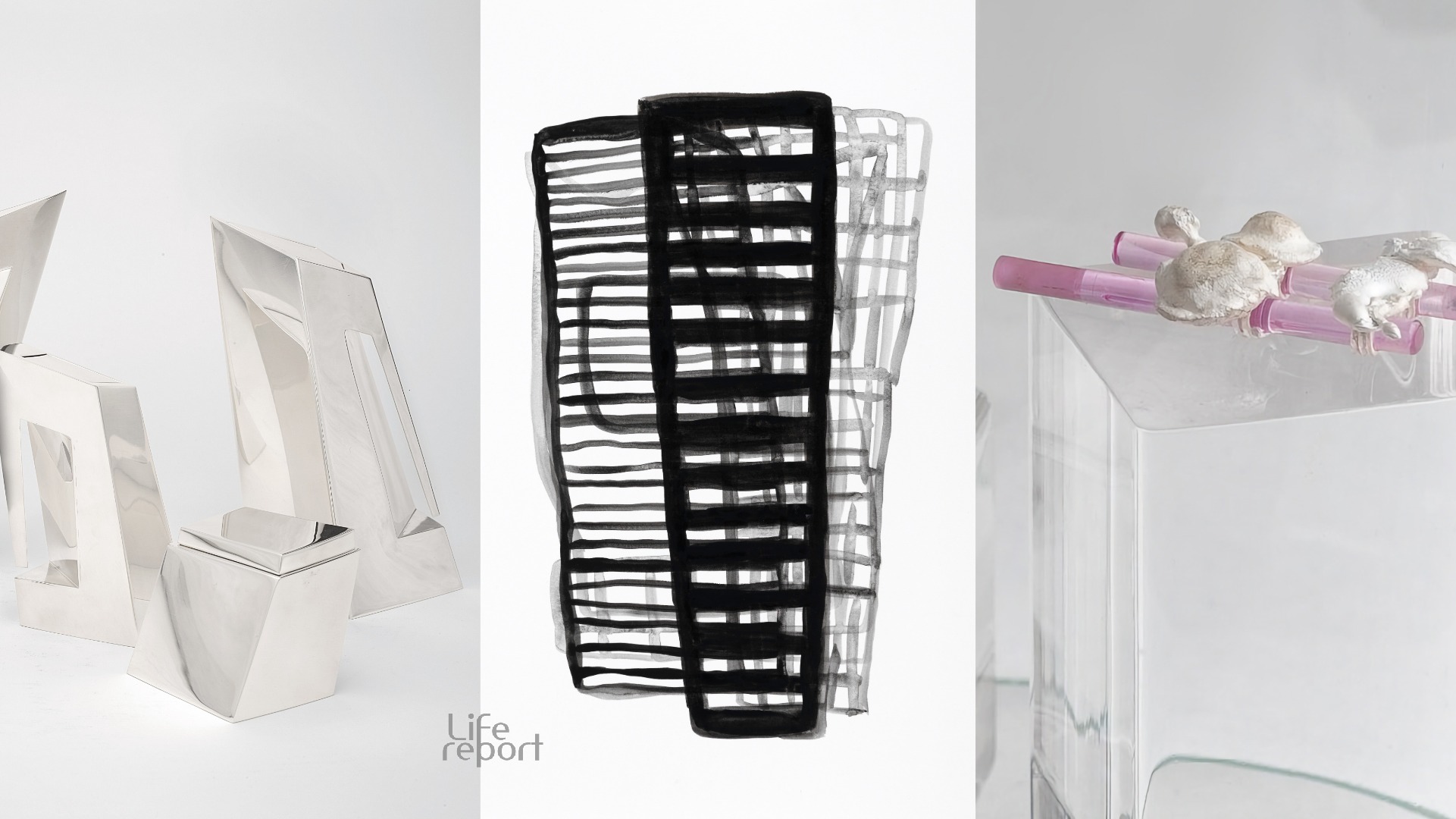
Kikodze, who has curated more than thirty exhibitions in Russia and abroad and formerly headed the Modern Moscow department at the Museum of Moscow, has assembled a multigenerational roster that reads like a syllabus for a particularly demanding seminar on perception. There is Zaha Hadid, whose architectural language of fractured geometries and fluid lines is evident in Abu Dhabi’s Sheikh Zayed Bridge, where sweeping structural forms meet dynamic lighting. There is Ilya Kabakov, the Moscow Conceptualist whose immersive installations sometimes plunge viewers into near-darkness, inviting them to navigate by torchlight and, in doing so, become acutely conscious of the act of looking. There is Kamal Boullata, the Palestinian artist who transformed the geometric rigour of Kufic script into luminous abstractions that seem to refract colour like a prism, and Susan Hefuna, the German-Egyptian artist whose mashrabiya-inspired works filter light through carved screens, creating shifting patterns that explore the boundary between public and private, inside and outside.
View this post on Instagram
The exhibition’s geographical reach is deliberate. Artists associated with Georgia (Koka Ramishvili), Russia (Eduard Steinberg, Oleg Vassiliev, Dmitri Prigov and Pavel Pepperstein), Algeria (Zoulikha Bouabdellah) and Lebanon (Akram Zaatari), alongside artists working across the UAE and other international contexts, converge in a conversation that is less about national identity than about the shared human predicament of perceiving – and misperceiving – the world. Loans from the Art Jameel Collection and the Barjeel Art Foundation, the Sharjah-based foundation whose collection of more than 2,200 works of modern and contemporary Arab art was assembled by Sultan Sooud Al Qassemi, add institutional weight and historical depth. Al Qassemi has described himself as a ‘custodian’ rather than an owner of his collection; one suspects he would appreciate the exhibition’s similarly custodial approach to the question of light itself – something we inherit, borrow and inevitably transform.
The inclusion of Eduard Steinberg is particularly felicitous. Steinberg, who died in Paris in 2012, spent his career pursuing what he called ‘metaphysical painting’ – compositions of luminous geometric forms that seem to float in indeterminate space, their pale tones evoking a kind of spiritual clarity rooted as much in Russian Orthodox icon painting as in Suprematism. His A Dedication to Rothko (1999) explicitly acknowledges the American painter’s influence, and the connection is instructive: both artists understood that colour, properly deployed, could function as a form of light – not the light that reveals objects, but the light that dissolves them.
But The Matter of Light is not merely a historical survey. It is also, and perhaps more urgently, a provocation. In dialogue with Kirill Makarov’s concurrent solo exhibition, Unveiled: Painting in the Age of Post-Produced Reality, which opens at Dom Art Gallery on 27 October, Kikodze’s exhibition poses a distinctly contemporary question: how is our visual reality changing as culture becomes increasingly post-digital? Makarov, born in 1988, treats digital technology as a kind of ‘virtual workbench’, using it to assemble and transform images across media. His current exhibition reconstructs environments associated with war from fragments of online media, reimagining digital images as three-dimensional spaces. His practice suggests that the emergence of digital reality is not a rupture but a continuation – another technological medium that can amplify rather than erase the aura of artistic expression.
This is a more generous position than the one usually adopted by cultural critics, who tend to greet each new technology with the sort of apocalyptic enthusiasm that once accompanied the invention of photography. It is also a more interesting one. If light has always been the medium through which we perceive the world, then the proliferation of screens – each one a source of emitted rather than reflected light – represents not the death of perception, but its mutation. We are, in a sense, all becoming residents of a world where the distinction between the light that illuminates and the light that constitutes has begun to blur.
The exhibition is part of Dom Art Projects’ not-for-profit programme. Admission is free, and the institution’s year-round activities include children’s workshops, artist talks and educational initiatives. Its commercial arm, Dom Art Gallery, represents artists and supports their long-term careers, complementing the institution’s research-led work with a route to commercial visibility. In a city where the art market often seems indistinguishable from the luxury market – where a Basquiat can be flipped for a profit before the champagne has gone flat – this commitment to museum-grade exhibition-making without a museum’s bureaucracy feels quietly radical. It is the sort of thing that makes you want to linger in Al Quoz a little longer, to let the light do its slow work on you.
The exhibition runs until 10 March 2027. By then, the Dubai summer will be threatening to return, and the light – that relentless, unediting light – will once again become something to escape rather than contemplate. For now, in the cooler months, there is a case to be made for spending an afternoon in a warehouse in Al Quoz, watching how 22 artists watch the world. You will not see objects. You will see light reflected from them. And if you are very lucky, you will see something else as well – a glimmer, perhaps, of why it matters that we look at all.
ALSO READ: Bentley’s Most Exclusive Bentayga Yet? Inside the Artenara Edition Inspired by a Mountain