Somewhere in the volcanic heart of Gran Canaria, the wind whips across a basalt monolith called Roque Bentayga, a rock so ancient it makes the pyramids look like pop-up installations. It is a landscape of violent geology and profound silence – the kind of place that makes a person feel minuscule, assuming that person has climbed 1,200 metres to the village of Artenara to find it. And yet, in a climate-controlled showroom on Dubai’s Sheikh Zayed Road, that very same pinnacle is about to be laser-etched onto a dashboard, just a few centimetres from a Naim for Bentley sound system and a polished champagne flute holder. The new Bentayga Artenara Edition has arrived, and it is, quite intentionally, a car that worships altitude.
The edition’s name, borrowed from the highest settlement in Gran Canaria, is a wink to those who enjoy their geography with a side of metaphor. Bentley, after all, named the Bentayga after the island’s Roque Bentayga years ago. Now, with the Artenara Edition, the brand has effectively decided that an SUV already named after a mountain should remind you of that mountain every time you slide into its tri-colour leather embrace. The sheer recursive symbolism of it all is so perfectly, decadently unnecessary that it borders on philosophical art. One might chuckle at the circular logic until the welcome lamp projection flickers across the asphalt at night, casting a glowing facsimile of the rock formation onto the valet’s driveway like a heraldic crest, and the irony dissolves into something approaching awe.
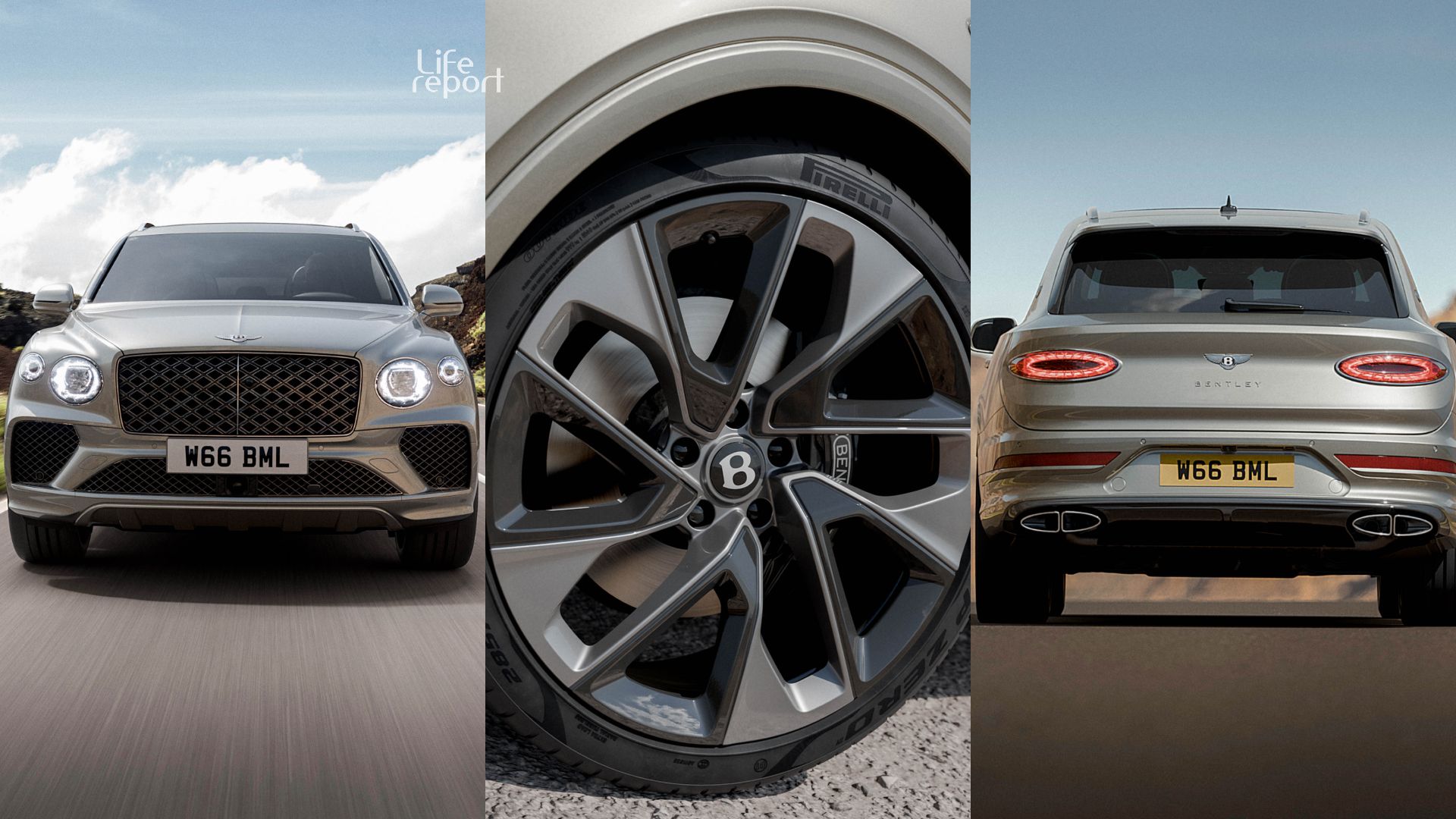
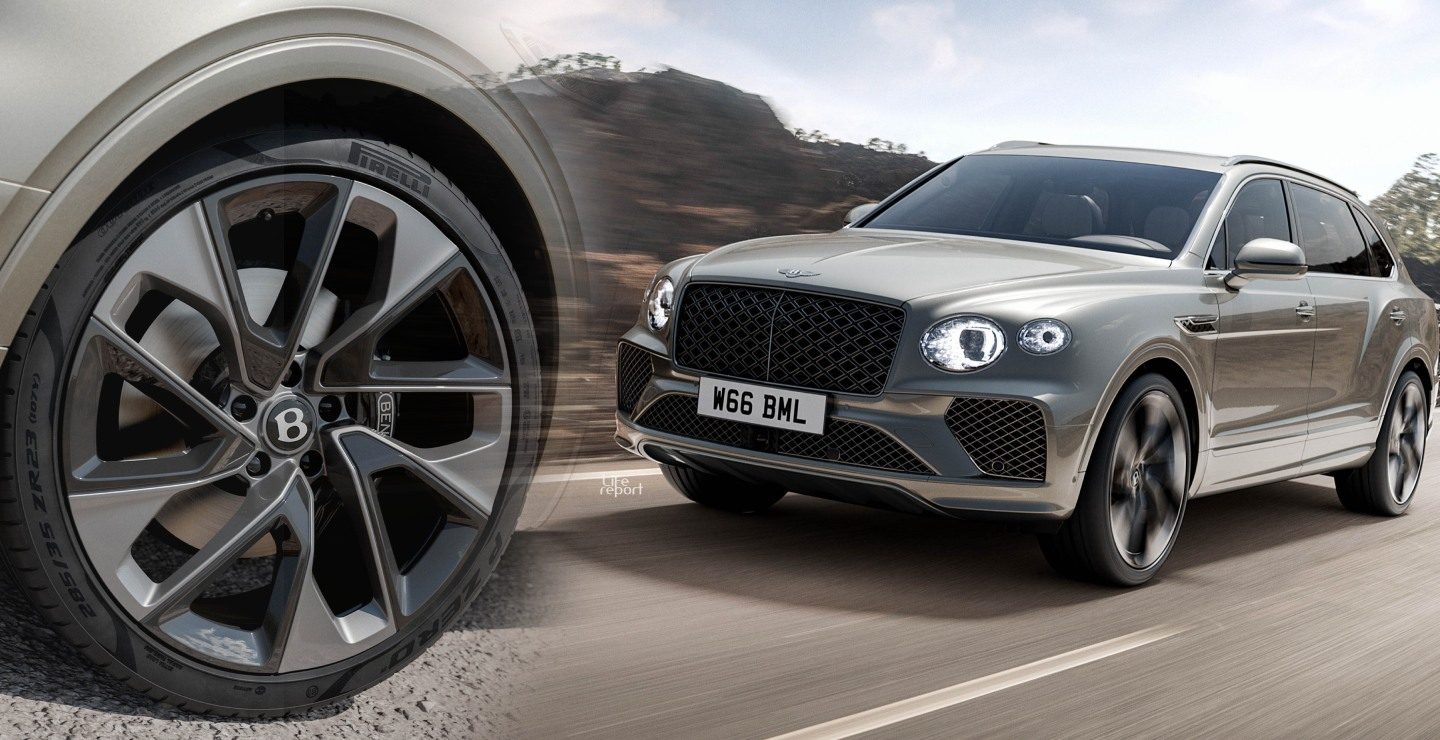
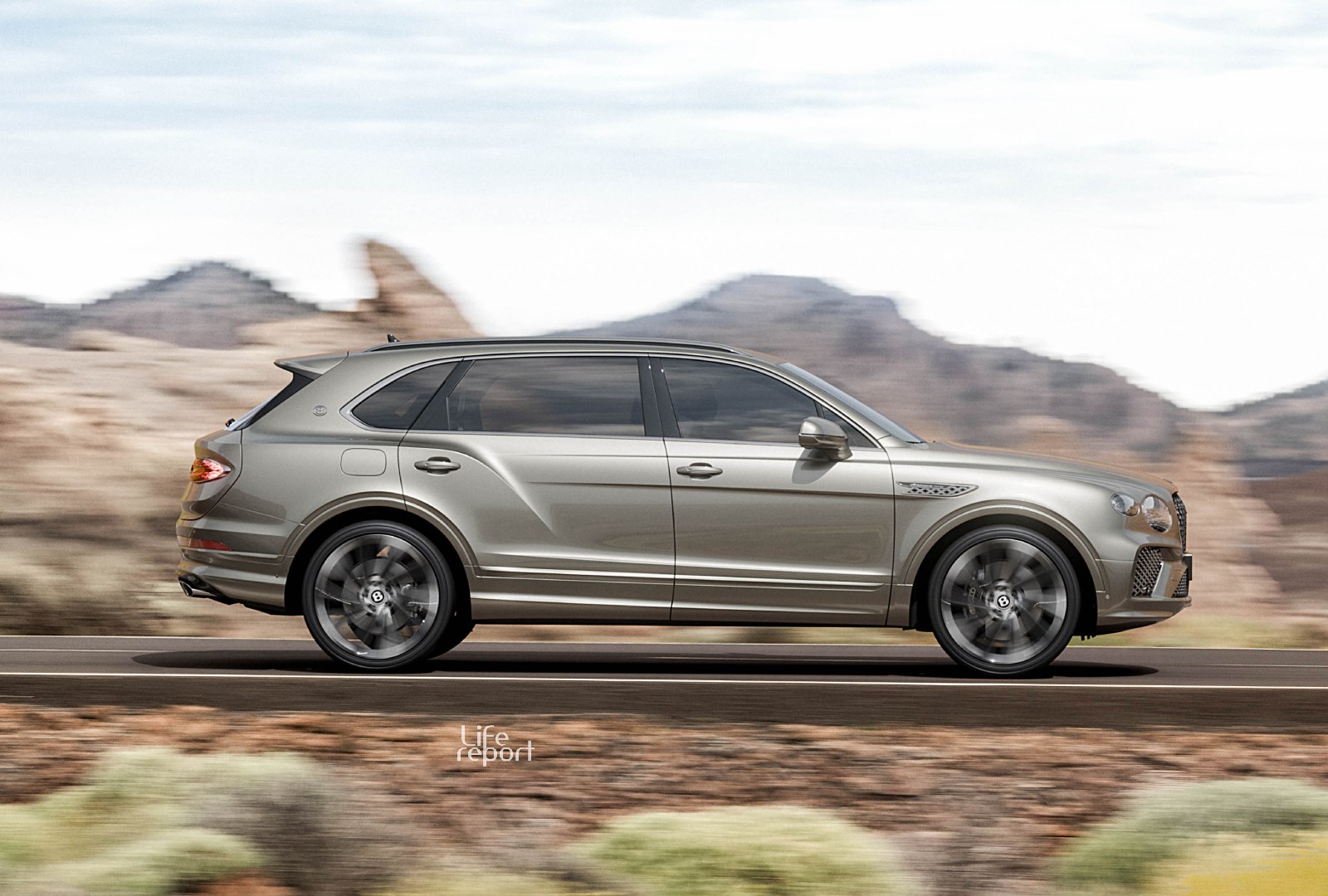
The exterior, available in eight curated body-colour schemes, achieves a visual cleanliness that will feel like a palate cleanser to anyone fatigued by the chrome-draped belligerence of modern luxury. Here, the lower brightware – the front bumper, rear bumper and lower door sections – is finished in the same paint as the rest of the body, a trick that visually lowers the beltline and gives the Bentayga a polished, monolithic presence. It is the sort of architectural restraint one might expect from a Foster + Partners tower in DIFC, rather than from a two-and-a-half-tonne SUV. The standard 22-inch Mulliner wheels, with their double-diamond-cut finish and grey-painted pockets, rotate with the quiet gravitas of a Patek Philippe Calatrava rotor. Opt for the new 23-inch Super Lux wheel, exclusive to Azure, Artenara Edition and Mulliner Extended Wheelbase models, and the effect becomes just a touch more Sultan of Swing.
At the nose, the Mulliner double-diamond grille – with dark chrome pockets available through the Blackline Specification – does what all great grilles should: it announces without shouting and intimidates without aggression. In Dubai, where a matte-black G-Class can look almost anonymous beside a well-specified Bentayga, the Artenara Edition’s face is a lesson in measured confidence. Illuminated treadplates and wing vents bearing the edition’s typography complete an exterior that, were it a fragrance, might resemble a Roja Dove composition built around oud and chilled silver, applied sparingly before a private dinner at Il Borro Tuscan Bistro.
Open the door – any door, though preferably the driver’s – and the interior introduces itself with the soft gasp of a revelation previously reserved for Mulliner’s Extended Wheelbase commissions. The tri-colour hide configuration, once the exclusive preserve of the very long and very chauffeur-driven, now graces the standard-wheelbase cabin. It is a detail that matters immensely to customers who define luxury not by cost alone, but by access to what was previously unattainable. It is the automotive equivalent of securing a seat at a Nobu pop-up before the influencer crowd has even discovered the geotag.
Each of the eight curated interior themes is a miniature masterclass in chromatic intelligence. The Pale Brodgar specification, for example, pairs Portland and Beluga hides with a Linen accent and Piano Linen veneer, conjuring the atmosphere of a Hamptons beach house viewed through a Savile Row lens. The Verdant exterior, matched with Saddle and Camel leathers and a vivid Cumbrian Green accent, feels like stepping into a private study on a Gleneagles estate, where the scent of saddle soap and fine cigars lingers in the air. Then there is the Sequin Blue option: a striking, athletic interpretation that combines a Linen main hide with Beluga secondary leather and Light Blue accents across the fascia base, steering wheel spokes and embroidered Bentley wings. Combined with the Blackline Specification and granite-pocket wheels, it reads like the daily driver of a contemporary art collector – perhaps one who alternates between a Richard Mille RM 67-02 and an Apple Watch Ultra, depending on the day’s desired level of irony.
Every surface in the cabin engages in a quiet dialogue. The fascia carries an etching of the Roque Bentayga summit, complete with its precise geographical coordinates, as though the car were a nautical chart for an emotional journey rather than a school-run battleship. Laser-crafted perforations on the seat shoulders and door cards reproduce the same mountain motif on a scale that rewards the fingertips more than the eye – a detail bordering on the fetishistic, the sort of flourish Jony Ive might once have narrated in an immaculate white room. It is, of course, almost invisible once seated, but luxury has never been about what is immediately seen. It is about knowing the mountain is there, hidden beneath one’s linen blazer, a secret shared between owner and machine.
Powertrain choices arrive with the relaxed abundance of a well-stocked cellar. The standard-wheelbase model is available with Bentley’s twin-turbocharged 4.0-litre V8 – an engine that growls through the rev range like a well-fed panther – or with a V6 plug-in hybrid capable of delivering around 40 kilometres of near-silent electric driving. In a city where the morning school run from Emirates Hills to Jumeirah often involves more time standing still than moving, the hybrid’s ability to glide past rows of idling supercars under electric power alone offers an elegant, almost smug, satisfaction. The Extended Wheelbase version, naturally, is powered exclusively by the V8, stretching the cabin rearwards to create a first-class suite that makes flying in Etihad’s The Residence feel faintly communal.

The real intelligence behind the Artenara Edition, however, is not mechanical but curatorial. The eight recommended colour, material and finish combinations – conceived by Bentley’s in-house design team in Crewe – serve as sophisticated starting points, a ready-to-wear haute couture collection that prevents the paralysis of infinite choice. Yet, as with any self-respecting atelier, the Mulliner team stands ready to dissolve even those boundaries, inviting clients to specify a nine-hide gradient that mirrors the tones of a treasured Persian rug or a veneer matched to the precise patina of a vintage Rolex Submariner. In the UAE, where a passion for personalisation runs deeper than the oil wells that partly financed it, this is less a sales proposition than a cultural expectation.
There is a gentle absurdity, of course, in naming a luxury SUV after a settlement that barely registers on a satellite image. Artenara’s population hovers at around a thousand people, few of whom, one imagines, drive anything equipped with massaging seats. But then this is the same industry that produces watches capable of surviving depths of 3,900 metres, only to be worn by men who will never venture beyond the deep end of a rooftop infinity pool. The Artenara Edition’s poetic fixation on a volcanic pinnacle is precisely what makes it relevant to millennial and Gen Z buyers shaping Dubai’s luxury market. They seek narratives rather than horsepower figures. They invest in objects that function as cultural signifiers – pieces destined for digital mood boards before eventually being parked outside OPA, where the projection lamp quietly paints a mountain onto the pavement.
And so, as the Bentayga Artenara Edition glides into the warm Arabian night, its polished 22-inch wheels catching the glow of the Museum of the Future’s calligraphy, one is left with the image of a car that has transformed geographical elevation into a mobile myth. The highest village in Gran Canaria now, unknowingly, presides over the slow crawl along Al Wasl Road at 8:45 on a Tuesday morning. Whether that represents a triumph of cultural storytelling or a magnificent piece of geographical gaslighting scarcely matters. Both are true, and both are exquisitely irrelevant. That, after all, is the whole point of a pinnacle.
ALSO READ: The Most Unexpected Art Show in Dubai Will Make You Distrust Your GPS