It was, I confess, over a decidedly unglamorous saffron latte in Alserkal Avenue – that industrial-chic theatre of Dubai’s creative ambition – that I first overheard the words “Bukhara Biennial” uttered with the sort of hushed reverence usually reserved for a pre-owned Birkin or a table at Zuma on a Thursday. The speaker, a fashionably fatigued curator in Bottega Veneta biker boots, was lamenting the predictability of the summer circuit: the Venice crush, the Basel migraine. “Next year,” she declared, scrolling through her phone, “I’m only doing things that come with ancient caravanserais and zero Wi-Fi.”
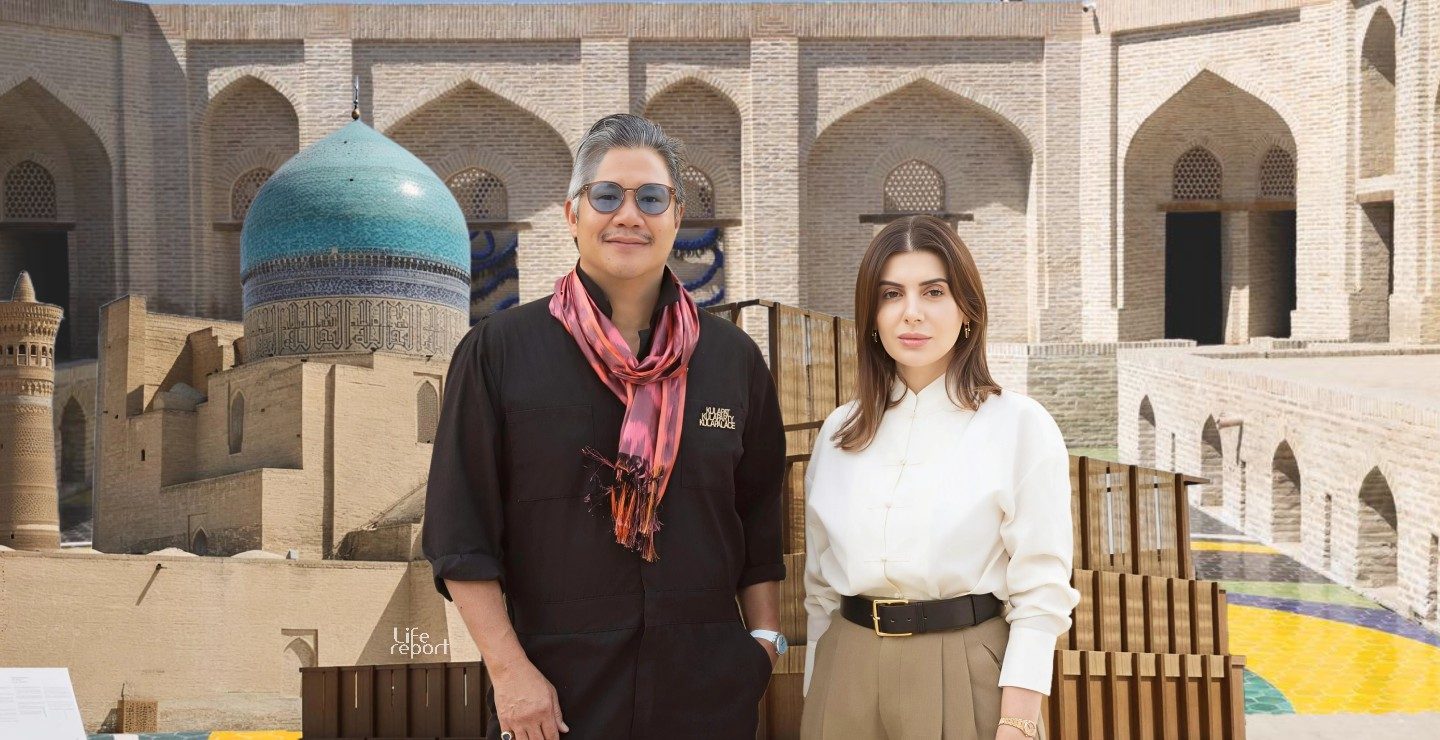
She was, of course, talking about the cultural jolt that has quietly reordered the map of global art. If the inaugural 2025 edition of the Bukhara Biennial caught the art world pleasantly off guard – 1.8 million visitors threading through the city’s madrasas and trading domes, an improbable, sandalwood-scented collision of Antony Gormley and master ikat weavers – its second act, now announced, promises to transform a fascinating experiment into an essential rendezvous for the aesthetically restless. The news that Thai architect Kulapat Yantrasast has been appointed artistic director for 2027 has, in a single stroke, elevated the Biennial from a Silk Road curiosity to the most elegantly cerebral ticket of the decade.
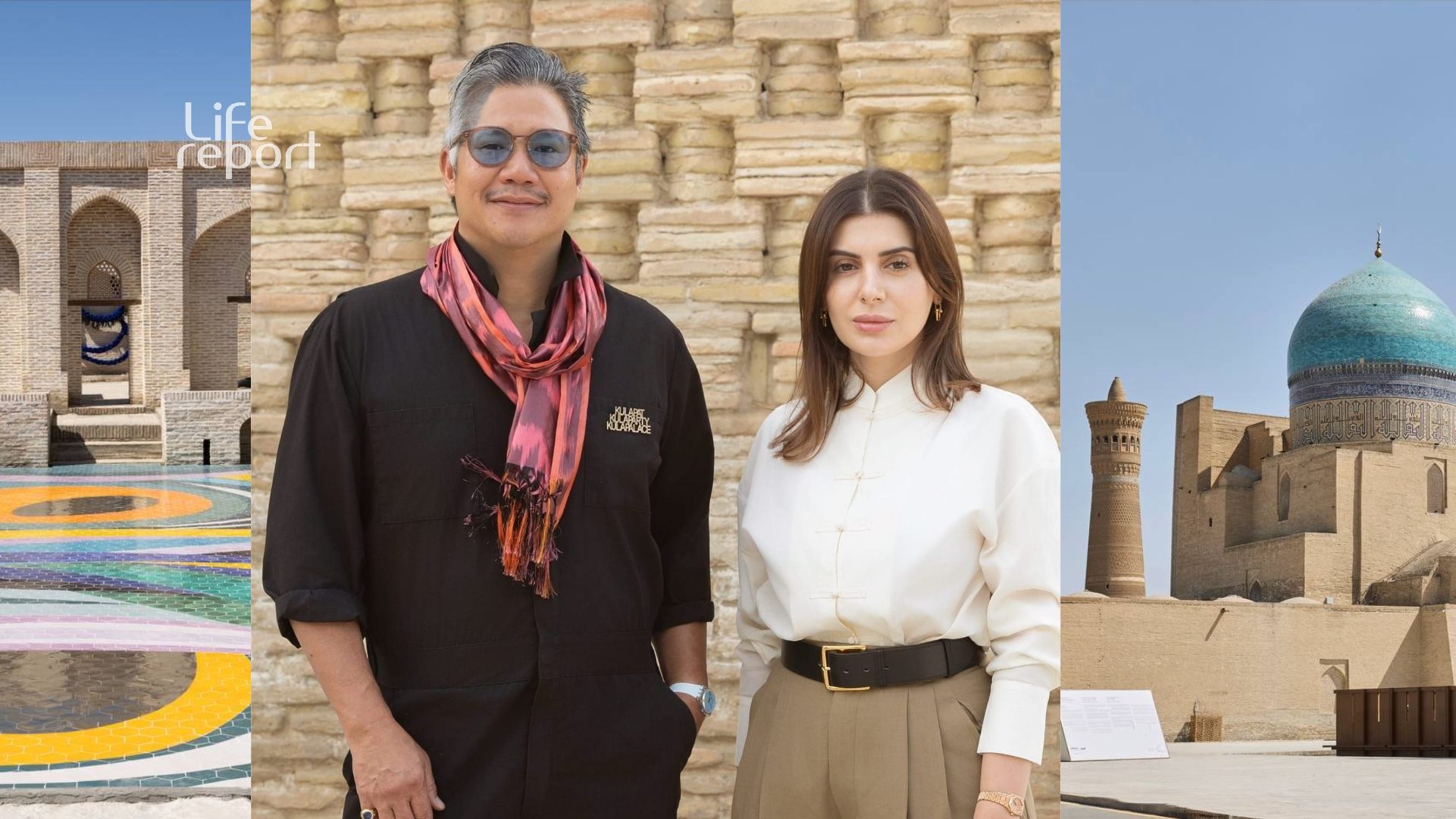
For those who track the pilgrimage patterns of the culturally aspirational, Yantrasast’s arrival feels like a bespoke key turning in a very old lock. Trained under the stoic minimalism of Tadao Ando before founding his own multidisciplinary firm, WHY Architecture, Yantrasast has built a career on making heritage breathe without wheezing under the weight of nostalgia. His recent work reads like a syllabus in how to seduce the contemporary museum-goer: the poetic reimagining of The Met’s Michael C. Rockefeller Wing in New York, the forthcoming ILMI Science Discovery & Innovation Center in Riyadh – a project that quietly mirrors the Gulf’s own gilded cultural sprint – and a sensitive role in the evolution of the Grand Louvre in Paris. He is, in effect, the man luxury institutions call when they need to signal deep intelligence without sacrificing the Instagrammable moment. The ACDF – Uzbekistan’s formidable cultural foundation, chaired by Gayane Umerova – clearly understood that the Biennial’s next chapter required more than a curator; it needed a spatial choreographer capable of staging a 2,500-year-old city as the main act.
Before we amble further into this turquoise-tiled future, a polite nod to the recent past. The 2025 edition, curated with a syncretic touch by Diana Campbell, operated under the distinctly un-corporate vision of “revitalising heritage not as a static memory, but as a foundation for creative futures”. This was no lofty press-release fluff. It manifested in a genuinely unusual model: international artists – Delcy Morelos, Subodh Gupta and the ever-luminous Dana Awartani – embedded themselves with local ceramicists, woodcarvers and silk painters to produce works that smelled of communal labour rather than airport-lounge conceptualism. The result felt less like a biennial and more like an atelier of civilisations, a quiet riposte to an art market often addicted to sterile white cubes. The attendance figure – 1.8 million, a number one greets with the same bemused squint as a brunch bill at Burj Al Arab – was, even if optimistic, proof that the appetite for the authentically rooted is ravenous.
View this post on Instagram
Yantrasast’s 2027 edition, running from 3 September to 21 November, is wisely doubling down on the artist–artisan dialogue while injecting a bracing dose of economic and ecological rigour. Local economists, ecologists and scholars will be woven into the programme, a move that will either give birth to truly grounded works or produce some profoundly chic panel discussions. But the real seduction lies in the venues. For the first time, the Biennial will unlock a string of rejuvenated caravanserais, madrasas and public squares that have, until now, remained tantalisingly closed to the public. One imagines installation pieces nestled within the courtyard of a 16th-century trading inn, the ghosts of spice merchants mingling with the murmur of a video art soundtrack. This is heritage conservation as luxury experience: not the cheap thrill of a projection-mapped ruin, but a rare, unhurried invitation to dwell within a living palimpsest. For the UAE’s millennial and Gen Z travellers – a generation that has already graduated from poolside selfies to AlUla’s mirrored concert halls and is desperately craving the next frontier of taste – Bukhara suddenly looks less like a destination and more like a revelation.
The connectivity is laughably simple, which, of course, only accelerates the desire. A direct flydubai or Air Arabia flight shuttles travellers from Dubai’s terminal gleam to the edge of the Kyzylkum Desert in just over three hours, placing the Biennial squarely within the realm of a cultured long weekend. Accommodation options are evolving with the speed of a luxury brand scenting a new market: the Samarkand Regency has recently added a wing of suites that channels a restrained, ikat-patterned opulence, while the Silk Road Samarkand complex offers a more resort-like base for those who prefer their heritage accompanied by a flawless hammam. This is not glamping in a yurt for irony’s sake; it is the soft landing of five-star hospitality upon ancient ground, a transaction that would feel crass were it not so meticulously executed.
View this post on Instagram
Yantrasast’s own aesthetic language – he is an architect who speaks of “gentle backdrops” and allows materials to age gracefully – suits a city where the blue of the domes is itself a masterclass in time’s patina. His collaboration with ACDF on the When Apricots Blossom installation at Milan Design Week 2026 already hinted at a shared sensibility: stories of perseverance and community rendered not through loud spectacle but through the quiet, amber light of dried fruit and woven thread. For those of us who endured that week in Milan, the project was a palate cleanser amid the typical branding bombardment – a whispering room that left visitors craving a cup of green tea and a deeper conversation. Expect the 2027 Biennial to amplify this tone, transforming entire neighbourhoods into immersive, soft-spoken environments that resist the tyranny of the photo opportunity even as they all but guarantee viral allure.
There is, naturally, a gentle irony to all this. We, the cosmopolitan vanguard, now chase authenticity in much the same way earlier generations chased gold, and we do so with the same impeccable accessories. The sight of a limited-edition Rimowa trunk being wheeled across a 14th-century cobbled square may well become the defining image of the next cultural season. Yet if the mission is sincere – and with Yantrasast’s pedigree and Umerova’s track record there is every reason to believe that it is – then the Bukhara Biennial might just succeed in being that rarest of things: an art event that refreshes the soul rather than merely padding the CV. It proposes that heritage, when handled with intellectual grace and a dash of architectural poetry, can be every bit as forward-looking as any neon-slick gallery in a free zone.
The second edition’s dates, spanning the velvet light of early autumn, are already etched into the mental calendars of those who plan their lives around art and meaning. As Dubai’s humidity finally breaks and the city’s own art season begins to stir, a pilgrimage northwards to the Sogdian heartland will become the new marker of cultural intelligence. My advice, delivered with a wry smile over a much better cup of coffee: book the flights now, and perhaps leave the Wi-Fi at home. The caravanserais are waiting, and for once, they offer better reception than your phone.
Also Read: Why Cheval Blanc Randheli’s Summer Offer Is the Ultimate Flex in Understated Luxury