In a world that measures engagement in seconds, new International Ethnographic Triennial in Russia is betting four years on a mammoth-ivory figurine and a question Dubai’s luxury class knows all too well: what, exactly, is worth preserving?
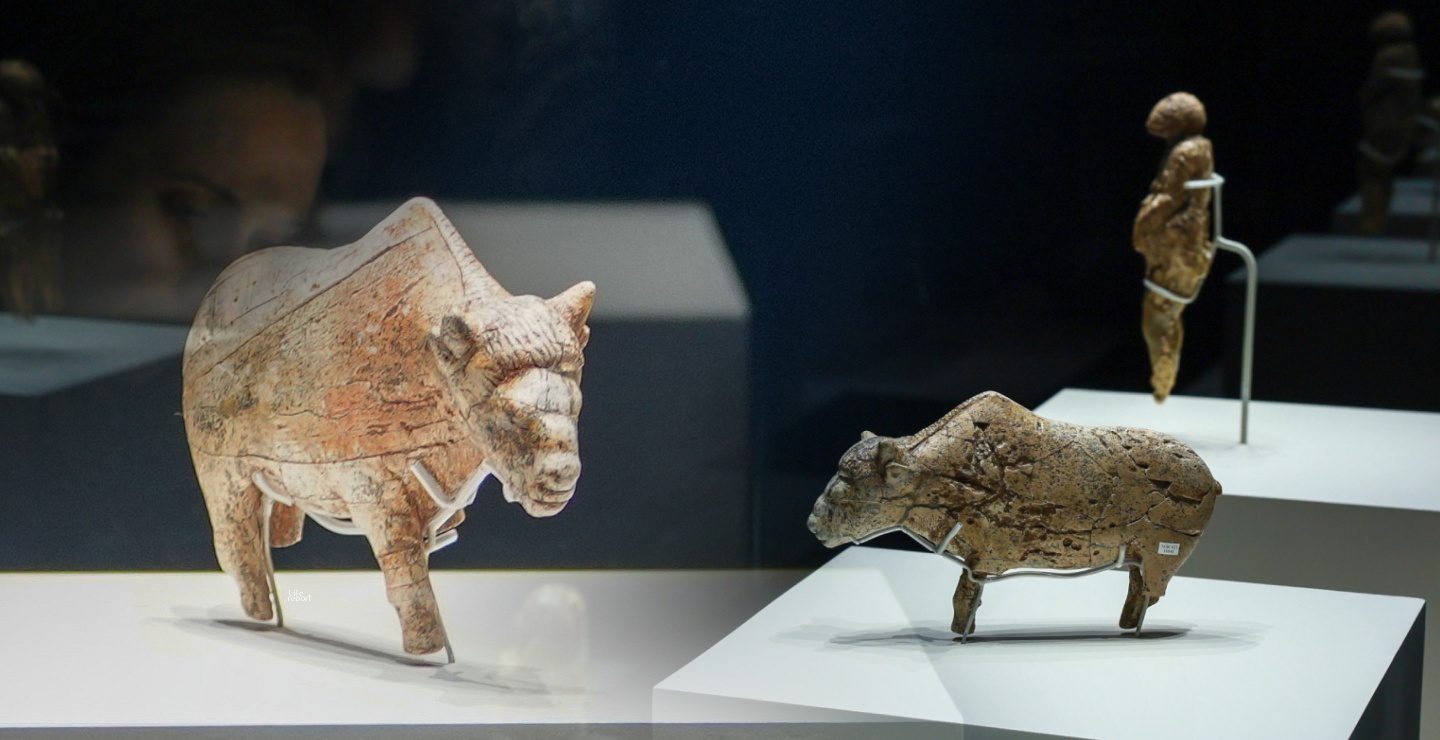
The most quietly subversive object in the art world right now is smaller than a smartphone, older than agriculture and currently housed in a regional Russian museum. It is a bison, carved from mammoth ivory some 22,000 years ago and discovered in a specially prepared pit at Zaraysk, in a deposit widely interpreted as ritual. Its discovery has the kind of theatrical precision that would make a contemporary installation artist weep with envy. The figurine has a nose, eyes, horns, ears and a mane rendered with a fidelity that Upper Palaeolithic hands had no business achieving. It was placed on a small platform of white sand, with arctic fox bones and a fragment of mammoth tooth beside it, then covered with a mammoth shoulder blade. This was not storage. This was staging.
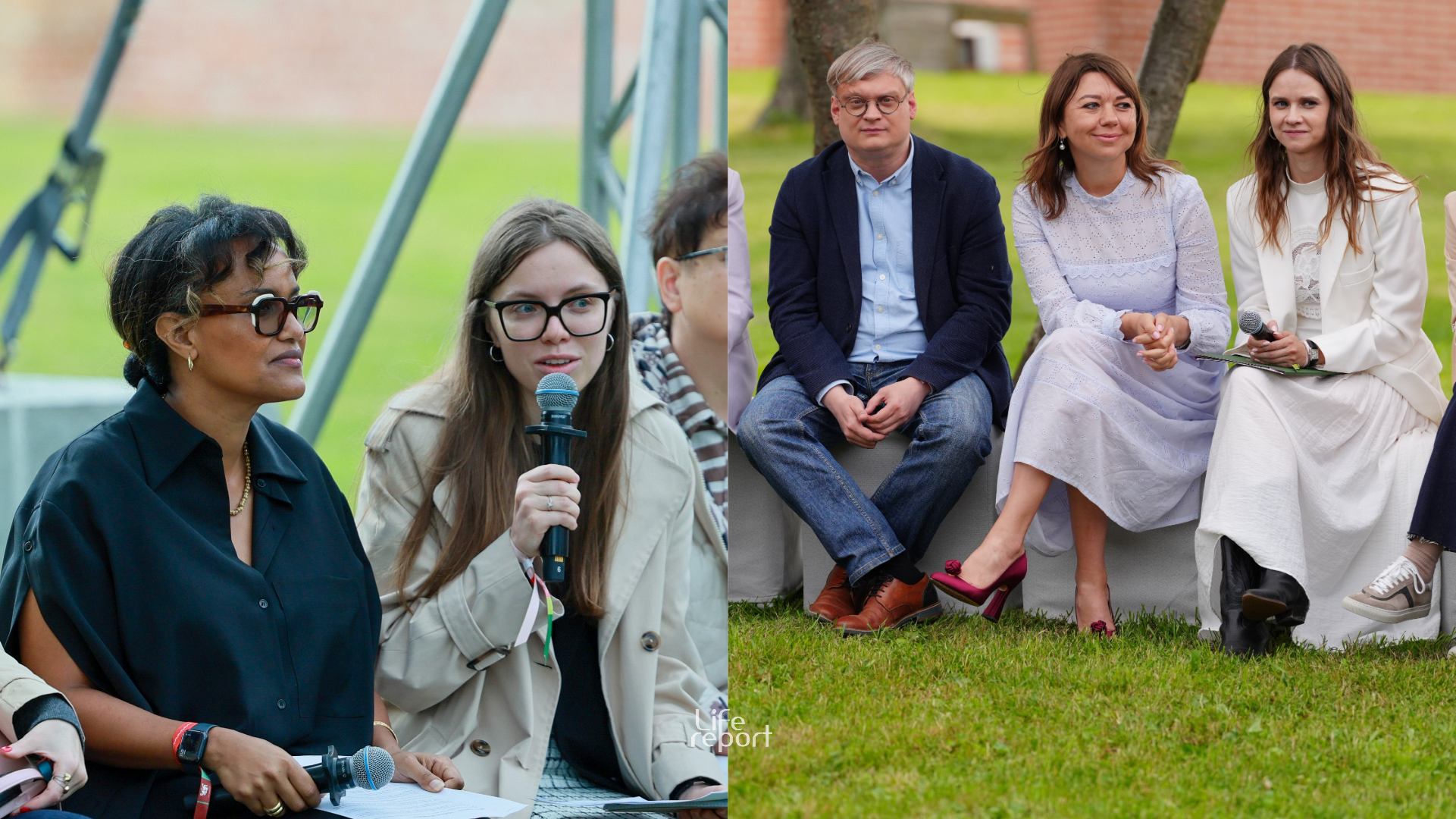
Right: MEHRET MANDEFRO, co-curator of the International Ethnographic Triennial, with participants, at the meeting of the International Ethnographic Triennial, Zaraysk, 2026. Left: ELENA YUSHINA, Head of the Exhibition and Curatorial Department, National Centre “Russia,” and NATALIA VIRTUOZOVA, Director General, National Centre “Russia,” and Commissioner of the International Ethnographic Triennial, with participants.
The bison is the unlikeliest of influencers. And yet it sits at the centre of The International Ethnographic Triennial, a project launched this summer by the National Centre Russia, with its main exhibition scheduled for 2030. The intervening years are not a countdown; they are the point. While the rest of the cultural economy sprints towards the next drop, the next biennial, the next algorithmic dopamine hit, this project is deliberately walking – through expeditions, field research, museum collaborations and educational programmes that will unfold across Russia’s regions before a single wall label is printed. In the language of luxury, it is the opposite of a limited edition. It is an exercise in unlimited patience.
For a Gulf readership fluent in the grammar of cultural capital, the proposition is both familiar and disorienting. Dubai and Abu Dhabi have spent the past decade proving that world-class museums and art fairs can be conjured with sovereign will and architectural ambition. Saadiyat Cultural District is no longer a render; it is a neighbourhood. The Louvre Abu Dhabi has become a fixture of the weekend itinerary. Guggenheim Abu Dhabi is due to open on 11 December 2026. The region understands the theatre of culture. What the Ethnographic Triennial proposes is something else: the anti-theatre of culture, a project that insists on the unglamorous, slow, sometimes awkward work of listening before it earns the right to exhibit.
The choice of Zaraysk as the launchpad is a statement in itself. A town in the Moscow Region with a kremlin, a Dostoevsky connection and a Palaeolithic site of global significance, Zaraysk is not a brand. It is not a destination for the private-jet set. It is, as Natalia Virtuozova, the project’s commissioner, put it, a place where “the memory of the human being has been preserved” for thousands of years, from the Upper Palaeolithic to the literary legacy of a novelist who understood the dangerous arithmetic of love. Virtuozova, Director General of the National Centre Russia, speaks of the triennial not as an exhibition but as “a long journey” – a phrase that will read as either admirably earnest or faintly absurd to a generation raised on same-day delivery. Both reactions are appropriate.
The project’s intellectual scaffolding is held together by an unlikely trinity: contemporary art, anthropology and ethnography. Its international co-curator, Mehret Mandefro, an Ethiopian-American physician, anthropologist and Emmy-nominated producer and filmmaker, describes ethnography as “the most humane of all sciences” – a discipline that requires its practitioners to eat the food, sit through the rituals and submit to the discomfort of not knowing. Mandefro’s own career is a rebuke to the neat boundaries of the creative class: Harvard-trained in both medicine and anthropology, she has spent years developing what she calls “audiovisual medicine”, narratives that bring storytelling together with art and science as a form of care. Her presence signals that this is not a folkloric showcase dressed in curatorially correct clothing. It is an argument about method.
That method is already underway. The “Towards the IET” programme is being built around field expeditions, museum partnerships and research involving collections and archives across Russia, with the explicit goal of integrating scientific findings into exhibition-making rather than treating them as decorative footnotes. Yelena Yushina, the project’s lead and co-curator, has presented it as a kind of living laboratory in which anthropologists, artists and museum specialists work shoulder to shoulder – an idea that would be easy to dismiss as curatorial boilerplate were it not for the long preparatory period designed to make it real. The main exhibition is scheduled to open in 2030. In the meantime, the programme is expected to include conferences, film screenings, publications and the slow accretion of relationships between institutions and communities that cannot be rushed into a press release.
Herein lies the gentle provocation for the UAE’s Gen Z and millennial luxury consumers, a demographic that has mastered the art of the curated experience but remains, understandably, suspicious of institutions that ask for time without offering a return. The triennial’s wager is that cultural memory is not a soft asset. It is the raw material of identity, and identity – for all the noise about personal branding – remains the only luxury that cannot be outsourced. The so-called Zaraysk Venuses, small female figurines also associated with the archaeological site, are not merely decorative ancestors. They speak to an ancient human impulse to make meaning from the body, from the world, from the fragile fact of being alive. A culture that forgets this impulse does not become modern. It becomes amnesiac.
None of which is to say that the project arrives without baggage. A Russian state-backed cultural initiative seeking “global dialogue” in the current geopolitical climate carries an irony thick enough to be carved from mammoth ivory itself. The triennial’s ambition to connect local stories with an international context will be read by some as soft power by another name, and the project’s institutional parentage – The National Centre Russia, a platform designed to project the country’s achievements – does little to dispel the suspicion. But the response to that suspicion is not cynicism. It is scrutiny. The question worth asking is not whether the triennial has a political dimension – everything with a budget does – but whether its research protocols, curatorial appointments and regional partnerships are robust enough to produce knowledge that outlives the opening speeches. Mandefro’s involvement and the plans for international expert meetings and symposia are early signals that the answer may be more interesting than the sceptics expect.

Installation view of Bison and associated Upper Paleolithic artifacts, ca. 20,000–22,000 BCE.
For the Gulf’s cultural ecosystem, there is a mirror here worth holding up. The UAE has become extraordinarily adept at importing the finished product of global culture – the blockbuster exhibition, the celebrity architect, the art fair that turns an airport into a pilgrimage. What it has been slower to cultivate is the unglamorous infrastructure of cultural memory: the archives, the field research, the community relationships that give a museum its roots rather than its roof. The Ethnographic Triennial, for all its Russian particularity, is a case study in what that infrastructure looks like when it is treated as the main event rather than the backstage. Dubai’s collectors and curators, who understand better than most that the next decade of luxury will be defined by provenance and narrative rather than logo and logo-adjacent collaboration, might find in Zaraysk an unexpected syllabus.
The bison, after all, was not made for an audience. It appears to have been intended for ritual use, deposited with care and forgotten for roughly twenty-two millennia. Its rediscovery is not a triumph of curation but the result of archaeology and chance. The Ethnographic Triennial is an attempt to build a structure around that accident – to turn the luck of the find into a method of looking. Whether it succeeds will depend on whether the project can resist the gravitational pull of its own institutional machinery and remain, as Yushina hopes, a laboratory rather than a monument. The early signs are cautiously promising. The research is underway. Partnerships are forming. The bison is waiting.
And for a generation that has been told, repeatedly, that attention is the only currency that matters, the bison offers a different proposition. It does not want your attention. It wants your patience. That is a luxury the UAE knows how to price. The question is whether it knows how to value it.
ALSO READ: Christie’s Mawasim in Abu Dhabi: Is the Gulf Becoming the New Centre of the Art World?