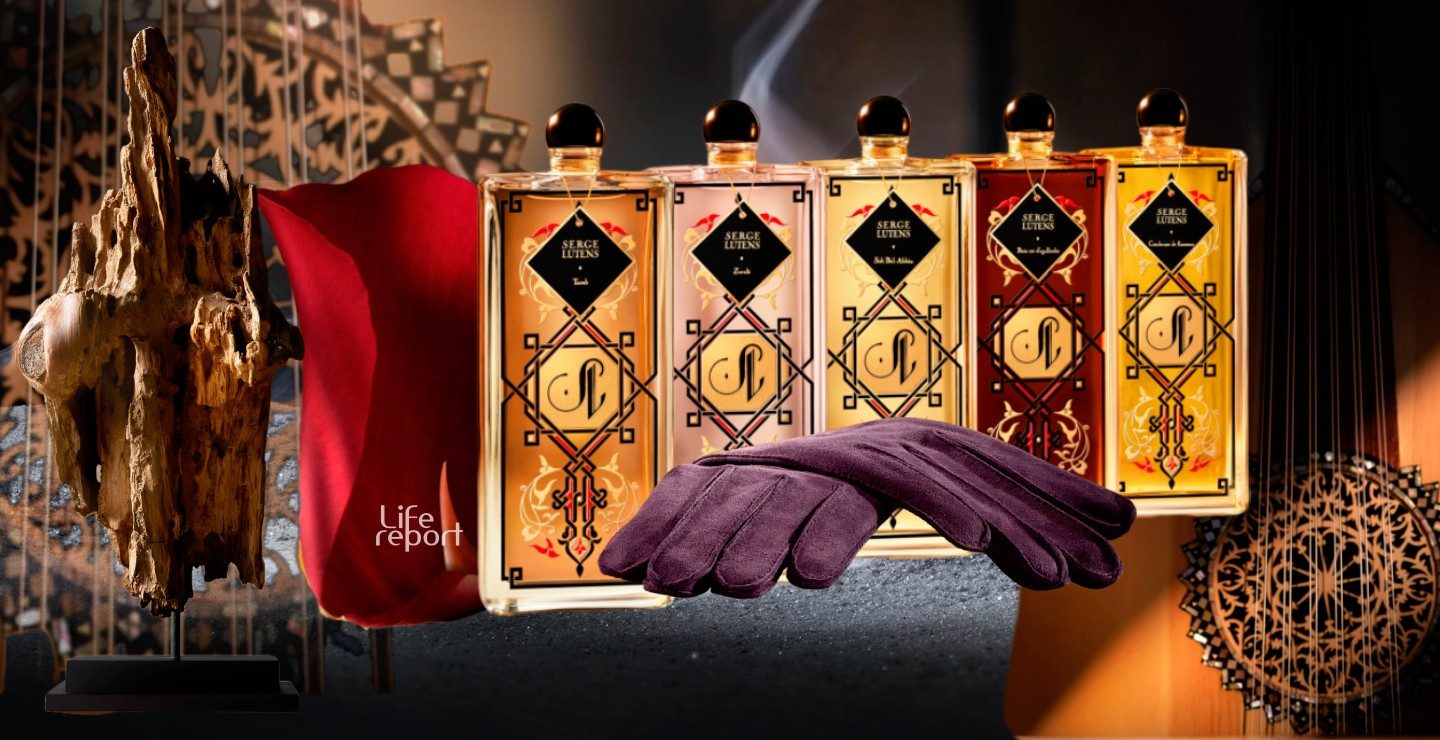
Serge Lutens does not do polite. In a city of gold-plated everything, his new Royaume des Lumières collection arrives like a half-remembered scandal – elegant, unsettling and impossible to forget.
Dubai has no shortage of luxury that announces itself. There are boutiques that gleam like banks, fragrance counters where the words “limited edition” are uttered with the solemnity of a royal decree, and an endless parade of objects designed to be photographed, tagged and never thought about again. It is, for the most part, a landscape of impeccable taste and impeccable boredom. Somewhere between the third private viewing of the season and the moment you realise yet another oud-based “masterpiece” has been engineered to smell like every other oud-based masterpiece, the soul of luxury begins to feel suspiciously like a spreadsheet. Which is precisely where Serge Lutens comes in – with a match in one hand and a rose in the other, and no intention of telling you which is which.
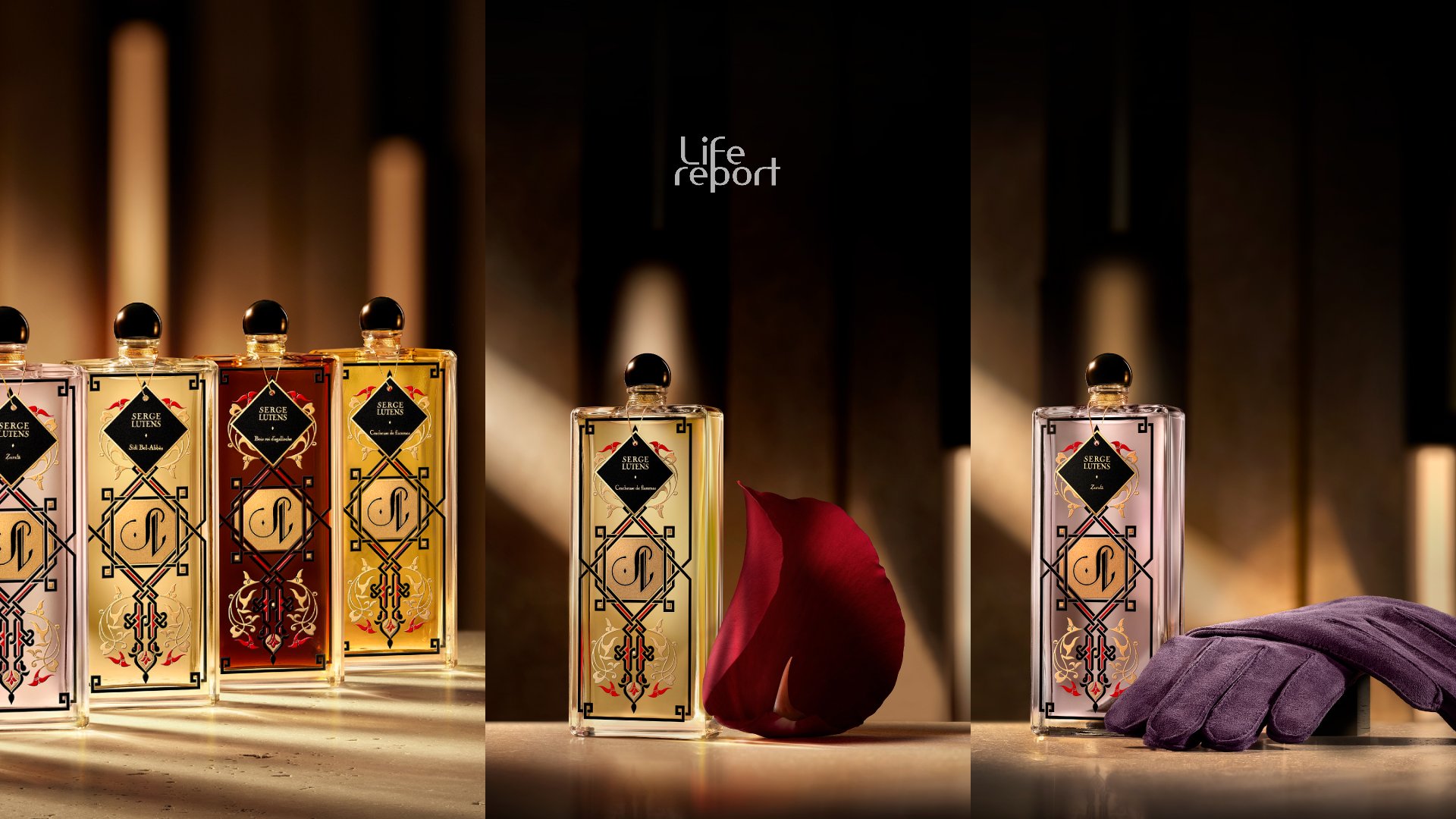
Royaume des Lumières – the Kingdom of Lights – is not a collection designed to reassure. These five fragrances, now arriving in Dubai’s most discerning boutiques, do not come with the usual fanfare of gold-plated flacons and breathless press releases about “inspiration”. They arrive with the quiet menace of something that knows precisely how valuable it is and refuses to beg for attention. In 2026, in a city that has turned acquisition into an art form, that feels almost revolutionary.
Consider, for a moment, the predicament of the contemporary perfume lover. We are drowning in niche. Every other week brings another “artisanal” house with a backstory about a perfumer who wandered through a Moroccan souk and discovered the soul of oud. The shelves groan with mediocrity dressed in minimalist bottles, each promising to be the final word in sophistication. The result is a kind of olfactory fatigue – a numbing of the senses that leaves us reaching, once again, for the familiar comfort of the fragrance we wore at twenty-five.
Lutens, now in his eighties, has never been interested in comfort. The man who transformed the aesthetic language of beauty – first at Dior in the 1960s, then at Shiseido, and later with his own eponymous line – has spent his career refusing to make things easy. His fragrances do not flatter. They confront. They linger in the memory like a conversation you did not know you needed to have.
The Royaume des Lumières, presented in bottles the colour of royal crimson and draped in golden lacework recalling the ornate excess of Ottoman miniatures, continues this tradition with something approaching insolence. This is not a collection for those who want to smell “nice”. It is for those who understand that fragrance, at its most compelling, is a form of architecture – a construction of mood, memory and, as Lutens himself puts it, “insolence”.
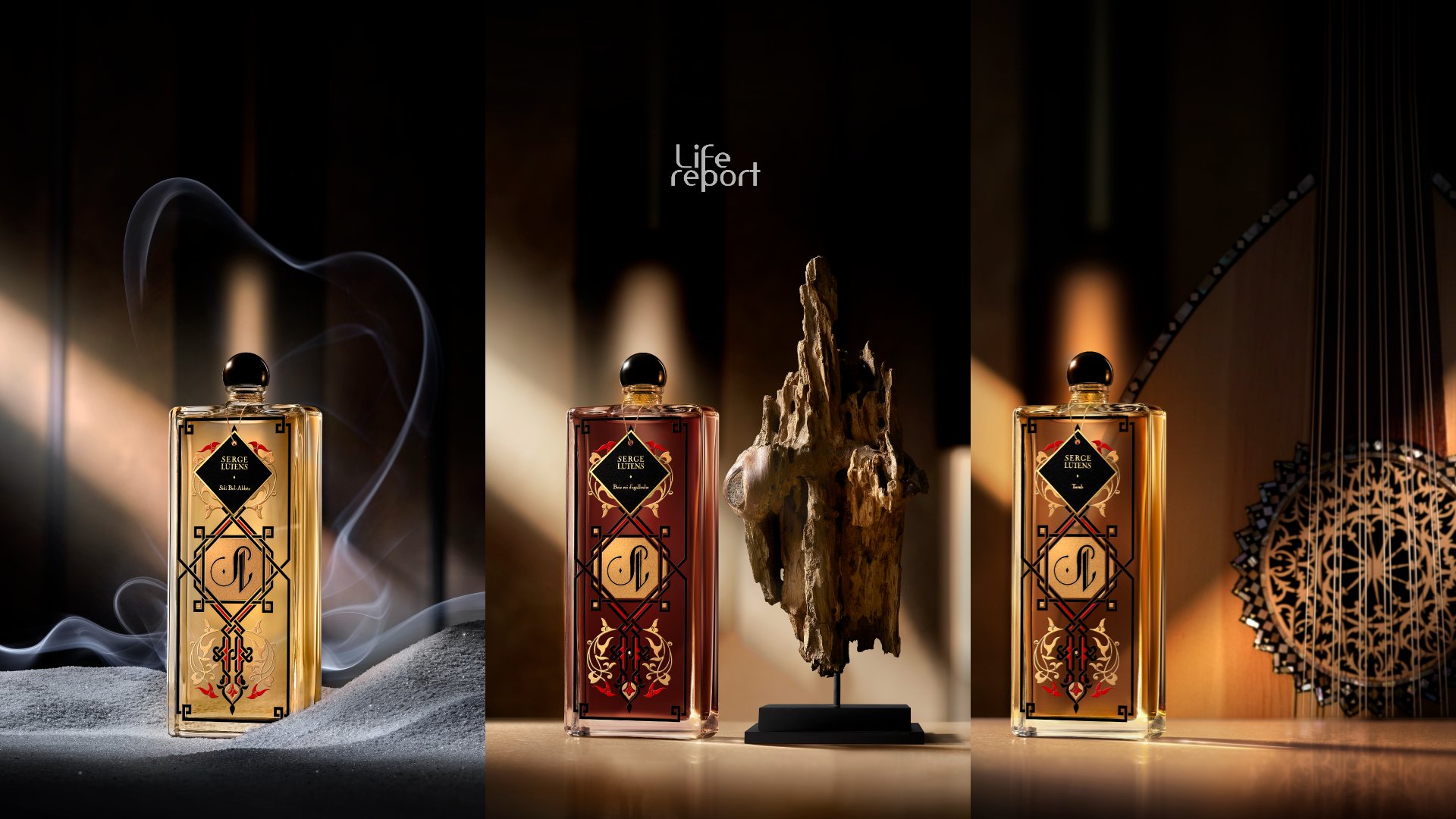
Let us begin with Bois Roi d’Agaloche, perhaps the most defiant of the five. Lutens’s accompanying text is characteristically unsparing: “When agalloch wood perishes, it exudes a distinctive odour, almost like its death rattle. But the divine aroma of its second marriage will overcome our disdain. Only a prince of insolence will have the audacity to crown it.”
This is oud as you have never encountered it. The ingredient that has become, in recent years, the default signifier of Arabian luxury – so ubiquitous that it threatens to become a cliché – is here stripped of its predictability. Lutens pairs sacred oud essence with vetiver and cypriol, creating something simultaneously ancient and unsettlingly modern. It is the scent of a kingdom that has burned and risen again, not because it was meant to, but because it simply refused to stay dead.
In a region where oud is often deployed with the subtlety of a gong, this feels like a quiet revolution. It understands that true power does not announce itself; it insinuates. Then there is Sidi Bel-Abbès, named for the Algerian garrison town and carrying within it the memory of a romance that ends before it begins. Tobacco, Russian leather and honey combine to produce something that is less a fragrance than a time machine. One closes one’s eyes and is transported to a particular kind of heat – the scorching sun of the Maghreb, golden sand holding the imprint of bodies that have already departed, the murmur of conversations that should have been had.
This is a fragrance for the man who understands that seduction is not about presence but absence. It is chic in the way only something slightly undone can be. The tobacco does not cloy; the leather does not overwhelm; the honey avoids sentimentality. Like the memory it preserves, it is exquisitely incomplete.
The name itself carries weight. Sidi Bel-Abbès was once the heart of the French Foreign Legion – a place of exile and reinvention. Lutens, who spent formative years in Morocco, renders this not as nostalgia but as something far more compelling: a meditation on how places retain the emotions that passed through them long after the people have gone.
Zurāfā, perhaps the collection’s most cerebral offering, takes its name from a community associated with elegance and intellectual refinement in medieval Arab–Muslim civilisations – a golden age of beauty and philosophy that still echoes in Andalusian gardens and courtly poetry. The fragrance is built around iris and leather, two notes historically kept at a respectful distance. Here, they are brought together in what Lutens describes as a memory returned “from far across the mists of time”.
Iris is notoriously difficult – cool, powdery, aristocratic. Leather is its opposite: warm, animalic, faintly dangerous. Their union in Zurāfā is not a compromise but a transformation. The iris softens the leather’s aggression; the leather warms the iris’s reserve. The result suggests a library in which someone has just finished reading a love letter – intellectual, yet unexpectedly intimate.
One imagines it as the fragrance Marcel Proust’s Swann might have worn, had he been born in tenth-century Córdoba. And then there is Cracheuse de Flammes. The name alone is worth the price of admission: “Spitter of Flames”. Lutens’s accompanying text reads like a gauntlet thrown at the feet of anyone who has ever underestimated a woman: “Seduction is a weapon, fire the ammunition. I blow, she ignites! In this battle of fire, the woman – or rather the rose – is left with only a burn.”
The Damask rose here is not the demure, romanticised flower of a thousand forgettable perfumes. It is a rose with thorns sharp enough to draw blood. Paired with musk and a Russian leather accord that feels as though it has been cured during a particularly brutal winter, it creates a fragrance that is radiant, obsessive and entirely unapologetic. This is a scent for the woman – or the man, gender here being as fluid as smoke – who understands that to be unforgettable, one must sometimes be unforgivable. It recalls the work of contemporary artist Shirin Neshat, or the late Lee Alexander McQueen, whose creations were never merely fashion but a form of theatre and confrontation.
In Dubai, where the discourse around women’s empowerment often defaults to the safely inspirational, Cracheuse de Flammes offers something rarer: a celebration of unapologetic intensity. The collection closes with Tarab, an Arabic word describing a state of emotional ecstasy – an aesthetic rapture experienced through music or dance. It resists easy translation, which makes it an apt name for a fragrance that similarly defies categorisation.
Damask rose, a cypress accord and oud essence combine to create something woody, hypnotic and transporting. One does not simply wear Tarab; one is carried by it. Crystallised fruit notes introduce a subtle brightness, preventing the composition from becoming overly solemn – a reminder that even profound ecstasy contains moments of lightness. Lutens, who has long paid tribute to Arabian perfumery traditions, creates here not a homage but a continuation. Tarab does not observe the past; it inhabits it.
The collection arrives in Dubai at a curious moment. The city is undergoing what might be described as cultural consolidation – the point at which the infrastructure of luxury begins to match its ambition. The Louvre Abu Dhabi has settled into its role as a regional anchor. Alserkal Avenue continues to assert its influence within the contemporary art world. And yet, questions of taste remain – alongside a quiet anxiety about whether we are acquiring the right things in the right way.
Royaume des Lumières offers no answers, only better questions. These are not fragrances to be purchased and forgotten. They demand attention. They resist decoration. One is reminded of the Italian architect Carlo Scarpa, whose work in Venice and Verona was never about conventional beauty. Scarpa understood that elegance lies in structure – how things are assembled, how they endure, how they guide the eye. Lutens operates in a similar register. His fragrances are not merely composed; they are constructed.
The practicalities: the Royaume des Lumières collection will be available at Palais Royal and Saint-Honoré boutiques from late May, with a wider release in department stores, selected perfumeries and online in early June. The 100 ml bottles are priced at 380 – neither excessive nor modest within Dubai’s luxury landscape.
In the city, they can be found at established destinations such as Tryano and Bloomingdale’s, as well as more discerning independent perfumeries. The wiser approach, however, is to seek out a consultant who understands not just the notes, but the narrative – someone who can explain Bois Roi d’Agaloche without resorting to the word “warm”.
Ultimately, what makes these fragrances necessary is not their beauty – though each possesses a slow-revealing elegance – but their insistence on meaning. In an age when luxury is increasingly indistinguishable from its own marketing, Lutens continues to create objects that exist beyond mere saleability.
Royaume des Lumières is not designed to make you feel rich. It is designed to make you feel something. Whether that is desire or discomfort, recognition or revelation, depends entirely on who you are when you encounter it. Perhaps that is the point. For Lutens, fragrance has never been fixed; it is a relationship – between wearer and world, past and present, immediacy and memory.
In a city that can feel like a kingdom of lights in the most literal sense – all glass and gold, surface and shimmer – there is something almost subversive about a collection that asks you to look beyond spectacle. But then, subversion has always been Lutens’s strength. He creates fragrances for those who understand that the most compelling things are not those that shout the loudest, but those that linger – like a memory of iris across time, a romance cut short, or a rose that has learned to burn.
Royaume des Lumières arrives in Dubai not with a coronation, but with a challenge: to experience, perhaps for the first time, something that resists commodification. Only a prince of insolence, Lutens suggests, would dare to crown it. In this kingdom, the throne remains empty. It awaits anyone bold enough to claim it.