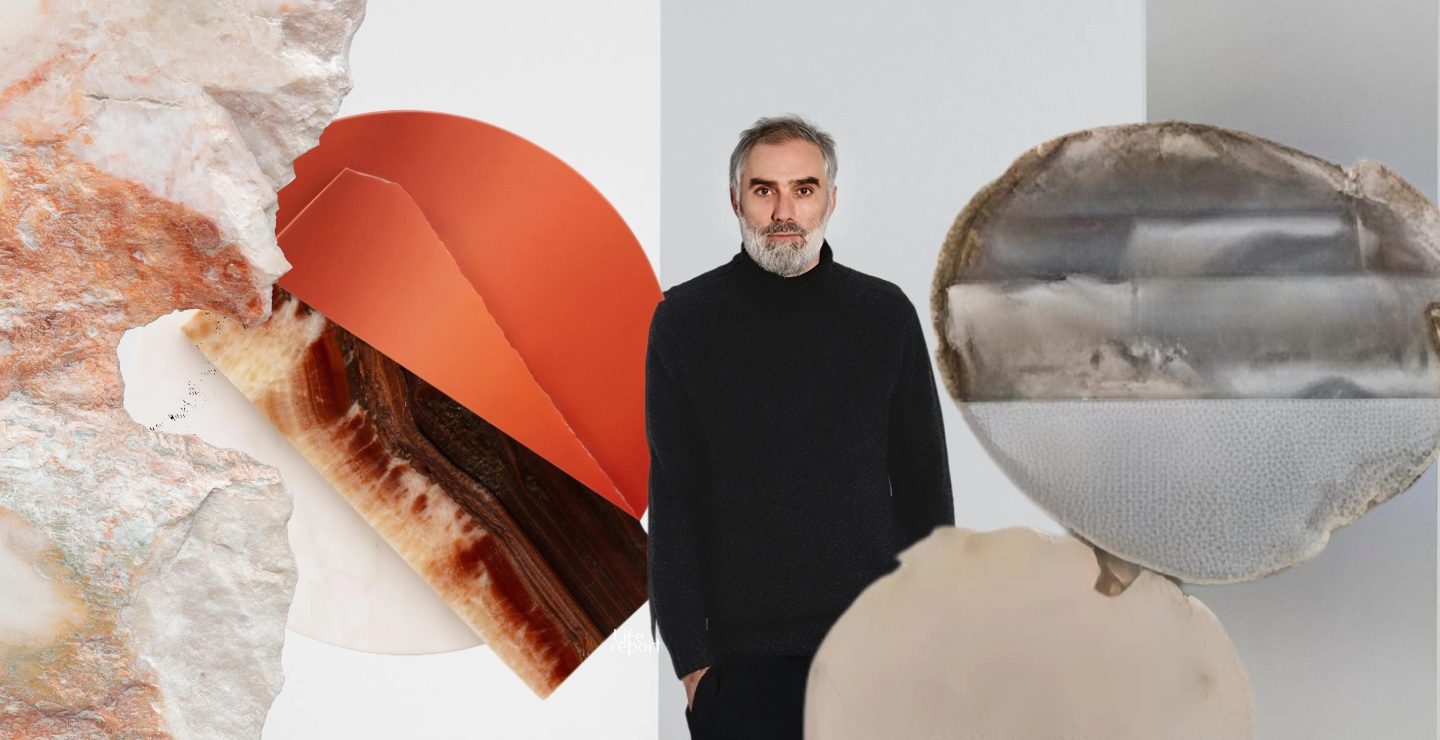
Perhaps the rarest luxury in Dubai today is not something you can buy at all. It is attention: the ability to stand in front of an artwork and simply look, without reaching for your phone, checking the time or thinking about what comes next. In a city fuelled by ambition, acceleration and an almost theatrical obsession with progress, slowing down can feel strangely radical. That is what makes Pieter Vermeersch’s first solo exhibition in the UAE, opening at Perrotin’s Gate Village gallery in DIFC on 30 September and running until 22 November, so intriguing. It does not compete for your attention. It quietly demands that you give it.
Vermeersch, born in Kortrijk, Belgium, in 1973, is that rare figure in contemporary art: a painter’s painter who has managed to remain conceptually rigorous without surrendering to the theatrics that so often pass for profundity in today’s visual culture. He studied at the Higher Institute for Visual Arts at Sint-Lucas in Ghent from 1991 to 1995, before continuing at HISK, the Higher Institute for Fine Arts, in Antwerp from 1999 to 2001. The son of a painter and grandson of a sculptor, he grew up fluent in the language of materials – a fluency that would later manifest itself in an oeuvre that refuses the easy distinction between image and substance.
The exhibition brings together eleven works, both recent and earlier, arranged across the gallery’s walls and floor in what amounts to a carefully calibrated atmospheric choreography. The walls themselves are painted in varying shades of grey, creating a muted scenography that allows the works to breathe rather than compete. Visitors move through the space in what might best be described as an open choreography – not directed by arrows or audio guides, but by the subtle gravitational pull of colour fields that seem to shimmer and dissolve as one walks past them.
What strikes you first about a Vermeersch painting is what is absent. There is no gesture. No narrative. No recognisable subject. The surface is emptied of the artist’s hand, of the dramatic brushstroke that announces authorship. Instead, colour passes imperceptibly into another colour, producing an experience that is less about looking at something and more about noticing the act of perception itself. His method is deceptively simple: he photographs cloudless skies and deliberately provoked accidents with a point-and-shoot camera, often working from images stripped of spatial reference. Some are reproduced upside down; others begin as negative photographic prints, allowing colour to drift away from recognisable representation. The resulting works occupy an uncanny territory between abstraction and hyperrealism – a practice Vermeersch has described in terms of being a “hyperrealistic painter of abstraction”.
View this post on Instagram
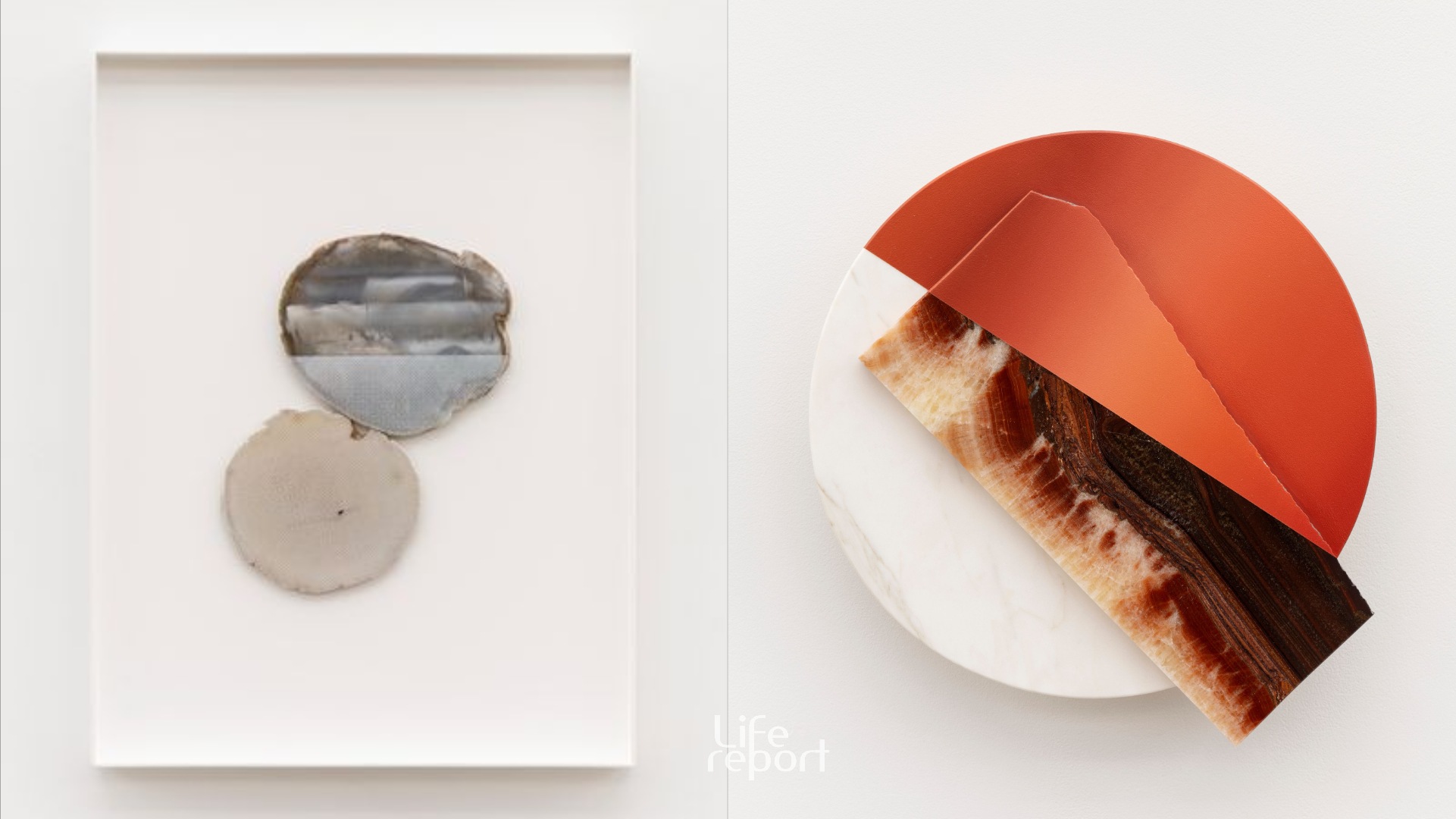
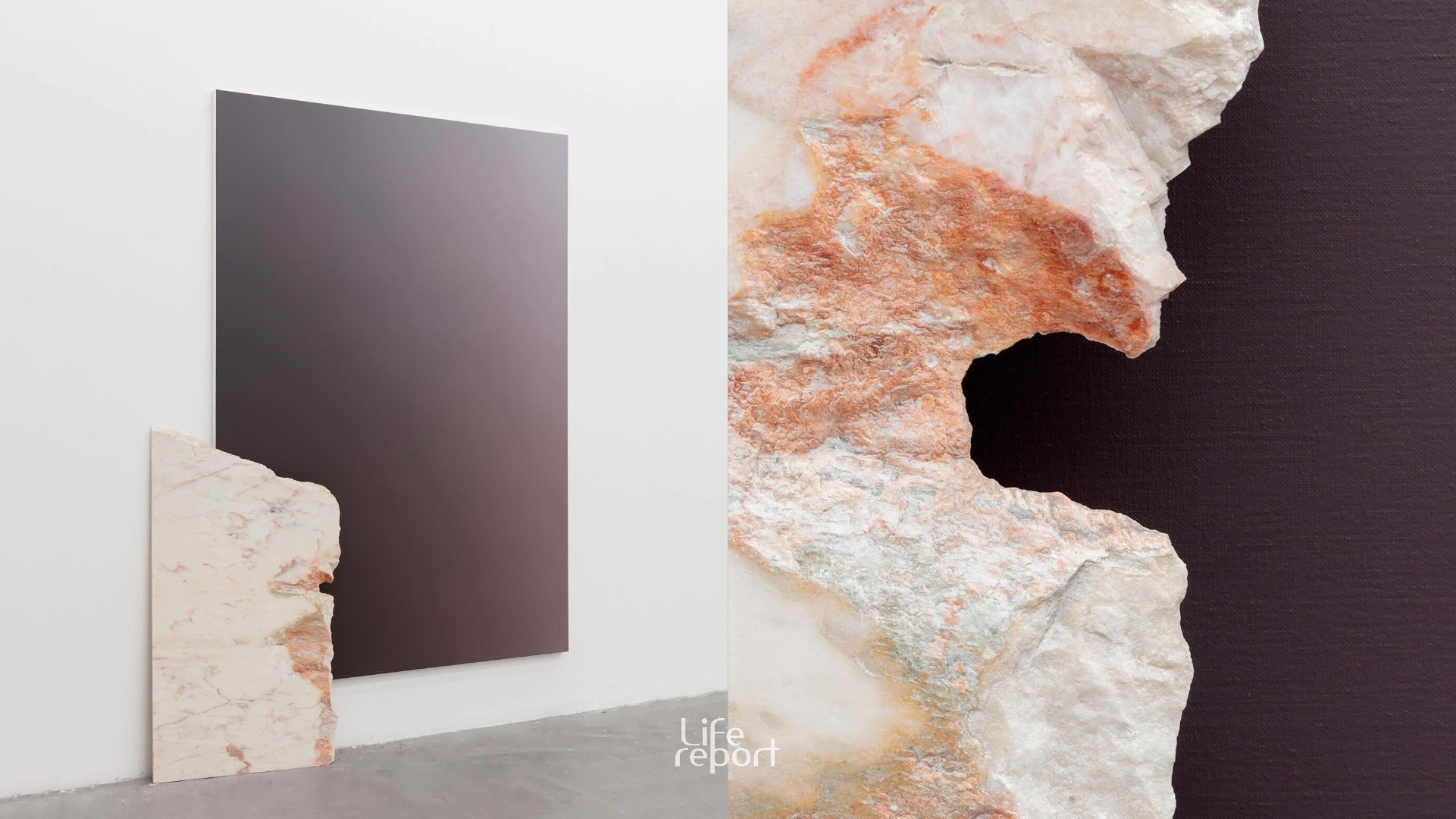
Since moving to Turin in 2017, Vermeersch has further expanded this enquiry into marble and other stones, including petrified wood. These are not canvases in any conventional sense. They are geological collaborators. A slab of marble carries within it the memory of millions of years – metamorphic processes, tectonic pressures and the slow accumulation of mineral strata. When Vermeersch applies pigment to its surface, he is not simply painting on stone; he is entering into a conversation with deep time. The resulting works are temporary assemblages in which human intention and geological agency become difficult to separate. The philosopher Jane Bennett, in her 2009 book Vibrant Matter: A Political Ecology of Things, argued that matter possesses an efficacy of its own, shaping the situations in which it participates rather than merely receiving human intention. Vermeersch’s stone works make that proposition tangible.
For this Dubai presentation, Vermeersch introduces a new experiment: Untitled (2026), conceived as an assemblage of painting and stone, two separate entities placed side by side in what the artist describes as a search for greater relational freedom. It is a work that refuses resolution, holding its two components in a state of productive tension – painting as image, stone as matter, neither subordinate to the other.
There is something quietly subversive about placing such work in DIFC, the financial heart of a city that trades in speed, speculation and the relentless forward march of capital. Perrotin’s Dubai space, which reopened in April 2025 in a 1,100-square-foot gallery in the heart of DIFC, has continued the gallery’s engagement with the region’s cultural scene. Its programme has included Daniel Arsham’s What Remains, Monira Al Qadiri’s Altered States and Xiyao Wang’s The Drifting Island – a roster that suggests Perrotin is not interested in playing it safe. Vermeersch, whose work has been shown at S.M.A.K. in Ghent and M HKA in Antwerp, and is held in collections including those of the Fondation Louis Vuitton in Paris and the European Central Bank in Frankfurt, fits this programme not despite his quietness, but because of it.
The works on view invite a kind of attention that is increasingly rare in a city – and a world – that has commodified distraction. They ask you to stand still. They ask you to notice how light enters the gallery, how the grey walls modulate the experience of colour, how a slab of petrified wood carries within it a temporal scale that dwarfs the entire span of human civilisation. It is not an experience that photographs well, which is precisely the point. Vermeersch’s paintings are not memes. They are not content. They are objects that demand the one thing Dubai’s collective metabolism resists most: duration.
View this post on Instagram
And yet, there is nothing austere or preachy about the experience. Vermeersch is not wagging a finger at the attention economy. He is offering an alternative to it. His work is sensuous, even seductive – the gradations of colour are often genuinely beautiful, the marble surfaces voluptuous in their veining, the petrified wood a reminder that elegance can be geological. This is art that seduces you into slowing down rather than demanding it. It works on you imperceptibly, the way colour itself works on the eye – not through argument, but through atmosphere.
In the end, what Vermeersch offers is less a body of work than a recalibration of perception. His paintings do not depict anything, yet they are not empty. They are full of time – the time of their making, the time of the materials they incorporate, the time of the viewer’s encounter with them. To stand before one is to be reminded that looking is not a passive act but a participatory one. In a city of glass towers and constant motion, that reminder feels less like an aesthetic proposition and more like a quiet necessity.
ALSO READ: Waterproof, Witty, and Worn by Superman: The Longines HydroConquest Has Quietly Become the Ultimate Timepiece