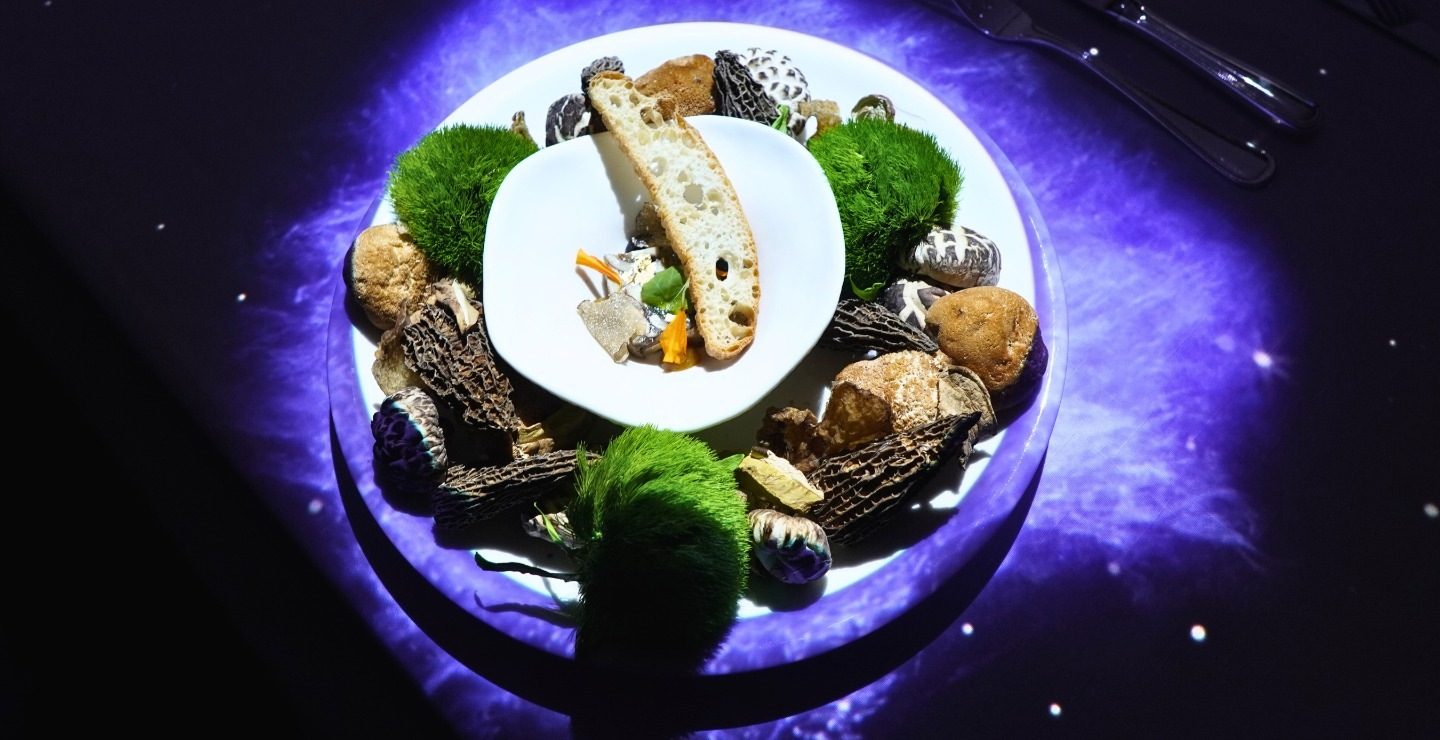
In the hushed, anticipatory darkness of Dubai’s most exclusive dining rooms, a quiet revolution is being plated. Forget white tablecloths and the sommelier’s whisper: the new currency of luxury is not merely taste, but total sensory capitulation. Here, chefs are less cooks than cinematic directors, and your table is the screen.
You do not simply eat a dish; you are submerged in its story, part of its illusion – often while a ghost, whether a late, great French chef or Leonardo da Vinci, narrates the proceedings. It is a world in which the boundary between gastronomy and theatre does not merely blur; it dissolves in a spectacle of projection mapping, artificial intelligence and theatrical flair. And this month, the city’s most captivating stage for such performances shrinks to the size of a dinner table, as The Magic Table opens at Andaz Dubai The Palm, inviting guests to the most intimate and intriguing feast of all.
View this post on Instagram
The Main Act: A Stage Set for Two Hours
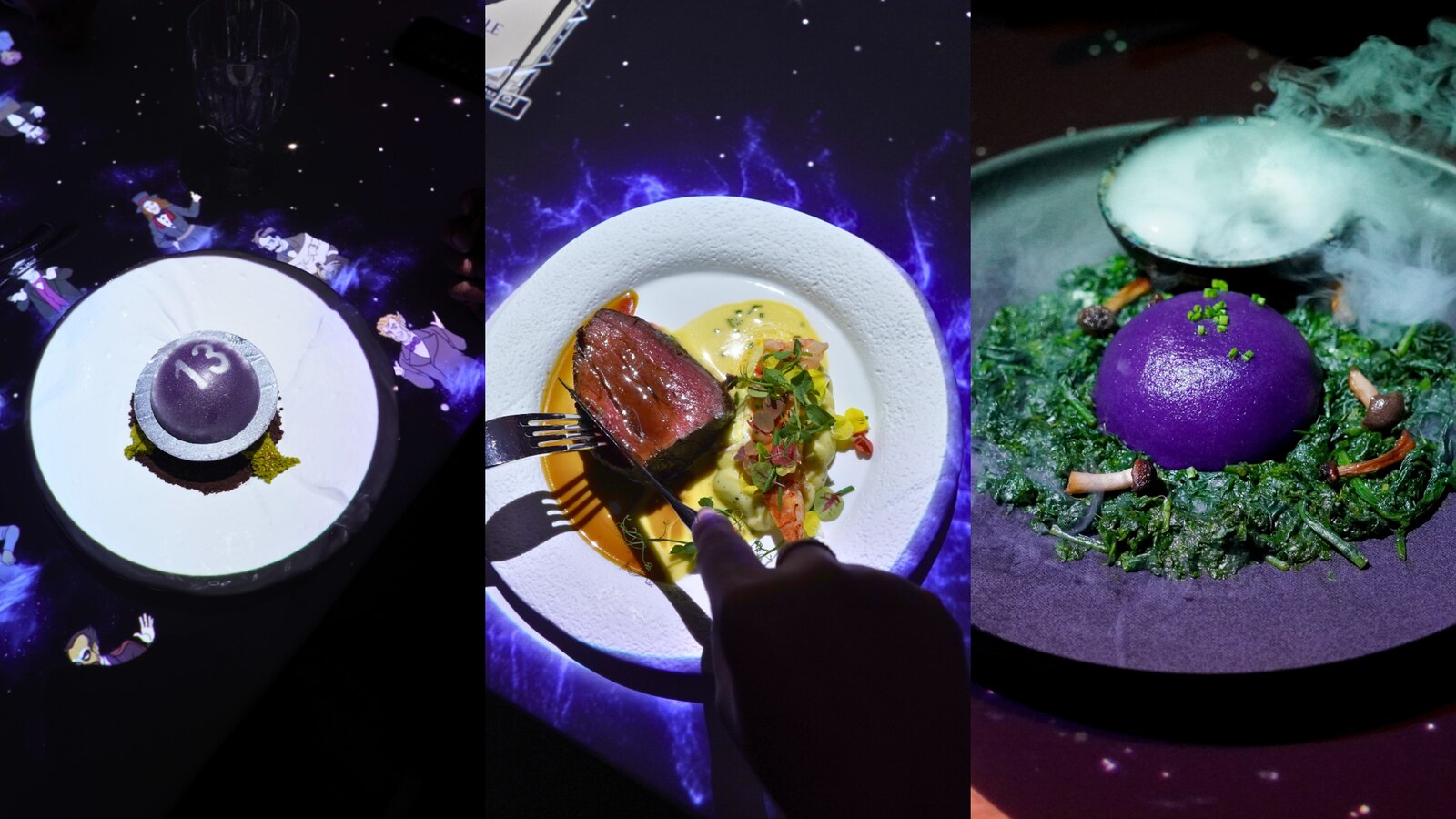
The Magic Table transforms the classic prix fixe format into a two-hour narrative arc of wonder. Conceived by the internationally acclaimed mentalist duo The Clairvoyants – whose mind-bending artistry once captivated millions on America’s Got Talent – the experience reimagines the dining table as a proscenium. Guests are not passive spectators, but essential cast members, solving tasks and interacting with illusions that unfold directly on the linen before them. The rhythm is meticulously choreographed: two nightly sittings at 6.00 pm and 9.00 pm, an intimate gathering of just 40 guests, and a five-course menu that grounds the ethereal in the materially delicious. The journey begins with crab salad, moves through smoked duck breast, and crescendos with the indulgence of slow-cooked A5 wagyu short ribs, before concluding with a chocolate marquise. The drinks list, ranging from classic serves to premium cocktails, provides a liquid counterpoint to the visual symphony. With prices starting at AED 620 for The Wizard Feast and rising to AED 770 for the premium Grand Illusion, the experience positions itself firmly within Dubai’s mid-premium luxury tier – an accessible entry point to a genre that can often command far steeper prices for its illusions.
The Supporting Cast: Dubai’s Immersive Dining Galaxy
To understand The Magic Table’s particular spell, one must first survey the constellation of experiences it joins. Dubai’s immersive dining scene is less a passing trend than a full-blown movement, with each venue presenting a distinct thesis on the future of eating. At the vanguard is Krasota Dubai, the “gastro-theatre” where Michelin-starred chef Vladimir Mukhin’s culinary prowess meets cutting-edge technology. Its Imaginary Future show is a masterclass in sensory overload, featuring a deepfake of the late Paul Bocuse introducing a dish of quail and foie gras – conceived, in part, by artificial intelligence. An AI-enabled tabletop uses sensors to distinguish between hand and plate, allowing projections of fireflies to gather on a glass. It is a high-concept, high-cost (experiences can exceed AED 2,100) exploration of what founder Boris Zarkov suggests may become a future of hyper-personalised, even brain-chip-mediated, dining.
For the art historian with a palate, 7 Paintings offers a more playful, participatory journey. Guided by animated versions of Leonardo da Vinci and the Mona Lisa, guests embark on a seven-course tour through art history, ‘eating a Picasso’ or painting their salad Pollock-style. It is a shared, convivial experience priced for broader appeal (from AED 450), proving that immersion does not always require a Michelin pedigree.
The Critique, Served with a Twist of Irony
Let us pause – between the virtual snowfall and the animated brushstroke – for a moment of wry reflection. This race for total sensory dominion raises a deliciously ironic question: when does the mise-en-scène overshadow the mise en place? As Oxford professor Charles Spence, a pioneer of ‘sonic seasoning’, observes, the risk is that the meal becomes mere ‘popcorn’ for the visual show. There is a gentle absurdity in paying a premium to be handed a paintbrush with an amuse-bouche, or to have cutlery dodging digital fireflies. It is dining as competitive experientialism – the ultimate ‘you had to be there’ moment for a generation that documents everything.
Yet the science behind it is compelling. Spence’s research confirms what these chefs intuitively exploit: sound, light and narrative are not mere garnish; they actively reshape perception. A classical melody can make a wine taste more expensive; red lighting can make it seem sweeter. The Magic Table and its peers are simply harnessing this neuroscience, engineering wonder to elevate flavour. The true luxury, perhaps, is no longer the truffle itself, but the story that makes it taste exponentially more truffled.
The Final Bite: An Era of Enchantment
The arrival of The Magic Table, with its global pedigree and focus on close-up, participatory magic, marks a new chapter. It moves beyond passive viewing to active belief, making the diner the key to the trick. For a limited six-month residency, it offers a distinct proposition in a market crowded with cinematic scale.
As Dubai’s festive season illuminates the city, these dining rooms provide their own form of pyrotechnics. Whether you seek the high-tech artistry of Krasota, the colourful chaos of 7 Paintings, the sustainability-led narrative of Message in a Bottle, or the intimate conjuring of The Magic Table, one thing is clear: the future of fine dining here is not confined to the plate, but exists all around it. It is a future that is dazzling, occasionally dizzying, and utterly inescapable.
All that remains to ask is this: are you ready to play your part?
Bon appétit – and mind the illusion.