
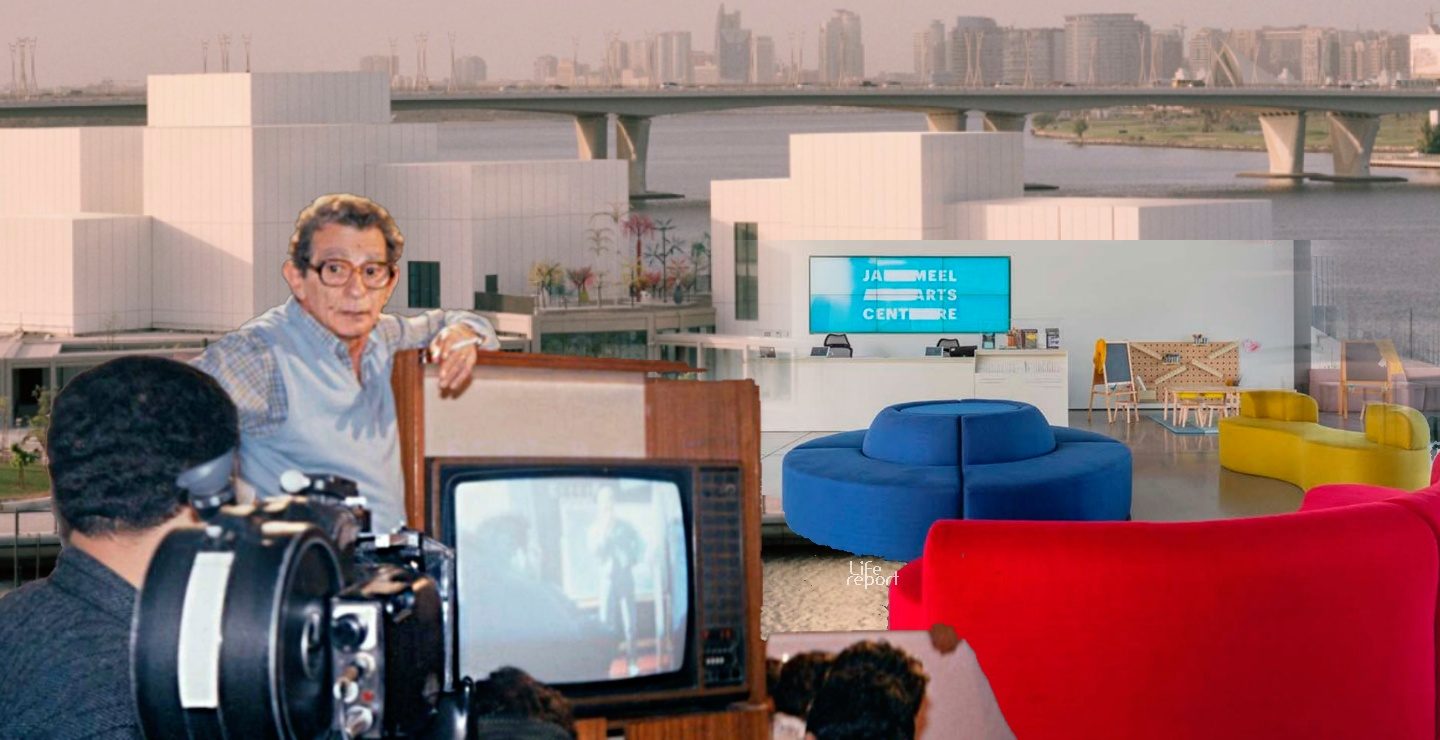
Dubai does not lack velvet ropes or gold-leaf spectacle, but finding a gathering that stimulates the mind rather than merely the Instagram grid remains a pursuit as rare as a quiet moment in a Dubai Mall car park. Yet there, poised with monastic calm on the edge of the Creek, Jameel Arts Centre has been quietly scripting a different kind of Saturday evening: one where the only thing flatter than the water at sunset is the algorithmic feed you mercifully forgot to check.
Jameel Summer Cinema is back for its second season, presented in collaboration with the cultishly followed The Culturist Film Club. The series – five films screened on alternate Saturdays through 15 August – is free, although the registration requirement bestows upon it that distinctive Dubai paradox: a no-cost affair that still feels discerningly gated, as though one must demonstrate a certain baseline of intellectual curiosity before being permitted to sit in a room with Youssef Chahine and a stranger who might actually discuss montage without mentioning TikTok. Curated by the formidable Hind Mezaina, writer, film programmer and founder of The Culturist, the line-up reads less like a passive screening schedule and more like a syllabus for the aesthetically restless.
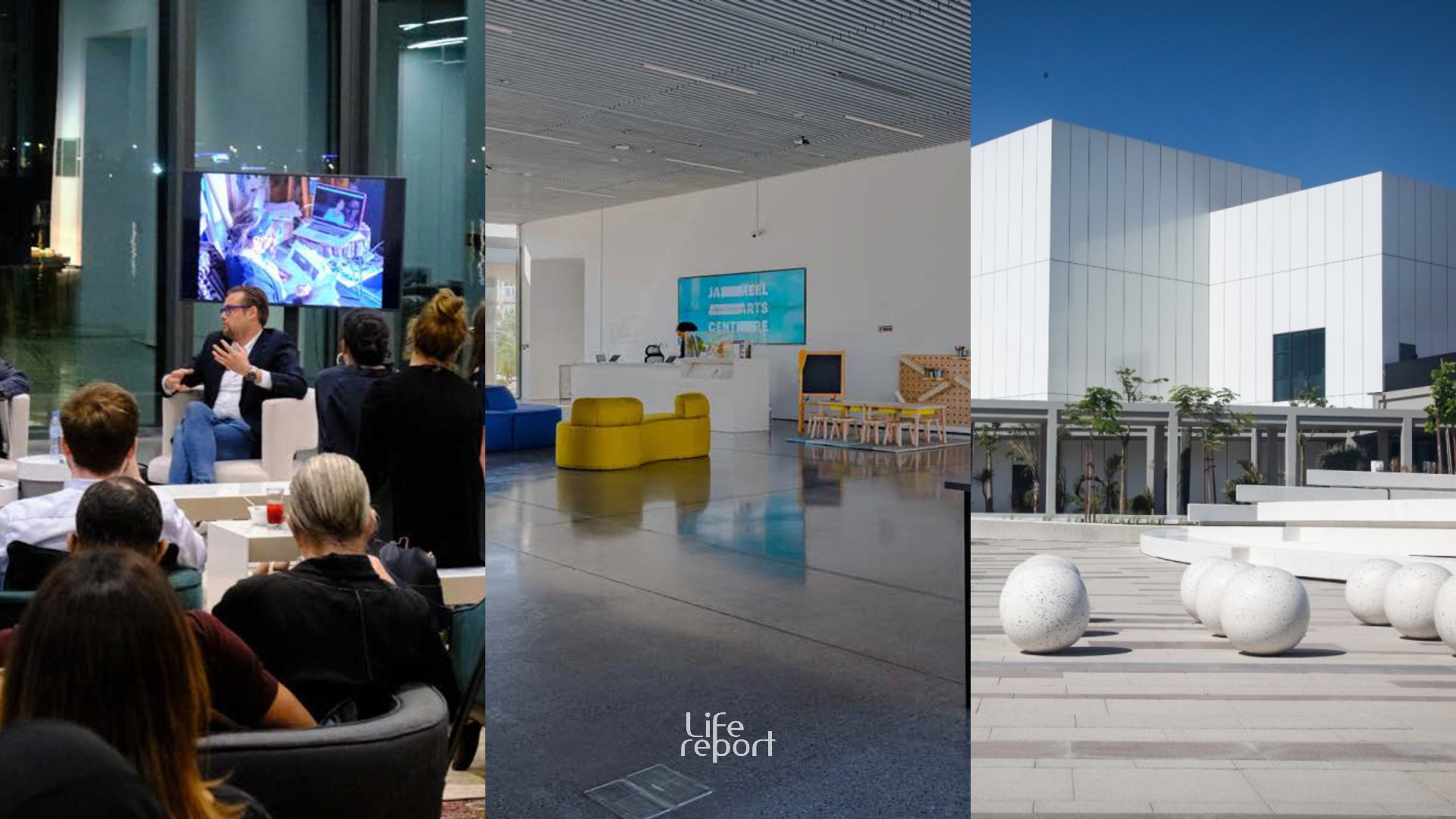
Mezaina, whose tastes run towards the liminal and the politically textured, has assembled works that double as portals. There is no unifying theme so much as a shared willingness to disorient. The programme traverses speculative futures on the African continent, the fragile audiovisual memory of Lebanon, the unsettling digital circulation of extremist propaganda, the mysteries of human consciousness and the rise of Egypt’s working class – all before the clock strikes 9.30 pm. The venue itself, the Centre’s lobby, is an architectural co-star. Designed by Serie Architects, its clean Brutalist lines are softened by the Creek’s tidal murmur and the fading desert light, transforming the space into an almost ecclesiastical setting for cinema: secular communion beneath high ceilings and carefully calibrated shadows.
The film selections function like a sequence of elegantly deployed provocations. On 4 July, John Lilly and the Earth Coincidence Control Office (2025), directed by Michael Almereyda and Courtney Stephens, dives into the life of the renegade neuroscientist who mapped dolphin communication and plunged into sensory deprivation tanks decades before wellness influencers rebranded floating as a luxury spa treatment. The film’s playful interrogation of cosmic synchronicity and scientific hubris lands with gentle irony in a city that loves to monetise altered states, from breathwork studios to mushroom-printed beachwear. Two weeks later, on 18 July, Kevin B. Lee’s Afterlives (2025) turns its lens towards Beirut, stitching together fragments of audiovisual memory into a meditation on a city that has learned to rebuild itself as often as it has been undone – a visual poem that will resonate uncomfortably with anyone who has watched a skyline be rewritten in the name of progress.
View this post on Instagram
August opens with Lana Daher’s Do You Love Me (2025), a film that explores how extremist propaganda metastasises in the digital age, wrapping itself in the aesthetics of intimacy while corroding from within. In an era when algorithms feed outrage as casually as a barista pours an oat flat white, Daher’s work feels less like a documentary and more like an emergency signal, elegant in its restraint. The season concludes on 15 August with a restored classic: Youssef Chahine’s The Blazing Sun (1954), a lush, sun-scorched melodrama tracing class struggle in rural Egypt. To watch Chahine’s early mastery amid Jameel’s contemporary galleries is to experience the lineage of Arab cinema as a living, breathing entity rather than a museum piece.
Each screening is followed by an informal discussion with guest speakers whose credentials suggest the conversations will be every bit as compelling as the films themselves. Amirah Tajdin, the Kenyan artist and filmmaker behind the speculative short The Last Day, brings a diasporic futurism to the post-screening dialogue. Rebecca Crookshank, a documentarian with a forensic eye for memory and trauma, will likely dissect the Lebanese imaginary. Kevin Jones, founder of the consciousness-focused platform JuniperMind, adds a psychonaut’s perspective, while curator Yalda Bidshahri anchors the series within the region’s wider artistic discourse. It is, in essence, a salon disguised as a screening.
View this post on Instagram
For Dubai’s millennial and Gen Z cultural class – those who can distinguish their Serra from their Sottsass and who treat a Le Labo city exclusive as a personality signifier – Jameel Summer Cinema offers something that even a Cartier bracelet cannot quite buy: the luxury of unhurried thought. Here, the dress code is unspoken but unmistakable: a certain relaxed precision, the kind of nonchalance that pairs an archival Comme des Garçons shirt with a vintage Rolex and feels no need to mention either. The evening’s true fragrance is not the ambient Santal 33 but the scent of possibility that lingers after the screen goes dark.
As summer tightens its grip and the city’s leavers decamp to cooler latitudes, those who remain inherit an alternative Dubai – quieter, slower and, if one knows where to look, extraordinarily rich. Jameel Arts Centre, sitting low and luminous on the Jaddaf Waterfront, is less an escape than a point of re-entry: into conversation, into cinema and into a community that values the creak of a projector over the clink of a bottomless prosecco flute. Registration is required, but the only true entry fee is a willingness to think.
Also Read: 10 Men’s Fashion Trends Defining Summer 2026


