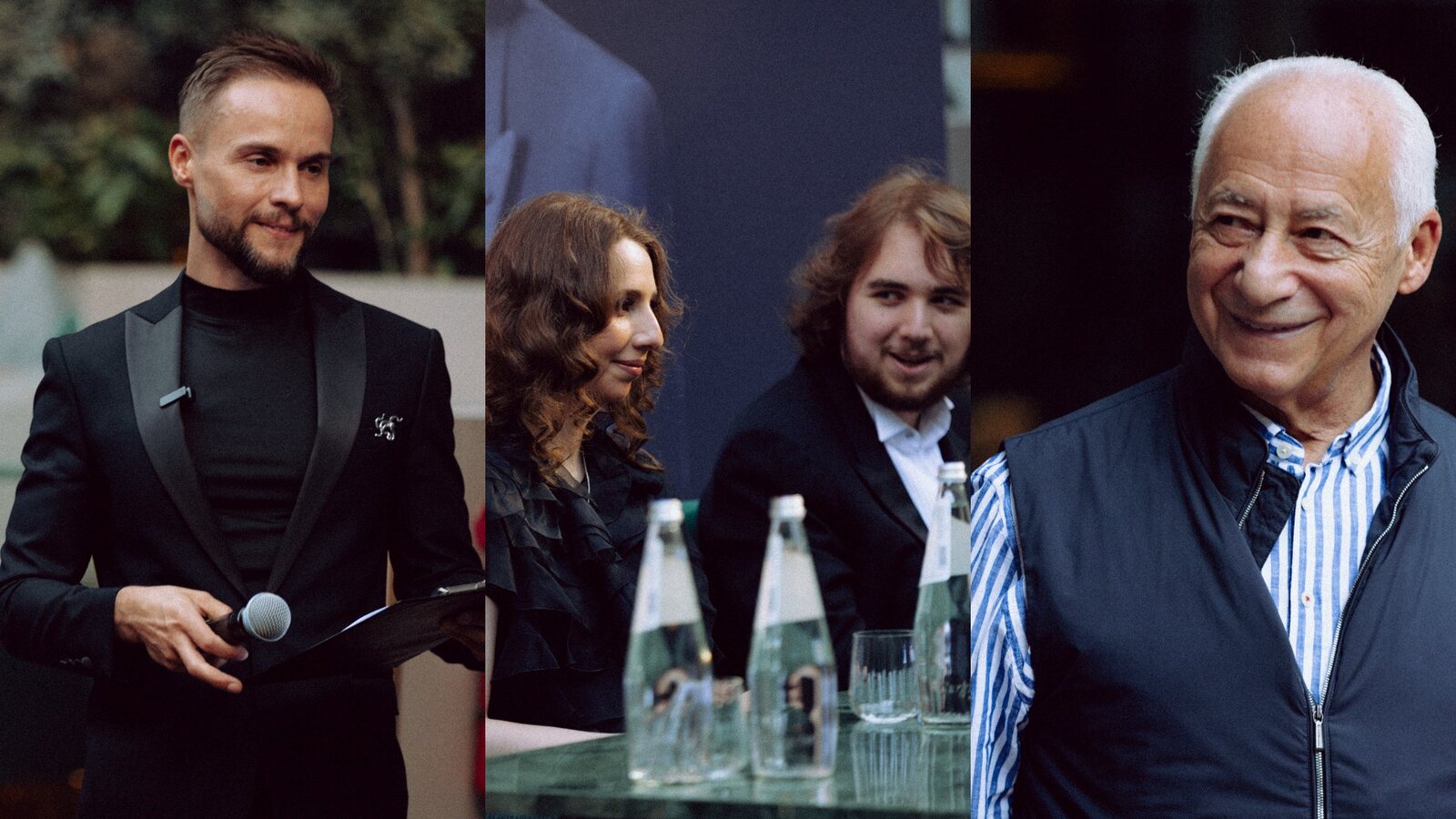
Several days before the stage lights illuminated Dubai Opera, a press conference served as the intellectual overture to the forthcoming musical event. Seated at the table was Maestro Vladimir Spivakov, whose gestures – restrained yet charged with inner energy – spoke volumes, alongside two young virtuosi: cellist Dali Gutseriyeva and pianist Adam Gutseriev. Moderated by the renowned Dubai-based journalist and cultural analyst Egor Sharay, the conversation unfolded not as a formal interview, but as a thoughtful exploration of anticipation itself.
When asked about his return to Dubai, Spivakov – whose charisma is rivalled only by the authority of Arturo Toscanini’s baton – might have alluded to the city’s unique acoustics: a metropolis that is itself a symphony of ambition, light, and glass. “The audience here listens not only with its ears, but with its heart,” his sentiment seemed to suggest. Adam and Dali Gutseriev, whose names have become synonymous with a remarkable new generation of musicians, spoke not of technique, but of imagery and inner experience. This gathering was not merely an announcement; it was an intimate tuning fork, aligning the city to the frequency of high art.
And then comes the moment when conversation falls silent and music begins to speak.
Within the architectural whisper of Downtown Dubai, where the contours of Dubai Opera curve like a drop of amber caught in the sunset, an event was poised to redefine the very notion of an evening in the city. This was not simply a concert, but a narrative woven from the conductor’s gestures, the orchestra’s collective breath, and the silence that becomes almost tangible between the notes. On 27 and 28 November 2025, Vladimir Spivakov – a living legend and an aristocrat of the spirit – returned to present the National Philharmonic Orchestra of Russia, an ensemble that, over the course of a decade, has secured its place among the world’s leading symphonic collectives.
To watch Vladimir Spivakov at the podium is to observe the workings of a complex Swiss mechanism, in which every element is imbued with meaning. His gesture is not an authoritarian command, but an invitation to dialogue. Beneath this almost French refinement lies the steel of the Russian conducting school – the very foundation capable of shaping soundscapes of extraordinary density and emotional depth.
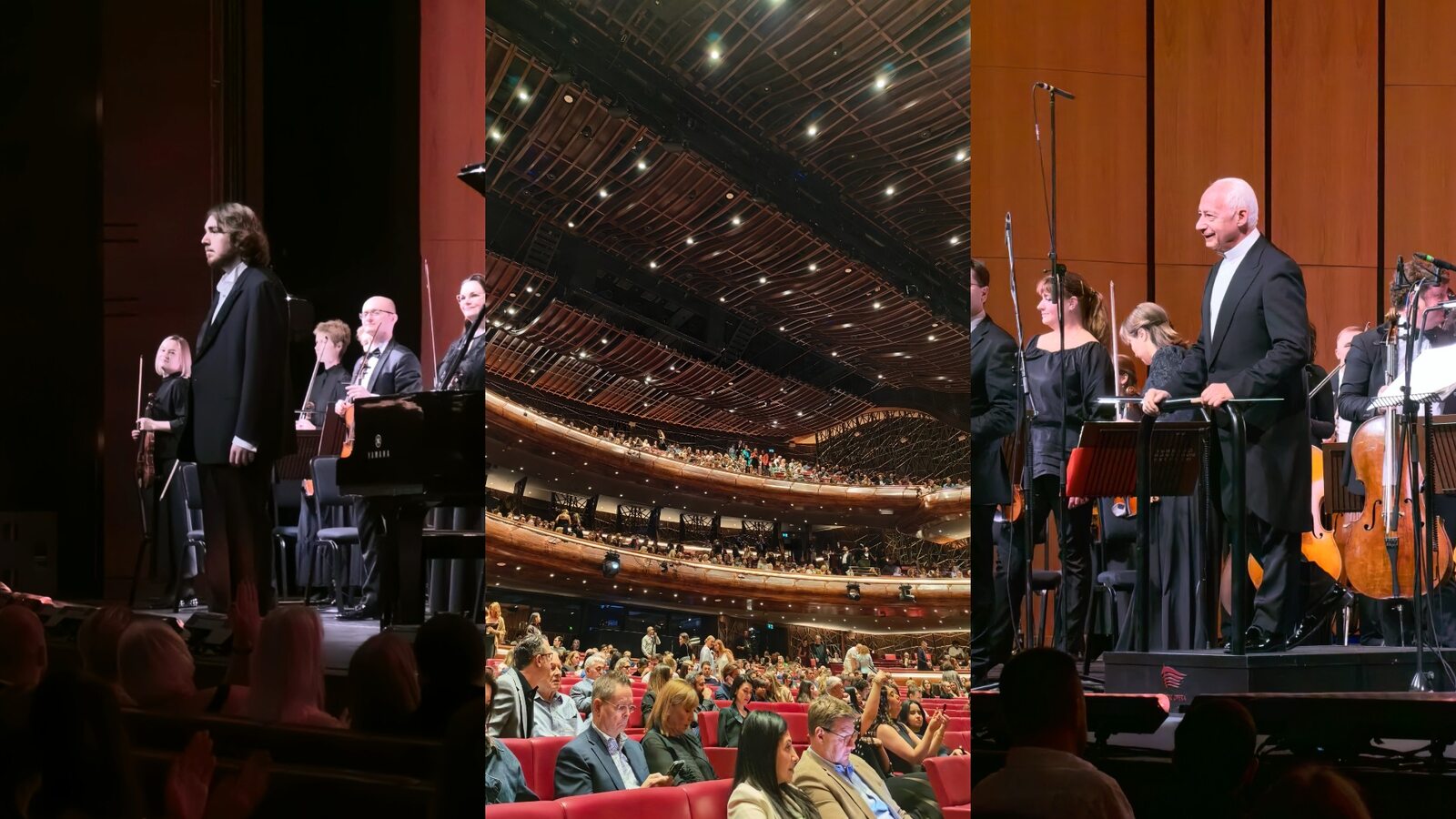
He had previously captivated Dubai audiences with the chamber ensemble The Moscow Virtuosi. This time, the scale was different – monumental, yet never deprived of chamber-like intimacy. Under his leadership, the orchestra attains that rare alchemy in which technical perfection meets the living pulse of interpretation. Maestro Spivakov curated two programmes, each a meticulously balanced journey for both mind and heart, constructed not chronologically, but according to emotional logic.
27 November: Passion and Fate. The evening opened with a Shakespearean tempest of emotion in Tchaikovsky’s Romeo and Juliet. Dali Gutseriyeva then took the stage with Camille Saint-Saëns’s Cello Concerto No. 1. The apotheosis of the night came with the Carmen Suite by Georges Bizet, arranged by Rodion Shchedrin. 28 November: from Norwegian Fjords to the Realm of Fantasy. The programme began with the crystalline, mountain-air lyricism of Edvard Grieg – the celebrated First Suite from Peer Gynt. Adam Gutseriev subsequently entered into a refined dialogue with the orchestra in Grieg’s Piano Concerto. The evening concluded with sumptuous orchestral colour: excerpts from three ballets by Tchaikovsky.
A particular distinction of these evenings was the appearance of the young soloist duo whose names have become synonymous with exceptional talent: cellist Dali Gutseriyeva and pianist Adam Gutseriev. Their return to Dubai, two years after their triumphant appearance, was an event in its own right.