

The Time has named it one of the World’s Greatest Places of 2026. Studio KO has clad its bones in Uzbek earth. And this September, the Centre for Contemporary Arts Tashkent will fling open its colossal iron doors – no ticket required. In a republic better known to the outside world for blue-domed madrasas and plov, a new kind of wisdom is taking shape.
Tashkent in the final weeks of August exhales a light that belongs more to painters than meteorologists – honeyed, oblique, capable of softening the brutalist Soviet-era mosaics into something resembling crushed lapis lazuli. By the time summer tilts into autumn, that same glow will filter through the steel ribs of a resurrected 1912 tram depot, casting elongated shadows across walls that once knew only grease and diesel fumes. On 6 September 2026, the Centre for Contemporary Arts Tashkent – the CCA, as it is already murmured about in curatorial circles from Venice to AlUla – will unlock its doors to a public that needs no membership card, no sponsor-level invitation, merely the curiosity to step inside.
The CCA arrives at a moment when Central Asia’s cultural topography is being redrawn with almost bullish velocity. Last year, the Bukhara Biennale materialised in the ancient Silk Road city like a mirage, filling caravanserais with video installations and scent-based sculpture. In Almaty, the Museum of Arts has already planted a flag for Kazakhstan, while Tadao Ando’s long-anticipated National Museum of Uzbekistan, slated for 2028, hovers on the horizon like a minimalist prophecy. Yet the CCA occupies a more interesting territory – permanent, public-spirited, and unapologetically grounded in the textured reality of Tashkent’s Old City. There is no VIP-only preview tier, no champagne-slicked vernissage designed to separate patrons from the merely curious. In a world where contemporary art openings have become exercises in velvet-rope social arithmetic, the CCA’s insistence on free, six-day-a-week admission feels both radical and faintly subversive.
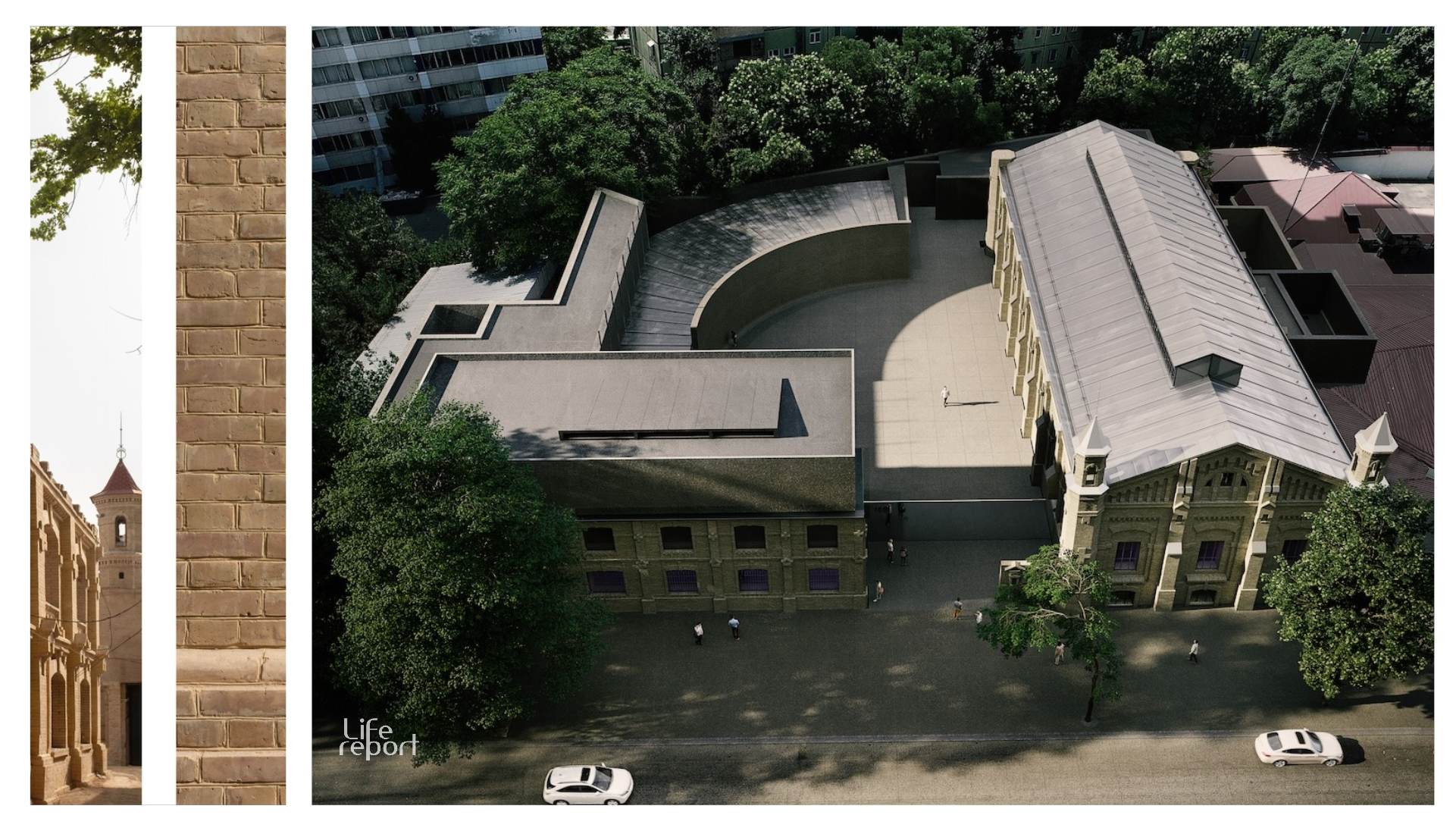
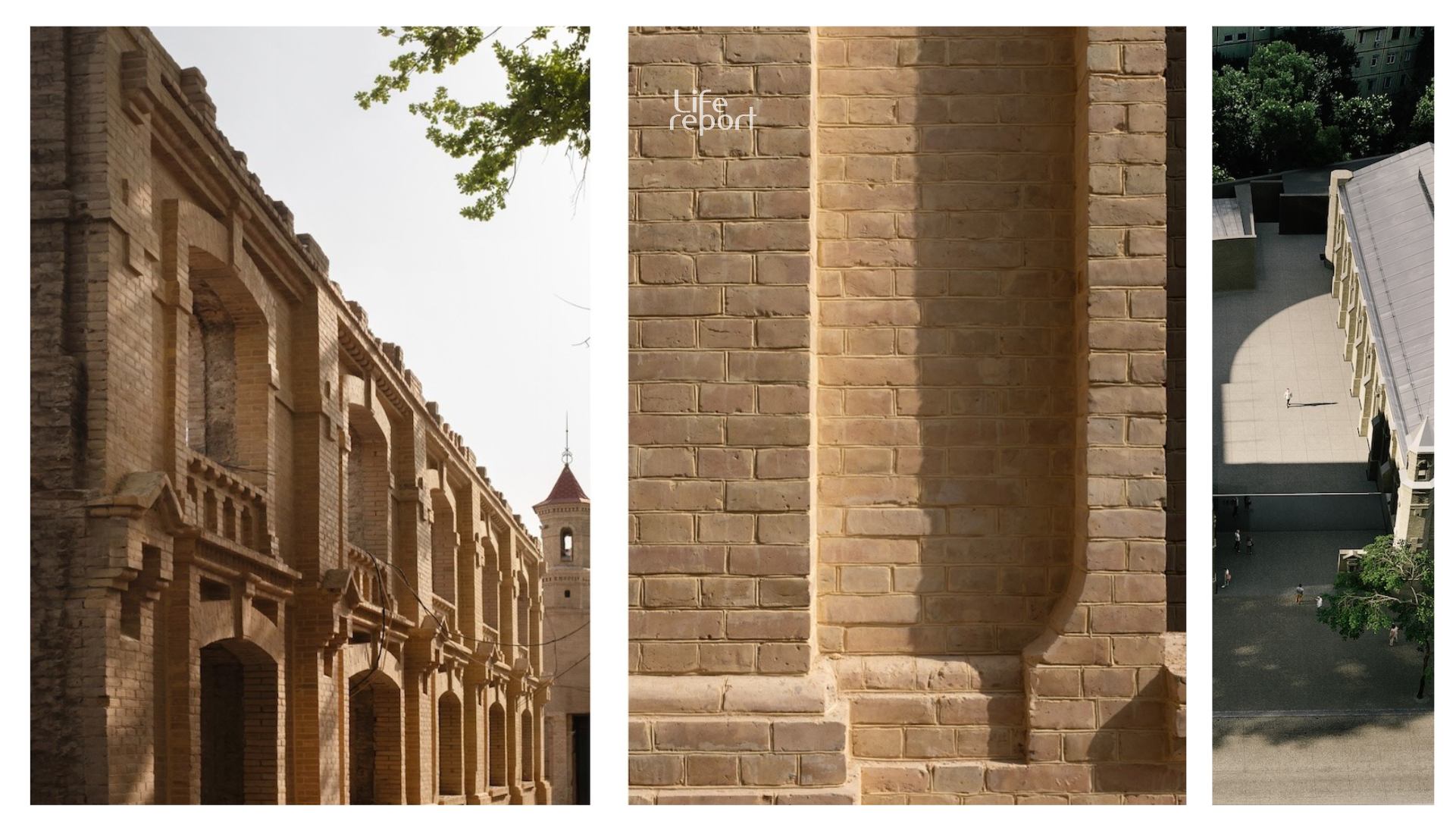
What awaits inside is a slow-burn revelation. Studio KO’s renovation has not erased the building’s industrial past so much as entered into conversation with it. The architects, led by Karl Fournier and Olivier Marty, spent months studying vernacular Uzbek construction – the pakhsa earth-and-straw walls of the Fergana Valley, the axial logic of a traditional courtyard house – before grafting these principles onto a soaring framework of steel and brick. The result is an architecture of warm monumentality: passageways that funnel the dry Central Asian wind into whispered currents, and lightwells that carve the sun into geometries worthy of a Moholy-Nagy photograph. In the main hall, the original roof trusses have been left exposed, their dark patina a quiet rebuke to any surface that feels too freshly painted. It is the kind of space that makes you instinctively lower your voice, not out of reverence, but from an almost sensual awareness that the building is still breathing.
View this post on Instagram
The inaugural exhibition, Hikmah – the Uzbek word for wisdom – sets the tone with the precision of a well-composed scent. Curated by Artistic Director and Chief Curator Dr Sara Raza, the show draws upon the building’s layered memory to explore material intelligence and the haptic language of making. A seventh-generation ceramicist from Tashkent, Shokhrukh Rakhimov, presents new work that marries traditional Central Asian glaze chemistry with sculptural forms that seem to have been excavated from a future archaeological site. Nearby, a Nari Ward installation repurposes found objects into a meditation on labour and grace, while Tunisian artist Nadia Kaabi-Linke contributes a work on loan from the Solomon R. Guggenheim Museum – a nod to the institutional heft the CCA already commands. Saudi artist Muhannad Shono, known for his otherworldly manipulations of line and smoke, has created a site-specific commission that responds to the space’s residual industrial acoustics. And the Korean conceptual artist Kimsooja, ever attuned to the spiritual charge of fabric, presents a piece that anchors the entire exhibition in a state of luminous stillness.
Raza, a curator of formidable intellectual range, is quick to describe Hikmah as a “method” rather than a theme. Her approach sidesteps the tired biennial rhetoric of globalism-as-checkbox, instead probing the open-ended relationship between art, architecture, and the kind of embodied knowledge that passes from hand to hand across centuries. She has, with visible intent, populated the CCA’s first-year calendar with a rhythm that feels both cosmopolitan and deeply rooted: a three-year visiting school with London’s Architectural Association launches this April, inviting students and spatial thinkers to use Tashkent as their living studio. Come June, the public art festival Tashkent Summer Days will unfurl across all districts during chilla, the peak of the Uzbek summer, recalling the city’s historic cinema festivals with an irreverent contemporary wink. And in December, Tashkent Film Encounters will resurrect the spirit of the legendary Tashkent International Film Festival (1968–1988), which once drew auteurs from across the Soviet sphere and beyond.
There is an undeniable irony in the spectacle of a government providing tax exemptions on profit, land, and personal income for cultural enterprises – a fiscal fantasy that, in less carefully managed hands, might read as an episode of soft-power theatre. The announced plan targets a $12.6 billion creative economy, with state compensation of up to 20 per cent of cultural event expenses and a special regime for companies within Uzbekistan’s Creative Industry Park. Yet the CCA, conceived under the auspices of the Uzbekistan Art and Culture Development Foundation and its formidable chairperson Gayane Umerova, steers clear of propaganda with the agility of a contemporary dance company. Umerova, who has spent years cultivating a cultural infrastructure that includes the acclaimed Tashkent Modernism Index research project, articulates the mission with a lucidity that sounds more Pompidou than Politburo: “When we first envisioned the CCA, I knew I wanted it to be open to all, a place for inspiration, dialogue, opportunity and a hub for the community.” In a republic where state narratives once dictated every chisel mark, such language signals a quiet revolution.
For the UAE-based connoisseur whose cultural compass already swings between Alserkal Avenue, the Sharjah Biennial, and AlUla’s desert pavilions, Tashkent’s emergence recalibrates the regional art map. The flydubai direct route from Dubai delivers visitors in just over three hours to a city where a cortado from a speciality café in the Yunusabad district tastes just as bitter-edged as its counterpart in Jumeirah, yet the scent in the air is of cumin, petrichor, and something older than oil wealth. The CCA’s concept store, curated with the same exacting eye as its galleries, will likely stock pieces from Uzbekistan’s nascent design avant-garde – perhaps a raw-silk tunic by Lali Fazylova or a hand-thrown cup from Rakhimov’s studio that invites your fingers to linger on its irregularities. A library stocked with Oriental studies volumes and Akhunov’s personal donated archive sits adjacent to a restaurant that, one imagines, will serve plov as it should be: lamb trembling, rice glistening, a quiet rebuttal to the truffle-infused excess of so many art-world dining rooms.
In Venice this summer, the CCA planted its flag on the Grand Canal with Vyacheslav Akhunov: Instruments of the Mind at Palazzo Franchetti, an official collateral event of the Biennale. The exhibition, also curated by Raza, spans five decades of the Uzbek conceptualist’s practice, including works that existed only as sketches for more than fifty years until Umerova’s foundation brought them into physical form. Akhunov’s Mantras (1974), in which handwritten text gradually obscures Soviet-era magazine images, builds up a surface of marks that resembles both devotional script and a palimpsest of erasure – a sly commentary on the relationship between rhythm, repetition, and national memory. Back in Tashkent, the CCA’s September calendar already holds Kabakov: The Centre for Cosmic Energy, a solo project guest-curated by Zelfira Tregulova that will transform the former diesel station into a speculative laboratory for energy, hope, and the elegantly staged para-fictions for which Ilya and Emilia Kabakov are revered.
View this post on Instagram
Perhaps the most seductive detail, for those weary of the art world’s mercenary cadences, is the residency programme. Rather than sequestering artists in a sterile white cube, the CCA places them within the mahallas of Namuna and Khast Imom, historic neighbourhoods where communal life still orbits the guzar – the crossroads – and where a neighbour might offer a bowl of kaymak-drenched apricots without a word of explanation. It is this pluralism, what Raza calls a “horizontal inclusivity”, that promises to differentiate Tashkent from other emerging art capitals. The population itself is a living syllabus of Central Asian communities: Russian, Tatar, Koryo Saram, Tajik, Uyghur. The centre’s programming, she insists, will mirror that polyphony.
Sceptics may note that the CCA’s opening date has already drifted – first teased for 2023, then spring 2026, and now officially September. But such delays, in a region where architecture is often a negotiation with seismic codes and layered histories, feel more like the patience of good tailoring than a failure of nerve. When Studio KO presented a scale model at Art Basel Paris in October 2025, the miniature galleries glowed like a maquette for an Andalusian dream, their courtyards a promise of shade and civility. Today, the full-scale reality hums with a quiet confidence that no rendering could convey.
By the time the first Tashkent Summer Days bleed into autumn, the CCA will have become what all enduring institutions must be: a backdrop for everyday epiphanies rather than a monument to one. The building’s 1912 bones – having weathered empire, revolution, and the slow entropy of forgetting – now hold an archive of the future. In the mahallas outside, children will still kick footballs in the dust, and old men will still pour green tea over trays of halva. But a few steps through the CCA’s threshold, a different kind of wisdom will be taking root, one exhibition, one film screening, and one shared meal at a time. For a region long cast as a mere waypoint on someone else’s Silk Road map, that is a genuinely exhilarating proposition.
Also Read: Forget Venice: The Art World’s Next Obsession Is Hiding on the Silk Road


