
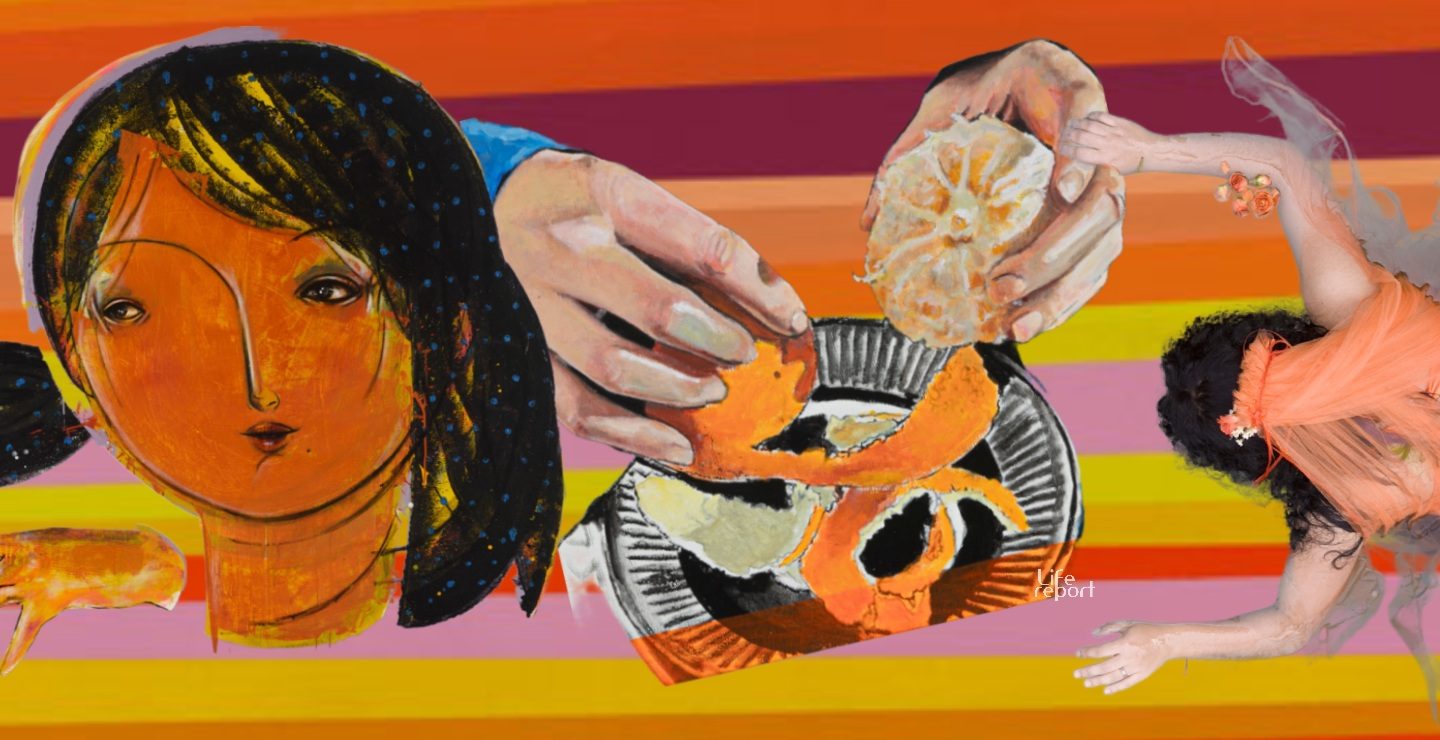
There are colours that whisper, and colours that demand attention. Then there is orange – a shade that arrives like the first sip of an espresso ristretto at a café on Alserkal Avenue: unapologetically vibrant, faintly bitter and impossible to ignore. This summer, Ayyam Gallery has chosen to build an entire exhibition around that chromatic exclamation point. Tangerine Dreams, running from 8 July to 18 September 2026, is a group show that dares to treat orange not as mere pigment but as a psychological state, a cultural code and, quite possibly, the most misunderstood protagonist of the visible spectrum. In a city where the sunset routinely stages a blockbuster performance over the Arabian Gulf, the gallery’s proposition feels almost audacious – a reminder that even in Dubai, a place saturated with spectacle, a simple tangerine reverie can still cut through the noise.
The premise is disarmingly elegant. Occupying a liminal space between the ferocity of red and the levity of yellow, orange has long been the colour of paradox. It signals both caution and celebration, from the sacred robes of Buddhist monks to the brash casing of a limited-edition Hublot Big Bang. Ayyam Gallery’s curatorial vision captures this duality with the kind of understated precision one might associate with a master perfumer selecting a single note of bitter orange to anchor an entire composition. The works on display – spanning painting, sculpture and mixed media by artists from the Middle East, North Africa and beyond – transform the gallery into a journey through the colour’s many moods. Here, a canvas radiates the amber warmth of late-afternoon light filtering through a mashrabiya; there, a sculptural installation evokes the cool, almost metallic tang of a tangerine peel after it has released its essential oils. It is, in the best possible sense, a seduction of the senses, calibrated for a generation that has learned to decode the world through a filter of saffron sunsets and social media aesthetics.
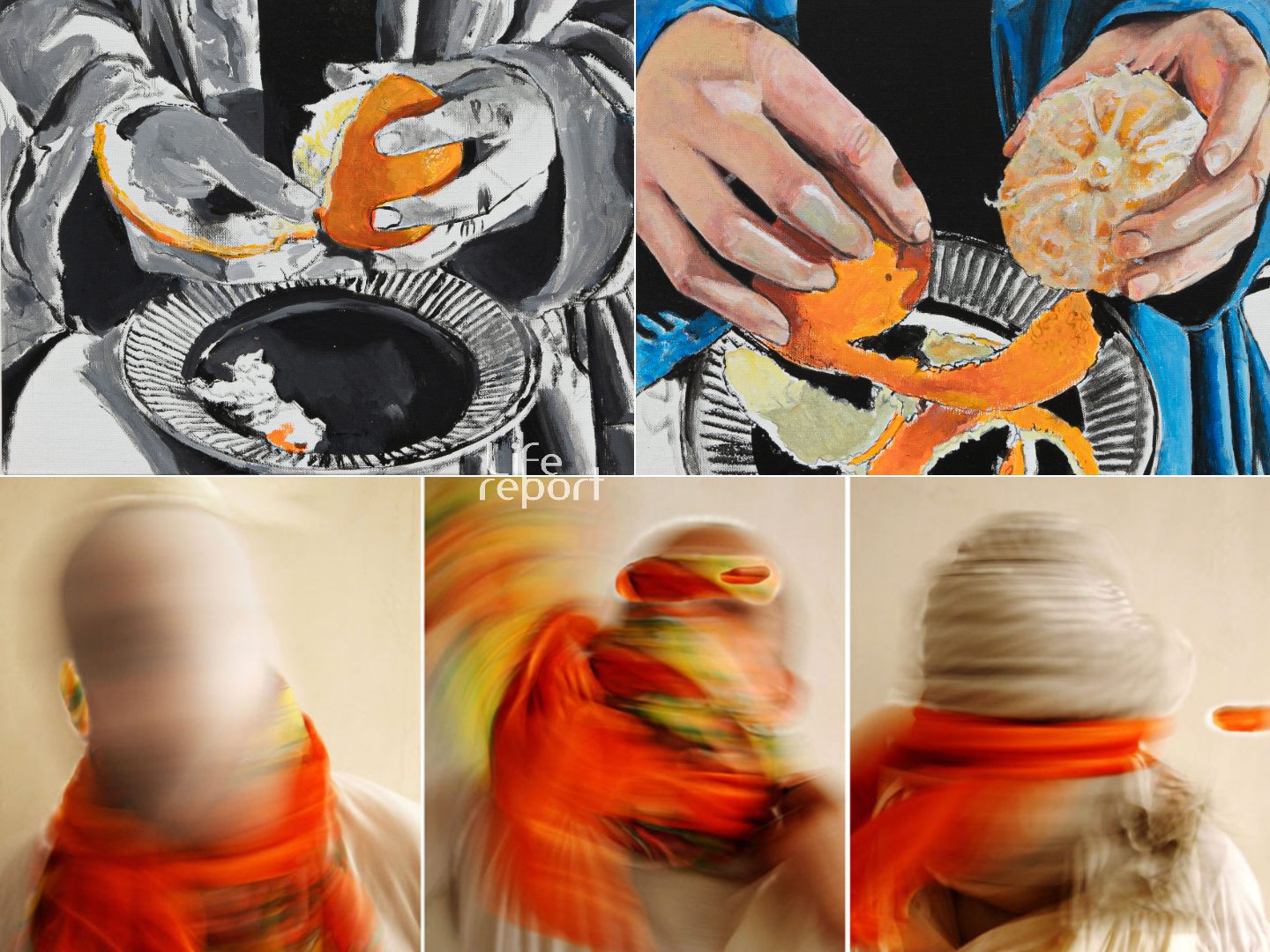
Abdalla Al Omari
Integration is Hard, 2023.
Faisal Samra
Performance #36 from the Distorted Reality series, 2007
Stepping into the gallery at B11, Alserkal Avenue, one is immediately reminded that a well-conceived exhibition functions much like a perfectly tailored Kiton blazer: every seam disappears, leaving only the sensation of effortless mastery. The space breathes. The concrete floors and white walls – hallmarks of the contemporary art world’s industrial-chic vernacular – become a vessel for the colour’s shifting temperatures. Some pieces thrum with the saturated intensity of a Rolex Explorer II’s iconic orange GMT hand, a tiny beacon of adventure in a world of polished steel. Others retreat into the nostalgia of a faded film photograph, the kind in which sun-bleached memories carry faint notes of orange blossom water and the metallic chill of a Voss bottle beside a desert infinity pool. The air inside the gallery, chilled to a museum-grade 21°C, feels like an olfactory palate cleanser, though one half-expects the ghost of Byredo’s Pulp or perhaps a bespoke Amouage citrus attar to drift through the space, a subtle nod to the city’s fascination with luxury fragrance layering.
At the heart of this chromatic meditation lies a poem. Oranges by Roisin Kelly, which accompanies the exhibition, reframes the act of selecting a piece of fruit at a market stall as a metaphor for choosing a lover – tactile, instinctive and utterly consuming. The poem’s presence is no curatorial gimmick. It serves as an emotional compass, reminding visitors that orange is the colour of intimacy, of skin warmed by the sun, of the viscous glow that clings to a white linen shirt after a Negroni has been sipped a little too close to the edge of an infinity pool. In one imagined correspondence with a canvas, a streak of vermilion recalls the careful, almost reverential act of peeling an orange, the way the rind resists just enough before releasing its aromatic burst. The poem’s logic – that love is both physical and ephemeral, leaving behind only a trace – echoes through the gallery like a piece of music that continues to resonate long after the final note has faded.
View this post on Instagram
The exhibition arrives at a moment when the very concept of a summer group show in Dubai can feel like a quiet act of rebellion. July and August are months when the city’s cosmopolitan crowd typically retreats to Sardinia, Bodrum or St Barthélemy, leaving behind a landscape of empty valet stands and eerily serene beach clubs. To open an exhibition during this season is to declare that cultural gravity need not follow the flight paths of private jets. Ayyam Gallery, founded in 2006 and long established as a blue-chip fixture in the region, understands the architecture of attention. With a custodianship programme that manages the estates of pioneering modern artists and a publishing arm that has helped reintroduce underrepresented chapters of global art history, the gallery has earned the right to make a statement as bold as a brushstroke of cadmium orange on raw linen. It is not chasing the crowd; it is inviting the crowd to adjust its rhythm.
Cinematically, Tangerine Dreams unfolds like a scene from a film by Jacques Audiard – sun-drenched and simmering with unspoken tension. One work evokes the shards of light that cut through a dusty window in the old souk of Deira, where mounds of dried apricots and saffron threads blur into a single golden haze. Another arrests the eye with the industrial precision of a polished traffic cone repurposed as a totem of minimalist satire – a wink at the urban lexicon of the UAE, where infrastructural order becomes its own form of public sculpture. There is humour here, of the refined and self-aware variety. A small canvas, devoted almost entirely to a gradient shifting from apricot to burnt umber, seems to mock the contemporary obsession with annual colour forecasts, as if to say: Pantone may have declared its seasonal oracle, but art has been interrogating the semiotics of tangerine for decades.
The gallerists have, with characteristic restraint, avoided turning the show into a literal explosion of citrus. Instead, they have curated moments of unexpected stillness. A video work, its frames lapping like a slow tide, captures the moment a slice of orange is submerged in a glass of sparkling water – effervescence clinging to the fruit in tiny, jewel-like bubbles. It is a meditation on transience that would not look out of place among the finalists of the Loewe Foundation Craft Prize. The piece offers precisely the kind of visual pause that appeals to a generation raised on the dopamine rhythms of short-form video yet increasingly hungry for experiences that cannot be fully captured by a smartphone camera.
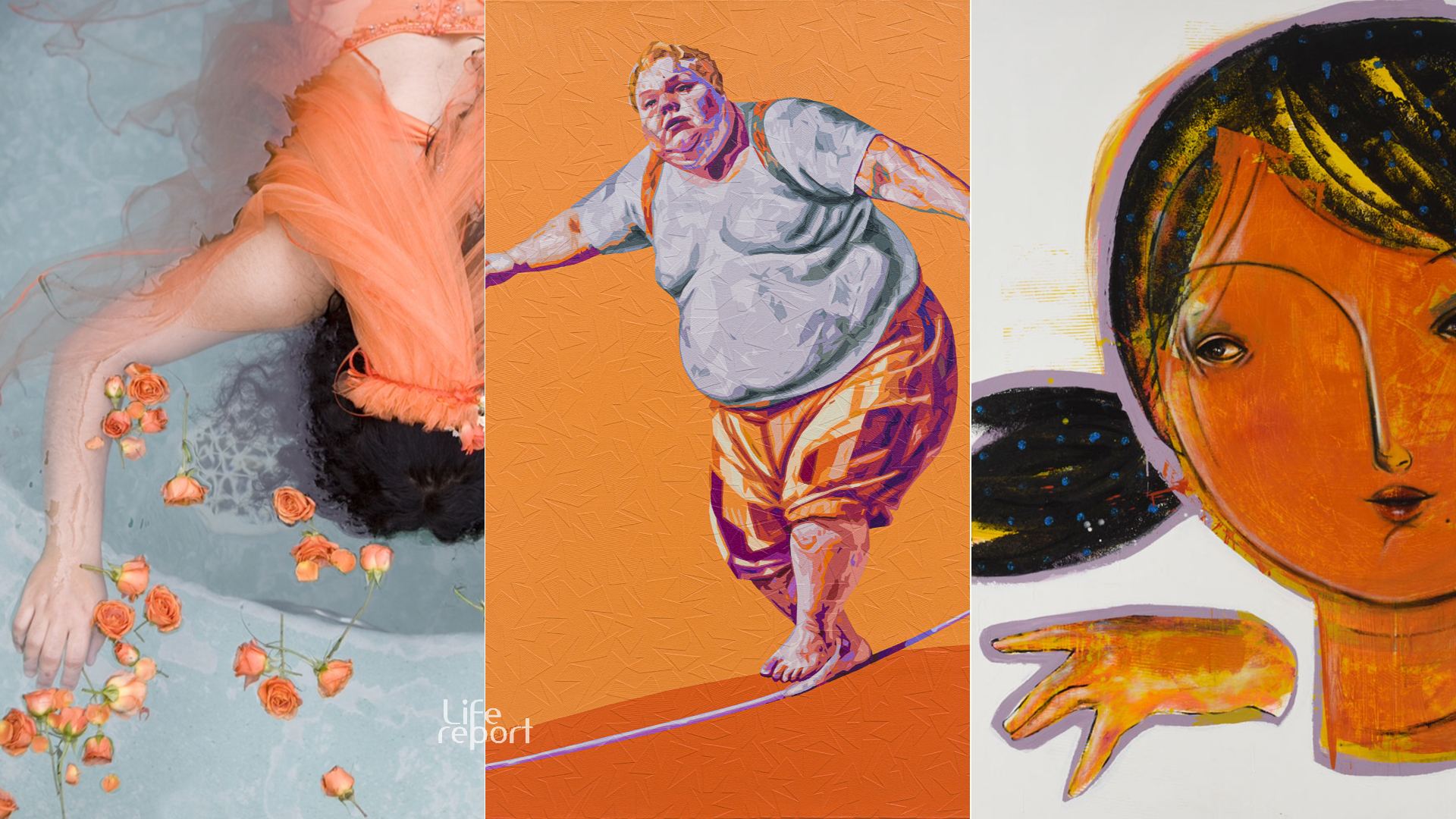
Sama Alshaibi
Gitmo Girl, 2009.
Elias Izoli
Untitled, 2024.
Mohannad Orabi
Ripples series, 2017.
Ayyam Gallery’s choice of Alserkal Avenue as its home is itself a testament to cultural foresight. Once a dusty cluster of warehouses in Al Quoz, the district has matured into the city’s most credible arts quarter, housing established names such as Leila Heller Gallery alongside boutique conceptual spaces and the sort of third-wave coffee shops where a flat white and a discussion of post-orientalism can comfortably share an afternoon. The summer opening hours – Monday to Friday, 11 am to 7 pm – are a deliberate invitation: visit while the rest of the city hibernates, and you may find yourself part of a conversation that lingers longer than a brunch reservation at Zuma. The gallery’s location on Street 8 requires a degree of intention; it is not somewhere one simply happens upon. That sense of purpose aligns neatly with a generation of collectors – millennials and Gen Z – who increasingly view art patronage not as transactional décor acquisition but as an extension of a thoughtful, value-driven lifestyle.
It would be easy to dismiss an exhibition centred on a single colour as an intellectual exercise in minimalism, the sort of concept that sounds compelling in a university seminar but wilts under the lights of a commercial gallery. Tangerine Dreams avoids this trap through sheer sensory confidence. The exhibition understands that orange is a colour of memory: the sticky sweetness of a childhood Jaffa Cake, the synthetic glow of a Loewe Paula’s Ibiza candle, the golden-hour photograph that somehow made last summer’s staycation resemble a Slim Aarons image. It taps into a collective nostalgia that is at once deeply personal and universally legible. Yet the show never becomes saccharine. Beneath its surface lies an intellectual elegance reminiscent of a finely argued essay, a willingness to explore the colour’s darker and more combustible associations – the blaze of a controlled burn, the ochre of a protest placard – without sacrificing its visual allure.
In a regional art market often characterised by spectacle and the gravitational pull of museum-scale statements, Ayyam Gallery has produced something genuinely rare: a summer exhibition that operates like a beautifully cut linen shirt in a bold shade of orange – confident, cool and irreverent enough to make viewers reconsider every neutral piece in their wardrobe. As the season stretches on and the city shimmers beneath its perennial veil of heat haze, Tangerine Dreams offers not so much an escape as an immersion. It suggests that the most seductive destinations are not those pinned to a travel mood board, but those painted directly before us in a hue that tastes exactly like the first bite of a perfectly ripe fruit – tangy, sweet and charged with the promise of sun-soaked afternoons yet to come.
Also Read: This Quiet 31mm Watch May Be the Most Radical Luxury Statement of 2026


