One must admit, the classic wine tour has begun to feel a touch… predictable. The hallowed cellars of Bordeaux, the sun-drenched rows of Napa, the impeccable hospitality of Tuscany – they are the old guard, the classics we return to like a well-worn copy of a beloved novel. But for a growing cohort of discerning travelers, myself included, the true thrill lies not in revisiting the canon but in discovering the new, the unexpected, the chapter yet unwritten.
This craving for authentic, layered experience over mere consumption is the very engine of modern oenotourism. It’s no longer enough to simply taste; one must *understand*. To feel the chalky soil between one’s fingers, to comprehend the whims of a microclimate, to engage with the culture that gives the wine its soul. This pursuit has turned regions like Rioja and Stellenbosch into pilgrimage sites. But lately, my curiosity – and that of my most well-traveled companions – has been pulled eastward, to a country where ancient viticulture is undergoing a breathtakingly sophisticated renaissance: Bulgaria.

I’ve always found a certain magic in the Balkan terroir, but on a recent sojourn, I discovered something that transcends even the most exquisite bottle. It is a place where the philosophy of wine is expressed not just in the glass, but in the very landscape, through the medium of art. Tucked away in the golden, sandstone hills of the Melnik region, where the Struma River carves its ancient path, AYA Estate Vineyards is less a winery and more a Gesamtkunstwerk – a total work of art.
View this post on Instagram
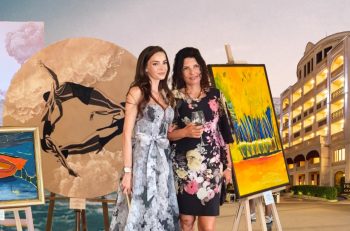
The vision of it’s founders, AYA Estate , which opens its gates fully this autumn, is a bold and brilliant proposition. Here, forty hectares of organic vineyards are woven together with a growing collection of site-specific installations from Bulgaria’s most celebrated contemporary artists. Imagine, if you will, a sculpture rising like a silent sentinel against the vineyard skyline, or a wall carved to mimic the delicate veins of a leaf, catching the low afternoon light. This is not art placed in nature; it is art in conversation with it, curated with a sharp eye by Vessela Nozharova and Vesselina Sarieva.

It is a concept that would feel at home in the Hudson Valley, yet it is profoundly, uniquely Bulgarian. To sip a glass of their Melnik 55 while contemplating a piece that draws from the very earth it grows in is to experience terroir in its most expansive sense. It is a tasting that engages all the senses, a dialogue between the crafted and the cultivated that lingers long after the last drop is gone.

A short drive through this hypnotic landscape leads to another sanctuary of taste, one that offers a different, though equally compelling, interpretation of the modern wine estate. Zornitza Family Estate, a proud member of Relais & Châteaux, is a love letter to the rustic elegance of Tuscany, filtered through a distinctly Bulgarian soul.
View this post on Instagram
Here, the artistry is culinary. The estate’s aEstivum restaurant – a clever nod to the Latin aestivum, or summer truffle – is under the masterful command of Chef Vesselin Kalev, a recent inductee into the prestigious Jeunes Restaurateurs Europe. His philosophy is a mantra we should all live by: modern cuisine is built on the bedrock of tradition and the unparalleled quality of organic terroir products. Dining on his terrace, overlooking infinity pools that seem to spill into the vineyards, one tastes the story of the region – a story of sun-soaked tomatoes, local herbs, and meat from their own farm, paired flawlessly with a cellar that boasts 300 labels.

It’s a level of sophistication that has rightly earned Zornitza a place in the Michelin Guide, a recognition that speaks not to opulence alone, but to a unique character and unwavering commitment to experience. After a day exploring Melnik’s pyramids, one can retreat to a villa of red brick and timber beams, or submit to a terroir-inspired treatment at the ZOMA spa using Biologique Recherche – a detail that alone tells you everything you need to know about their standards.

These two estates, AYA Estate with its avant-garde gallery-without-walls and Zornitza with its Relais & Châteaux-certified embrace, represent the two halves of a perfect whole for the contemporary connoisseur. They prove that Bulgaria is no longer the emerging alternative, but a premier destination in its own right. It offers a journey that satiates not just the palate, but the mind and the soul.

It’s a rather delightful thought, isn’t it? That the next great conversation between a glass of profound wine and a piece of profound art might not be in a bustling global capital, but in the serene, sun-drenched silence of a Bulgarian valley. I, for one, have already cleared my calendar for September.