
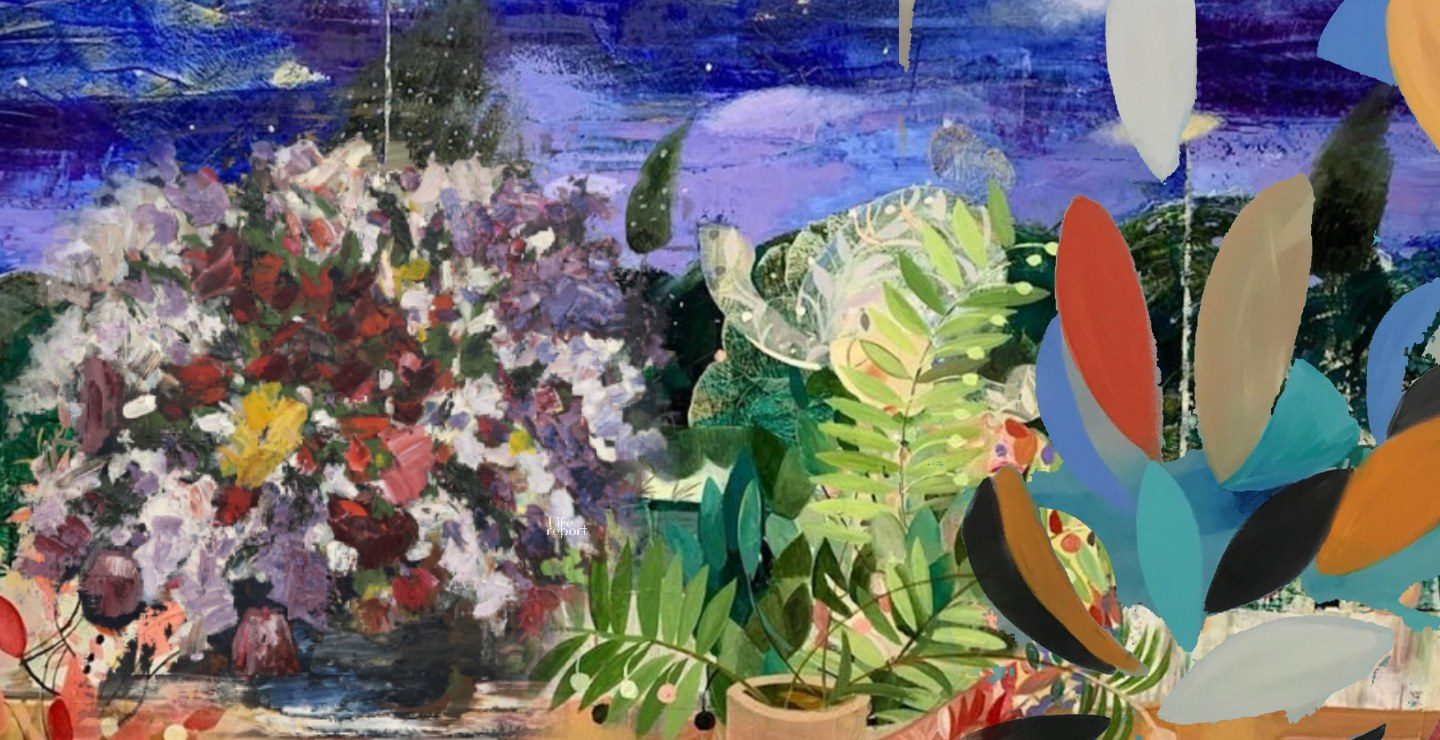
September does not arrive quietly in Dubai; it arrives as a change of light. After months of relentless, white-hot summer – a season that bullies the senses into submission – there is suddenly a softer register in the air, a suggestion of autumn, even in a city where climate-controlled atriums make the seasons largely theoretical. It is a moment when glare gives way to texture, excess to nuance, and the seductive gloss of the pool deck to something deeper and more enduring. In September, the eye begins to crave not just colour, but history, patina and the burnished depths of a canvas.
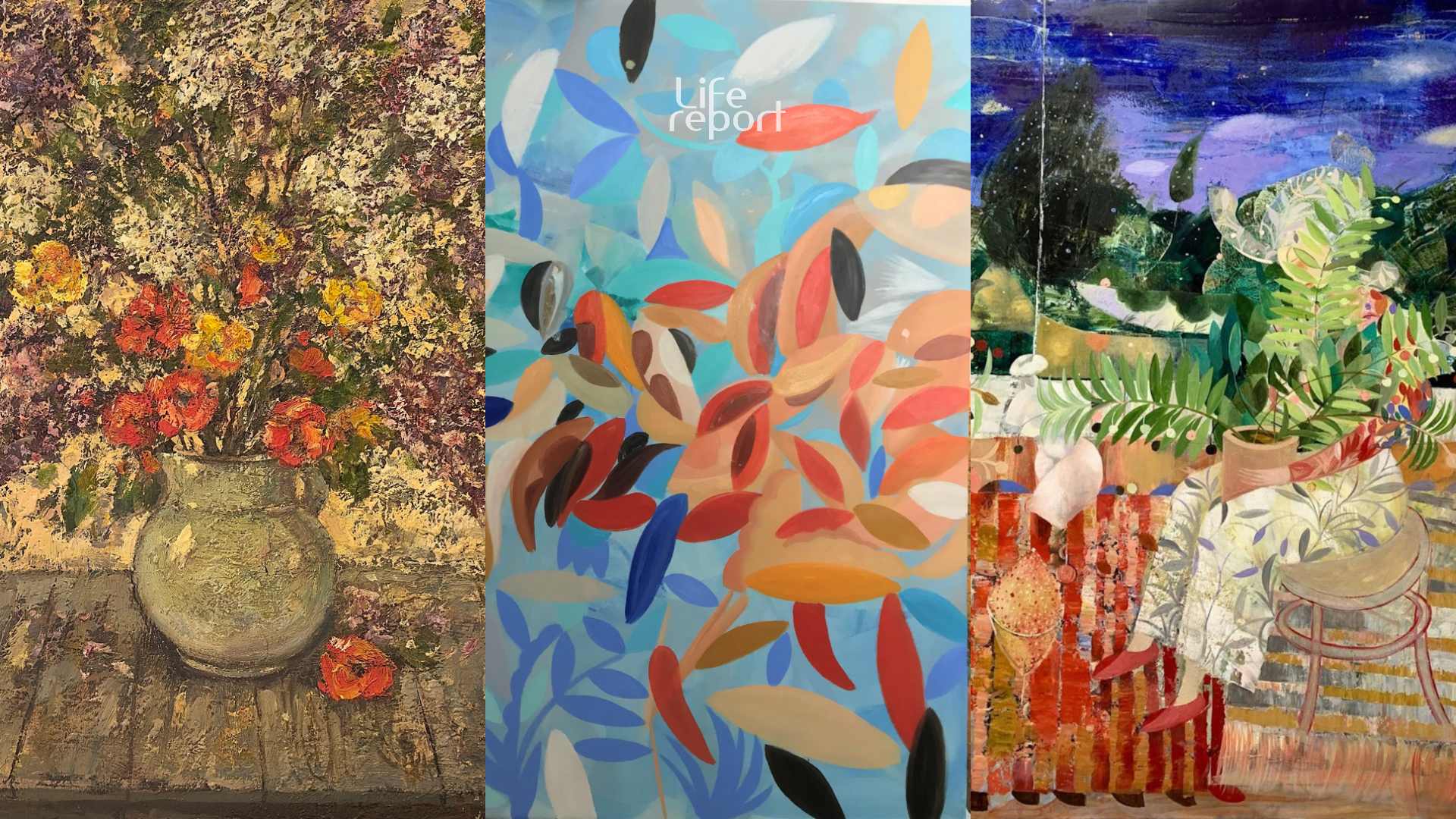
From the 11th of September to the 11th of October, the Andakulova Gallery in DIFC offers precisely that sanctuary. Titled Golden Harvest, Lasting Bloom, the exhibition is less a thematic exercise in seasonal decoration and more a philosophical meditation on maturity, abundance, and the expressive potential of decay. It is an aesthetic investigation into how a single natural motif – autumn – can be refracted through the distinct prisms of different generations, producing an artistic dialogue that is as layered as the impasto on the canvases themselves.
The gallery, a bastion of Central Asian modernism and contemporary practice founded by Natalya Andakulova in 2012, has long been a quiet heavyweight in Dubai’s art ecosystem. While the city chases the ephemeral flash of immersive digital spectacles, Andakulova has cultivated something far more enduring: a scholarly bridge between the avant-garde heritage of the ‘Stans and the voracious cultural appetites of the Middle East. With a second space opened in Tashkent City Mall in 2025, the gallery now operates as a dual-axis cultural engine, and Golden Harvest, Lasting Bloom serves as a compelling manifesto of its curatorial ethos.
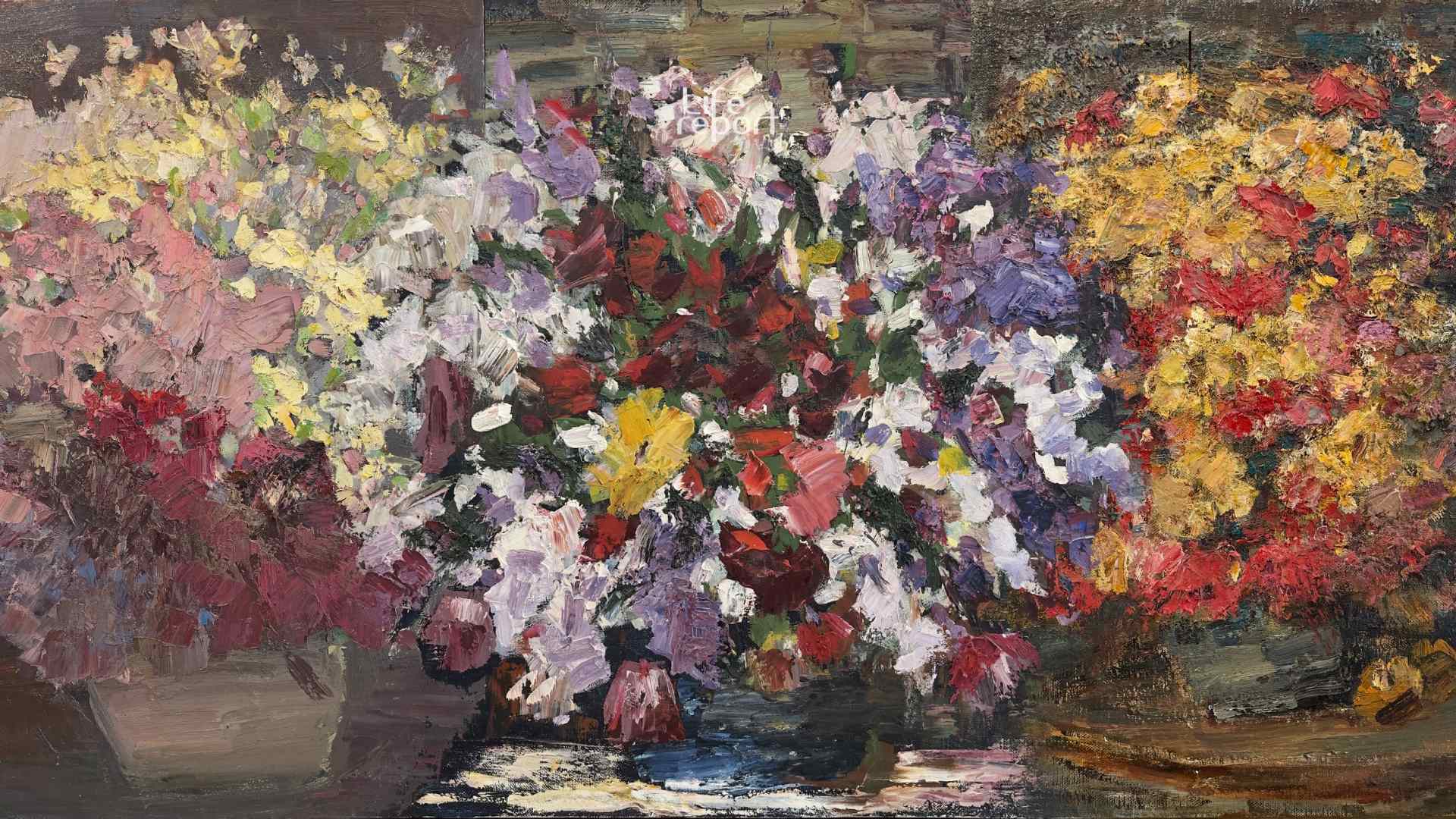
To dismiss autumn as a cliché is to miss the point entirely. In the hands of the featured artists, the season becomes a vehicle for exploring the very syntax of painting. Consider the juxtaposition of two titans of the Uzbek school. Rimma Gagloeva (b. 1940) approaches the canvas with a scenographer’s eye – hardly surprising, given her training at the Tashkent Theatre and Art Institute. Her autumn is not a landscape; it is a psychological state. Her use of rich, textured impasto transforms the surface of the painting into a terrain of emotional expressiveness, where colour operates not as a descriptor of nature, but as a barometer of internal weather. To stand before a Gagloeva is to witness nature being absorbed and exhaled as pure feeling.
View this post on Instagram
Contrast this with the masterful formalism of Javlon Umarbekov (b. 1946). If Gagloeva is the theatre, Umarbekov is the library. A People’s Artist of Uzbekistan whose works reside in major international collections, Umarbekov synthesises the rigour of European painting traditions – honed in part at VGIK in Moscow – with the intricate, flattened perspectives of Central Asian miniature art. His exploration of the harvest is one of history and memory. There is an intellectual coolness to his composition, a structural elegance that reframes the chaos of the natural world into a language of balanced, meditative harmony. It is art that appeals to the collector who appreciates the mechanics of a fine tourbillon movement as much as the beauty of its dial.
Beyond these established masters, the exhibition extends its reach into the practices of artists like Timur Akhmedov and Vera Nechaeva, alongside a cohort of emerging voices who continue to reinterpret the region’s visual lexicon. This is where the gallery’s mission truly crystallises. In a marketplace often obsessed with the youth cult of the digital age, Golden Harvest, Lasting Bloom is a gentle but firm reminder that cultural infrastructure is built on lineage. It offers a continuum – a dialogue between the classical landscape, the emotive still life, and contemporary figurative languages that refuse to be siloed by geography.
There is a delightful irony in hosting this celebration of Central Asian harvests within the polished glass canyons of the Dubai International Financial Centre. It is a juxtaposition that flatters both parties. The natural world, with its cycles of ripeness and decay, gains a certain gravitas when framed by the monoliths of global capital; meanwhile, the financial district – often accused of a sterility born of endless ambition – borrows a little of the soul that only art can provide. For the discerning Gen Z and millennial audience in the UAE, who navigate the world with a sophisticated taste for cross-cultural narrative and a healthy skepticism of the overly commercial, this exhibition offers a more meaningful form of luxury. It is the luxury of context.
The narrative being woven by Andakulova Gallery is, at its core, about re-introduction. It is about correcting a geographic blind spot and asserting that the artistic hubs of Samarkand, Tashkent, and Almaty hold as much relevance to the contemporary collector as the established circuits of Berlin or New York. This is not art as mere decoration; it is art as quiet diplomacy, executed with a brushstroke and a well-curated room sheet.
To visit Golden Harvest, Lasting Bloom is to engage in a form of cultural time travel, where the light of a departing summer is captured and held in suspension by pigment and oil. It is an exhibition for the urbanite who understands that true style is not about the newest logo, but about the depth of one’s references. It runs for a month. In the accelerated timeline of Dubai, that is practically an eternity – and for once, that feels like a precious, lingering luxury.


