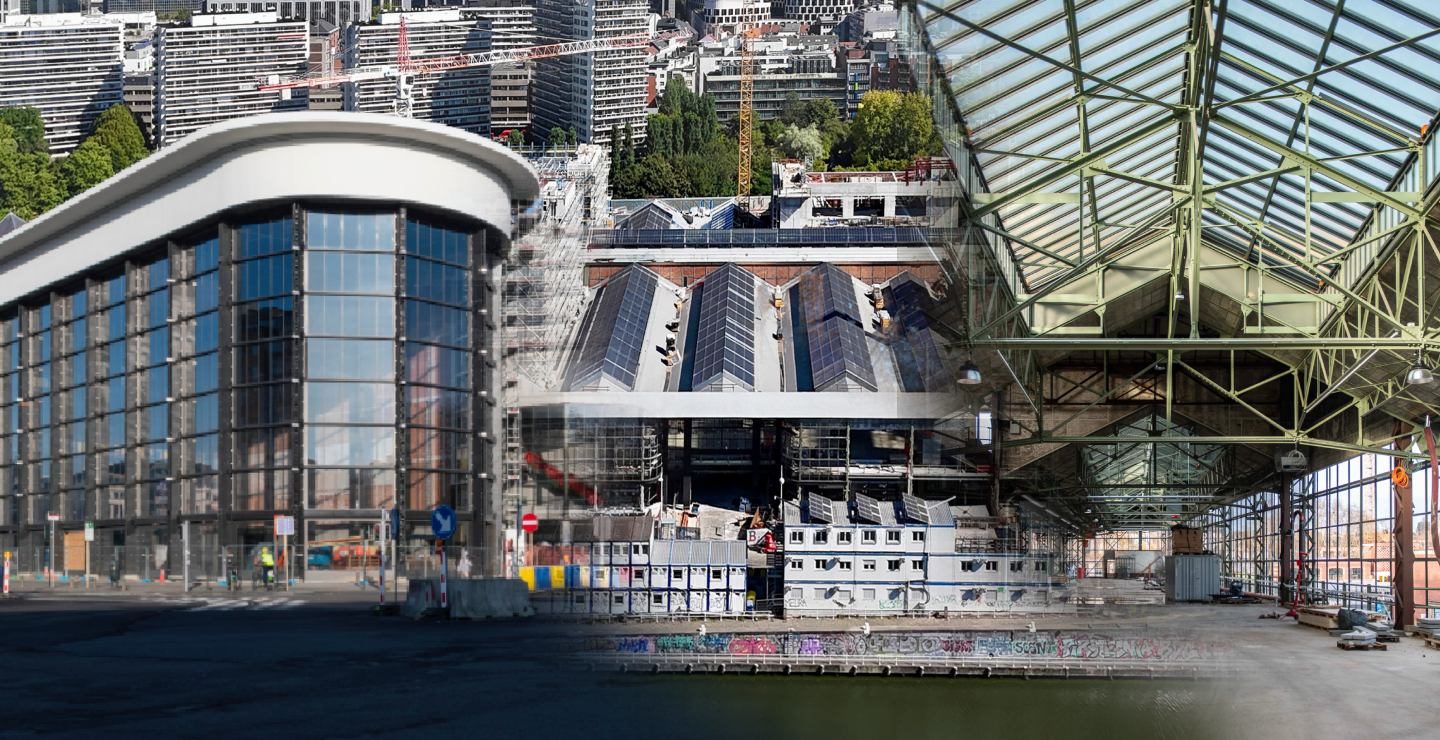
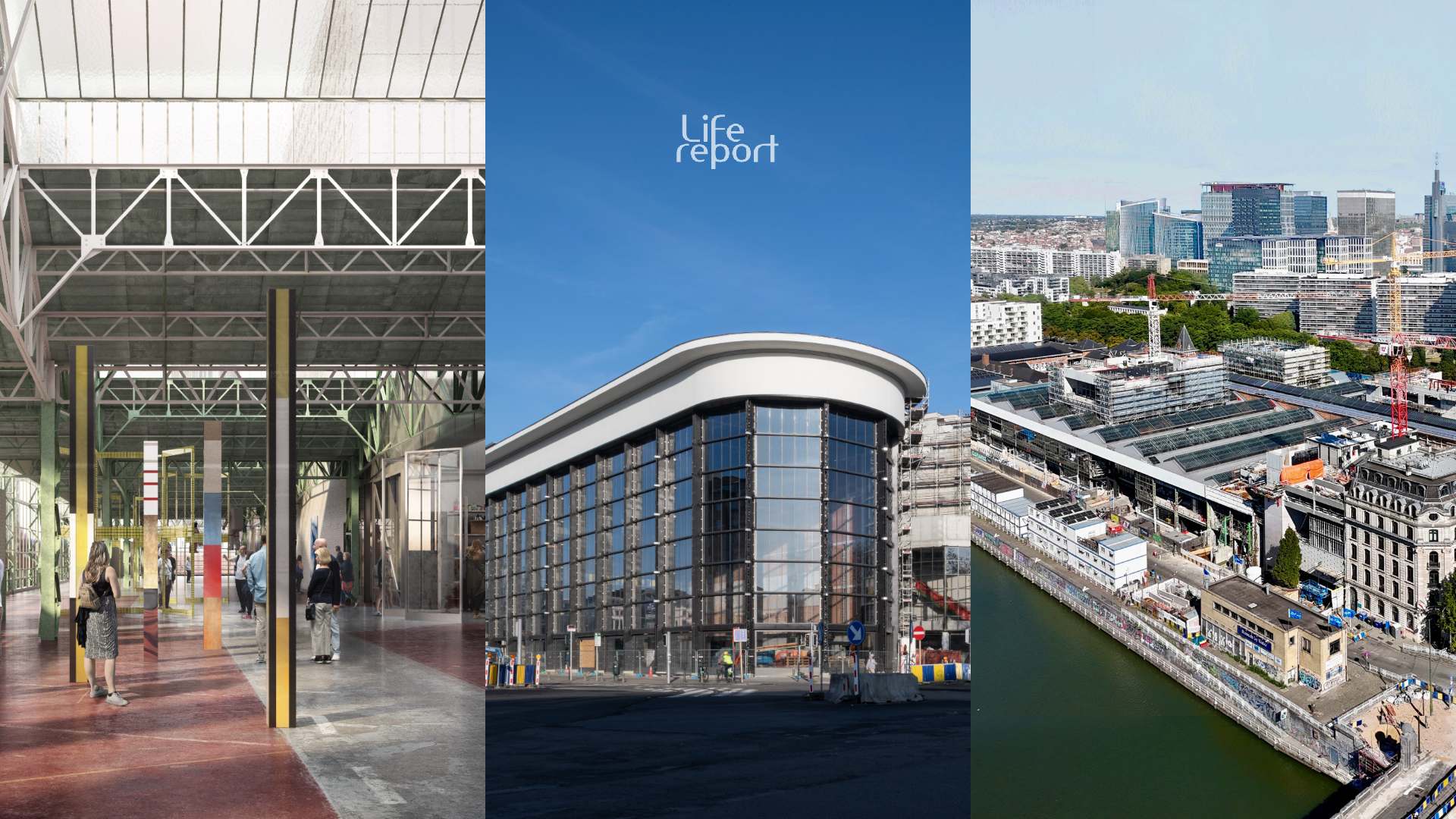
A cathedral of contemporary art inside a former Citroën garage. It is a gesture that flirts with industrial nostalgia while demanding architectural reverence – a collision of grease-stained memory and white-cube purity that defines one of the most ambitious cultural projects Belgium has seen in decades. When Kanal Centre Pompidou finally throws open its monumental doors on 28 November 2026, it will not merely be inaugurating a museum; it will be asserting that Brussels – that surrealist city of comic books, frites and bureaucratic intrigue – is ready to claim its seat at the high table of global contemporary art.
For a city that has long hummed with intense artistic energy – home to visionary collectors, blue-chip galleries and a restless avant-garde – Brussels has suffered from a curious institutional absence. It has been a capital of art without a museum of modern and contemporary art to call its own. Kanal emerges not as a corrective, but as a proposition: a wager that a 21st-century institution can be a living organism rather than a mausoleum of masterpieces.
View this post on Instagram
The inaugural programme, anchored by the sprawling exhibition A Truly Immense Journey, is a statement of intent that draws heavily on the intellectual firepower of the Centre Pompidou in Paris. This collaboration, which will run until 2031, is less a transfer of authority than a high-stakes dialogue between two distinct cultural temperaments. For the next five years, Brussels will benefit from a rotating cast of modernism’s most formidable icons. The ghosts of Braque and Picasso will converse in Belgian light; the chromatic dynamism of Robert and Sonia Delaunay will pulse through the raw concrete halls; and the quiet radicalism of Matisse will be given room to breathe. For a younger generation of culturally omnivorous travellers from the UAE and beyond – those who schedule itineraries around gallery openings and architectural pilgrimages rather than mere sightseeing – this is the kind of long-term curatorial promise that transforms a city into a destination.
The main event, A Truly Immense Journey, is deliberately expansive in its ambition. Spanning more than 2,000 square metres across three floors, it brings together more than 350 works to trace the forces that have propelled people, ideas and artistic practices across geographies and histories since the beginning of the 20th century. Inspired by the canal beside the museum, the exhibition explores themes of migration, exchange, movement and artistic transformation. It is a journey without a fixed destination, a concept that suits the fluid, borderless identity of modern Brussels perfectly. In an era when luxury is defined less by static ownership and more by the quality of experience, this exhibition offers the ultimate premium: intellectual disorientation.
View this post on Instagram
Yet Kanal is savvy enough to know that a museum cannot survive on masterpieces alone. It must also cultivate a pulse. The surrounding programme suggests a curatorial team deeply attuned to the rhythms of contemporary life and the tastes of a millennial and Gen Z audience that values participatory culture as highly as passive viewing. In the public spaces – accessible without a ticket, a radical gesture of democratic luxury – Nigerian-born, Antwerp-based artist Otobong Nkanga will install a series of looms designed to encourage encounters and co-creation. It is a subtle nod to the building’s industrial past, when labour was manual, and a forward-looking embrace of art as social fabric.
Elsewhere, the programme flirts with subversion and historical reckoning. Banu Cennetoğlu’s right? fills the showroom with bouquets of gold letter balloons, spelling out the 30 articles of the Universal Declaration of Human Rights. The installation is a work of profound weight rendered in the visual language of a birthday party – a juxtaposition that is both devastating and deeply ironic. Over the course of the exhibition, the balloons gradually deflate, turning the installation into a meditation on the fragility of rights that are often treated as universal and permanent.
The exhibition An Infinite Woman tackles the uncomfortable legacy of the colonial gaze, examining the image of a Mangbetu woman that was used as a symbol in Citroën-sponsored colonial propaganda in the 1920s and exploring how artists of African descent have reclaimed and subverted that imagery. It is exactly the kind of sharp, historically conscious programming that resonates with a generation fluent in the politics of representation.
The Belgian and Brussels-based contingent is not relegated to the margins; it is woven into the building’s very foundations. Joëlle Tuerlinckx will transform the subterranean Lower Room into an immersive sound composition, buried deep within the museum’s bowels. Manon de Boer offers a sensory reprieve with Blindsight, a filmic experience that insists on deceleration at the intersection of music and dance. And in a gesture of delightful irreverence, the exhibition NO SHOW, featuring Deborah Bowmann, Maoupa Mazzocchetti and 20 Brussels-based artists, poses the cheeky, postmodern question: can a museum still entertain? It is a query that winks at the fatigue of the digital age, inviting a knowing smile from visitors who have seen one too many Instagram-bait installations.
The architectural programme, presented under the banner Right to the City – Right to the Future and developed with Kanal Architecture following the transformation of CIVA, invites reflection on urban ecosystems. The exhibition turns its attention to Brussels itself, examining the city as a laboratory of architectural, participatory and sometimes conflictual urban practices. In doing so, it grounds the museum in the very real urban questions of the city around it.
For the discerning traveller from the Emirates, where the construction of cultural capital moves at warp speed, Kanal offers a different tempo. It is a museum that has taken its time, emerging from a dialogue between industrial heritage and contemporary ambition. It understands that true luxury in the cultural sphere is not merely about what is on the walls, but the space in which it hangs, the air it breathes and the conversation it sparks. Kanal Centre Pompidou is not just a new museum; it is a new argument for why Brussels matters. And in November 2026, the art world is cordially invited to listen.
ALSO READ: The New Vacheron Constantin Overseas 34.5 mm Is a Quiet Rebuttal to Everything Loud in Luxury