Inside COEX’s first Middle Eastern 2026 K-Premium Products fair, where Korean brands have arrived to prove that the next great luxury conversation isn’t about logos – it’s about restraint.
The first thing you notice about the 2026 K-Premium Products Fair in Dubai is what it doesn’t do. There is no K-pop soundtrack thrumming through the corridors, no LED screens screaming brand names in Hangul and Arabic. Instead, Korean companies spanning beauty, fashion, living and food have arranged themselves with the quiet confidence of people who know that the most persuasive argument for a product is the product itself. The wider K-Premium programme runs from 28 September to 4 October, combining a consumer showcase at Dubai Festival City Mall with a B2B export-consultation programme at the InterContinental Dubai Festival City on 29 and 30 September.
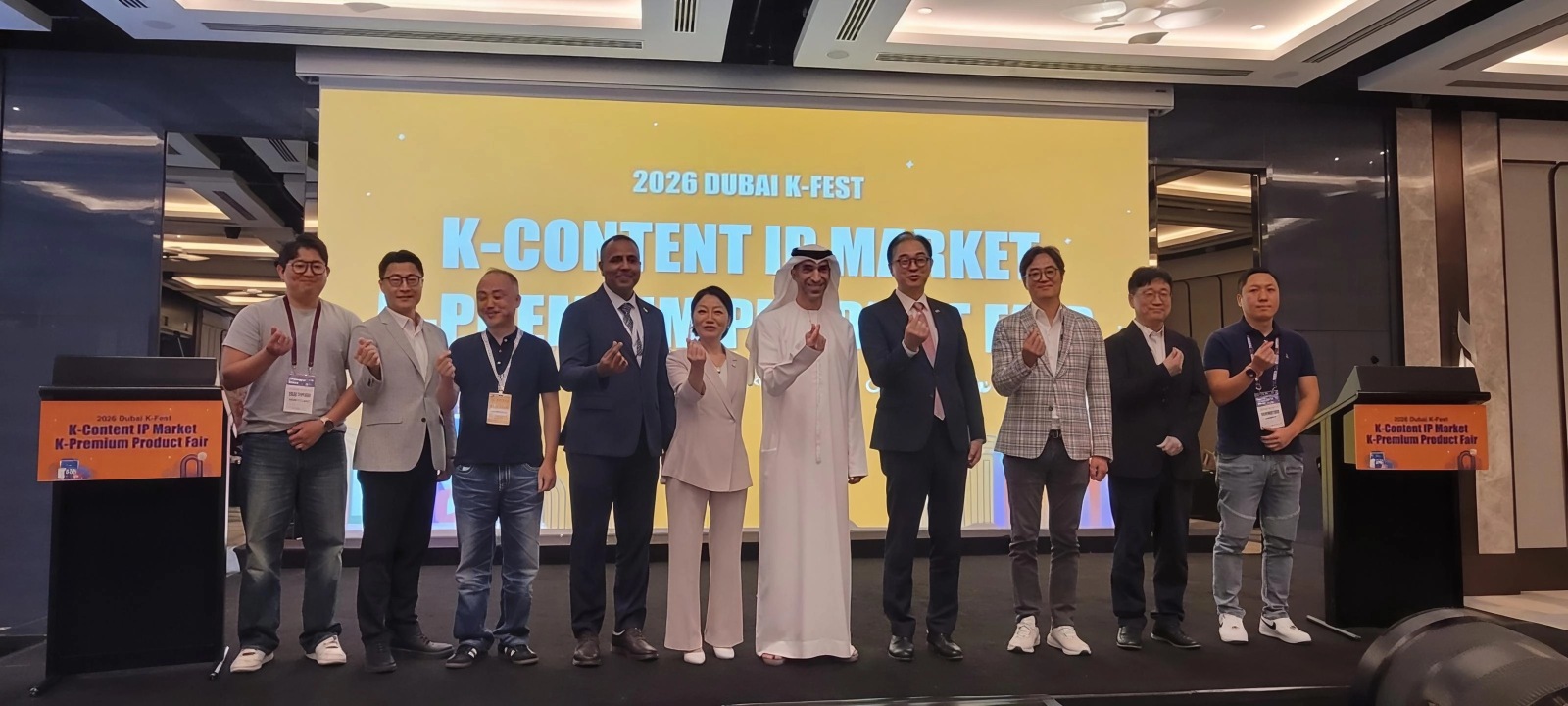
COEX, South Korea’s exhibition giant, has chosen Dubai as its first Middle Eastern destination after building an overseas exhibition presence in Asian markets including Vietnam and Indonesia. The symbolism is not lost on anyone in the room. H.E. Dr Thani bin Ahmed Al Zeyoudi, the UAE’s Minister of Foreign Trade, delivered the keynote address, underscoring the official importance attached to the event. H.E. Lee Won-ik, Ambassador of the Republic of Korea to the UAE, and Jong Hoon Han, Director of COEX’s Global Business Team, moved through the crowd with the easy diplomacy of people accustomed to making international business feel personal.
Jo Sang Hyeon, President and CEO of COEX, put it plainly: “This event, the first COEX is presenting in Dubai, is meaningful as both an initiative to support Korean SMEs entering the Middle East and a starting point for expanding COEX’s overseas business into the region.” The subtext, of course, is that the Gulf’s appetite for Korean consumer goods has matured beyond the novelty phase. The era of the K-beauty sample sachet is giving way to something more considered.
The Arithmetic of Aspiration
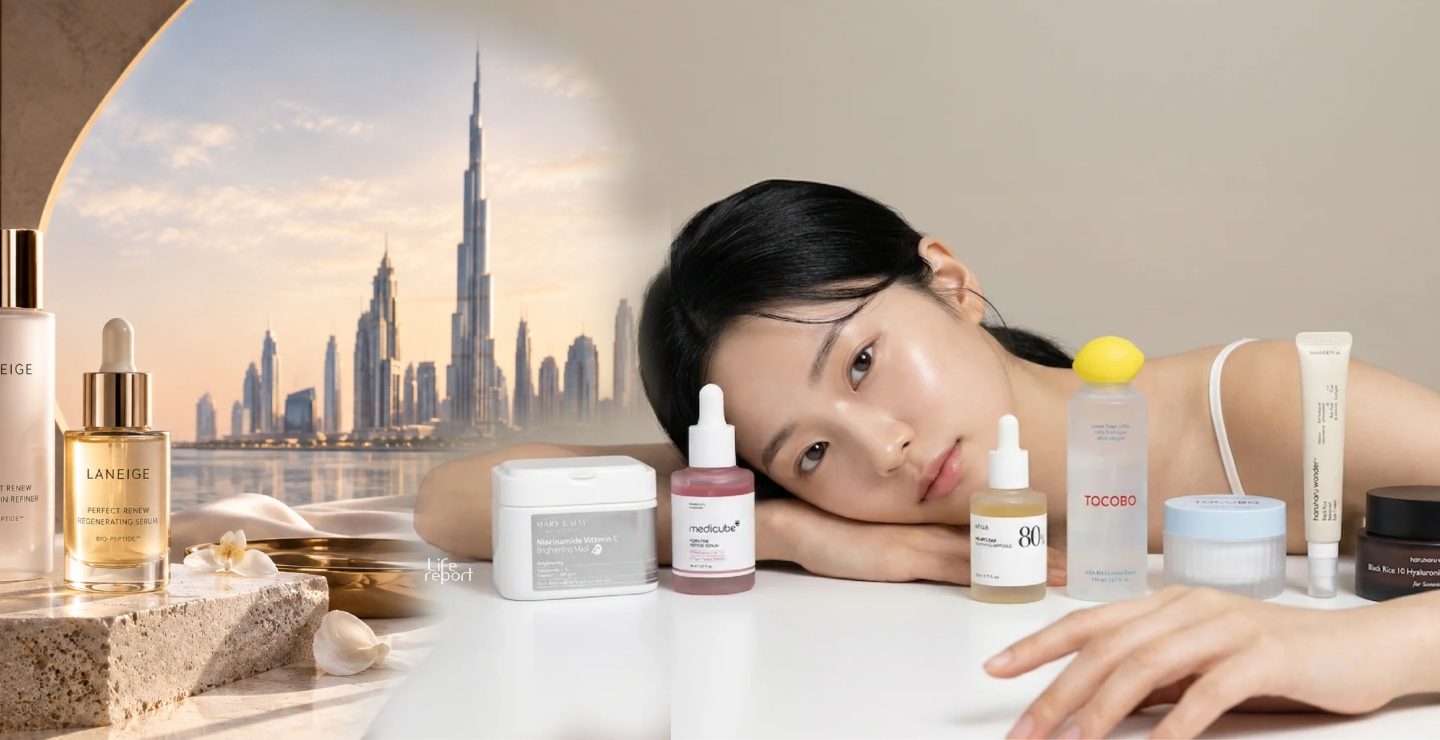
The numbers, as numbers tend to do in the Gulf, tell a compelling story. The UAE K-beauty products market is projected to grow from $31.62 million in 2023 to approximately $51.08 million by 2032, according to Credence Research. That trajectory has attracted everyone from LANEIGE – now the skincare partner for Etihad Airways’ Business-class Destination Collection amenity kits – to a growing roster of Korean beauty brands available through major regional retailers. The region’s youth profile only sharpens the opportunity. A 2026 report from Snap Inc. and The Business of Fashion notes that 60 per cent of the GCC population is under 30, while 77 per cent of Snapchat users in the GCC share products or recommend brands to friends and family. For Korean brands – many of them SMEs with limited marketing budgets but exceptional product narratives – that social infrastructure matters.
View this post on Instagram
This is the generation that discovered K-beauty through TikTok dermatologists and Instagram Reels of glass-skin routines, that trusts user-generated before-and-afters more than a campaign shot by a legacy maison. For Korean brands, the advantage is not simply visibility; it is cultural fluency. “Luxury is less about status symbols and more about individuality and emotional connection,” notes Mintel’s research on the future of luxury retail. The sentiment is echoed throughout the COEX fair. The participating companies, matched with buyers from across the GCC, are not here to compete directly with Chanel or Dior. They are here to occupy a different territory altogether: the space where quality of life, ingredient transparency and design restraint become new markers of discernment.
The Quiet Luxury of Korean Aesthetics
If there is a unifying philosophy to the Korean brands making inroads into the Gulf, it is what the furniture house Eastern Edition calls “simple yet not humble, splendid yet not extravagant”. Co-founded by interior designer Teo Yang, who was named to Architectural Digest’s AD100 list in 2022 and shortlisted for Dezeen’s Interior Designer of the Year award in 2024, Eastern Edition reinterprets the aesthetics of the traditional Korean hanok through contemporary forms. The company lists the UAE among its international markets. Yang’s work speaks to a Gulf consumer who has moved past the maximalism of the early 2010s and now craves spaces that feel curated rather than decorated.
This sensibility extends to fashion. Laneyu, the haute couture house founded by Kim Jung-ah, who participated in Italy’s Alta Moda collection in 1991, is planning a Dubai haute couture shop-in-shop with a local partner later this year. The Dubai ambitions follow Laneyu’s appearance at the 2025 Vie Fashion Week, where Kim presented her interpretation of Hwagwanmu, a traditional Korean court dance. Korean fashion coverage subsequently reported a royal invitation for an encore presentation in Dubai. The language is lofty, but the execution is pragmatic. The concept targets Middle Eastern royalty, high-net-worth individuals and international luxury consumers, positioning Korean craftsmanship not as an exotic alternative but as a peer to established European ateliers.
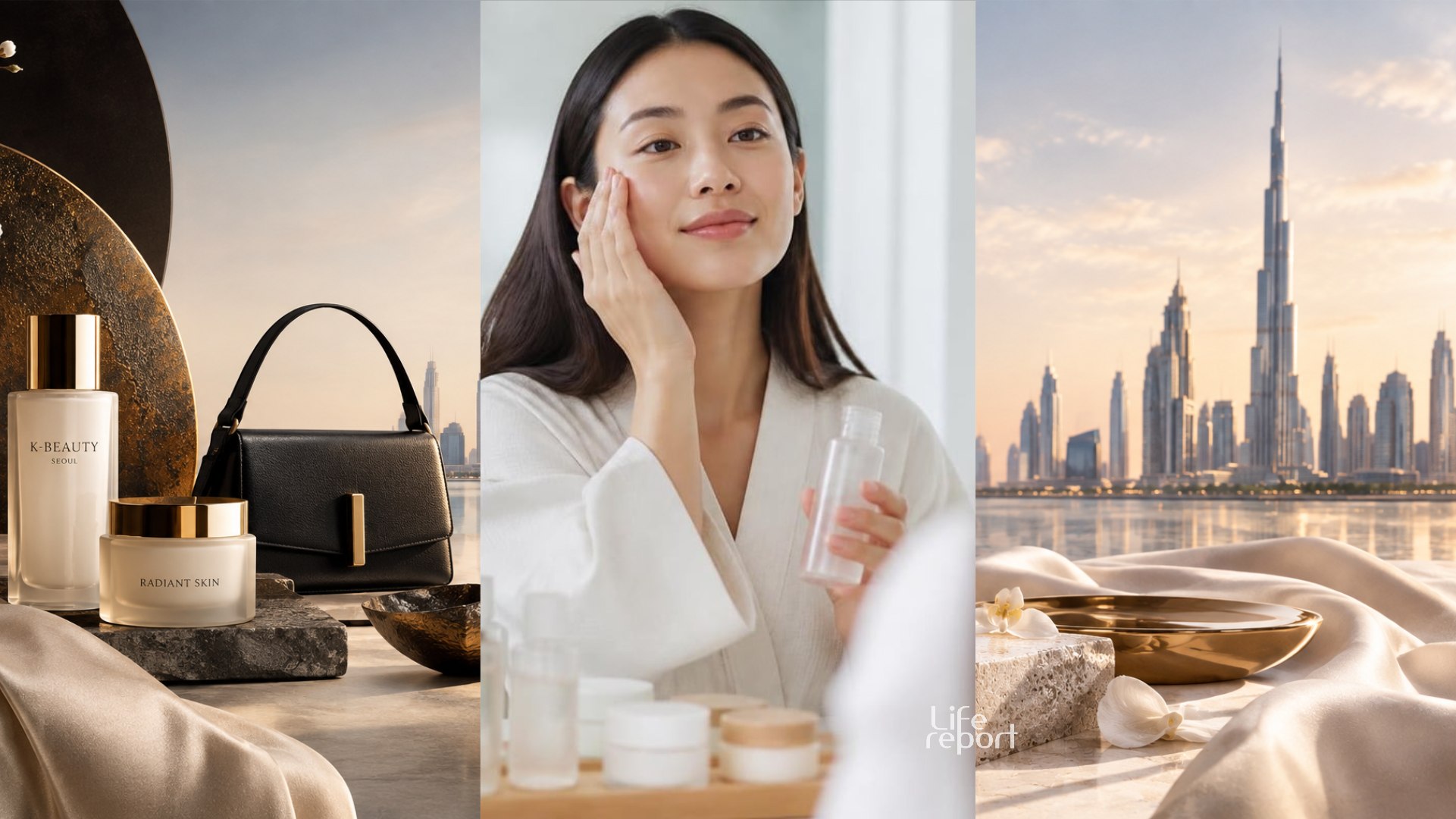
It is a strategy that follows the broader arc of Korean cultural exports. Some of the same consumers who stream K-dramas on Netflix and book tables at HANU, the contemporary Korean restaurant at St Regis Gardens on Palm Jumeirah, are now prepared to bring the same sensibility into their homes and wardrobes. Chef Kyung Soo Moon, the creative force behind HANU after experience at Sushisamba and Attiko, has positioned the restaurant around a contemporary interpretation of Korean cuisine – a philosophy that could apply just as readily to a skincare serum or a linen sofa.
The Gulf’s New Grammar of Taste
What makes this moment distinct from earlier waves of Korean cultural export is the audience. The Gulf’s Gen Z and millennial consumers are not simply adopting K-beauty or K-design as a trend. They are integrating it into a broader, more cosmopolitan grammar of taste – one that values sustainability, craftsmanship and personalisation over logos and heritage-by-decree. Mintel’s research projects that Gen Z and Millennials together will account for 80 per cent of the global luxury market by 2030, with younger consumers increasingly defining luxury through quality, uniqueness and self-expression rather than status alone.
This shift is particularly visible in the UAE, where tourism, expatriate populations and a digitally native consumer base have created what the Snap–BoF research describes as a more globalised luxury experience. Korean brands, with their emphasis on ingredient integrity, minimalist design and narrative-driven marketing, are well positioned to speak this language. It is a language of understatement, and it is spoken fluently at the COEX fair. The one-to-one export consultations that form the fair’s operational backbone are not merely transactional; they introduce GCC buyers to the logic of Korean product development – the obsession with texture, the reverence for fermentation, the willingness to iterate until a formula is right. The emphasis on continued online sales and market development after the physical event points towards a longer-term strategy: not a single transaction, but a sustained presence.
What Seoul Knows That Paris Might Not
There is a temptation, when writing about Korean luxury in the Gulf, to frame it as a challenger narrative – Seoul versus Paris, K-beauty versus the legacy maison. The more interesting story is one of complementarity. The Gulf’s luxury landscape has always been defined by its capacity to absorb influences from across the world and synthesise them into something distinctly its own. The abaya worn with a Celine bag, the majlis furnished with B&B Italia, the iftar table set with Bernardaud – these are not contradictions but expressions of a cosmopolitanism that has long been one of the Gulf’s defining characteristics.
View this post on Instagram
Korean luxury enters this landscape not as a replacement but as an addition, a new vocabulary for consumers who are already fluent in several. The K-Premium Products Fair, for all its business-to-business machinery, is ultimately a cultural proposition: that the future of premium consumption may lie not in the loudest brand in the room but in the most considered. Seoul has been making that argument for years. Dubai, it seems, is listening.
As the fair moves from its B2B programme into the wider consumer showcase, the question is not simply whether Korean brands can find a foothold in the Gulf. The growing market, regional partnerships and evident buyer interest suggest that the opportunity is substantial. The more interesting question is how the Gulf’s own luxury ecosystem will evolve in response – and whether the Korean example will reinforce an idea that luxury does not always need to announce itself. Sometimes, its most sophisticated expression is restraint.
ALSO READ: 14,000 Hours, Five Necklaces and One Powerful Message: Boucheron’s Most Thought-Provoking Collection Yet