
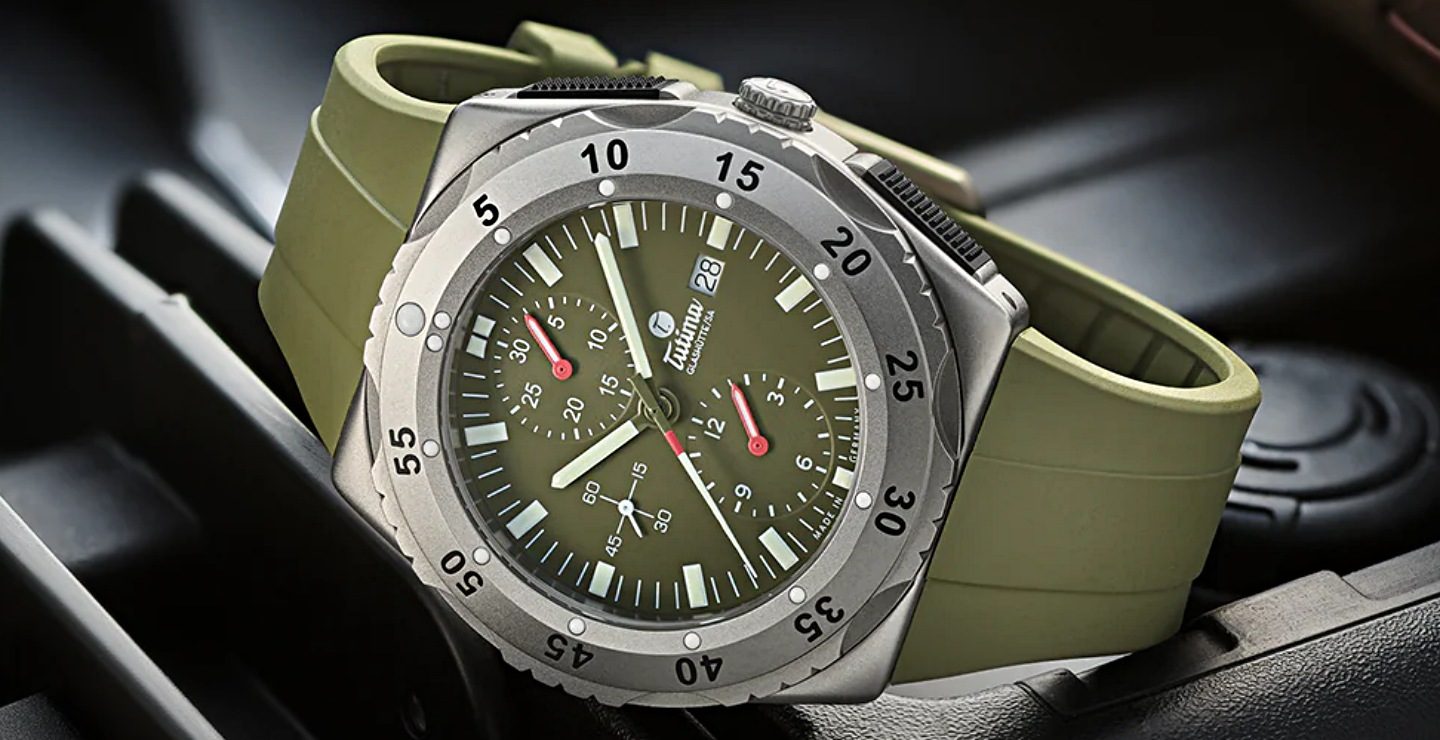
In the rarefied world of luxury, where desire is often meticulously separated from consequence, a peculiar new equation is emerging. The latest variable? A 46.5 mm titanium chronograph from Germany’s Black Forest, engineered to fund the protection of elephants on Kenya’s golden savannah.
It is a transaction that asks the modern connoisseur to consider not just what their purchase says about them, but what it does for the world. The new Tutima Mara Safari Chronograph represents a compelling, if slightly ironic, evolution: conservation by wristwatch, where the ultimate luxury accessory is a clear conscience.
This is not mere corporate philanthropy slapped onto a product sheet. The story begins decades ago, under the vast African sky, with a man named Ted Goss. An “African legend” in conservation circles, Goss led anti-poaching units in Nairobi from the late 1970s. On every helicopter mission over the Mara–Serengeti ecosystem, strapped to his wrist, was a Tutima chronograph – a tool as trusted and rugged as the man himself. This was not a fashion choice but a professional one, drawing on Tutima’s deep legacy in crafting official pilot’s watches for the German Air Force and NATO, born of its famed 1941 Flieger model. Years later, his son Marc, now Chief Executive Officer of the Mara Elephant Project (MEP), reached out to the brand. He spoke of his father’s legacy and the family’s inherited trust in Tutima’s instruments. The idea for a watch to support MEP’s critical mission – protecting elephants and fostering peaceful human–wildlife coexistence – was born, closing a poignant circle of history, heritage, and hope.
The Anatomy of Purpose: Where Craft Meets Conservation
The resulting timepiece is a masterclass in purposeful design: a tool watch with a soul. Its case, crafted from pearl-blasted titanium, is both ultra-light and defiantly robust, pressure-tested to withstand depths of 300 metres. The dimensions – 46.5 mm across and 16 mm thick – are unabashedly bold, almost “elephantine” in their statement, yet the titanium ensures it sits on the wrist with surprising grace. Every element is engineered for the field: integrated chronograph pushers designed to avoid snagging, a screw-down crown, and a bezel with luminous markers for tracking elapsed time in any conditions.
View this post on Instagram
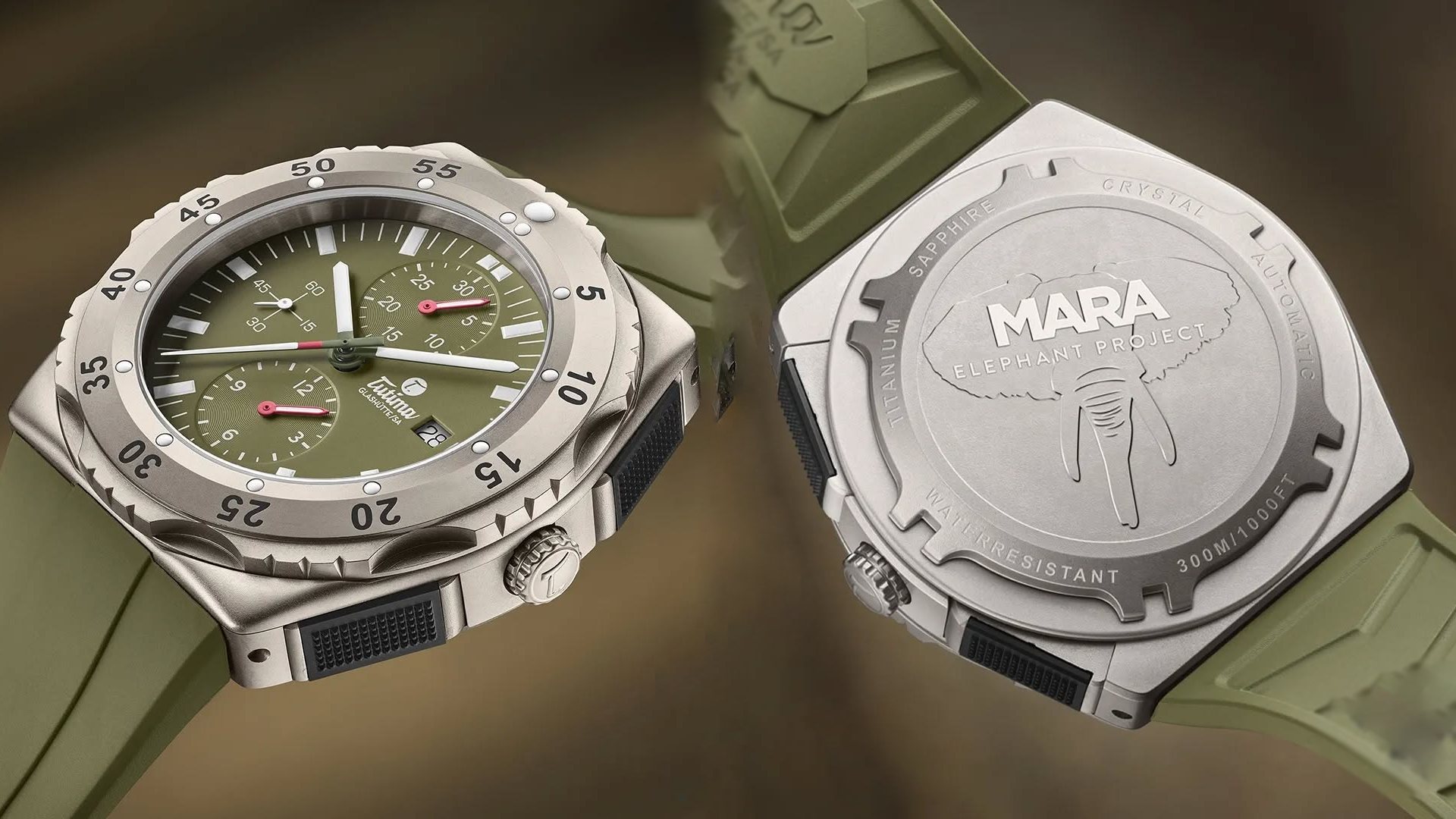
The soul of the watch is its dial, a muted, matte safari green that evokes the dry grasses of the Mara. Legibility is exemplary, with Super-LumiNova-coated hands and indices glowing against the dark, and chronograph sub-dials marked with precise red accents. On the screw-in case back, the transaction of values is made permanent: engraved not with decorative flourish, but with the proud logo of the Mara Elephant Project. Inside beats the automatic Calibre T310, a reliable workhorse with a 62-hour power reserve, ensuring accuracy for the long haul – whether on a transcontinental flight from Dubai or in a Land Rover tracking a herd.
The New Currency: Sustainable Luxury and the Dubai Mindset
This watch arrives at a pivotal moment, particularly for the sophisticated markets of the UAE. Dubai’s luxury landscape is being reshaped by a powerful new demographic: millennials and Gen Z, who now account for nearly 40 per cent of premium property purchases in the emirate. Their calculus is different. They seek not just opulence, but meaning; not just ownership, but impact. Recent surveys indicate that 68 per cent of these younger buyers prefer homes with integrated smart technology and sustainable features – a demand that extends to their broader consumer choices.
The Tutima Mara Safari speaks directly to this ethos. It aligns with a wider movement in horology in which heritage brands are increasingly expected to account for their footprint. Cartier and its parent company Richemont have committed to the Watch & Jewellery Initiative 2030 for responsible sourcing. Chopard has pioneered the use of 100 per cent ethical gold. Panerai made headlines with its eLAB-ID, a watch composed of 98.6 per cent recycled materials. In this context, Tutima’s move is astute. It offers a tangible, narrative-driven form of sustainability. You are not merely buying a chronograph; you are funding ranger training, elephant population monitoring, and anti-poaching patrols in one of the world’s most iconic ecosystems. For the young professional in Dubai Marina or Downtown, for whom global citizenship is a lived reality, this kind of “wearable philanthropy” carries considerable cachet.
The Verdict: A Complication Worth Having
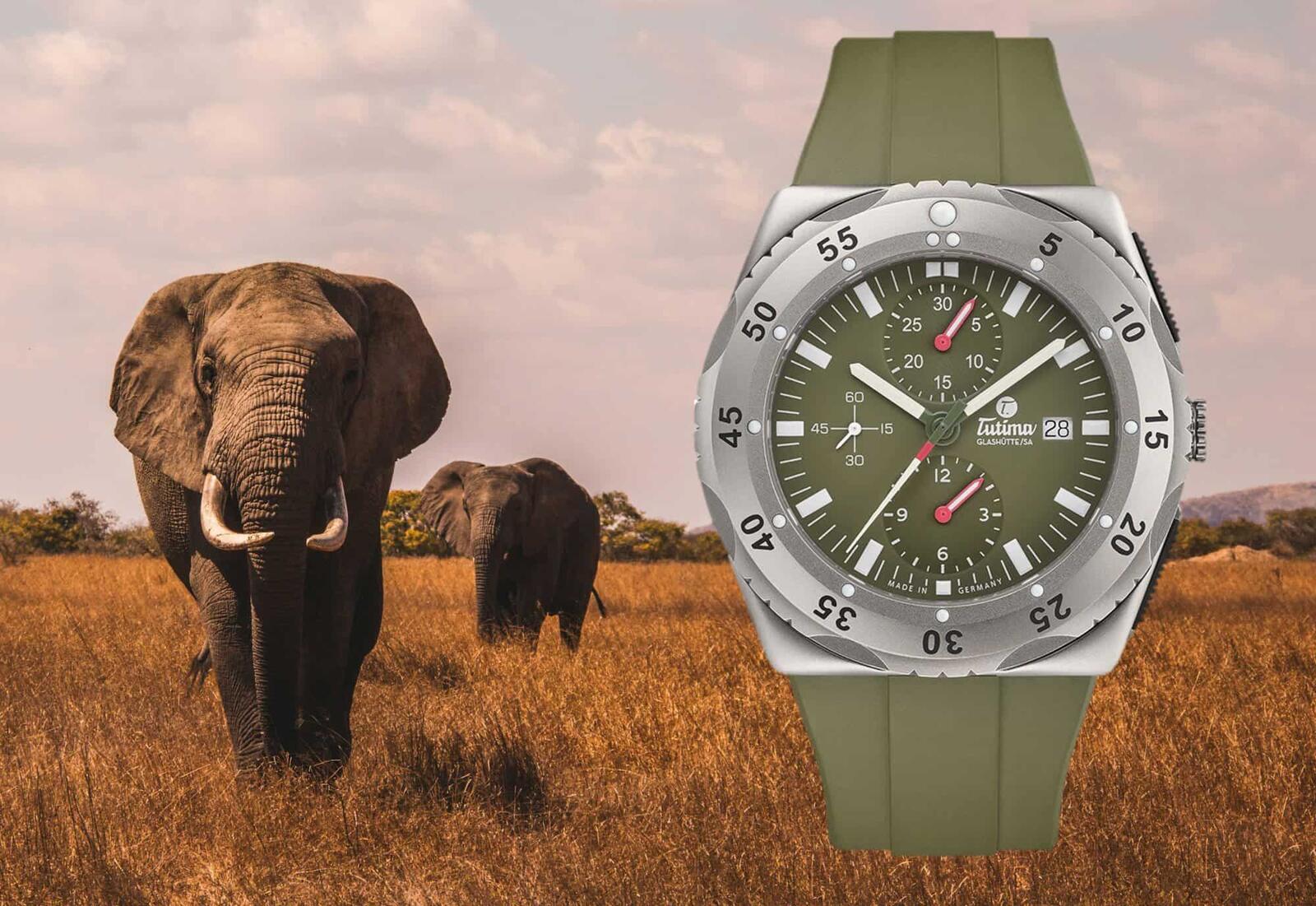
Limited to just 250 pieces and priced at €4,600 (approximately AED 18,400), the Mara Safari Chronograph is an exclusive proposition. Its value, however, extends far beyond German engineering and limited availability. For the collector: it is a historically rich piece, connecting the dots between Glashütte’s pilot-watch pedigree and a real-world conservation legacy – a story you can wear. For the conscious consumer: it represents a meaningful entry into the sustainable luxury conversation. The direct link to MEP’s on-the-ground work offers a level of transparency that resonates in an age of greenwashing. For the Dubai aesthetic: it balances rugged, tool-watch functionality with a refined, contemporary look. The safari green dial is distinctive yet versatile, equally suited to brunch in DIFC or a desert safari.
In the end, the Tutima Mara Safari Chronograph succeeds by elegantly resolving a modern tension. It allows engagement with the urgent cause of conservation not from a place of guilt or sacrifice, but from one of appreciation – for fine mechanics, for timeless design, and for the majestic creatures whose survival its sale helps ensure. It proves that, in today’s world, the most sophisticated luxury may well be the luxury of making a difference, one precise second at a time.


