
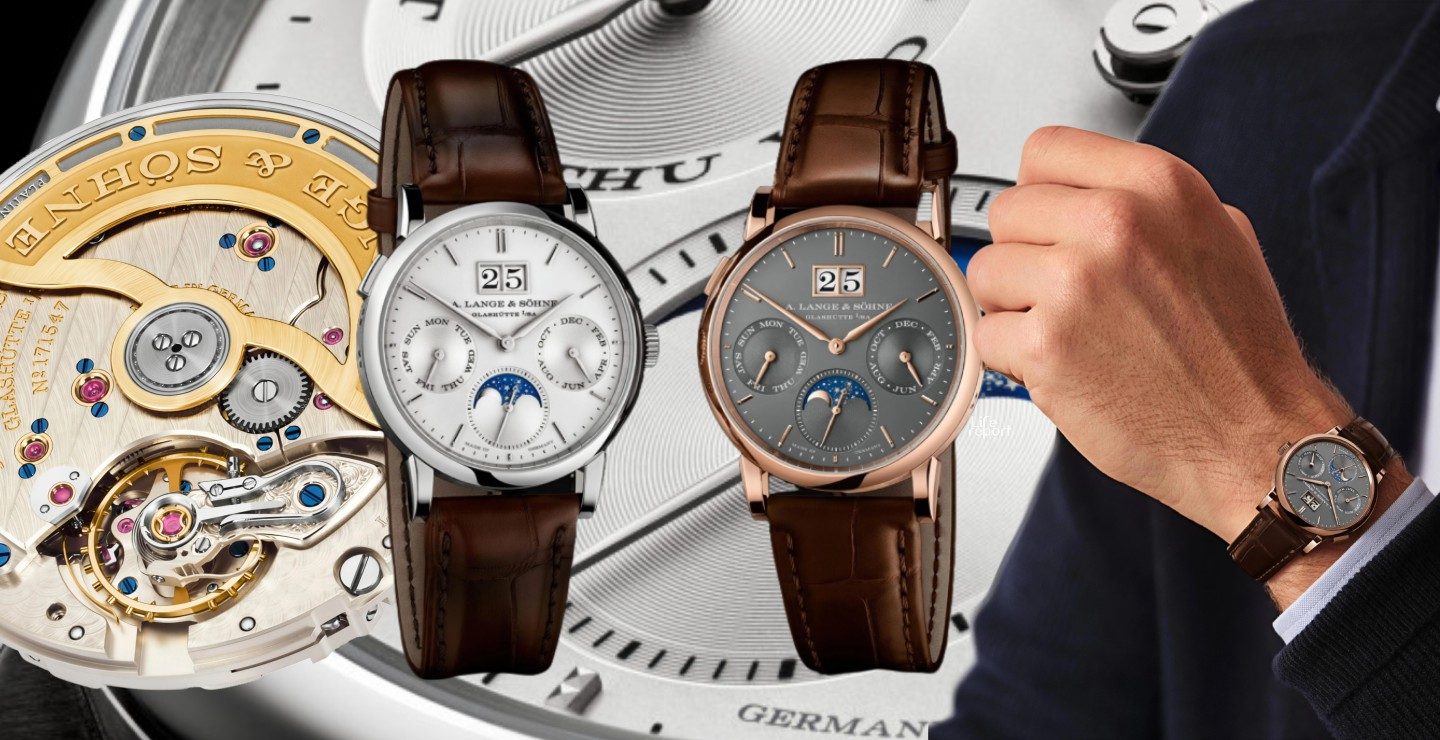
Some watches arrive with a brass band; the Saxonia Annual Calendar prefers the slow, deliberate hush of a library door closing onto a marble floor. In a region accustomed to pavé diamonds and the unmistakable clink of solid-gold bracelets against marble, the most radical gesture sometimes arrives in an unassuming 36-millimetre case. At Watches and Wonders 2026, A. Lange & Söhne unveiled exactly that: the Saxonia Annual Calendar. In doing so, it delivered a quiet masterclass in scaling down without diluting an ounce of substance.
The immediate temptation is to call it a smaller version of what came before, and to an extent, that is precisely the point. The 1815 Annual Calendar, with its 38-millimetre frame and hand-wound heart, already represented something close to platonic perfection in a complicated dress watch. Yet the Saxonia iteration introduces a wickedly sensible plot twist: automatic winding. Calendar watches are, by their very architecture, the divas of a collection – exquisite when performing, petulant when left to run down. Anything that minimises the chore of resetting the day, date, month and moon phase is not merely convenient; it is an act of psychological mercy. The Saxonia’s self-winding calibre L207.1 transforms a relationship of delicate maintenance into something approaching effortless cohabitation.
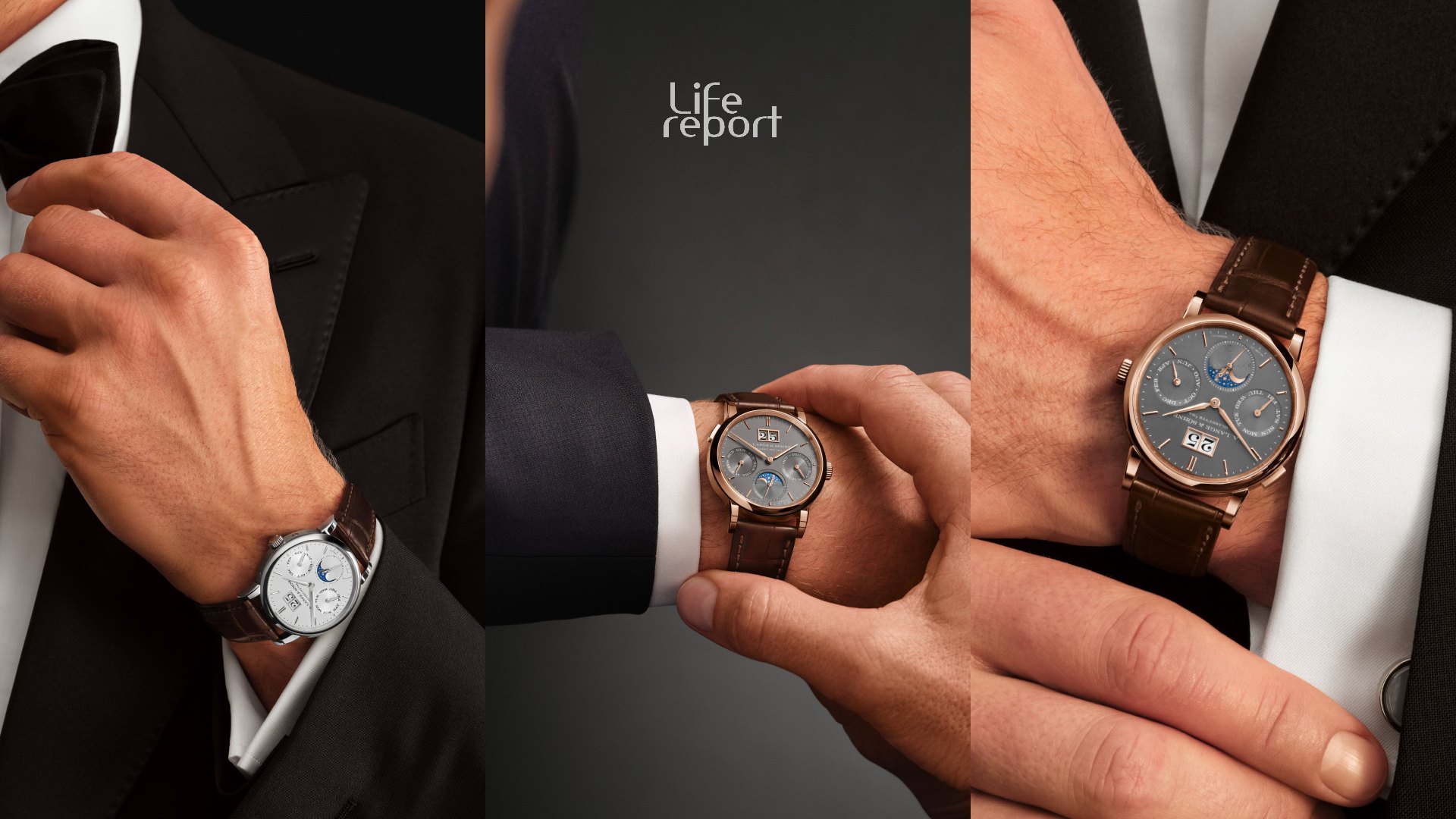
Lange’s signature outsize date – that magnificent Teutonic rebuttal to squinting – sits front and centre, replacing the analogue date display of the 1815. It is a genuinely useful complication masquerading as an aesthetic statement, the kind of design logic that separates a watch you admire from one you actually wear. A single pusher at ten o’clock advances all calendar indications in synchronised elegance, while discreet correctors allow for individual adjustments – a concession to the reality that even the most carefully curated lives occasionally fall out of step.
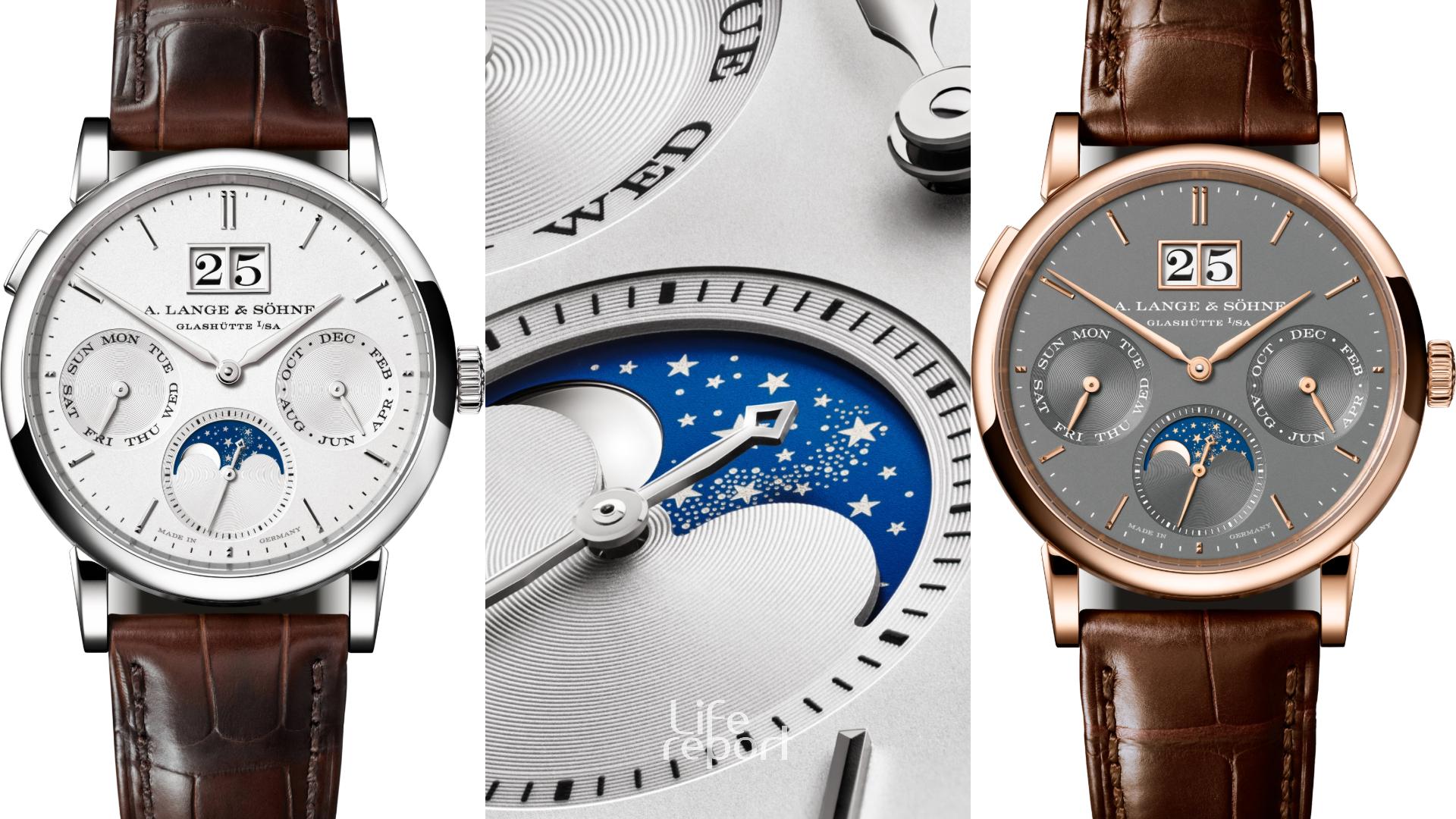
The dial, available in pink gold with a cool grey counterpoint or white gold paired with a silvered argenté surface, is a study in controlled complexity. Four subsidiary displays – day, month, running seconds and a moon phase that could have been borrowed from a planetarium – sit within slightly recessed sub-dials. The azurage finishing shifts from fine to pronounced, creating ripples of light that animate the surface without clamouring for attention. It is the visual equivalent of a well-modulated voice in a room full of shouters. The newly faceted baton markers, now terminating in subtle pyramidal tips, catch the light just enough to guide the eye – a detail so refined that it feels almost illicit to notice.
View this post on Instagram
What makes this watch resonate in cities such as Dubai, Riyadh and Doha – where horological ambition often manifests itself in precious metals and complications stacked like a wedding cake – is its resolute refusal to participate in that particular arms race. At 9.8 millimetres thick, it slips beneath a bespoke shirt cuff with the discretion of a diplomat. It is thinner than many time-only watches from marques that ought to know better, and its modest diameter recalls an era before wrist presence was measured in square centimetres. Yet the heft surprises: a solid sterling-silver dial rather than mere brass, a platinum mass in the rotor, and the reassuring density of genuine substance. It feels like the sort of object one might discover in a Jeddah collector’s private study, placed beside a first edition and a hand-blown glass inkwell.
The movement, visible through a sapphire caseback, continues Lange’s commitment to making the inside as compelling as the outside. Untreated German-silver plates shimmer with Glashütte ribbing, black-polished steelwork absorbs light into an obsidian depth, and the hand-engraved balance cock – with its whiplash spring and impossibly delicate flourishes – remains the single most seductive calling card in Saxon watchmaking. The return of screwed gold chatons, absent from calibre L086.1, presumably because of thickness constraints, marks a welcome restoration of traditional largesse.
There is, inevitably, the accusation of boredom. The worst thing one can say about the Saxonia Annual Calendar is that it looks as though it could have resided in the catalogue for a decade. Fair enough – and perhaps that is precisely the compliment hiding within the critique. Lange’s design language exhibits a coherence so complete that a new model can appear inevitable, as though it simply materialised fully formed from the horological ether. Next to its most natural rival, the Patek Philippe Annual Calendar Ref. 5396R, the Saxonia offers a larger date display, a more wrist-accommodating silhouette, movement finishing that borders on the obsessive, and a price approximately seven per cent more approachable. In the rarefied calculus of haute horlogerie, that qualifies as pragmatic luxury – a concept with which the region’s younger collectors are becoming increasingly familiar.
Here is a watch that understands the power of understatement without mistaking it for austerity. The moon-phase disc, crafted in 750 gold and coated in deep blue, features 428 pinpoint stars mapping a miniature Milky Way and requires correction by a single day only once every 122.6 years. It is a statistic that feels almost decadent in its precision – like knowing the exact thread count of your hotel sheets or the name of your perfumer’s preferred supplier of orris root. For the millennial and Gen Z connoisseurs reshaping the UAE’s luxury landscape, authenticity matters more than ostentation, and mechanical poetry trumps branding. The Saxonia Annual Calendar does not advertise; it confides.
In a region that has mastered the art of the grand gesture, the 36-millimetre Saxonia arrives as a gentle provocation. It suggests that the next chapter of masculine elegance may be written not in rose-gold excess, but in the confident whisper of a compact calendar watch that refuses to make a scene – precisely because it does not need to.


