
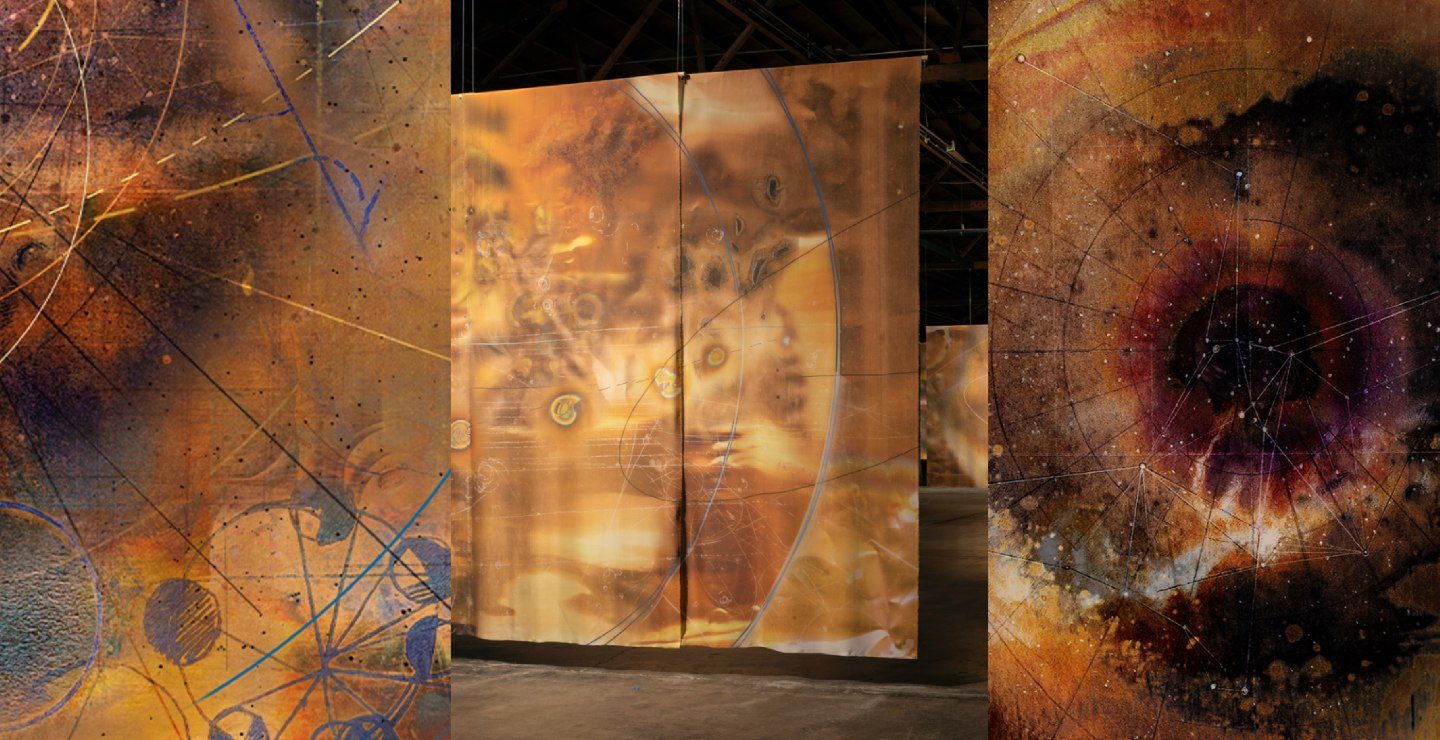
What if the ground beneath Dubai remembers everything the skyline has taught us to forget? In a city obsessed with reinvention – where coastlines shift, neighbourhoods disappear and yesterday’s desert becomes tomorrow’s landmark – ‘The sky held it, the earth remembered’ arrives as an unusually quiet act of resistance. At Ishara Art Foundation in Alserkal Avenue, the exhibition turns its gaze away from spectacle and towards something far more unsettling: the memory of landscapes, communities and ecosystems that refuse to vanish simply because the city has moved on. There are no easy Instagram moments here, no spectacular distractions – only a slow, almost hypnotic meditation on what remains when progress leaves something behind.
Running from 11 September to 15 December 2026, this collaboration with the Han Nefkens Foundation brings together Shahana Rajani, Rohini Devasher and Sarker Protick – three practitioners from Pakistan, India and Bangladesh who treat environmental collapse not as a headline, but as a text to be read slowly, like a first edition of a Cormac McCarthy novel discovered in a Parisian bouquiniste. The premise is deceptively simple: that rivers, skies and soil are living archives, bearing witness to extraction, displacement and neglect across timelines that dwarf our own brief, algorithmically curated existences.
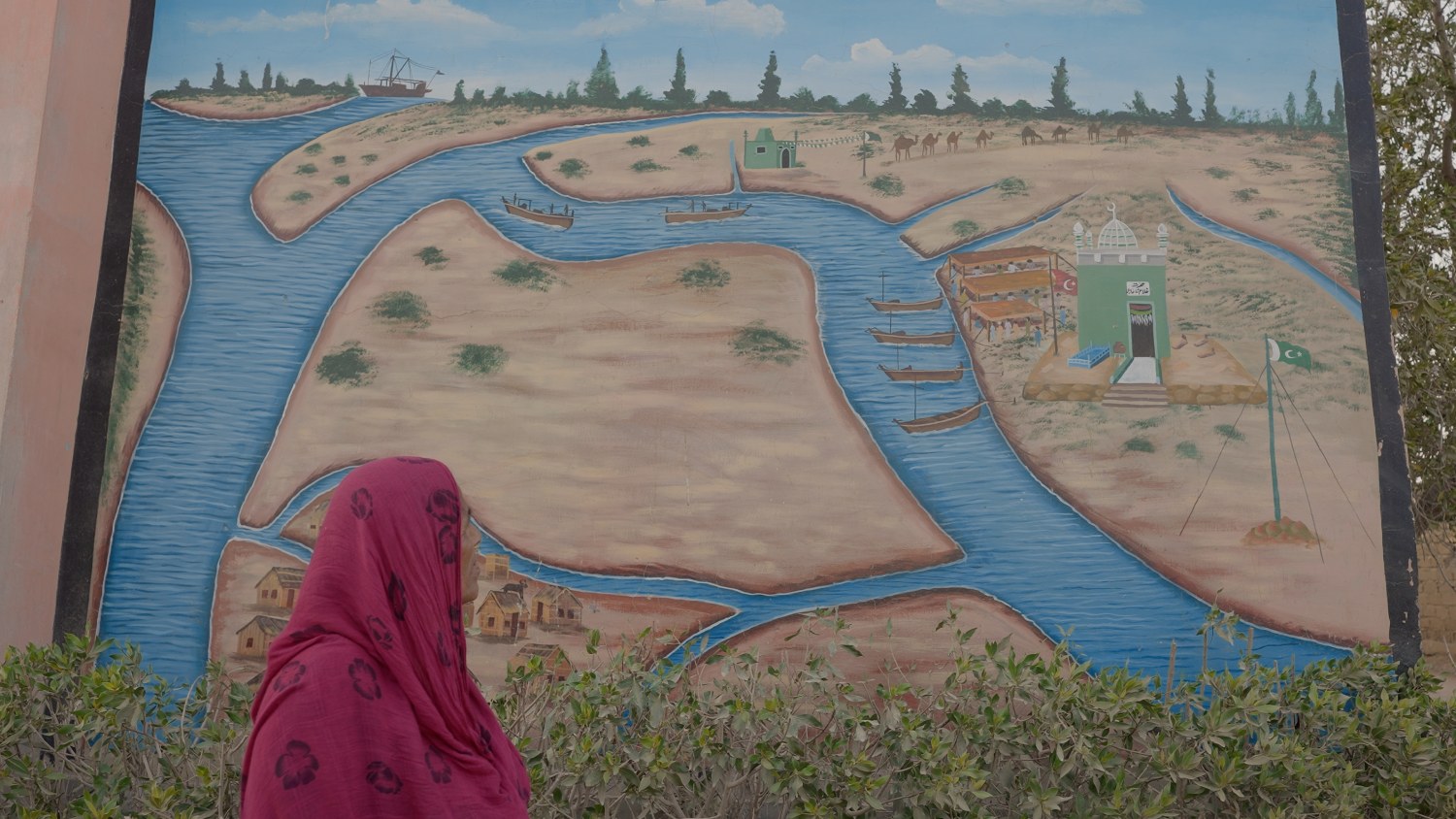
Shahana Rajani, Lines That World a River (2026)
Shahana Rajani’s Lines That World a River is the exhibition’s emotional epicentre. A three-screen film installation centred on the coastal communities of Pakistan’s Indus Delta, it traces the lives, memories and sacred ecologies of people displaced by environmental and infrastructural change. Here, water is not a metaphor for renewal but a force of upheaval, erasure and loss. The communities’ drawings and paintings – depicting houses, rivers, boats and sacred sites from memory – become acts of quiet defiance. Rajani, a co-founder of Karachi LaJamia, has long rejected the romanticised, aerial-view aesthetic of development photography. Instead, she offers something closer to an intimate séance. Shrines, waterways and remembered landscapes become anchors in a terrain increasingly transformed by rising salinity, disappearing land and infrastructure. It is work that understands grief as a form of geography.
View this post on Instagram
The intellectual foil to Rajani’s earthen sorrow is Rohini Devasher, Deutsche Bank’s 2024 Artist of the Year, whose Latent Fields transforms observations of the subatomic and stellar worlds into monumental habotai silk panels. Suspended like celestial banners, the works emerge from an obsessive, almost alchemical process involving drawing on copper, acid washing, embossing and fumage before the resulting imagery is digitally printed onto fabric. Devasher – an amateur astronomer with experience as an Arts at CERN resident – operates as an artist-as-astronomer, collapsing the distance between the microscopic and the atmospheric. The result is a palimpsest of cosmic time, a universe rendered as delicate, billowing couture. It is the kind of work that would look as at home in a Frank Gehry atrium as it does in a non-profit foundation, which is precisely the point: it refuses to distinguish between the sublime and the scientific. One imagines her works whispering to the particle accelerators of Geneva, a conversation in a language too old for vowels.
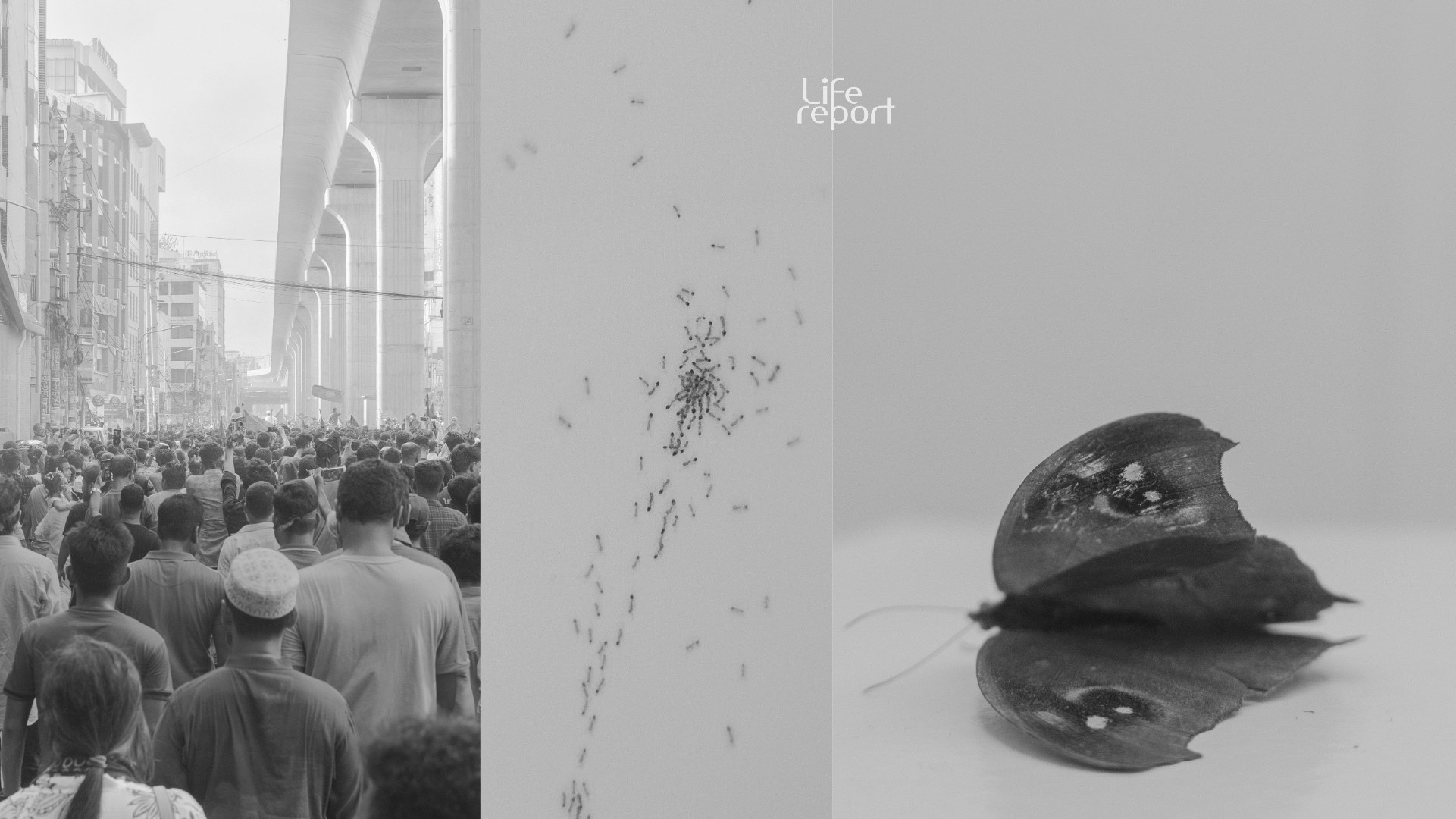
Sarker Protick, Dhaka 1217 (2011–2026)
Sarker Protick’s Dhaka 1217, a selection from a 135-photograph series, grounds the exhibition in the granular reality of urban encroachment. Captured between 2011 and 2026 within a one-square-mile radius around the neighbourhood where he was born and continues to live, Protick’s black-and-white images are studies in absence. A railway line devours a rolling hill; palm trees shiver behind construction hoardings; fallen hair gathers on a floor like a quiet elegy. The 2024 Monsoon Revolution appears not as a spectacle, but as a ripple in a larger pattern of ecological and personal loss. Protick, a graduate of Dhaka’s Pathshala and a veteran of institutions including the Gallery of Modern Art in Brisbane and Whitechapel Gallery in London, photographs the way Wim Wenders films: with a patience that reveals the violence beneath the surface. His forthcoming book, co-published by Nokta Books in November 2026, promises to be a collectible for those who treat photography as a form of literature.
What makes The sky held it, the earth remembered so urgently contemporary is its refusal to moralise. It does not wag a finger at the Anthropocene; it simply observes that the environment has been taking minutes at every meeting humanity has ever held. The exhibition, presented in partnership with Alserkal and featuring works loaned from Gallery Wendi Norris in San Francisco and Shrine Empire in New Delhi, is a reminder that the most radical luxury in 2026 is not a limited-edition timepiece or a villa on an artificial archipelago. It is attention – sustained, close and unflinching. It is the willingness to hear stories of dispossession and resilience written in mud, silk and starlight, if only one bothers to look.
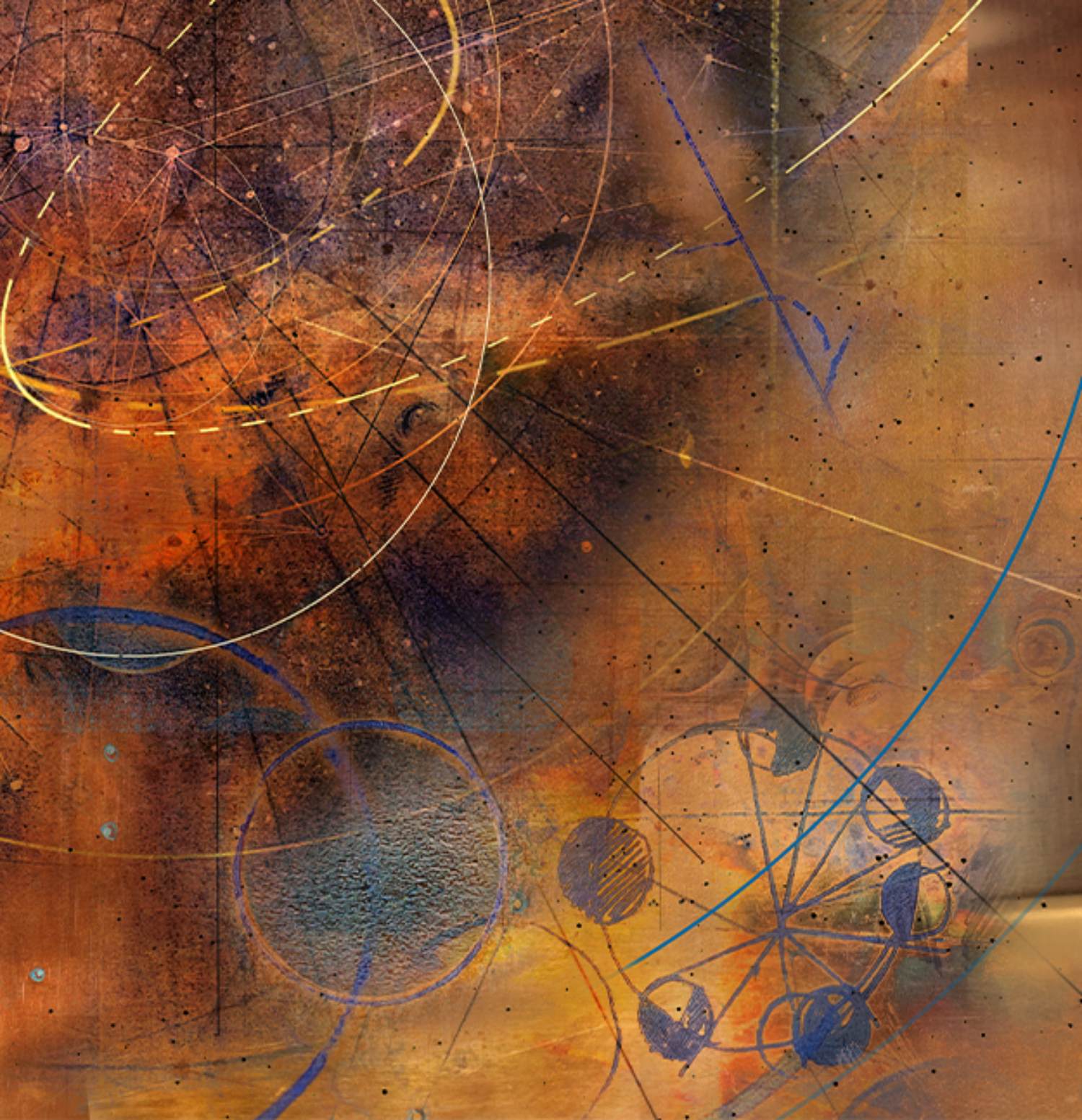
Rohini Devasher, Detail of Latent Fields (Field Six) (2023)
As Dubai’s skyline continues its inexorable vertical climb, its glass façades reflecting a future that has no rear-view mirror, this exhibition offers a necessary corrective. It suggests that memory is not a soft skill but a material force, one that persists like river silt or solar flares. The sky, it turns out, has been holding it all along. The earth, less forgiving, remembers every single thing.
ALSO READ: Amouage Elsewhere: The Fragrance for a Generation That Can’t Stay Put


