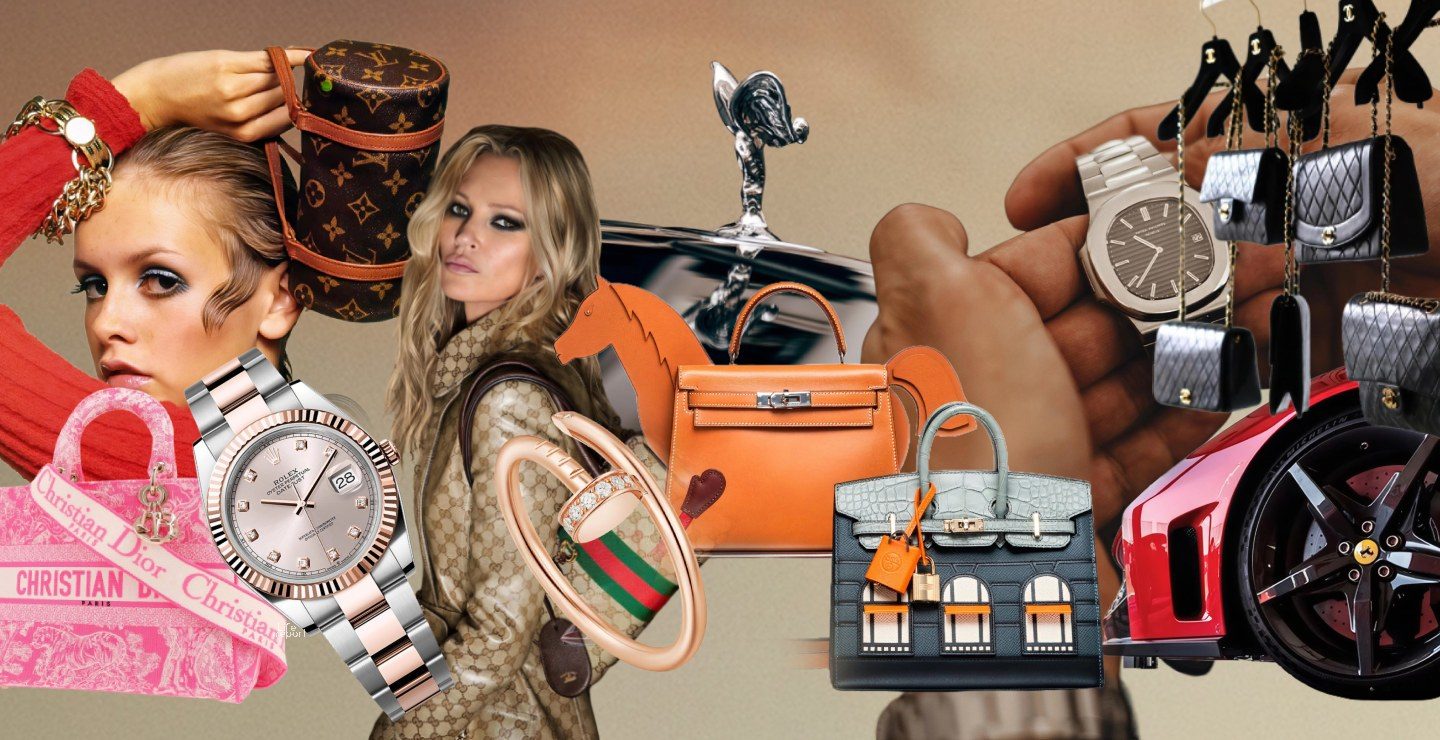
In the gilded hush of a Geneva auction room, where fortunes are exchanged with the flick of a paddle rather than the vulgar rustle of a balance sheet, the true hierarchy of luxury is determined not by quarterly earnings, but by a far more stubborn currency: permanence. After six weeks of meticulous curation, our editorial team arrives at the summit of our index. We have abandoned the tyranny of mere valuation tables – a decanter poured too quickly for anyone to taste the vintage. Instead, we return to the fundamentals that persist long after the receipt has yellowed: Heritage – the stubborn refusal to detach from one’s origins; Prestige – the accumulation of silent, obsessive gestures; and Influence – the rare alchemy of altering culture rather than merely renting space within it.
This final instalment descends from No. 10 to No. 1, traversing a rarefied stratum where engineering icons and uncompromising jewellers converse like old acquaintances across a candlelit table. These are maisons that have shaped the interior lives of generations, from collectors in Paris to the discerning tastemakers navigating Dubai’s DIFC gallery openings and penthouses suspended above the Arabian Gulf, where a specific complication on the wrist articulates more than a business card ever could. In the landscape of luxury lifestyle in the UAE, where Gen Z and Millennials curate their identities with archival precision, these brands function as the definitive grammar.
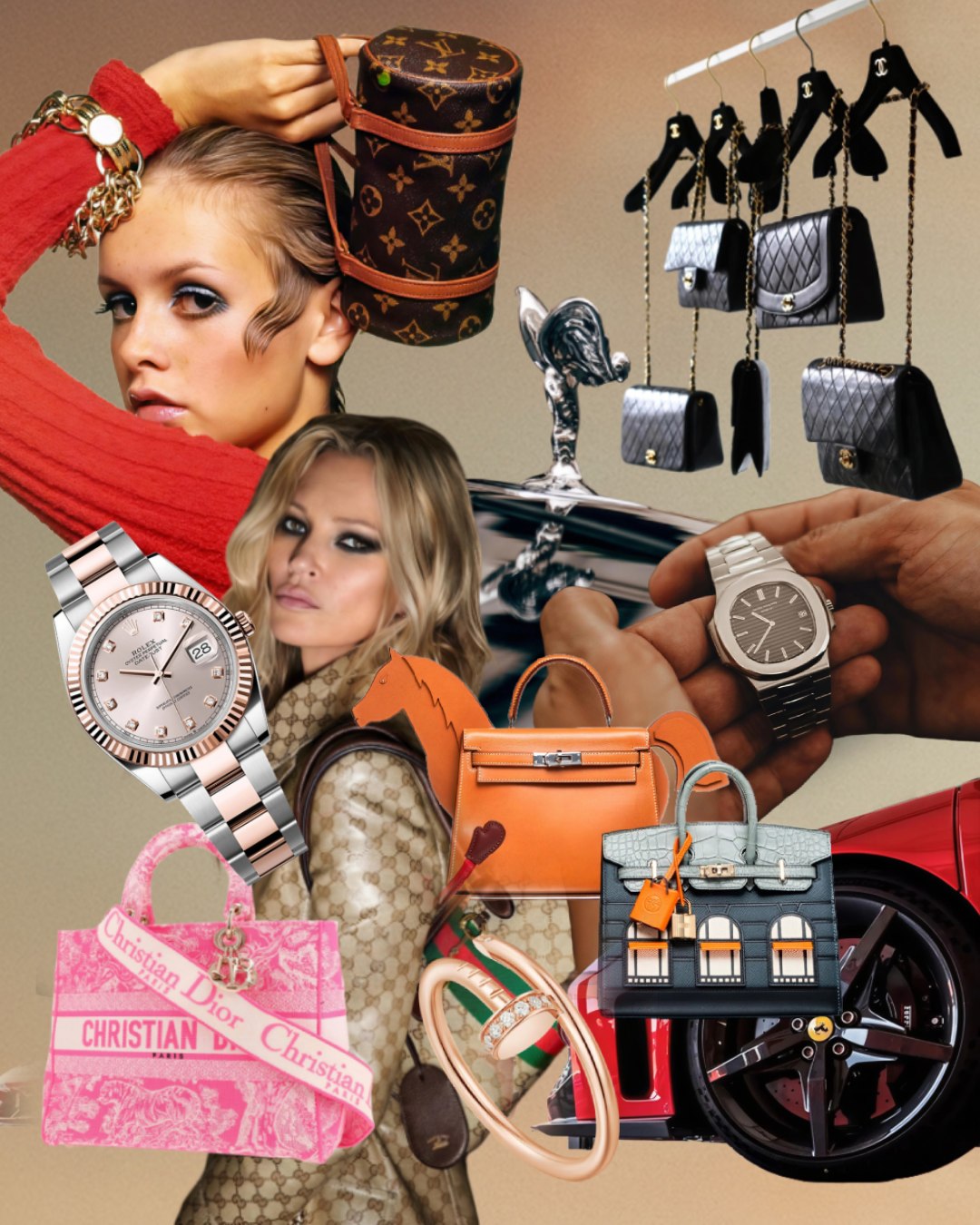
ALSO READ: The Part IV of The 50 Best Luxury Brands in the World
Rank 10
Rolls-Royce
Founded in 1906
Category: Automotive
Rolls-Royce – The Only Car Brand Where the Bonnet Mascot Has a More Dramatic Backstory Than the Owner
Long before “quiet luxury” became a hollow mantra whispered by marketing departments in Dubai Marina boardrooms, Rolls-Royce had already perfected it in polished metal. The Spirit of Ecstasy, gracing Rolls-Royce cars since 1911, was modelled on Eleanor Thornton – secretary and clandestine lover to Lord Montagu of Beaulieu – her identity veiled for decades with the same discretion the affair itself demanded. It remains a fitting mascot for a marque built entirely on the seduction of the unspoken.
View this post on Instagram
That appetite for private mythology now fuels the Coachbuild division, where commissions such as the Boat Tail took three years and reportedly eclipsed $28 million – each one-off as bespoke as a Savile Row suit cut for a client who has simply forgotten how to dress elsewhere. Under BMW’s stewardship, this theatre of excess translates rather effortlessly into the electric age with the Spectre. Silence, it turns out, was always Rolls-Royce’s oldest luxury; the motor merely had the decency to finally catch up.
Rank 9
Ferrari
Founded in 1947
Category: Automotive, lifestyle
Ferrari – The Only Brand Where Scarcity Is the Actual Product
Enzo Ferrari constructed an empire on a deceptively simple principle: produce one car fewer than the market demands. Eight decades later, that manufactured scarcity has rendered the Prancing Horse, by Brand Finance’s own metric, the most powerful brand on earth. The emblem itself carries the weight of aerial mythology, adopted from First World War flying ace Francesco Baracca’s fuselage – making every bonnet badge a small, silent tribute to combat rather than mere horsepower.
View this post on Instagram
The gravitational pull extends far beyond Maranello. V12 hypercars such as the $3.7 million F80 evaporate before reaching a showroom, with order books stretching past 2026, while the marque presides over theme parks in Abu Dhabi with the same fierce licensing discipline it applies to a steering wheel. In a world obsessed with instant gratification, Ferrari remains the master of the slow burn, proving that desire scales rather elegantly when you refuse to scratch the itch.
Rank 8
Patek Philippe
Founded in 1839
Category: Watches
Patek Philippe – The Watchmaker That Turned “Someday” Into a Business Model
Founded in Geneva in 1839 by Polish émigré Antoni Patek, the house has spent nearly two centuries proving that horological genius and generational patience are indistinguishable virtues. The Stern family has held the reins since 1932, and it was their late patriarch, Philippe Stern, who commissioned the Grandmaster Chime, which now holds the world auction record at a staggering $31.2 million.
View this post on Instagram
The brand’s enduring campaign line – “You never actually own a Patek Philippe. You merely look after it for the next generation” – reads less as advertising and more as a legal disclaimer on mortality. It is an admission that true mastery was never meant to answer to a single lifetime. For the young collector in a Dubai penthouse, acquiring a Nautilus is less a purchase than an initiation into a continuum of patience, a quiet rebellion against the ephemerality of the feed.
Rank 7
Gucci
Founded in 1921
Category: Fashion, leather goods
Gucci – The Florentine Porter’s Bag Shop That Became a Cultural Weapon
Guccio Gucci built his first Florence workshop in 1921 on nothing more sophisticated than close observation, having spent years as a porter at London’s Savoy Hotel studying the luggage aristocrats trusted with their lives. That founding instinct – watch what the wealthy actually carry, then make it sharper – produced the Horsebit loafer and the bamboo-handled bag, born from wartime leather shortages. These are codes so structurally embedded that a Gucci piece reads as itself regardless of the decade.
View this post on Instagram
Under Kering, the house has weaponised this archive with remarkable consistency. Tom Ford’s 1990s sexual provocation, Alessandro Michele’s maximalist geek-chic, and now Demna’s lean into Ford-era spotlight glamour – each era reshapes global taste rather than merely following it. Few houses manage to feel simultaneously like a Florentine relic and a viral moment. Gucci has built an entire business model on doing precisely that, making it a staple for UAE Gen Z wardrobes that oscillate between heritage and irony.
Rank 6
Dior
Founded in 1946
Category: Fashion, fragrance, cosmetics
Dior – The House That Turned Post-War Grief Into a Business Empire
On 12 February 1947, Christian Dior sent models onto the runway in cinched waists and cascading yards of fabric that nobody in ration-era Paris had seen in years. Harper’s Bazaar editor Carmel Snow coined the phrase that defined an era: the “New Look”. That collection didn’t merely revive French couture; it restored Paris’s claim to the fashion capital through sheer, unapologetic volume.
View this post on Instagram
Under LVMH, Dior operates as both couture laboratory and blockbuster factory. The Lady Dior, gifted to Princess Diana in 1995 and instantly immortalised by her, sits alongside J’Adore – still one of fragrance’s most recognisable gold-capped icons. The arrival of Jonathan Anderson as creative director has sharpened the tension between archive and spectacle. Dior’s real genius was never nostalgia; it is timing, an instinct for knowing exactly when the world is ready for a return to opulence.
Rank 5
Cartier
Founded in 1847
Category: Jewellery, watches
Cartier – How a Jewellery House Became Royalty’s Preferred Vocabulary
King Edward VII reportedly crowned Cartier “the jeweller of kings, the king of jewellers” in 1904. It was in that same year that Louis Cartier designed the Santos watch for aviator Alberto Santos-Dumont, effectively inventing the modern men’s wristwatch almost by accident – freeing pilots from the indignity of fumbling with pocket watches mid-air.
View this post on Instagram
That instinct for turning private affection into universal design repeated itself in 1969 with the Love bracelet, created by Aldo Cipullo and inspired by medieval chastity belts – a detail Cartier’s marketing department wisely declines to advertise. Sealed with an actual screwdriver, it is worn, not merely owned. Jeanne Toussaint, nicknamed “La Panthère”, later transformed the feline motif into three-dimensional jewels for the Duchess of Windsor. Under Richemont, Cartier treats the Tank, born from a 1917 battlefield silhouette, with unbothered confidence. True design authority, it seems, rarely needs reinventing – only a very good security system.
Rank 4
Rolex
Founded in 1905
Category: Watches
Rolex – The Watch That Made Owning One Feel Like Winning Something
Hans Wilsdorf spent his career convincing sceptics that a wristwatch could rival the pocket watch’s precision. In 1926, he settled the argument with the Oyster – the first genuinely waterproof case, proven publicly when a young Channel swimmer emerged after ten hours in freezing water with the watch still ticking. That instinct for engineered proof over marketing claims still defines the brand.
View this post on Instagram
Rolex insists its notorious waiting lists reflect hand-assembly limits rather than deliberate scarcity, a distinction few customers find persuasive while standing in a boutique sipping espresso. Owned entirely by the Hans Wilsdorf Foundation since 1960, the company answers to no shareholders, only to its own obsessive chronometric standards. The result is a watch requiring no logo recognition whatsoever. It is arguably the only luxury object on earth that functions simultaneously as a timepiece, investment vehicle, and unambiguous social shorthand – a status symbol that has transcended its own steel.
Rank 3
Louis Vuitton
Founded in 1854
Category: Leather goods, fashion
Louis Vuitton – The Trunk-Maker Who Accidentally Invented Modern Branding
Louis Vuitton opened his Paris workshop in 1854 with a narrow ambition: build a flat-topped, stackable trunk sturdy enough to survive a steamer crossing. That single engineering fix conquered the luxury travel trade so thoroughly that his son Georges devised the interlocking LV monogram in 1896 purely as an anti-counterfeiting measure. It is arguably history’s most successful piece of defensive branding, now the engine driving LVMH’s entire empire and, according to Kantar BrandZ, the single most valuable luxury name on earth.
View this post on Instagram
Marc Jacobs later invited Takashi Murakami and Yayoi Kusama to treat that sacred monogram as raw material rather than relic, turning heritage into an ongoing conversation rather than a monologue. Few houses manage a 360-degree lifestyle vision this convincingly. Fewer still can trace it back to a single, stubbornly practical box designed to stop your shirts from wrinkling on a boat.
Rank 2
Chanel
Founded in 1910
Category: Fashion, fragrance, watches
Chanel – The House That Won’t Sell You Anything Online, and Somehow Still Wins
Coco Chanel spent the 1920s dismantling the corset, quietly redesigning the century’s idea of a woman’s body. The tweed suit that followed remains her most enduring argument: comfort disguised as couture. That instinct for reinvention now belongs to Matthieu Blazy, whose debut deliberately roughed up the sacred 2.55, embedding hidden wire framing so the leather could be crushed and reshaped by hand into something that looks lived-in rather than showroom-perfect.
View this post on Instagram
No. 5, composed in 1921 by Ernest Beaux and immortalised by Marilyn Monroe’s famous admission about what she wore to bed, remains untouchable. Chanel enforces its mystique with almost aggressive discipline: harmonised global pricing and a near-total refusal to sell handbags online. Métiers d’Art shows function less as collections than annual love letters to its own ateliers. In a world of aggressive e-commerce, independence is the one accessory money still can’t quite buy elsewhere.
Rank 1
Hermès
Founded in 1837
Category: Leather goods, fashion
Hermès – The House That Turned “No” Into Its Most Profitable Word
Jane Birkin was mid-flight in 1984, spilling the contents of a straw bag across the cabin floor, when Hermès chief executive Jean-Louis Dumas sketched a solution on an airsickness bag. That sketch – reportedly including space for baby bottles – became so consequential that her worn, sticker-covered original sold at Sotheby’s for $10.1 million, still the auction record for any handbag.
View this post on Instagram
That origin story only partly explains why Birkins and Kellys remain the rare luxury goods that appreciate rather than depreciate the moment they leave the boutique. Hermès manufactures its own leather, trains its own artisans, and produces deliberately less than demand requires. It refuses the shortcuts – licensing, logo mania, e-commerce convenience – that built lesser empires faster. Scarcity here isn’t a marketing department’s invention; it is the entire business model, worn on one arm at a time. In the context of luxury lifestyle in the UAE, where availability often dilutes desirability, Hermès remains the final word in elegant restraint.
The fifth and final chapter of LifeReport’s 50 Best Luxury Brands series lingers over a rarefied band where the familiar and the unexpected converse like old friends. The order emerged from a meticulous synthesis of Brand Finance, Kantar BrandZ, Deloitte, and Vogue Business data, tempered by a quiet conviction that true cultural gravity cannot be reduced to a quarterly earnings call. The result aspires not to mirror existing rankings but to capture something far more elusive: the enduring power to define what luxury itself means, decades after the campaign has faded and the hype has moved on.
Stay tuned. Stay with LifeReport and follow us on Instagram @Lifereport.Official
ALSO READ: The Part I of The 50 Best Luxury Brands in the World