The countdown is nearing its apex, but the real curriculum begins just beneath the top ten. Before Dubai’s collectors get their fix of the usual marquee suspects, the fourth chapter of LifeReport’s definitive index pauses in the rarefied territory of No. 20 to No. 11 – a stratum where influence speaks in the measured cadence of a Geneva auction room rather than the decibels of a billboard.
These are the houses that have stopped asking for attention and started rewarding it. The second ten deserves more than a passing glance on your luxury radar; it deserves a slow, deliberate read, the kind usually reserved for a vintage catalogue or a well-kept tasting menu. We are steadily approaching the top ten, but before that unveiling, the following names form the bridge between established desire and the absolute apex.
This is not a retreat into nostalgia. It is a strategic acquisition of permanence. In Dubai’s glass-and-silk retail landscape, a generation once weaned on Supreme drops and metaverse pop-ups is discovering the transgressive thrill of patience: a Jaeger-LeCoultre Reverso whose mechanism remains invisible, an Hermès cashmere throw that will outlive every iPhone upgrade, a bottle of Guerlain’s Mitsouko still composed as if the Belle Époque never ended. The fourth instalment of LifeReport’s definitive index, forged from Brand Finance data, Vogue Business insights and a healthy disdain for algorithmic virality, interrogates that subtle alchemy. Heritage here is not a museum label but a living, slightly mischievous intelligence – the kind that knows a hand-stitched saddle stitch will always outlast a hype cycle.
ALSO READ: The Part II of The 50 Best Luxury Brands in the World
Rank 20
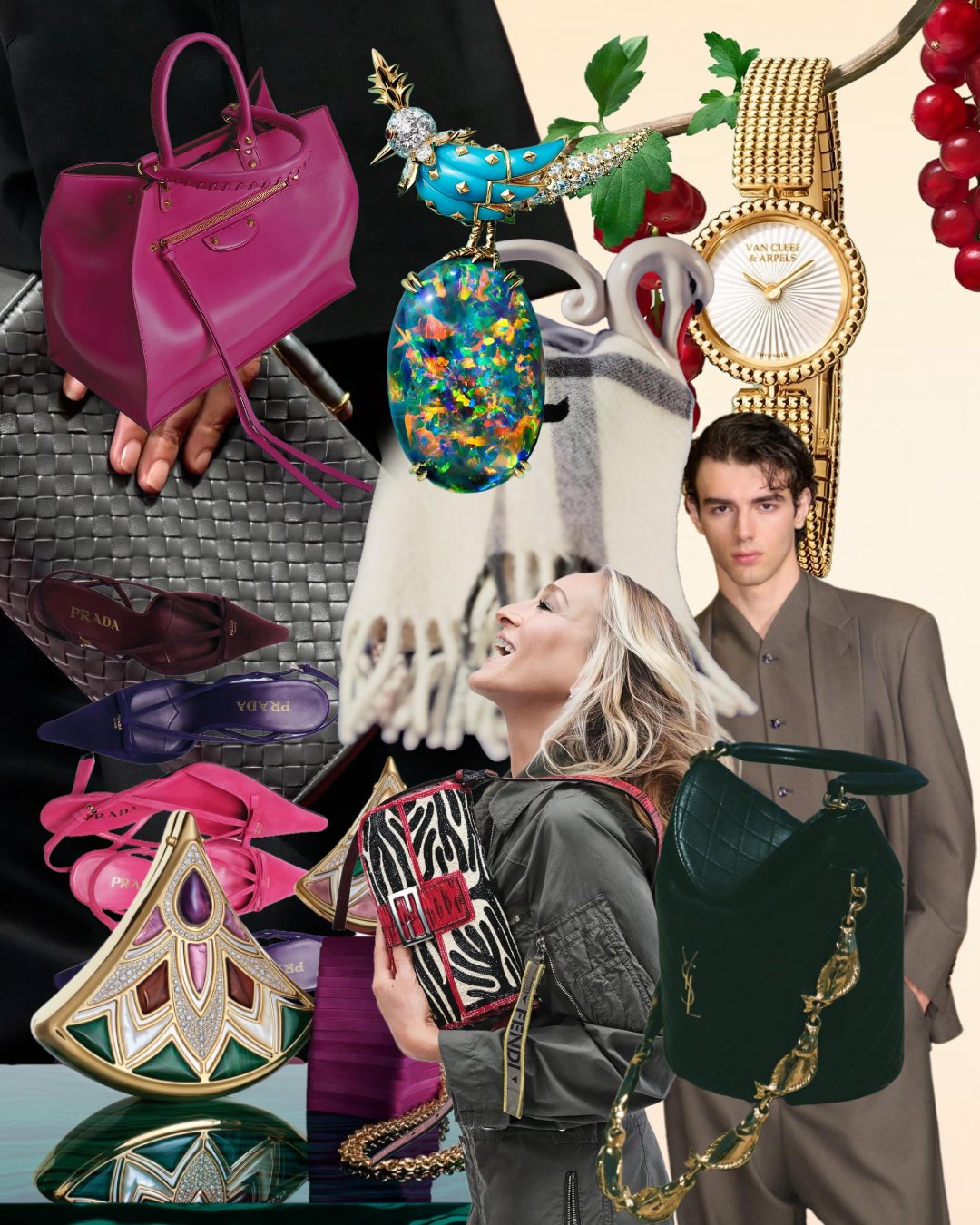
Fendi
Founded: 1925
Category: Leather goods, fur, fashion
Fendi – The Roman Matriarchy’s Elegant Coup
To survive a century in fashion is to master the art of the elegant handover. Founded in Rome in 1925 by Adele and Edoardo Fendi, the house built its reputation on the twin pillars of fur and the Selleria stitch – a hand-saddling technique so exacting that a single Baguette bag still carries the heft of more than 600 individually sewn topstitches. That bag, conceived in 1997 by third-generation scion Silvia Venturini Fendi and later canonised by Sex and the City, was the original “It bag” panic: a frenzy of waiting lists that predated the Instagram drop by two decades.
View this post on Instagram
But the real narrative drama is one of succession. In October 2025, Maria Grazia Chiuri – who began her career at Fendi and helped develop the Baguette – was appointed Chief Creative Officer of the Roman house, returning to the Maison for a new chapter under LVMH’s stewardship. She presented her first Fendi collection for Autumn/Winter 2026–27 in February 2026. It is a rare move in an industry that often treats creative directors like disposable lighters. As Delfina Delettrez Fendi continues to shape the jewellery line, Fendi demonstrates something increasingly scarce: the ability to manage legacy with the same precision as leather.
Rank 19
Burberry
Founded: 1856
Category: Fashion
Burberry – The Trench Coat’s Redemption Arc
Few garments have had a more dramatic psychological journey than the Burberry trench. Thomas Burberry patented gabardine in 1888, a breathable armour that accompanied Fridtjof Nansen towards the North Pole and Ernest Shackleton across Antarctic ice – credentials most outerwear brands would commit corporate espionage for. Yet the house’s signature Nova check spent the 2000s suffering an image crisis of Shakespearean proportions, appropriated so thoroughly by football hooligans and counterfeiters that Burberry quietly exiled it from the runways for nearly a decade.
View this post on Instagram
Under Daniel Lee, appointed in 2022, Burberry has staged a meticulous return to its founding vocabulary. This is not nostalgia; it is reclamation. Lee’s treatment of heritage is less like a museum curator and more like a lawyer reclaiming a trademark. This autumn, the V&A will open The Burberry Trench: Crafting an Icon, a dedicated display tracing the garment’s evolution from practical and military outerwear to a global fashion icon. The display opens on 21 September 2026. In the context of Dubai’s transient fashion appetites, Burberry’s resurgence is a masterclass in the value of weathering the storm.
Rank 18
Balenciaga
Founded: 1919
Category: Fashion
Balenciaga – The Couturier’s Paradox
Coco Chanel once claimed that Cristóbal Balenciaga was the only true couturier among her contemporaries, everyone else being “simply fashion designers” – a compliment sharp enough to leave scars. The Basque perfectionist was so uncompromising that he closed his house in 1968 rather than let it decline. Kering resurrected the dormant name, but it was Demna’s decade at the helm, ending in 2025, that transformed Balenciaga into fashion’s most reliable provocation machine. He weaponised irony and “ugly” trainers into cultural dominance, proving that, in the attention economy, chaos is a viable business model.
View this post on Instagram
Now Pierpaolo Piccioli, arriving from the classical grandeur of Valentino, faces the impossible question: can Cristóbal’s original discipline and Demna’s chaos coexist? Appointed Creative Director in July 2025, Piccioli is tasked with building on Demna’s legacy while reconnecting the house with Cristóbal Balenciaga’s heritage. His early collections suggest a house testing the tensile strength of its own history. In a luxury landscape often bifurcated between heritage rigidity and street-luxe absurdism, Balenciaga remains the fascinating experiment that refuses to choose a side.
Rank 17
Bottega Veneta
Founded: 1966
Category: Leather goods, fashion
Bottega Veneta – The Power of Saying Nothing
In an era exhausted by monogram logomania, Bottega Veneta’s founding maxim – “when your own initials are enough” – has aged into something close to prophecy. The Intrecciato weave does more quiet signalling than any embossed emblem ever could; it is the visual equivalent of a lowered voice in a noisy room. Matthieu Blazy sharpened that philosophy into trompe-l’œil wizardry, rendering leather to mimic denim and crumpled paper, before departing in 2025 to take one of the most consequential jobs in fashion at Chanel.
View this post on Instagram
His successor, Louise Trotter, previously of Carven, inherited a house that Kering credits with outperforming the wider luxury market. Appointed in December 2024 and joining the house in January 2025, Trotter’s challenge is not merely to sustain momentum, but to do so without imitating the ghost of Blazy’s tricks. For Dubai’s understated connoisseurs – those who prefer their status symbols to be legible only to the initiated – Bottega Veneta remains the benchmark. It is the house that made anonymity its loudest statement.
Rank 16
Saint Laurent
Founded: 1961
Category: Fashion
Saint Laurent – The Architecture of Androgyny
When Yves Saint Laurent sent a woman down the runway in 1966 wearing a tailored tuxedo, Parisian fashion audiences were confronted with a radical new proposition. The house’s iconic Le Smoking was introduced in the Autumn/Winter 1966 collection and initially met with resistance from its haute couture clientele before becoming a classic through the Saint Laurent Rive Gauche line. Sixty years on, Anthony Vaccarello continues to work within the radical vocabulary established by the founder. The gasp may have softened, but the cultural resonance has not. Le Smoking has colonised modern power dressing so thoroughly that we forget it was ever a scandal.
View this post on Instagram
Vaccarello’s decade-long project – relentless, Parisian, faintly dangerous rock-chic – has proven to be less an aesthetic than a growth engine. The tuxedo no longer needs an opera house to prove its edge; it simply exists as the default armour for the contemporary woman navigating the boardrooms of the DIFC or the galleries of Alserkal Avenue. It is the suit that made androgyny a business strategy, and it shows no signs of fatigue.
Rank 15
Giorgio Armani
Founded: 1975
Category: Fashion, hospitality
Giorgio Armani – The Emperor’s Blueprint
Giorgio Armani spent five decades convincing the world that power could whisper. He unpicked the shoulder pad and invented fluid tailoring that redefined what a suit was allowed to feel like. His death in September 2025, at the age of 91, could have triggered the usual conglomerate scramble. Instead, Armani had already structured the company’s succession: a foundation with a significant role in the ownership structure, a carefully defined governance framework and a will setting out a timetable for future stake sales.
View this post on Instagram
The pyramid he built – from Privé’s couture pinnacle to Emporio’s accessible cool – remains intact under CEO Giuseppe Marsocci. Few designers have exited as meticulously as they dressed. Armani left nothing unstructured except the jacket. It is a sobering lesson in an industry often characterised by chaotic succession: true elegance includes the exit strategy.
Rank 14
Prada
Founded: 1913
Category: Fashion, leather goods
Prada – The Intellectual’s Subversion
Miuccia Prada arrived with a degree in political science rather than a conventional design-school education, and that academic detachment has defined the house’s DNA. Her 1984 nylon backpack – cut from industrial Pocono nylon – turned utilitarian fabric into a status object. It was the founding gesture of “ugly chic”: elegance that requires effort to appreciate rather than merely admire.
View this post on Instagram
In a world of passive consumption, Prada demands engagement. The long-running creative partnership with Raf Simons, which began in 2020, remains a testament to the house’s refusal to pander. The Saffiano wallet remains the quieter entry point, a first purchase that functions less as an accessory than as an intellectual initiation. To carry Prada in Dubai is to signal that you understand the irony of luxury – and appreciate the joke.
Rank 13
Bulgari
Founded: 1884
Category: Jewellery, watches, hospitality
Bulgari – The Roman Engineering of Desire
Bulgari has spent the past decade proving that jewellery houses can out-engineer traditional watchmakers. The Octo Finissimo collection has claimed roughly ten world records, including a flying tourbillon in a case just 1.85 mm thick. It is a game of one-upmanship played with the seriousness of a blood sport, executed with Roman bravado.
View this post on Instagram
Yet the house has shown the confidence to recalibrate. The new 37 mm Octo Finissimo, unveiled in 2026, suggests a brand prioritising proportion over spectacle. Its redesigned proportions and ultra-thin in-house movement offer a more universal interpretation of the Octo Finissimo formula. It is the same intelligence that governs the Serpenti’s coiled Tubogas bracelet – a negotiation between menace and glamour. Whether in a Geneva auction room or on a wrist at CÉ LA VI, Bulgari makes a diamond necklace and a movement’s mainspring feel like the same idea, executed twice.
Rank 12
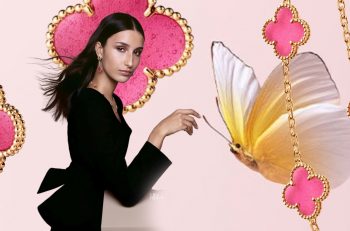
Van Cleef & Arpels
Founded: 1906
Category: Jewellery, watches
Van Cleef & Arpels – The Poetry of Invisibility
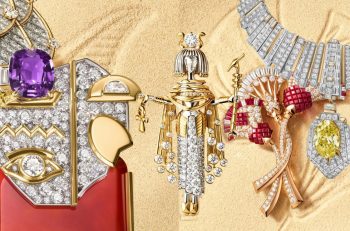
Van Cleef & Arpels opened at 22 Place Vendôme in 1906, founded through the union of two families with roots in the diamond and gemstone trade. In 1933, the house patented its Mystery Set technique – a method so exacting that it conceals the metal beneath a continuous field of gemstones. It is invisible to the untrained eye, unmistakable to the connoisseur.
View this post on Instagram
The Alhambra clover, launched in 1968, remains the talisman that inducts the aspirational into the collector class. The ballerina clips inspired by Louis Arpels’s devotion to the Paris Opéra represent the summit. Poetry, in this house, has always worn a loupe. For a generation obsessed with being seen, Van Cleef & Arpels offers the counter-narrative: the most visible flex is knowing what you are looking at.
Rank 11
Tiffany & Co.
Founded: 1837
Category: Jewellery
Tiffany & Co. – The Blue Box’s Billion-Dollar Makeover
Charles Lewis Tiffany opened his stationery shop in 1837, but it was the 128.54-carat Tiffany Diamond that supplied the house’s enduring mythology. Worn by Audrey Hepburn in publicity photographs for Breakfast at Tiffany’s and later by Beyoncé in Tiffany’s 2021 About Love campaign, the stone remains the ultimate talking point.
View this post on Instagram
That campaign signalled the intentions of Alexandre Arnault, LVMH’s wunderkind, who, as Executive Vice President of Product and Communications, helped oversee Tiffany’s transformation, including the roughly $500 million renovation of the Fifth Avenue flagship into The Landmark. The store reopened in 2023 after a nearly four-year transformation. It marked a shift away from mall-friendly silver towards serious gold and platinum. The Tiffany Blue Box remains the one element nobody dared touch – proof that even the most aggressive revitalisation knows precisely which inheritance not to spend. In the context of global luxury retail, it is the definitive case study in respecting the asset while renovating the portfolio.
The fourth chapter of LifeReport’s exhaustive index lingers over positions 20 to 11 – a rarefied band where the familiar and the unexpected converse like old acquaintances across a candlelit table. These are not merely brands; they are architects of desire, guardians of technique and, occasionally, prisoners of their own mythologies. The final ten – from No. 10 to No. 1 – will be unveiled when the narrative demands it. And not a moment sooner. For in the quiet index of true luxury, patience is not just a virtue; it is the very texture of the product.
ALSO READ: The Part III of The 50 Best Luxury Brands in the World