The first thing you notice aboard the B.Neos is what you cannot hear. This is not, in the world of superyachts, a trivial observation. For decades, the industry has operated on an unspoken assumption that luxury is inherently loud – that engines may hum, generators may thrum, and the collective mechanical breath of a vessel may assert itself as the background music of the good life.
We have all endured it: the dinners where conversation becomes competitive shouting; the sun-drenched afternoons when the vibration settles into your bones like a low-grade fever; the quiet desperation of realising that the €50 million machine beneath you has, somewhere along the way, forgotten to include the sea. Which is why Benetti’s latest offering feels less like a new model and more like an apology. Or perhaps a correction. Or, if one is feeling generous towards the Italian shipyard’s hundred and fifty years of existence, a long-overdue return to first principles.
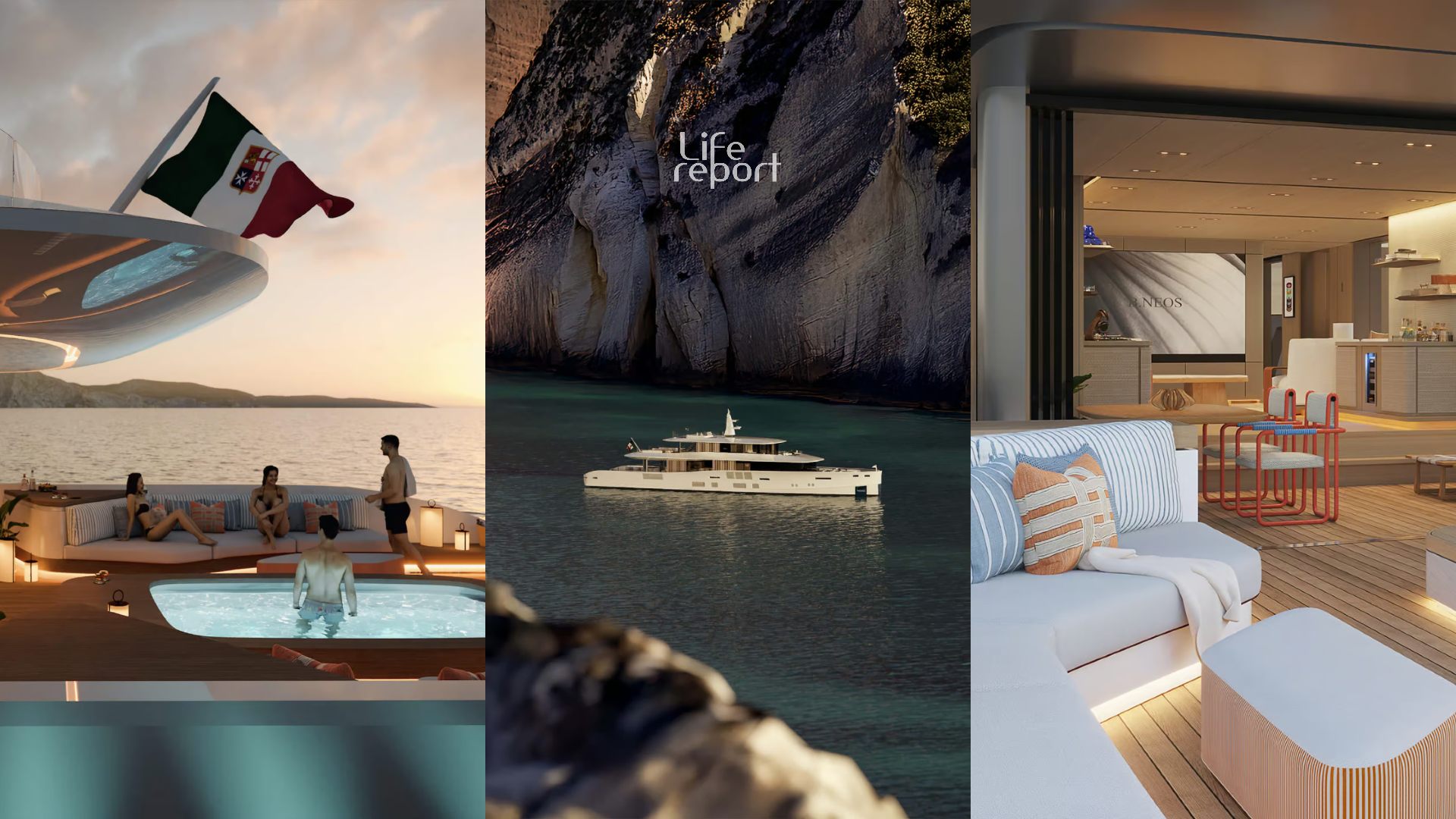
The Italians, as they so often do, have been asking themselves the same question. And Benetti, the Viareggio-based shipyard that has spent 150 years mastering the art of floating grandeur, has arrived at an answer that feels almost heretical in an industry built on conspicuous consumption. The B.Neos – a 40-metre hybrid yacht unveiled late last year and now making its quiet way into conversations among those who prefer their statements sotto voce – is not here to impress the marina. It is here to restore the possibility of hearing yourself think.
The Line Between Restraint and Revelation
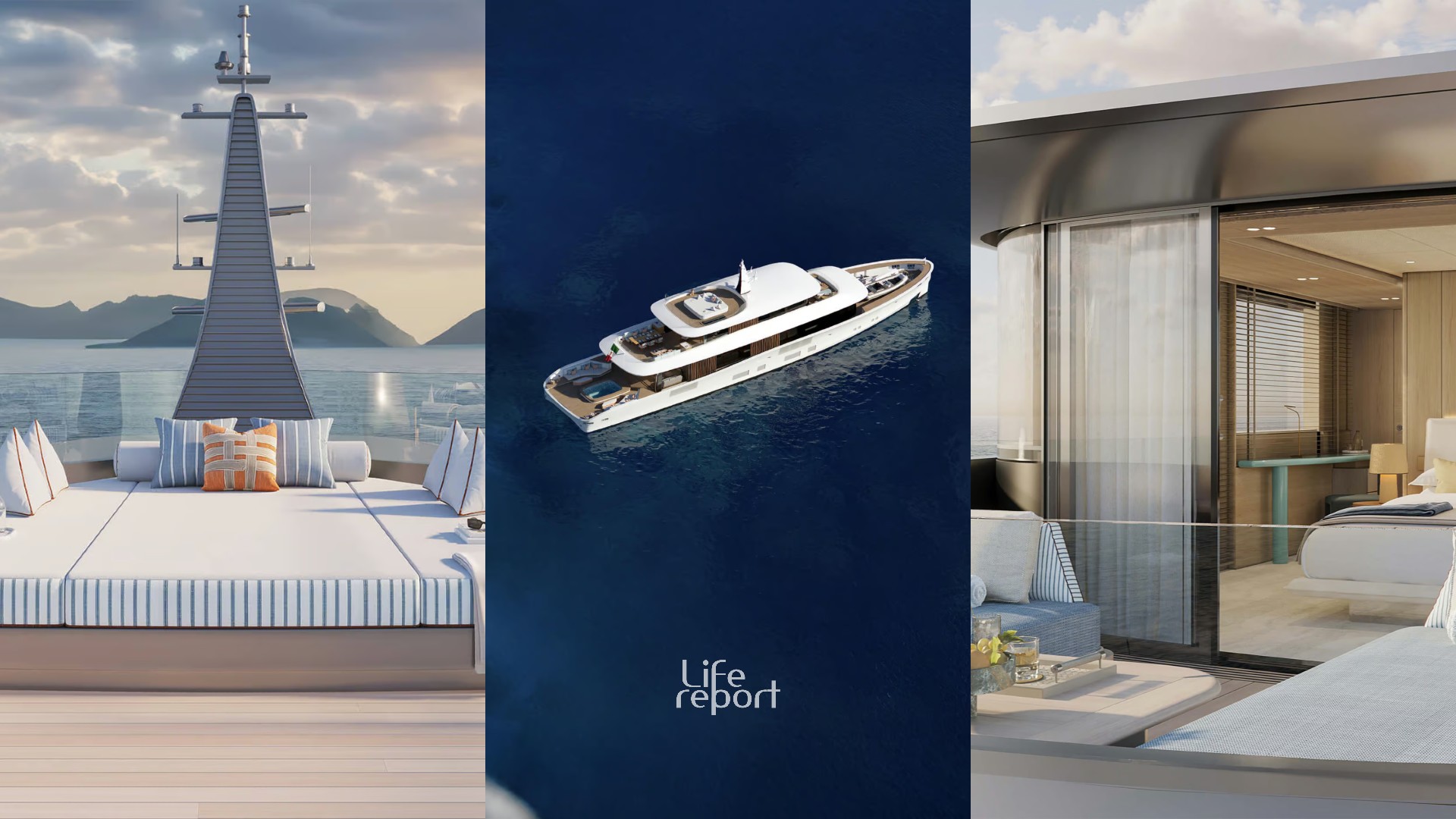
Let us speak first of the silhouette, because in yachting, as in life, one is judged in the first thirty seconds. Malcolm McKeon, whose reputation was forged in the taut, purposeful world of sailing yacht design, has given the B.Neos the proportions of something that might actually move with intent rather than merely float with attitude. The profile is low, the lines clean to the point of severity, the entire composition possessed of a calm that reads less as a design statement and more as hard-won wisdom.
“It’s daringly simple,” the marketing materials claim, and for once the hyperbole lands somewhere near the truth. In an era when yacht exteriors have evolved into a kind of naval-architecture theatre – all creases, angles and visual noise designed to signal novelty at any cost – the B.Neos stands apart by doing the one thing luxury has forgotten how to do: nothing. It does not shout. It does not flex. It simply exists in a state of such considered equilibrium that you find yourself slowing down to look at it, rather than looking away in search of something quieter.
View this post on Instagram
Francesca Muzio, the creative force behind FM Architettura, has carried this philosophy indoors with the sort of discipline that separates true taste from mere decoration. The interiors are warm without being precious, tactile without tipping into the sensory overload that afflicts so many contemporary yacht builds. Light woods, expanses of glass, surfaces that ask to be touched rather than merely admired – these are spaces designed for occupancy rather than ogling. “A personal canvas for owners to enhance with their own memories,” Muzio calls it, and one detects the subtle shade directed at those floating palaces where every surface screams “important” and nothing whispers “welcome”.
The Sound of Silence
But the exterior lines and the carefully considered joinery, elegant as they are, are not the story here. The story is what happens when you press the button marked ‘Silence’.
Benetti has done something that ought to be obvious but somehow is not: it has made hybrid propulsion standard rather than optional. The B.Neos does not offer hybrid as an upgrade, a concession or a nod to greenwashing fashion. It arrives with twin MAN V8-900 diesel engines working in concert with 200 kW electric motors as part of an integrated system that simply assumes you will want the option of moving through the world without announcing yourself.
The numbers are impressive enough: a 30 per cent reduction in energy consumption compared with conventional yachts of similar size; IMO Tier III compliance; a range of 2,600 nautical miles at ten knots. But numbers are for brochures and the sort of dinner-table conversations from which one politely excuses oneself. The experience is for the senses.
Picture, if you will, a family lunch on the aft deck. Not a ‘yacht lunch’ in the sense the industry usually means – a staged affair involving uniformed staff, silver service and the quiet anxiety of performance – but an actual lunch. The sort where children argue about the last piece of bread and adults talk over one another and nobody is thinking about the photo composition. On the B.Neos, this scene unfolds against a backdrop of such profound quiet that you hear the ice settle in the glasses. No exhaust fumes. No vibration. No generator hum insinuating itself into the conversation like an uninvited guest. Just the sea, the air and the voices of the people you are with.
The technical term for this is ‘Hotel Mode’, which strikes one as both accurate and profoundly inadequate. At anchor, the yacht runs on battery power alone – up to eight hours at night and five during the day – and the effect is nothing less than the recovery of something stolen from modern life. When was the last time you heard nothing mechanical while surrounded by human comfort? When did silence last feel like a luxury rather than an absence?
The Architecture of Inhabitation
This reclamation of experience extends to the layout, which Benetti has rethought with the sort of radical common sense that becomes visible only after someone else has done it. By shifting the wheelhouse forward on the main deck, the designers have freed the entire upper deck to serve as a private owner’s suite – a configuration normally reserved for yachts pushing sixty metres. The result is 260 square feet of private domain with 270-degree views and direct access to a terrace that hangs over the water like a particularly well-appointed thought.
But it is at the yacht’s centre that the real innovation reveals itself. The Family Kitchen is exactly what it sounds like: a proper kitchen, open to the main living areas, designed for actual use rather than as a backstage area for catering staff. One can make coffee here without ceremony, prepare breakfast while the rest of the family drifts in and out, commit the minor domestic transgressions that make a house feel like home. A sliding glass partition allows the space to be closed off for formal occasions, but the default setting is openness, connection – the mundane magic of shared space.
This kitchen flows into the Sea Atrium, a 2.4-metre-high gallery enclosed in floor-to-ceiling glass that dissolves the boundary between inside and out. The beach club – that curious institution which has evolved from practical boarding area to social theatre – is reimagined here as a genuine extension of living space, linked visually and physically to the pool and the sea beyond. It is, in other words, designed for people rather than brochures.
Technology That Serves, Not Shouts
The B.Neos is not Luddite in its retreat from noise. Quite the opposite: it is so thoroughly technological that its systems verge on prescience. The yacht comes equipped with 5G and Starlink connectivity, advanced home automation and a management interface that allows the crew to see behind bulkheads using augmented-reality glasses. When something goes wrong – because something always does – the shipyard can diagnose the issue remotely, guiding the crew through resolution in real time.
View this post on Instagram
This is the sort of innovation that matters: technology that removes friction rather than adding features, that makes life simpler rather than more complex. The same philosophy underpins the ‘Yacht as a Service’ programme, through which Benetti will manage everything from maintenance to interior styling for five years. Yachtique, the group’s interior-design division, can supply everything from linens to tableware, ensuring that the vessel arrives ready for occupancy rather than requiring the new owner to spend six months assembling the right sort of napkins.
For the generation inheriting these vessels – millennials and Gen Z buyers who have grown up with subscription models and service economies – this approach makes a certain intuitive sense. Why own the complication when you can own the experience? Why manage the machinery when you could be using it to float somewhere beautiful with people you love?
The View from Dubai
It is here, perhaps, that the B.Neos finds its most natural audience. The UAE’s luxury landscape has matured rapidly from the ‘more is more’ ethos of the early years to something more nuanced, more edited, more attuned to the pleasures of restraint. Dubai’s marinas are no longer merely showcases for conspicuous consumption; they are becoming stages for considered living, for experiences curated with the sort of attention to detail that separates taste from mere wealth.
The parallel rise of services such as BENO – which now offers everything from yacht charters to helicopter tours from its Marsa Al Arab lounge – reflects this shift towards integrated, effortless luxury experiences. The new generation of UAE residents and visitors wants access without ownership, experience without entanglement, beauty without the burden of maintenance. They want, in other words, exactly what the B.Neos offers: the ability to step aboard and immediately inhabit a space that feels personal, peaceful and perfectly prepared.
At €21 million, the B.Neos is not inexpensive. But it represents something rarer than a price point: a philosophy. In an industry still largely defined by the logic of accumulation – more volume, more toys, more visible markers of success – Benetti has built a yacht for those who have moved past the need to prove anything. It is for people who have tried excess and found it exhausting. For people who value the sound of the sea over the thrum of generators. For people who understand that the greatest luxury, in the end, is the ability to hear yourself think while floating towards the horizon.
Coda: The Point of It All
There is a moment, somewhere in the small hours of a night at anchor, when the B.Neos reveals its true purpose. The batteries are holding steady. The hotel systems hum along invisibly. The only sound is water against the hull, a rhythm so ancient it predates language. You lie awake, not from discomfort but from the sheer unfamiliarity of silence, and you realise that this – this absence of machinery – is what the sea has always sounded like. This is what humans heard from boats before we learned to fill the world with noise.
The B.Neos does not invent a new kind of luxury. It restores an old one. And in doing so, it makes you wonder why we ever settled for anything less.