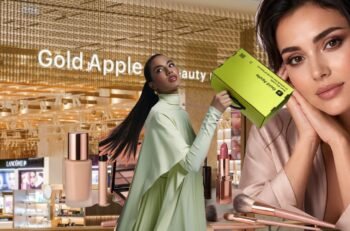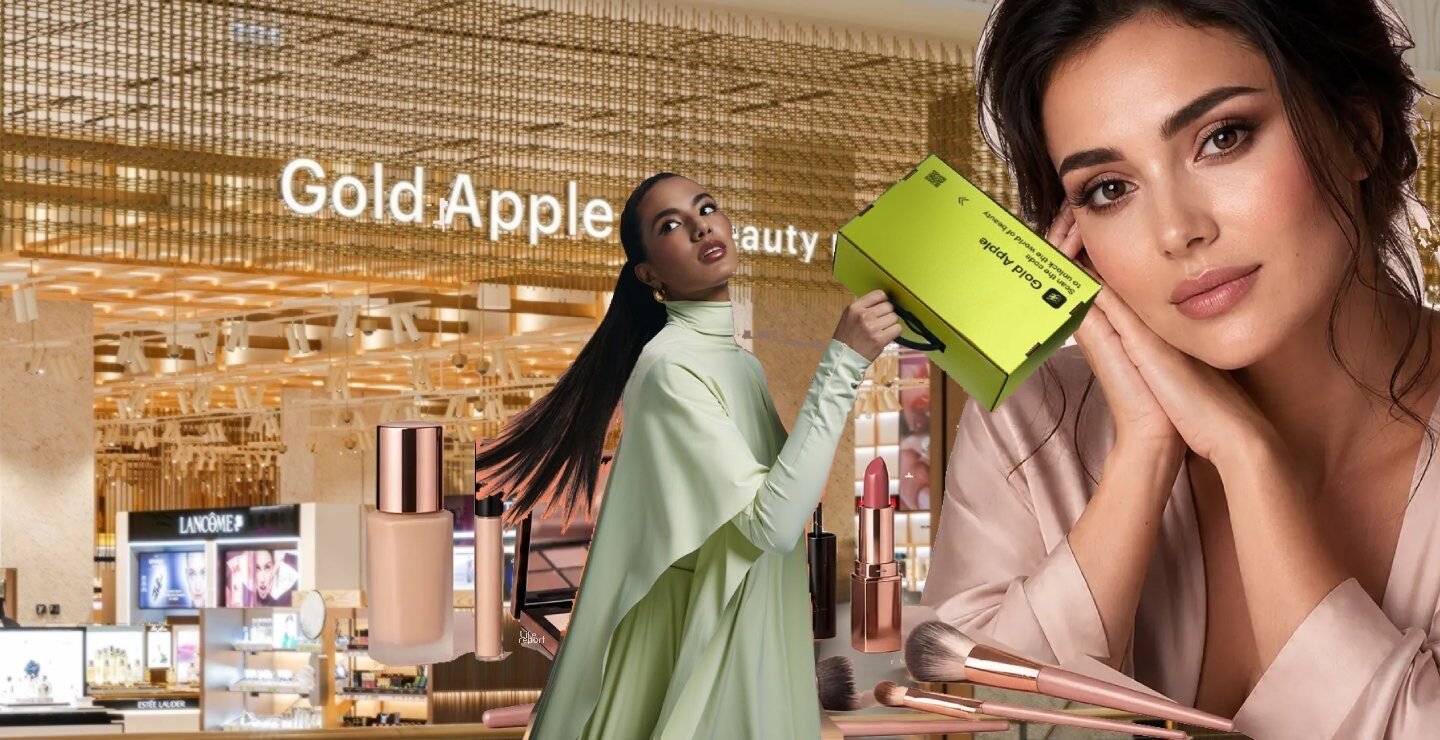
On the surface, the proposition is almost too neat: a Russian-born beauty retailer, a year and a half into its Dubai presence, wrapping itself in the national colours and calling itself a majlis. And yet, from 2 to 6 December 2026, as the UAE prepares to celebrate its 55th Eid Al Etihad under the official theme “Belonging in Unity”, the 1,500-square-metre Gold Apple at City Centre Mirdif is doing something more interesting than the usual retail theatre. It is testing whether the language of Emirati hospitality can survive translation into the grammar of contemporary beauty retail – and whether a generation raised on K-beauty serums and TikTok tutorials still has an appetite for the slower rituals of henna, Sadu motifs and cardamom-scented gahwa. The answer, on the evidence of the programme alone, is a cautious, elegantly curated yes.
The setting matters more than it first appears. City Centre Mirdif, the Middle East’s first LEED Gold-certified mall, was conceived by RTKL and Holford Associates as a “desert villa” – a series of interconnected spaces, with streets and passageways linking its various environments and natural light shaping the architectural experience. That logic of the villa, the courtyard and the shaded interior is precisely the logic of the majlis: a room with an open door, where the host does not ask why you have come or when you are leaving. Gold Apple’s activation does not so much import a majlis as acknowledge that the mall already contains one. The henna artists, the Sadu-inspired greeting-card workshop, the dates and luqaimat, the photo booth with its instant prints and flags – these are not decorations. They are a quiet argument that heritage, in the Emirates, has never been a museum piece. It has always been a service.
 The cultural scaffolding is sturdier than that of the average National Day activation. Al Sadu, the traditional Bedouin weaving practice of the UAE, was first inscribed on UNESCO’s List of Intangible Cultural Heritage in Need of Urgent Safeguarding in 2011. In 2025, it was subsequently added to the Representative List of the Intangible Cultural Heritage of Humanity. Its distinctive geometric vocabulary of repeated patterns and narrow bands speaks to a craft rooted in the practical and social life of Bedouin communities. Henna rituals, inscribed on UNESCO’s Representative List of the Intangible Cultural Heritage of Humanity in 2024 as part of a multinational cultural tradition, are not merely ornamental; UNESCO recognises their associations with joy, festive occasions and the strengthening of social bonds. To place these traditions in a beauty hall, between the Tom Ford counters and the Korean skincare shelves, is to make a category argument: that adornment in this region has always been a form of memory, not just consumption.
The programme itself is deliberately paced. The National Photo Booth and Gift-Wrapping Station run throughout the day, catching the after-work and school-run traffic; the more intimate interventions – henna, heritage art, the Little Artists corner with its Gold Apple elf mascot, and personalised mirror engraving available with purchases of AED 200 or more – unfold from 5 pm to 10 pm, when the mall sheds its errand-running efficiency and becomes something closer to a promenade. This is retailtainment, but of a restrained, almost curatorial kind. Gold Apple has made much of its retailtainment concept across the Gulf, with beauty stylist consultations, masterclasses and in-store events designed to turn a serum purchase into an evening out. The National Day calendar applies that same logic to culture rather than product: the entertainment is the heritage, and the heritage is the entertainment.
View this post on Instagram
There is an irony here, and it would be coy to pretend otherwise. A retailer founded in Yekaterinburg in 1996, which launched its UAE online store in late 2024 and opened its first physical store at City Centre Mirdif in May 2025, now finds itself at the intersection of Emirati memory and millennial beauty habits. The Gulf has become one of Gold Apple’s most dynamic growth markets: its Middle Eastern offering expanded by 60 per cent in a single year, while its combined regional portfolio now exceeds 1,200 brands across the UAE, Qatar and Saudi Arabia. The brand’s Beauty Elf game – a virtual-pet mechanic that first launched in Russia in 2024 – attracted more than four million users in its first year, over 80 per cent of whom were aged between 20 and 35. It is precisely the kind of digital engagement that cultural policymakers might study with a mixture of admiration and unease. That the elf now appears on children’s colouring sheets alongside UAE national symbols is either the most cynical or the most sincere gesture of the entire five-day run. Probably both.
What rescues the activation from pastiche is its refusal to over-explain. There is no lecture on the symbolic meaning of Sadu patterns, no wall text parsing the distinctions between regional henna styles. The traditions are simply made available – to be tried, photographed, engraved onto a compact mirror, wrapped in flag-coloured paper and taken home. For Gen Z and millennial shoppers who have grown up navigating the fine line between cultural appreciation and cultural extraction, this matters. In the UAE’s competitive, fast-evolving beauty market, shoppers are increasingly brand-aware and experience-driven, with cultural relevance becoming an important differentiator from generic global sameness. Gold Apple’s wager is that the most luxurious thing it can offer this audience is not another exclusive launch, but a credible claim to belonging.
The dates and luqaimat, the gahwa poured into small cups, the henna drying on a wrist while a child colours an elf – these are small gestures, easily dismissed as festive window-dressing. But they also constitute a subtle realignment of what a beauty hall is for. In a city that has learned to sell spectacle on an industrial scale, the quiet proposition of a five-day majlis inside a LEED Gold-certified mall is almost countercultural: sit down, stay a while, let the host refrain from asking when you are leaving. The flag colours will come down on 6 December. The question is whether the invitation – to a slower, more textured, more locally fluent idea of luxury – will outlast them.
ALSO READ: What Does Light Reveal About Us? Inside Dubai’s Most Cerebral New Art Exhibition