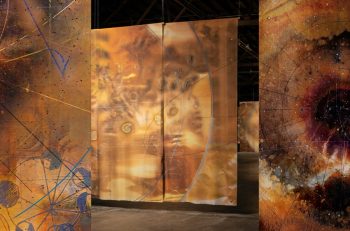
The most subversive thing you can do in Dubai this season isn’t buying a watch that costs more than a villa in Al Barari. It’s standing in a white-walled warehouse in Alserkal Avenue and admitting that the coins jangling in your pocket – the ones you’d sooner abandon in favour of a contactless tap – might be the most honest artworks in the room. At Efie Gallery, Ghanaian artist Yaw Owusu has built a career on this uncomfortable proposition. His second solo exhibition with the gallery, Where the Tide Flows, and the Dunes Gather, is less a display of objects than a quiet, shimmering indictment of everything we’ve agreed to call valuable.
The timing is characteristically sharp. The exhibition opens on 16 November, dovetailing with Alserkal Art Week, which runs under the theme of ‘Smouldering’ – a programme otherwise preoccupied with memory and resistance across the region. While the Avenue’s other galleries turn towards Arab modernism and archival ghosts, Owusu offers something more tactile: a meditation on how the detritus of an economy – specifically, Ghana’s copper-plated steel pesewa coins, rendered functionally obsolete by inflation – can be alchemised into surfaces that glow with an almost sacral luminosity. These coins entered circulation in 2007 as part of an effort to counter the country’s inflation; today, their value has dwindled to almost nothing, casualties of the same global market forces that make Dubai’s skyline gleam. Owusu, who negotiates directly with the Bank of Ghana to procure the coins (and pointedly ignores its stipulation that they be left intact), treats this discarded currency not as money but as a pigment, a particle, a confession.
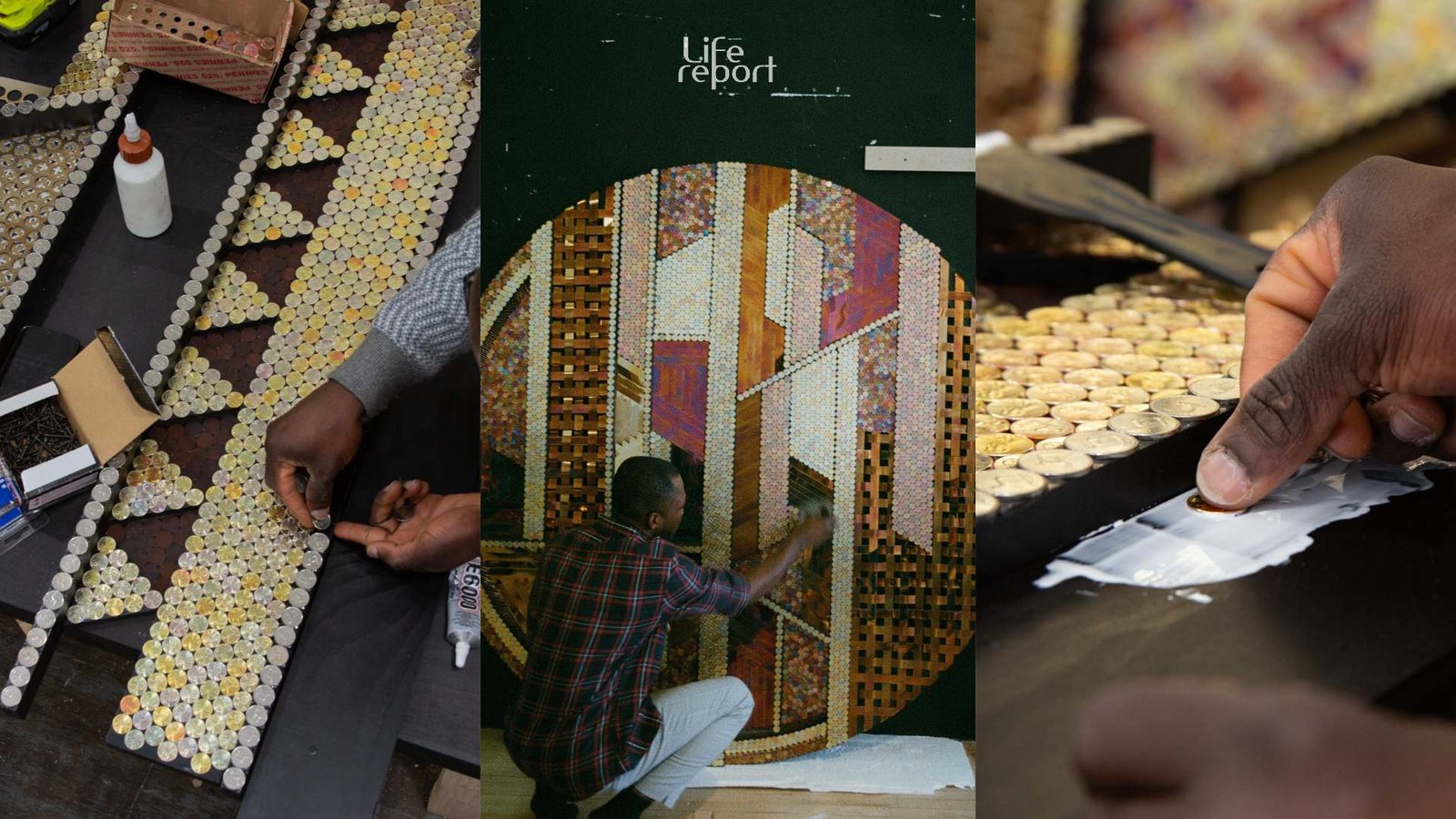
What makes this exhibition more than a clever material trick is its architecture of contradiction. The sculptural works – circular, mandala-like panels composed of thousands of coins treated with salt and vinegar, their surfaces corroded into iridescent patinas of violet, verdigris and bruised copper – are deliberately, almost perversely, beautiful. They resemble the kind of object one might acquire at a Design Miami booth and place beside a Pierre Jeanneret chair, yet their constituent parts are the very definition of worthlessness. Owusu accelerates the corrosion that would otherwise take decades, transforming circulation into sedimentation, exchange into residue. The works on paper, making their debut here, invert the logic entirely: created from the stains and sediments left behind by the sculptural process, they are abstract archives of oxidation that look less like ornament than aerial views of a delta seen from a private jet. If the sculptures are the gold, the paper works are the ledger – the unglamorous record of what was extracted, what was lost and what was left behind.
Owusu’s biography reads like a curriculum vitae designed to unsettle a certain kind of collector. Born in Kumasi in 1992, he holds a BFA from KNUST and an MFA from Pratt Institute. His work is already represented in the permanent collections of the World Bank, the Presidential Residence of Ghana and Meta, whose New York headquarters houses a 50-foot installation made from 90,000 pennies – a monument to the same digital economy that has made physical currency feel quaint. His practice has moved between Accra and New York, incorporating US pennies and UAE fils into works such as Heart of a Place, presented by Efie Gallery at Art Dubai 2026, which brings three currencies together in a meditation on circulation and belonging. There is a gentle irony in an artist whose medium is devalued state-issued metal being feted by the very institutions – central banks, tech conglomerates and international art fairs – that manufacture and manage value. Owusu doesn’t resolve this tension; he polishes it until it catches the light.
View this post on Instagram
The exhibition’s title, borrowed from the language of landscapes, offers a clue to its deeper argument. Tides carry and erode; dunes gather through the slow accumulation of innumerable particles. Both are forms shaped by forces larger than their components, and both suggest that value – like a coastline – is never fixed, only temporarily settled. This is a particularly resonant proposition in the UAE, where the pace of construction and the rhetoric of perpetual growth can obscure the fact that every boom leaves a remainder, every skyline a sediment. Owusu’s works ask who determines what is precious, who performs the labour that makes prosperity legible, and what becomes of the residue when the tide goes out. The gallery, which marks its fifth anniversary this year and relocated to a two-storey space on Alserkal Avenue in 2025, has built its programme around precisely this kind of cross-cultural friction – African artists interrogating systems from within the heart of a Gulf capital that is itself a laboratory of value creation.
For a generation fluent in the aesthetics of scarcity – limited drops, resale premiums and the theatre of the waitlist – Owusu’s work offers a bracing corrective. It is one thing to fetishise the rare; it is another to recognise that the abundant and the discarded are often the same substance, viewed through different regimes of power. The pesewa is not rare. It is barely useful as currency. But under Owusu’s hand, it becomes a mirror: of Ghana’s postcolonial economic struggles, of the global financial networks connecting Kumasi to New York to Dubai, and of the viewer’s own reflexive calculus of worth. The exhibition coincides with the artist’s forthcoming monumental public installation in Abu Dhabi, details of which have yet to be announced. The project is expected to extend this conversation into the region’s broader architectural and civic landscape.
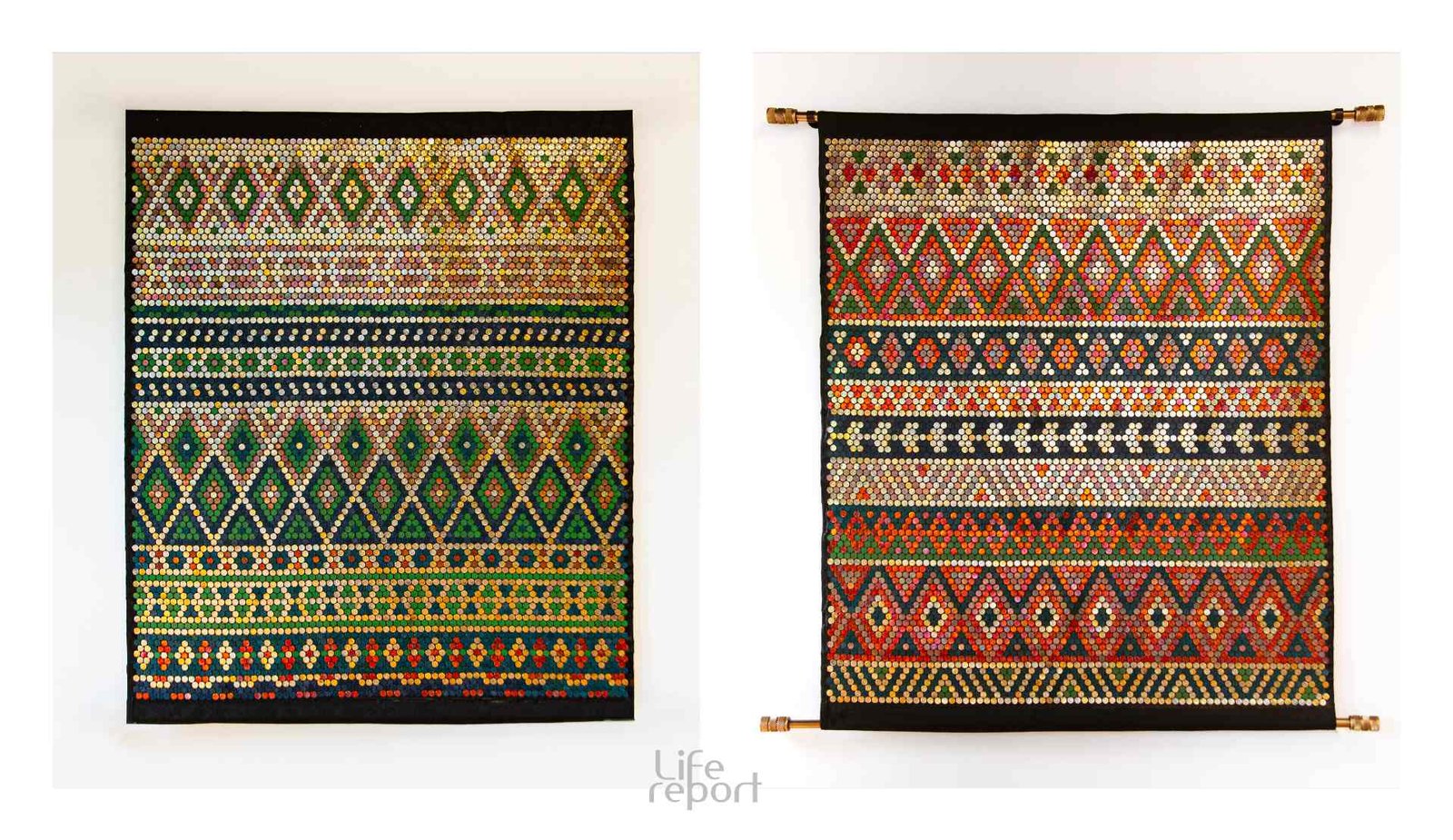
Where the Tide Flows, and the Dunes Gather runs at Efie Gallery, Warehouse 61, Alserkal Avenue, Dubai, from 16 November 2026 to 10 January 2027. Admission is free, which is fitting. The most valuable thing in the room was never for sale.
ALSO READ: The Altitude Adjustment: Why TUMI’s FW26 Collection Is the Only Travel Companion Worth Ascending With