The global art market, that gilded carousel of vanity and venture capital, has returned to growth. Sales rose 4% last year to $59.6 billion, according to the Art Basel and UBS Global Art Market Report 2026, a modest but welcome rebound after two years of recalibration. And yet, for all the champagne-soaked optimism of Basel and the blue-chip solemnity of Frieze, the most interesting conversations in the art world are no longer happening in the marbled halls of established power. They are happening in Sofia.
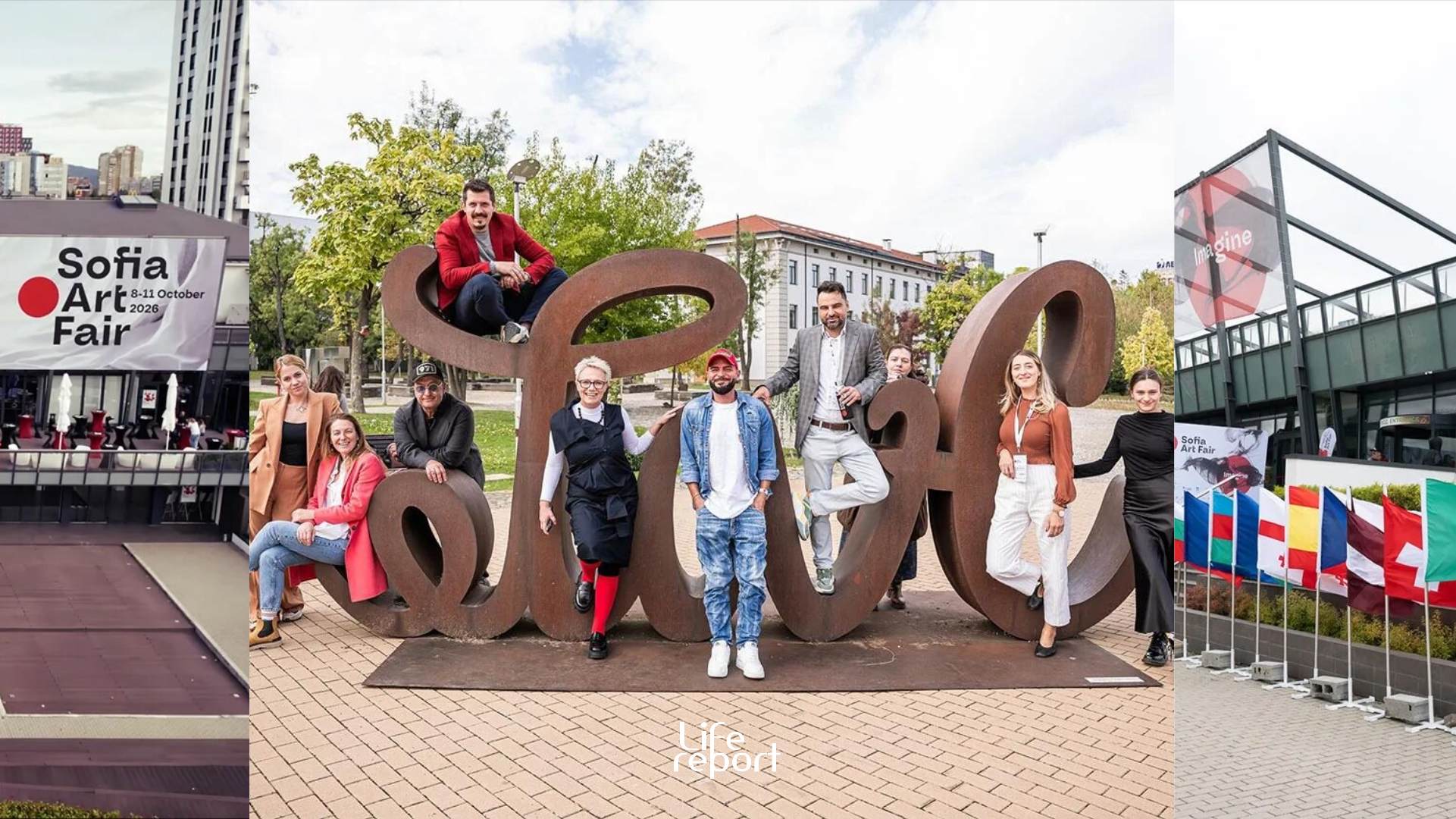
On 8 October, the John Atanasoff Innovation Forum at Sofia Tech Park – named after Bulgarian-American computer pioneer John Atanasoff – will transform into a temporary city of art. The third edition of Sofia Art Fair will gather 27 galleries and exhibitors from eight countries, presenting works by 88 artists from 17 countries across five continents. The numbers are impressive. The subtext is more so. In a market where booths at Art Basel can cost as much as $200,000, Sofia Art Fair operates on a different logic altogether. Its ticket prices range from €20 to €45, with free admission for anyone under eighteen – a gesture of democratic access that would induce palpitations in the finance departments of most Western fairs.
The Star Turn: Tomás Saraceno and the Architecture of Air
If there is a single work that encapsulates the fair’s ambition, it is Tomás Saraceno’s LBG-2377/M+I, a levitating residential cell from his ongoing Cloud City project, presented by Genoa’s Pinksummer gallery at €79,000. Saraceno, an Argentine artist and architect whose work is held in the permanent collections of MoMA, Tate Modern and the Centre Pompidou, collaborates with scientists from MIT and the Max Planck Institute to construct mathematically modelled habitable structures. The sculpture, assembled from seven iridescent Plexiglas modules, steel filaments and cords, shifts its spectral register with every movement of the viewer. It is a museum-grade work offered outside the hushed salerooms of Sotheby’s and Christie’s – a rare opportunity for the Bulgarian public, and a canny proposition for the collector who understands that Saraceno’s auction prices have long since crossed into six figures. Saraceno’s scientific collaborations with MIT and the Max Planck Institute are well documented, particularly through his Arachnophilia research.
Alongside it, Pinksummer will present two works woven from actual spider silk. Saraceno maintains a spider laboratory in his Berlin studio, part of his Arachnophilia project, where different species spin their webs across open frames over weeks before the threads are delicately fixed with gold ink. The titles reference star catalogues; the geometry of the web, for Saraceno, is a miniature reflection of cosmic tissue. Pinksummer’s participation also includes works by Carsten Nicolai, the German artist and electronic musician known as Alva Noto, whose minimalist investigations into sound and code have made him a fixture of both the contemporary art and experimental music worlds; Koo Jeong A, the Korean artist whose ethereal installations explore memory and perception; Peter Fend; and Bojan Šarčević.
Christo’s Bulgarian Ghost
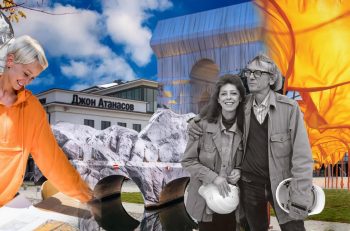
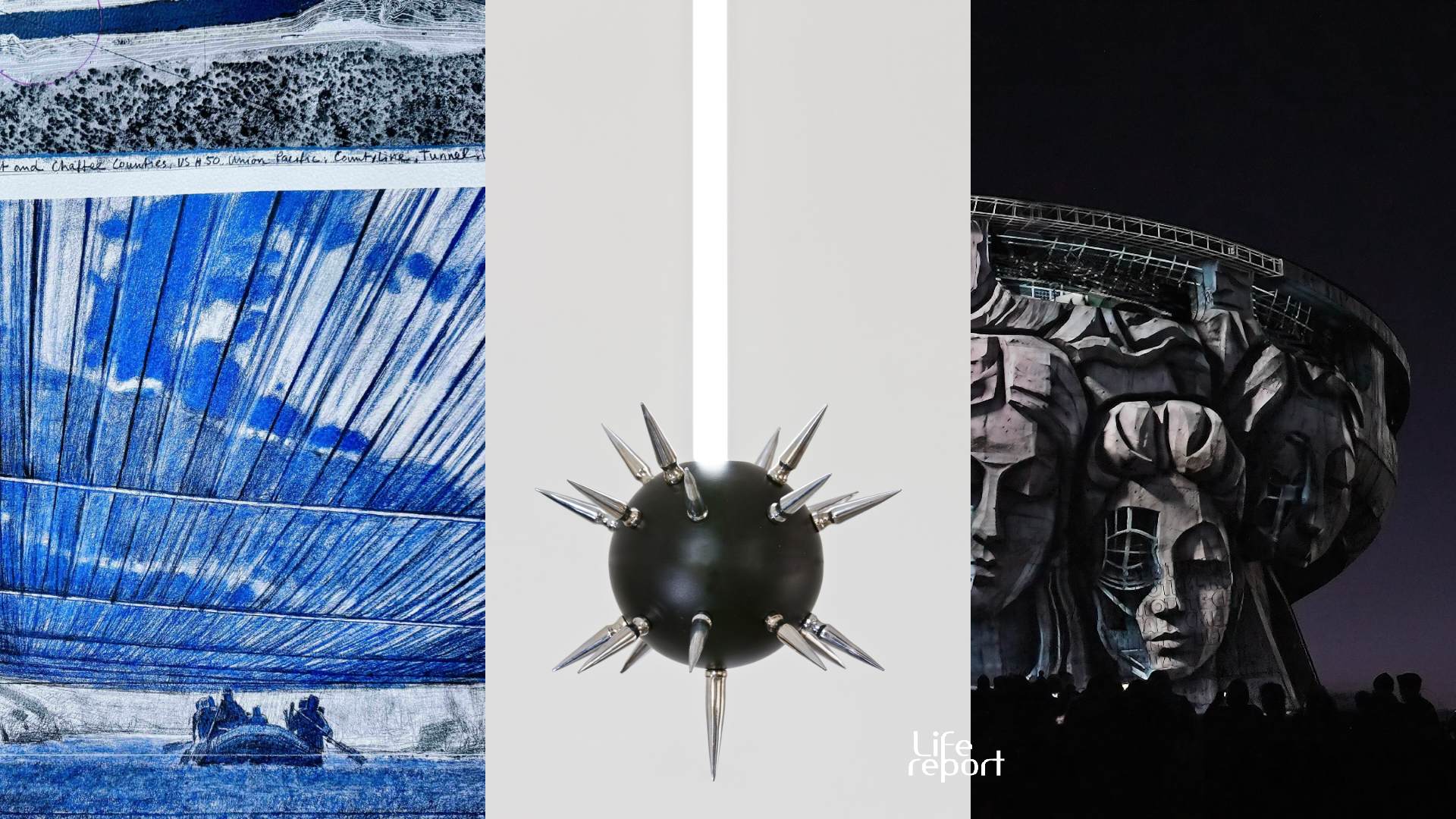
There is, however, a more personal narrative threading through this year’s fair. DG Art Gallery will present previously unseen works by Christo and Jeanne-Claude – lithographs, signed editions, collages and preparatory studies spanning the better part of five decades of the artistic duo’s career. Among them is a piece related to Wrapped Portrait of Jeanne-Claude from 1963: a portrait painted by Christo in oils, subsequently wrapped in transparent polyethylene and rope, with the painting originally signed with his surname, Javacheff. The original is now held by the Museum of Contemporary Art San Diego. There are also studies for the Wrapped Reichstag in Berlin, the Pont Neuf in Paris and The Gates in Central Park. The 1963 Wrapped Portrait of Jeanne-Claude is documented by the Christo and Jeanne-Claude Foundation and is held by the Museum of Contemporary Art San Diego.
View this post on Instagram
The selection is not merely art-historical. Christo was born in Gabrovo, Bulgaria, in 1935, and left the country in 1957, first for Prague, then Vienna, then Paris. His story – of a Bulgarian artist who wrapped the Reichstag and the Pont Neuf and became one of the most recognisable names in twentieth-century art – is a talisman for a fair that understands the value of narrative as much as that of the object. “Christo is a symbol of how Bulgarian roots and genius can reach the highest global heights,” says Denitsa Gergova, founder of DG Art Gallery. The sentiment is earnest, but it is also strategically astute. In a market where provenance and storytelling have regained their primacy, Christo’s Bulgarian origin is not a footnote. It is a selling point.
The Alternative Fair as Cultural Strategy
Sofia Art Fair belongs to a category of events that the industry, with its characteristic talent for euphemism, calls “alternative”. The term encompasses everything from Liste in Basel – the so-called “younger sister” of Art Basel – to CAN Ibiza, whose intimate scale and lower booth costs have made it a viable counterpoint to the high-stakes atmosphere of the mega-fairs. These fairs share a common premise: that the art world’s gatekeepers are not the only arbiters of value. “Spaces for emerging artists are essential, offering visibility and connections to those who are often overlooked in favour of established, market-safe names,” said John Russo, then CEO of London-based Maddox Gallery. “Emerging artists bring the risk, energy and innovation that keeps the art world dynamic.”
The logic is sound, and the data supports it. The inaugural edition in 2024 attracted more than 4,000 visitors, with 90% of exhibitors making sales. The second edition, in 2025, generated more than €150,000 in sales over four days, with more than 3,500 visitors passing through. For a fair in its third iteration, in a country whose contemporary art market remains nascent, these are not trivial figures. They suggest something more than curiosity. They suggest an emerging ecosystem.
The fair’s founder, Suni Danadzha, is careful to frame the project in terms of infrastructure rather than spectacle. “Contemporary art is part of the economy,” she says. “Behind every work there is labour, and around it an entire environment of galleries, curators, collectors, experts and cultural organisations is built. In order to develop the potential of Bulgarian artists, it is not enough to just talk about their talent. A working market, international visibility and sustainable infrastructure are needed.”
It is a refreshingly pragmatic vision – one that treats the art fair not as a four-day festival but as a piece of cultural infrastructure, a mechanism for connecting a local scene to global capital. Stefan Stoyanov, the fair’s creative director, whose career has taken him from Manhattan to Dubai, Bahrain, Moscow and Paris, frames the ambition more bluntly: “If we truly unite – gallerists, museums, collectors, municipality, government – the fair can become a leader in the Balkans and a true cultural centre.”
A City’s Cultural Coming-of-Age
Sofia, it must be said, is not an obvious art destination. It is a city of Brutalist apartment blocks and an Ottoman-era mosque, of garlic-infused tavernas and third-wave coffee shops, of a cultural scene that has long operated beneath the radar of the international art world. But that, too, is changing. The National Gallery’s retrospective of Bistra Lechevalier in 2024 – a Bulgarian-born, Paris-based sculptor who has explored the tension between freedom and constraint since the 1960s – introduced her work to Bulgarian audiences on a major institutional scale. The Water Tower Art Fest, now in its twentieth edition, has become a fixture of the city’s cultural calendar. And Sofia Tech Park, with its sleek innovation infrastructure, has emerged as an unlikely but effective venue for a fair that wants to position itself at the intersection of art and technology.
The fair’s accompanying programme – with its AR/VR experiences, children’s zone and dedicated meeting areas – is designed to make the event accessible to audiences who might otherwise feel intimidated by the art world’s codes and rituals. It is a strategy that has been employed with considerable success by fairs like The Other Art Fair, which has built a loyal following by stripping away the elitism and making the experience of buying art feel less like an auction and more like a conversation.
View this post on Instagram
The Next Big Thing Is Not Where You Think It Is
The art world loves to talk about discovery. It loves the narrative of the overlooked genius, the artist who toiled in obscurity before being rescued by a discerning curator or a brave gallerist. What it loves less is the structural work of building markets in places where none existed before. That work is unglamorous. It requires patience, capital and a willingness to accept that the returns – cultural and financial – may take years to materialise.
Sofia Art Fair is engaged in precisely that work. It is not trying to compete with Art Basel, nor should it. It is trying to do something more interesting: to create a market where none existed, to connect a local scene to global networks, and to offer collectors a way into contemporary art that is not mediated by the gatekeepers of the established centres. Whether it succeeds will depend on factors that no press release can guarantee – the quality of the work, the commitment of the galleries, and the willingness of collectors to take risks on artists they have not yet heard of.
But the signs are promising. The fair has streamlined its gallery roster from 29 in its first edition to 27 in its third; its current edition brings together 88 artists from 17 countries across five continents. The presence of Pinksummer, a gallery of genuine international standing, is a vote of confidence. So is the involvement of Guillaume Piens, whose decision to speak at Sofia Art Fair is not an act of charity but a recognition that the fair is becoming a meaningful node in the European art calendar.
For the traveller who has grown weary of the art world’s endless carousel – the same faces, the same fairs, the same champagne – Sofia offers something different. It offers the possibility of surprise. It offers the chance to see a Saraceno sculpture in a building named after a computer pioneer, to encounter Christo’s early studies in the city of his birth, to discover an artist whose work has never been shown outside the Balkans. It offers, in short, the thing that the art world most desperately needs and most frequently forgets: the possibility of genuine discovery.
The third edition of Sofia Art Fair runs from 8 to 11 October at Sofia Tech Park. Tickets are available at sofiaartfair.art.
ALSO READ: Pieter Vermeersch Comes to Dubai: The Exhibition That Asks You to Simply Look