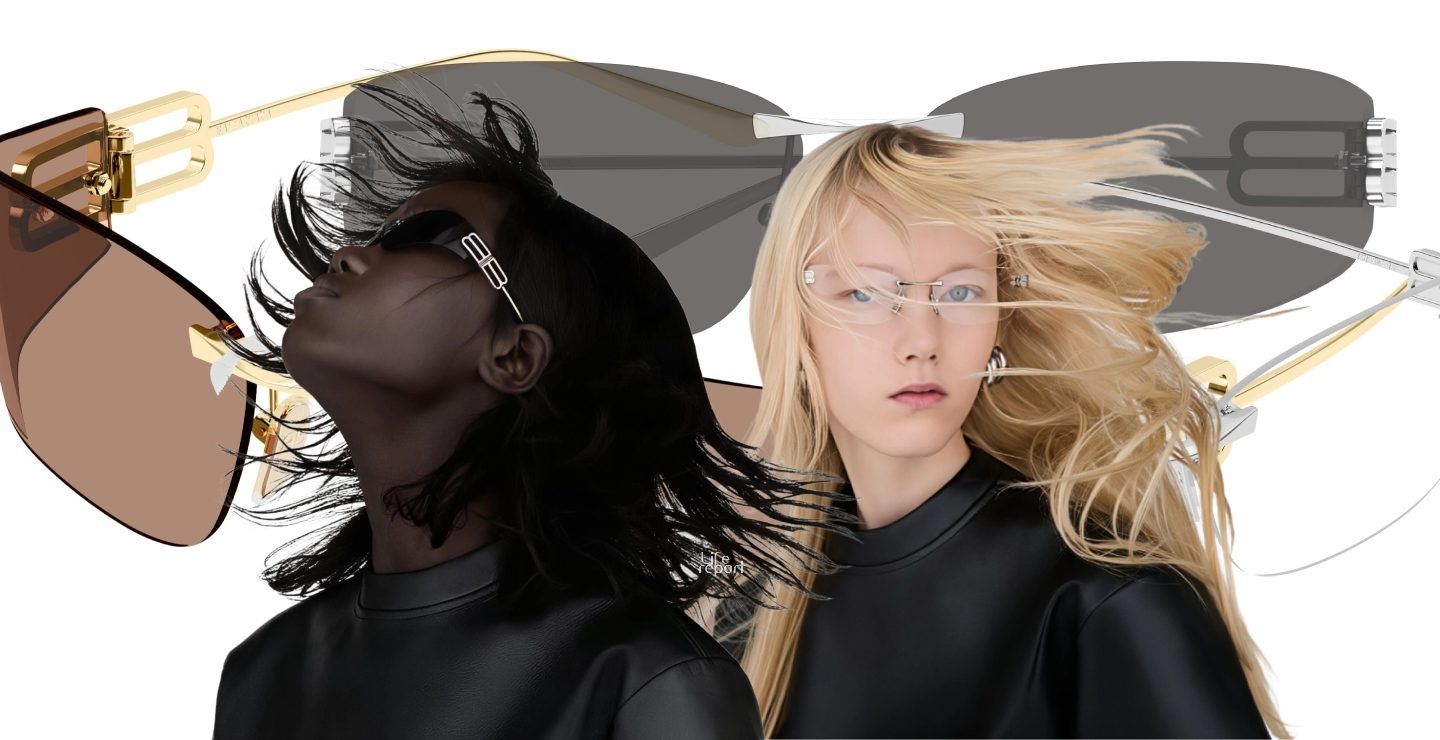
The Summer 2026 collection introduces ultra-light, rimless frames that whisper of the future, perfectly at home in a city that lives for the next big thing.
In a city that communicates almost entirely through micro-gestures of opulence – the glint of a Royal Oak on a sun-bronzed wrist, the deliberate slouch of a hand-distressed Loro Piana linen shirt – what one chooses to place over one’s eyes has long ceased to be a matter of mere sun protection. It is, instead, a manifesto. And the newest entry into this silent lexicon, Balenciaga’s Gossip eyewear, arrives not with a shout but with a flawlessly engineered murmur.
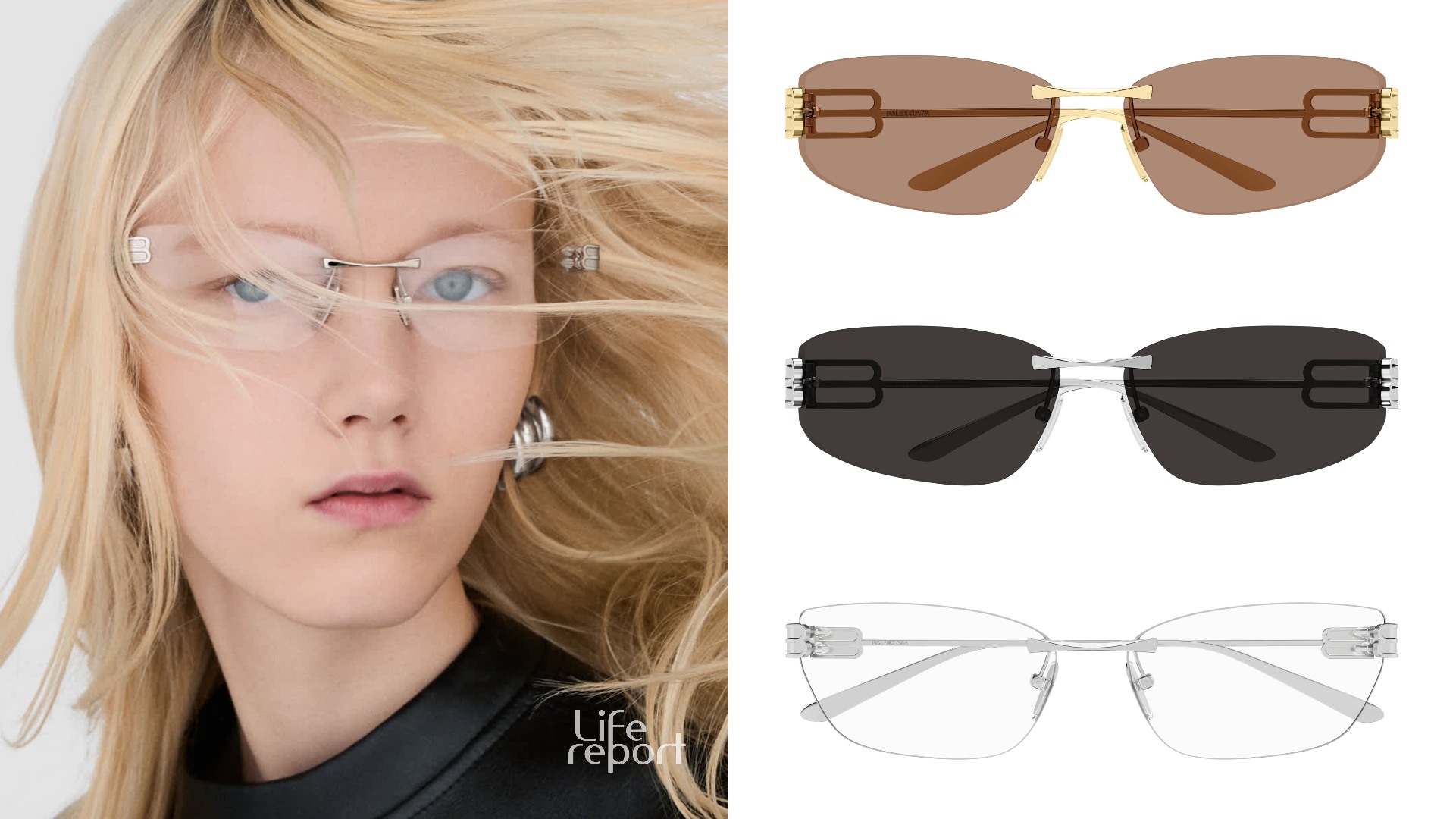
Unveiled for Summer 2026, the Gossip family is a study in architectural subtraction. The frames dispense with rims entirely, suspending aerodynamic wraparound lenses within a delicate titanium structure so light it almost disappears against the skin. The design’s only visible anchor is an elongated cut-out BB logo – not applied as a decorative afterthought, but carved directly into the lens through openwork and low-relief sandblasted metal detailing. The effect recalls a Cartier skeleton watch, where absence becomes the most articulate form of presence. These are spectacles that understand the assignment: to be seen without feeling seen, to announce their provenance with the softest possible inflection.
The campaign imagery – set against sleek, futuristic architectural backdrops – presents models whose gazes are framed by sweeping curves that echo the fluid geometry of Dubai’s Museum of the Future. It is a fitting parallel. Just as that building rejects the heaviness of history in favour of a fluid, algorithmic grace, the Gossip silhouette abandons the weighty acetate frames and assertive logos that have dominated luxury eyewear for the better part of a decade. Where a chunky Gucci frame once signalled cultural membership with the volume of a JBL PartyBox, this new object operates at the frequency of quiet confidence – the kind that has nothing left to prove in a valet queue.
The name itself, Gossip, is a characteristically witty provocation. In an era when a fleeting Telegram message can dismantle reputations before the first Emirati latte is poured at % Arabica, calling an accessory “Gossip” invokes a world of whispers and half-truths. Yet the frames themselves are the visual opposite of the digital avalanche. They are so light they almost deny their own material existence – a kind of optical minimalism dressed in sandblasted silver or obsidian. The cut-out logo, stretched like a rumour in mid-transmission, acts as a secret handshake for those in the know. It is, if you will, a piece of high-frequency jewellery for the face, transmitting a cultural signal that no algorithm can quite capture.
Technically, the collection responds to a movement that has been gathering momentum since the latter stages of the pandemic: the relentless rise of rimless, futuristic silhouettes. South Korean provocateur Gentle Monster laid much of the groundwork, transforming eyewear into sculptural conversation pieces. Balenciaga, however, refines the proposition to something approaching its Platonic ideal. The ultra-light metal construction ensures that even the optical versions – worn not for concealment but for focus – rest on the nose with the discretion of a well-edited sentence. In a region where people move countless times a day between 45-degree heat and aggressively chilled interiors, the wraparound form offers an additional practical advantage: it helps minimise the instant fogging that plagues lesser frames when stepping from a Lamborghini into a hotel lobby. It is, in the truest sense, a design shaped by the physics of everyday luxury.
This arrival is not without its own contextual intrigue. The House of Balenciaga is entering its first season following Demna’s departure, after the creative director transformed it into one of the most divisive and electrifying fashion houses of the 2020s. Into this delicate interregnum steps a pair of glasses so assuredly minimal they can be read as a palate cleanser – a coded message that the house’s design language remains intact, even as the volume is gently turned down. It is a move that Dubai, a city perpetually suspended between the splendour of the Al Fahidi Historic District and the vertiginous promise of its next super-tall spire, understands instinctively. Elegance here is a constant negotiation between the weight of the past and the lightness of the future.
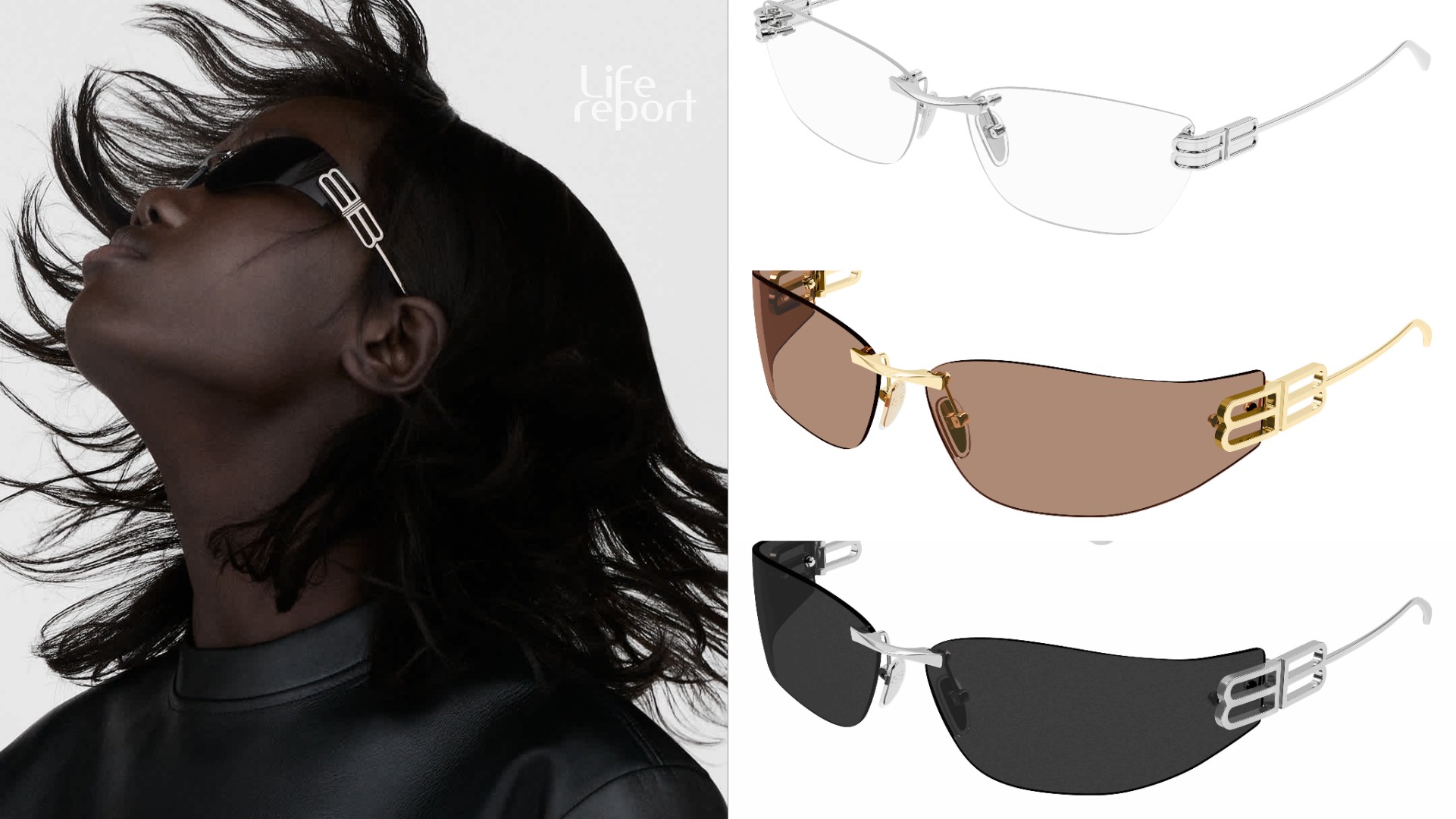
One can easily picture the optical edition resting on the desk of a curator during Art Dubai, its lenses catching the glow of a Nasser Al Salem calligraphic neon installation, or the sun version shielding the eyes of a collector during a private viewing at Leila Heller Gallery. These are frames that will migrate effortlessly from a morning strategy session at the Nasab members’ club to an evening set where a DJ, wrapped in quiet restraint, drops a rare vinyl record. The champagne-gold colourway, in particular, seems calibrated to mirror the fleeting light over Al Qudra as the last winter migratory birds take flight – a beauty that, like good Gossip, exists only in the moment it is shared.
There is, inevitably, a gentle irony in coveting an object named Gossip at a time when the world is earnestly trying to disconnect from its own digital toxicity. But luxury has never been about earnestness; it has always been about desire. And the Gossip frames desire nothing more than to become the most refined secret one has the pleasure of sharing. They whisper; they do not scream. In a city that has built an entire mythology upon the loudest possible statements, that whisper might just be the most disruptive sound of the season.
ALSO READ: Munich’s Most Stylish Hotel? Why The Dean Munich Surprises Even Dubai’s Most Seasoned Travelers