In a city of fleeting trends, Chef Alessandro Miceli is building a different kind of legacy – one built on slow-roasted lamb, live pasta-making, and a monthly rotation of Sicilian grandmothers. We took a seat at the table.
You don’t find Mamabella; you earn it. Tucked within the sleek, marble-clad canyons of the Kempinski The Boulevard, it presents not as a restaurant, but as a proposition. In a metropolis often accused of architectural amnesia, where the new relentlessly eclipses the old, Chef Alessandro Miceli is staging a quiet, delicious rebellion. He has imported the one thing you cannot fake, the one ingredient no logistics company can source: soul. And he’s brought in the heavy artillery – his mother.

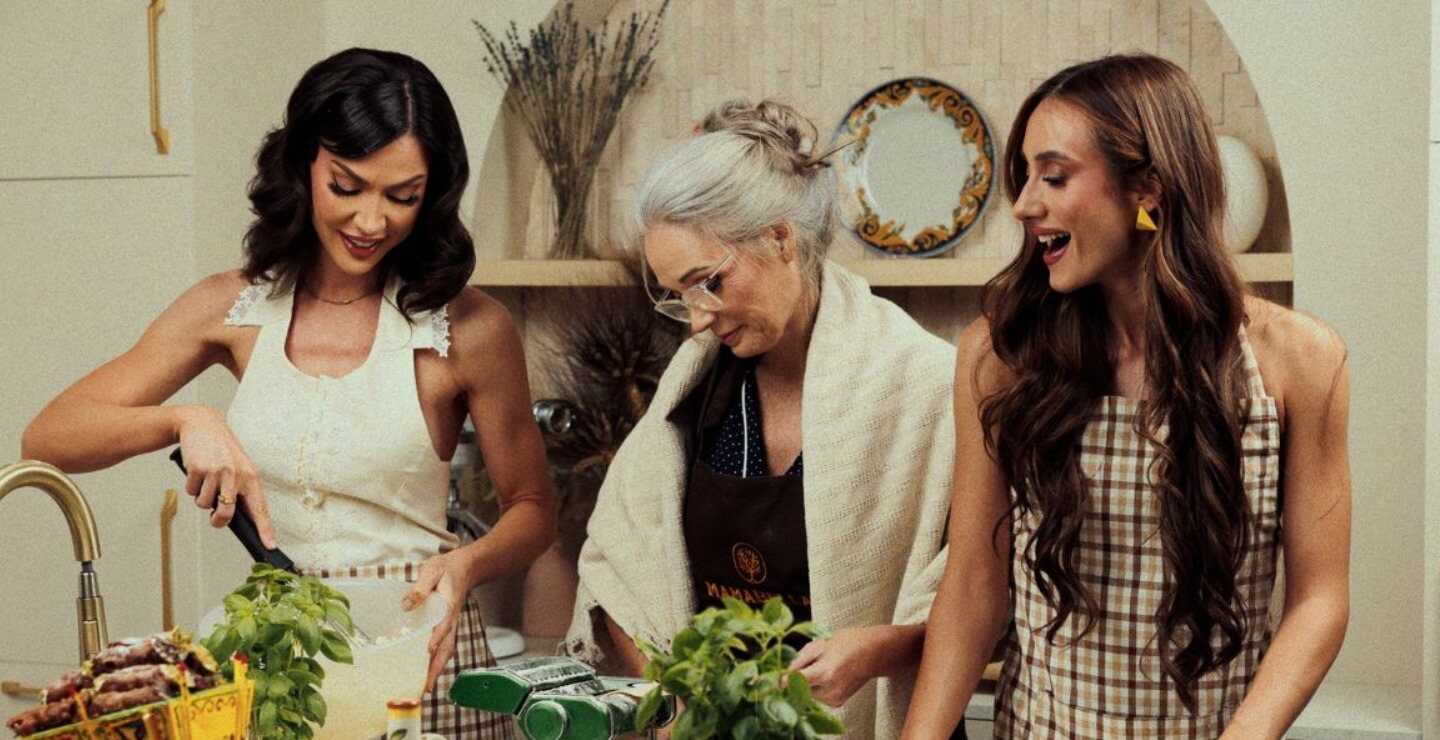
This is the heart of the Mamabella Dubai narrative, a story so intuitively clever it feels less like a business plan and more like a culinary heist. Chef Alessandro, whose credentials are as impeccably polished as a Bulgari timepiece, has reached past the tropes of ‘authentic Italian’ and gone straight for the source code. He has institutionalised the Nonna. Each month, a new grandmother, a nonna, is flown in from the sun-baked hills of Sicily, her suitcase doubtless filled with linen, cherished recipes, and the kind of quiet authority that would make a Michelin-starred chef tremble.
The concept is a stroke of genius, a wry commentary on our collective hunger for authenticity in an age of the algorithmically curated. It’s a move that would make the Medici patrons green with envy. Why simply serve food when you can serve a lineage? The first of these culinary sages is none other than Alessandro’s own mother, the very woman in whose kitchen he stood on a stool, learning the sacred rhythms of the Sicilian hearth. The narrative is almost too perfect, a cinematic flourish that Federico Fellini would have applauded for its heightened, operatic sentimentality.
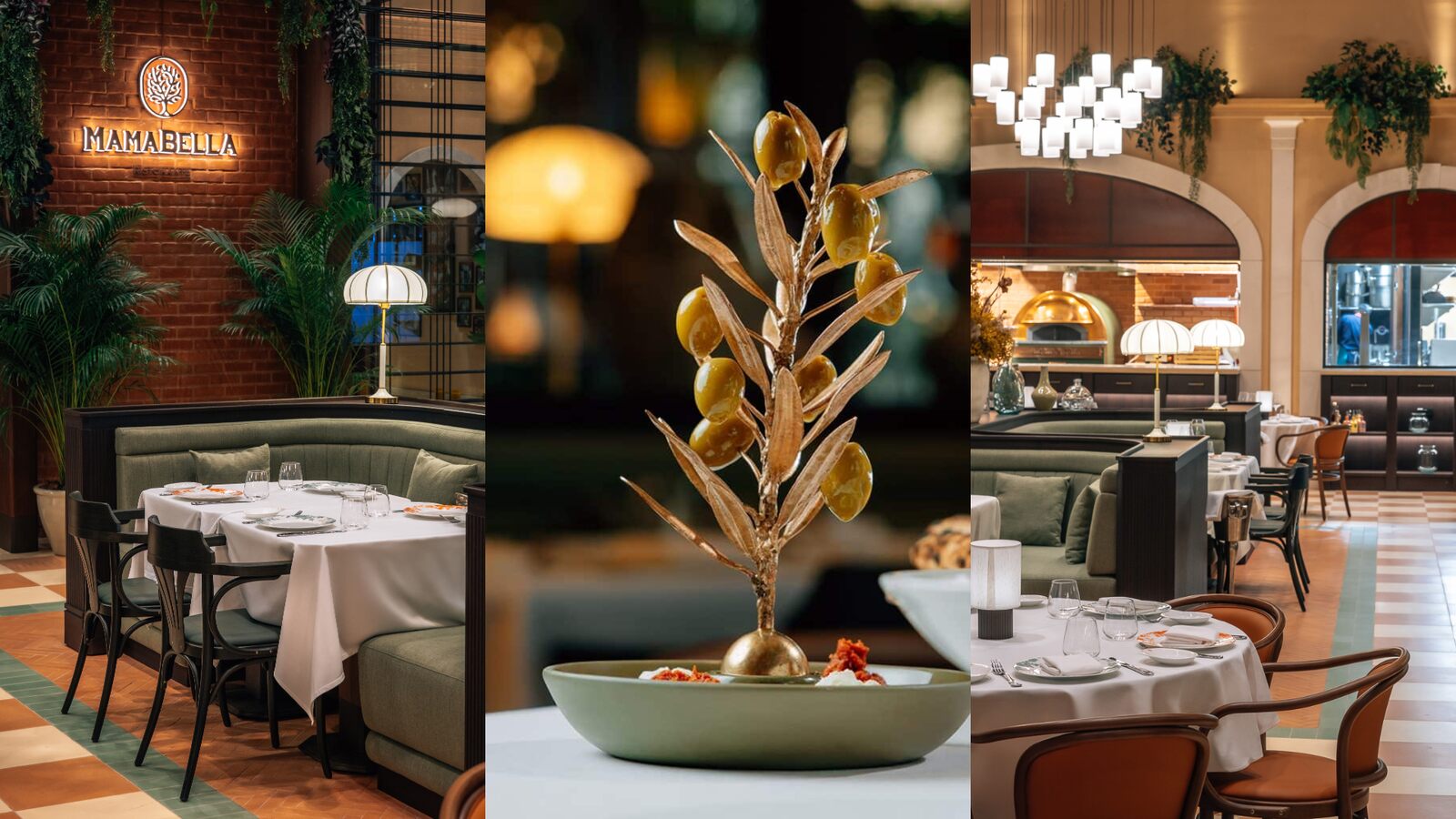
The space itself is a masterclass in translated warmth. It avoids the kitsch of chequered tablecloths and Chianti bottles, opting instead for an aesthetic that whispers, rather than shouts, la dolce vita. High ceilings and dark woods provide a sober canvas, against which lush greenery and earthy beige tones evoke a modern Mediterranean villa. The pièce de résistance is the transparent glass kitchen – a proscenium arch where the daily drama of fresh pasta-making unfolds, using machinery imported directly from Italy. It’s a live performance, a ballet of dough and semolina in which the finale is your plate.
View this post on Instagram
The menu reads like a love letter to the Italian peninsula, from its coastal crudi to its inland roasts. To call it a menu, however, is to undersell it. It is an itinerary. You begin with a Sicilian bread basket presented with an almost pagan reverence, an olive-branch tree standing sentinel beside Alessandro’s impossibly creamy homemade ricotta. Then, the journey proper commences.
The Crudi di Pesce is a study in marine minimalism – a sea bass carpaccio so delicate it seems to dissolve on the tongue, and a crimson Gambero Rosso that tastes of the deep, open sea. But the true showstoppers are the slow-crafted symphonies of the Secondi. The Agnellino, a whole baby lamb slow-roasted Sicilian-style for five to seven hours, is a landmark dish, the first of its kind in the UAE. It arrives with a rustic ceremony, allowing you to choose your cut, a gesture that connects you to a pastoral tradition far removed from the Dubai skyline. The Wagyu short ribs, braised for a monastic 72 hours, offer a different kind of opulence, a fusion of Japanese precision and Italian nonna-level patience.
And then there is the pizza. Not an afterthought, but a dedicated programme featuring the scrocchiarella – a Roman-style pizza with a fermentation process that results in a crust so thin, so shatter-crisp, it justifies its onomatopoeic name. It is the kind of detail a horologist would appreciate, a testament to the tyranny of timing.
As the evening deepens, Mamabella sheds its sophisticated skin and embraces the vibrant chaos of a Sicilian piazza. The air thrums with the tarantella, flower petals drift from above, and the boundary between dinner and celebration blurs into irrelevance. For those seeking a more intimate communion, there is the private dining kitchen, a sanctum sanctorum with a panoramic view of the Burj Khalifa. Here, under the tutelage of the visiting nonna, twelve guests can partake in what is ostensibly a cooking class, but is in reality something far more profound: a transfer of cultural memory.
Mamabella Dubai is not merely another entry in the city’s ledger of fine-dining Italian restaurants. It is a philosophical argument on a plate. In a world chasing the next big thing, Chef Alessandro Miceli has built a temple to the oldest thing we know: the love and lore of the family kitchen. It is a place where the most potent luxury is not the caviar or the lobster, but the time, the tradition, and the tangible, fleeting presence of a grandmother’s hands. It turns out that the future of luxury dining in Dubai isn’t a lab-grown innovation, but a perfectly crafted cannolo, filled to order, and a lesson from a nonna. You’d be a fool to miss class.