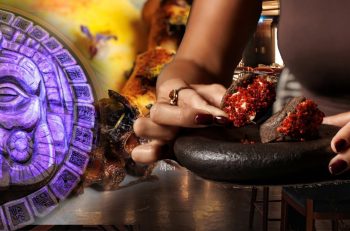
The deity Amaru, a coiled fusion of serpent and dragon, was once believed to glide between the sky, the earth and the underworld – a courier of transformation in a pre-digital age. In Dubai, a city that long ago dissolved the boundary between terrestrial ambition and celestial fantasy, this ancient symbol has been reincarnated not in stone, but in clay, wood and flickering firelight at the entrance to Souk Madinat Jumeirah. The venue that bears its name is not merely a restaurant; it is a threshold, and to step across it is to surrender – for a few hours, at least – to a Latin American fever dream rendered in the unmistakable vernacular of modern luxury.
The restaurant occupies a storied corner at the entrance to Souk Madinat Jumeirah, a former nightlife landmark that had, in recent years, settled into a comfortable hibernation. In most cities, this would be a footnote; in Dubai, it is simply the prelude to a second act. Named after the Incan serpent-dragon deity, a symbol of transformation, Amaru emerges as a home-grown concept that marries Latin America’s culinary fire with the city’s insatiable appetite for theatre. If the myth of the serpent shedding its skin ever needed a contemporary metaphor, this is it.

The design, a collaboration that speaks in the hushed, textured language of ancient temples, achieves something increasingly rare: it makes you lower your voice upon entering, not out of intimidation, but from a kind of involuntary reverence. Warm clay walls and carved wood evoke a pre-Columbian aesthetic, while gold-toned Aztec-inspired motifs glint in the firelight like buried treasure. A 360-degree projection-mapping system transforms the space throughout the evening, a nod to the Gen Z insistence that a meal must double as content, and content as art. The cynic in me might call it dinner theatre for the Instagram generation, and yet, standing beneath the vaulted ceiling with a mezcal in hand, I confess that the cynic falls silent. The effect is not gimmicky; it is transporting. The aesthetic sits somewhere between a Tulum beach shrine and a Dubai penthouse – a calculated collision of the sacred and the shareable.
The spatial narrative unfolds across several interconnected chambers, each with its own emotional register. A long bar anchors the ground floor, a temple to agave in all its forms – blanco, reposado and the deeply smoky mezcals that linger on the palate like a whispered secret. This is not merely a place to order a drink; it is the restaurant’s circulatory system, pumping energy through the room via a carefully curated soundtrack of Latin beats and DJ-led sets. For those who prefer their evenings unblurred by alcohol, the bar has developed a zero-proof programme called Sober Whispers, which approaches its craft with a seriousness usually reserved for the alcoholic canon: complex, layered concoctions that refuse to treat sobriety as an afterthought. This attention to the non-alcoholic experience is, one suspects, less a concession to wellness trends than a genuine understanding that the designated driver deserves more than sparkling water with a wilted mint leaf.
View this post on Instagram
The culinary direction falls to Chef Carlo Valentino, and his kitchen is built around one uncompromising element: live fire. The menu traces a geographical and emotional arc from the citrus-cured ceviches of Peru to the coastal richness of Brazilian moqueca, a journey that feels less like a geography lesson than a love letter written in chilli and smoke. A lobster taco arrives in a huitlacoche tortilla – a funky, earthy nod to Mexican corn fungus that tastes far more luxurious than its etymology suggests. Highland lamb chops, kissed by flame, recall the ancient fire rituals that inspired them: the sort of dish that makes you want to gnaw the bone in polite company and then order another. The flavours are rooted in tradition, yet finished with the unapologetic flair of a chef who has experienced the authentic and decided, correctly, that it could use a little more drama.
This flair for narrative extends to the cocktail programme. The Welcome Sphere arrives with the self-aware whimsy of a performance piece: a tropical aperitif encased in a delicate shell that must be cracked to release its contents, a ritual that is either delightfully playful or mildly absurd, depending on your tolerance for ceremony before caffeine or alcohol. The Negroni Latino reimagines the Italian classic with mango and tropical fruit, a gesture of cross-continental diplomacy that, to its credit, offends neither geography nor palate. Each drink is a short story, and the best of them leave you wanting a sequel.
Six metres above the main floor, the Galleria offers a vantage point from which to survey the scene below – a mezzanine of voyeuristic pleasure, complete with its own bar for those who prefer their people-watching with a touch of altitude. For the truly committed, the Amber Room Chef’s Table presents an intimate tasting menu in a private dining room, the sort of experience that transforms dinner into a memory deliberately constructed rather than casually stumbled upon.

This month, Amaru is participating in the extended Dubai Restaurant Week, a citywide gastronomic ritual in which more than 100 restaurants, including a constellation of Michelin-listed and Gault&Millau-recognised addresses, offer prix fixe menus of unexpected generosity. Amaru’s offering is a three-course dinner priced at AED 250 per person. The journey begins with a choice of beef empanada with ají amarillo, Pacific Gold ceviche of wild sea bass with tiger’s milk, or a vegetarian shiitake anticucho. The main course features a 36-hour Asado Negro short rib – a dish of such depth it practically has its own backstory – Patagonian ancestral sea bass, or eggplant a la brasa for the plant-forward. Dessert is a choice between dulce de leche fondant and the restaurant’s signature churros with dark chocolate, a finale that manages to feel both nostalgic and unmistakably grown-up. At this price point, in a venue of this calibre, it feels less like a meal than a benevolent error in the accounting department.
What Amaru ultimately understands – and what a certain generation of restaurateurs may have forgotten – is that luxury today is no longer defined by the weight of a tablecloth or the hush of a room. For the millennial and Gen Z audiences who now set the rhythm of Dubai’s nocturnal economy, luxury is a feeling: immersive, shareable and faintly dangerous in its beauty. These diners do not simply want to consume; they want to inhabit the content, to live an evening that feels like a film they can post about later. The shift has been seismic enough to reshape menus, design language and even the pace of service. A generation that came of age during a pandemic understands something profound about ephemerality and is willing to pay for experiences that honour that understanding – provided they come with flattering lighting and a coherent hashtag strategy. Restaurants that ignore this shift risk irrelevance; those that embrace it, as Amaru has with its projection mapping, shareable plates and DJ-curated soundscapes, are effectively writing the new grammar of fine dining.
One might argue that Dubai has no shortage of restaurants promising an “immersive journey”, and one would be correct. But Amaru distinguishes itself through a genuine commitment to craft beneath the spectacle. The fire is real, the recipes are meticulously researched, and the serpent-dragon metaphor – though perhaps deployed with the subtlety of a glass of Malbec – ultimately holds. This is, after all, a city that has made transformation its defining characteristic, shedding skylines as easily as the Incan deity shed its skin. To dine at Amaru is to participate, however briefly, in that ongoing ritual of becoming.
View this post on Instagram
As the night deepens, the projection mapping shifts from amber to midnight blue, the mezcal works its quiet magic, and the chef’s fire roars in the open kitchen. One begins to experience something approaching a genuine sense of elsewhere. In a city that can at times feel like a film set designed by a committee of algorithms, Amaru is that rare venue where the performance feels like truth – and where truth, for a few hours, tastes remarkably like a perfectly charred lamb chop.
Amaru Dubai is located at Souk Madinat Jumeirah. Bookings for Dubai Restaurant Week are available until 31 May 2026, with reservations accepted via Careem DineOut and the Visit Dubai platform.
Also Read: The New Montblanc Collector’s Pens – A Fauvist Masterpiece in Hand