Grey is the colour of a well-kept secret. It is the hue of concrete at dusk, of a Savile Row flannel suit, of the sky over Dubai when the desert haze softens the edges of the skyline. It is also, as it happens, the colour Vacheron Constantin has chosen for its latest act of quiet subversion.
The oldest continuously operating watch manufacturer in the world – 271 years and counting, with a history of complications and record-setting feats that would make a Swiss patent office weep – has never been a brand that shouts. It whispers, in the way that Patek Philippe whispers, or a bespoke Anderson & Sheppard jacket whispers. But the new Fiftysix, unveiled this month in two stainless-steel references, whispers with a slightly different cadence. It is a watch that understands something profound about the current mood of luxury in the UAE and beyond: that the most compelling statement a millennial or Gen Z collector can make in 2026 is the absence of a statement.
The Fiftysix collection arrived in 2018 as Vacheron’s bid for the everyday-elegance market – a watch you could wear with a suit, a cashmere hoodie or the particular kind of relaxed tailoring that has come to define Gulf style. Its name is a postcode in time: 1956, the year Vacheron launched Reference 6073, a mid-century dress watch whose lugs evoked the four arms of the Maltese Cross and whose box-shaped crystal gave it a certain cinematic authority. That reference was also among the Maison’s first self-winding watches, a technical distinction echoed in the Fiftysix collection’s automatic movements.
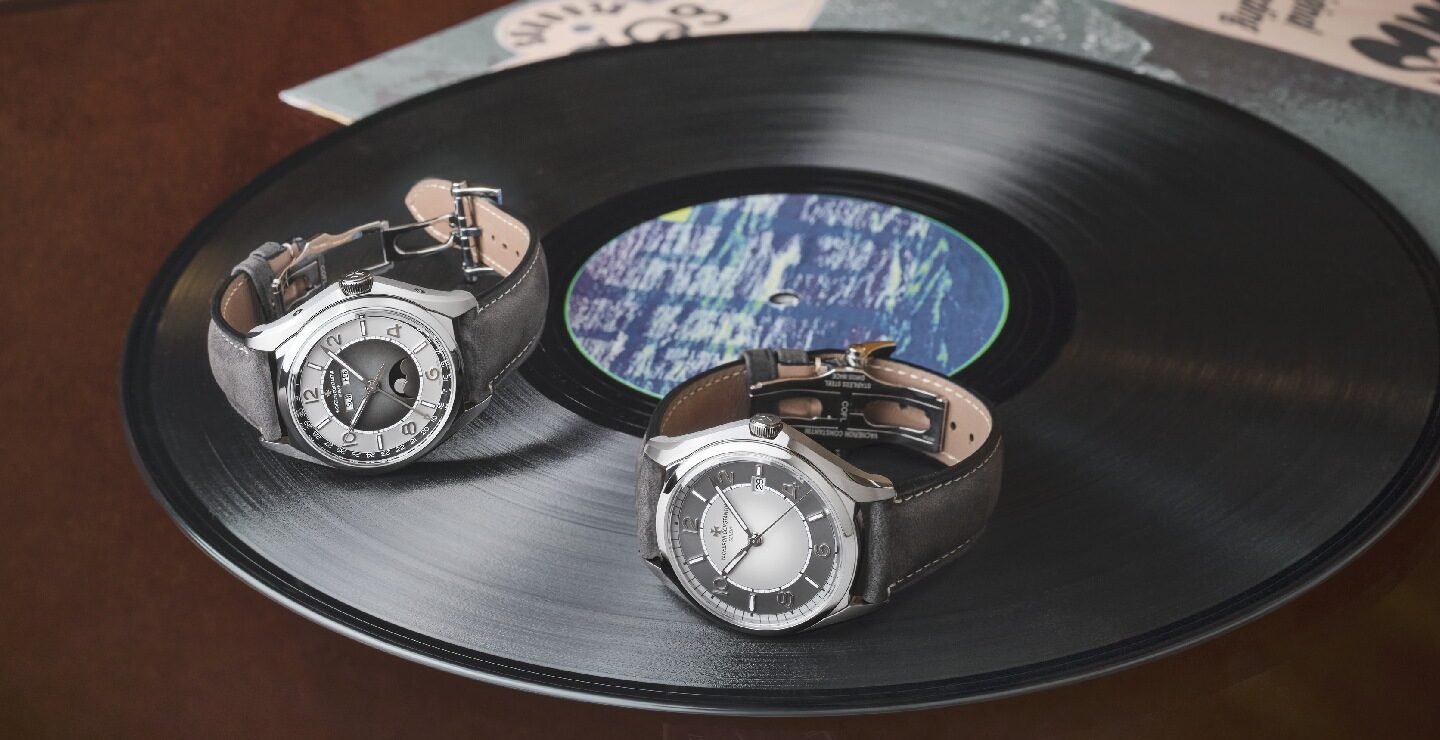
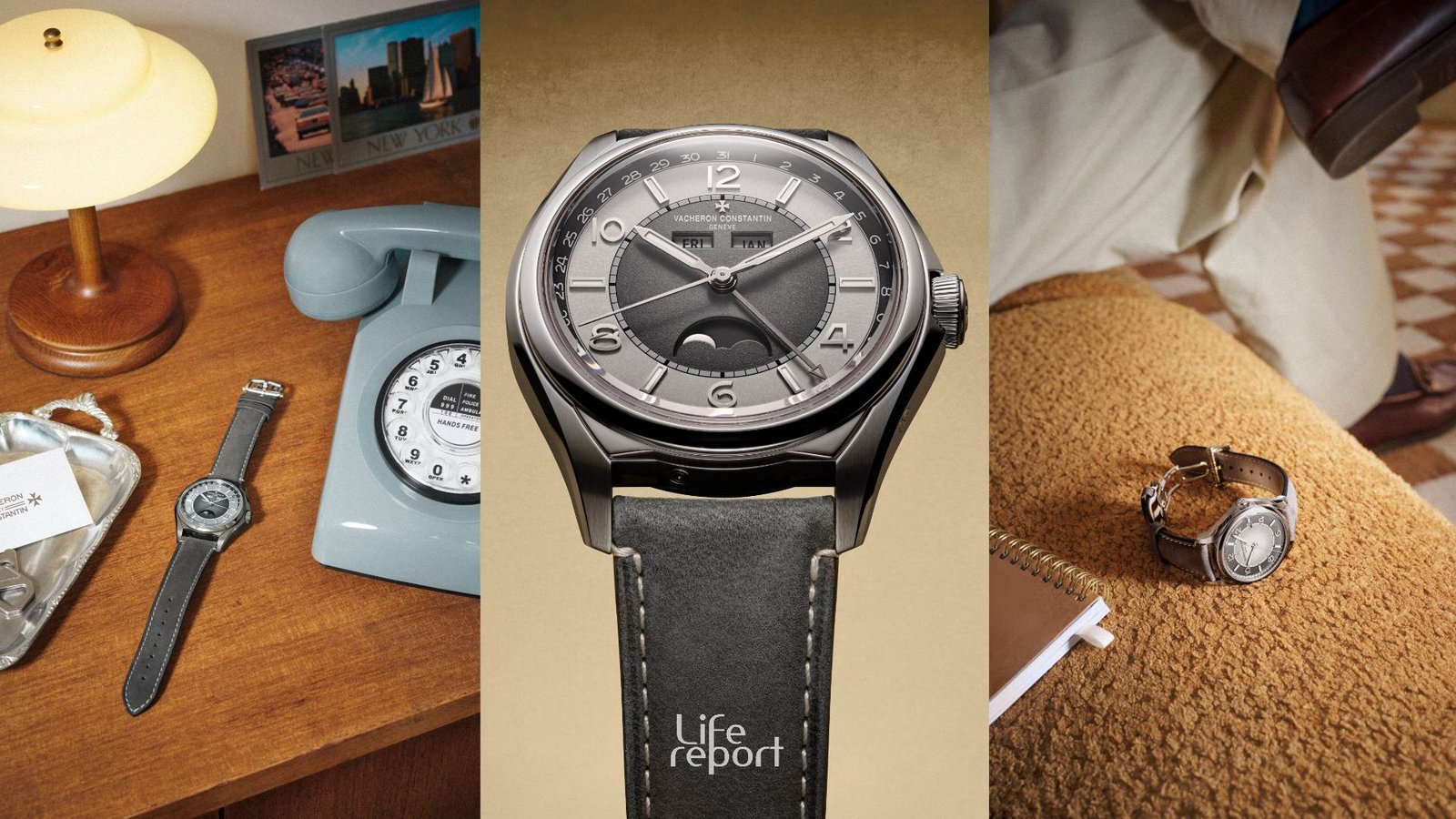
Eight years after the collection’s debut, and seventy years after the original 6073 appeared, Vacheron has returned to the Fiftysix with a scalpel rather than a sledgehammer. The result is a pair of watches – a Self-Winding three-hander and a Complete Calendar – that take the sector-dial formula and push it into darker, more sophisticated territory. Both feature double-gradient grey dials. The Self-Winding pairs a lighter grey opaline centre with a darker grey sunburst chapter ring, while the Complete Calendar reverses the arrangement and adds a dark, snailed peripheral date track. It is a design that owes something to the graphic rigour of Bauhaus and something else to the monochrome romance of a black-and-white photograph from the era that inspired it.
The effect is not minimalist in the self-denying, Scandinavian sense. It is minimalist in the way that a mid-century boardroom was minimalist: every line has a purpose, every surface has a finish, and the whole thing is quietly, expensively alive. The applied hour markers – Arabic numerals alternating with elongated rectangular indexes – are rendered in 18-carat white gold, their tone-on-tone pallor broken only by the blue Super-LumiNova that illuminates the markers and the hour and minute hands when the lights go down. It is the horological equivalent of a dinner jacket with a midnight-blue lining: invisible to most, deeply satisfying to the wearer.
View this post on Instagram
The case has been reworked, too. The 40-millimetre steel envelope, measuring 9.6 millimetres thick for the Self-Winding and 11.6 for the Complete Calendar, now combines vertical brushing on the case sides and lug surfaces with polished bevels, a polished bezel and a polished crown. The lugs – those distinctive, Maltese Cross-inspired bevelled appendages – are brushed on their vertical faces and polished along the bevels, creating a play of light that is less about shine and more about shadow. In a city like Dubai, where glass towers catch the sun with almost aggressive brilliance, a watch that plays with shadow feels like a palate cleanser.
Then there is the strap. Crafted from anthracite-grey nubuck calfskin, with ecru stitching and a stainless-steel folding clasp, it is soft in the way that a well-worn vintage car interior is soft – tactile, slightly irregular and entirely without pretence. It is a deliberate move away from the alligator-strap orthodoxy of traditional dress watches, and it works. The Fiftysix is not a watch that demands to be worn with a tuxedo. It is a watch that suggests the tuxedo is optional.
Inevitably, there are compromises. The Self-Winding is powered by Calibre 1326, a 48-hour automatic movement produced by Richemont’s Manufacture Horlogère ValFleurier and finished, assembled and regulated by Vacheron Constantin. It is a perfectly decent movement. It is also, as the purists have been quick to point out, not Hallmark of Geneva-certified – unlike Calibre 2460 QCL/1 inside the Complete Calendar, which carries the coveted distinction for its craftsmanship and finishing. The irony is exquisite: the more affordable watch does without the certification, while its more complicated sibling carries the coveted mark of distinction. Whether this matters to the intended audience – a younger buyer drawn to the Fiftysix for its aesthetics and relative accessibility – is debatable. It matters to the internet, which has never met a hierarchy it didn’t want to litigate.
And speaking of accessibility: the Self-Winding retails for $14,300 in the US, while the Complete Calendar comes in at $33,900. In the rarefied air of the Holy Trinity, these are practically democratic figures. They are also, in the context of the real world, the price of a small car or a very good year at a Swiss boarding school. The word ‘entry-level’ is doing a great deal of heavy lifting here – it is entry-level in the way that a ground-floor apartment in Mayfair is entry-level, which is to say, the least expensive way to own a piece of a very exclusive building. But the Fiftysix has never pretended otherwise. It has been the brand’s most accessible line since 2018. The audience it courts is not the collector with a safe full of perpetual calendars; it is the collector who wants one watch that can do everything, and wants it to look as though it was inherited rather than purchased.
The Complete Calendar, for its part, is the more emotionally resonant of the two. Its moon-phase display is a small act of poetic restraint: 18-carat white-gold moons against a black night sky, set against the otherwise subdued grey dial. An astronomical complication rendered with just enough contrast to catch the eye without demanding attention. The calendar itself is complete rather than perpetual, but its precision moon-phase display requires no adjustment for 122 years – a timescale that makes the average millennial’s planning horizon look almost ambitious. And the peripheral date hand, moving around the snailed date track, is a reminder that Vacheron has been making wristwatches with triple calendars since the 1940s; this is not a novelty, but a heritage piece in contemporary clothing.
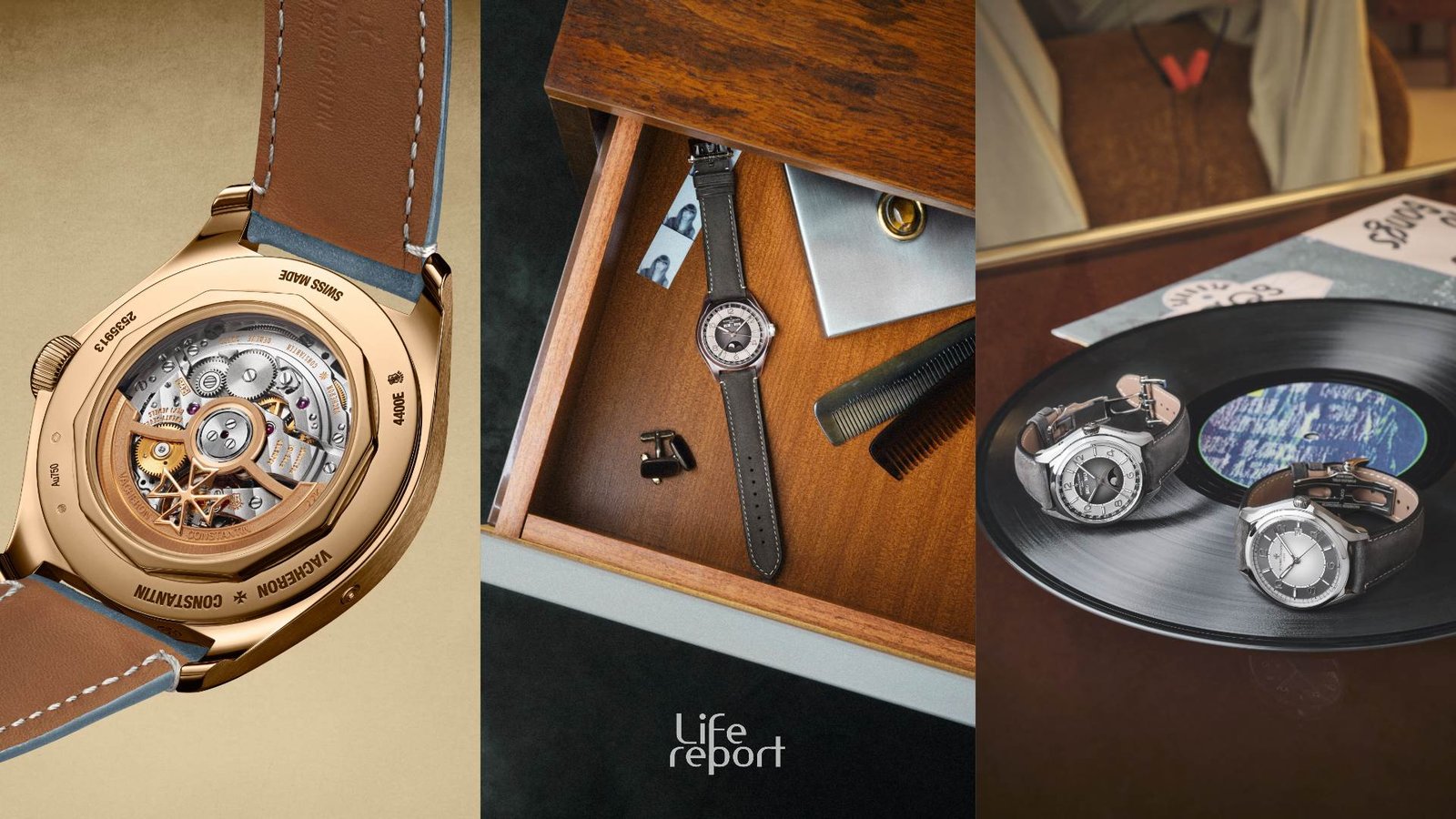
Where the Fiftysix ultimately succeeds is in its understanding of a shifting market. In the UAE, the language of luxury is changing. The old grammar of conspicuous consumption – the diamond-set sports watch, the gold everything – still has its speakers, but it no longer tells the whole story. For some affluent millennial and Gen Z collectors in the GCC, history, authenticity and a certain quiet confidence are becoming increasingly compelling alternatives to overt display. The Fiftysix, with its grey-on-grey dial, nubuck strap and hidden 22-carat pink-gold rotor, visible only through the sapphire caseback, makes a persuasive case for this more understated approach to luxury.
View this post on Instagram
It arrives at a fitting moment. Dubai Watch Week, one of the region’s most important horological gatherings, is a biennial event: its seventh edition took place at Burj Park in November 2025, and the next is scheduled for 17 to 21 November 2027 at Dubai Mall and Burj Park. For the city’s collectors – a cohort that treats rare watches as both trophy and social currency – the new Fiftysix offers another point of reference. The Vacheron Constantin flagship at The Dubai Mall, with its mashrabiya-inspired entrance and permanent Les Collectionneurs vintage offering, is already a pilgrimage site for the brand’s local clientele. The new references give them something fresh to consider without abandoning the codes that made the collection a quiet success.
The Fiftysix is not a watch for everyone. It is not a watch for the person who wants to be asked about their watch at a party. It is a watch for the person who wants to be asked eventually, after the conversation has turned to architecture, wine or the relative merits of Milan and Copenhagen, and who will answer with a slight shrug and a change of subject. It occupies a grey area in the best possible sense: between dressy and casual, between vintage and modern, between the Holy Trinity and the real world. And in a city that has built its reputation on superlatives, there is something deeply sophisticated about a watch that prefers the comparative.
The Fiftysix Self-Winding and Complete Calendar are part of Vacheron Constantin’s current collection and available through the Maison’s boutiques, including its flagship at The Dubai Mall. Neither is a limited edition. Their exclusivity lies, as all good things do, in the relatively small number of people who understand what they are looking at.
READ MORE: The Painter Who Left Fashion Behind – and Took Its Tricks With Him